The Role of Restorative Sleep Techniques for Central Nervous System Recovery and Performance Enhancement
You need restorative sleep to reset your central nervous system, clearing toxins and restoring neural balance. Deep sleep boosts brain wave efficiency, sharpening cognition and physical response. Without it, cortisol rises, recovery slows, and even the best fitness gear won’t offset CNS fatigue. Techniques like consistent sleep schedules, controlled breathing, and tracking sleep cycles maximize repair. Aligning your habits with your body’s natural rhythms activates measurable gains-discovering how to optimize each phase reveals even greater potential.
Notable Insights
- Deep sleep stages facilitate CNS recovery by promoting neural repair and synaptic balance through delta brain wave activity.
- Proper spinal alignment with cervical pillows supports restorative sleep and enhances central nervous system regeneration.
- Aligning sleep with 90-minute REM cycles optimizes brain wave continuity and maximizes neural restoration.
- Controlled breathing and magnesium supplementation improve sleep quality, boosting CNS recovery and daytime performance.
- Sleep tracking devices provide actionable data on REM and deep sleep, enabling adjustments for enhanced neural efficiency.
What Happens During Restorative Sleep
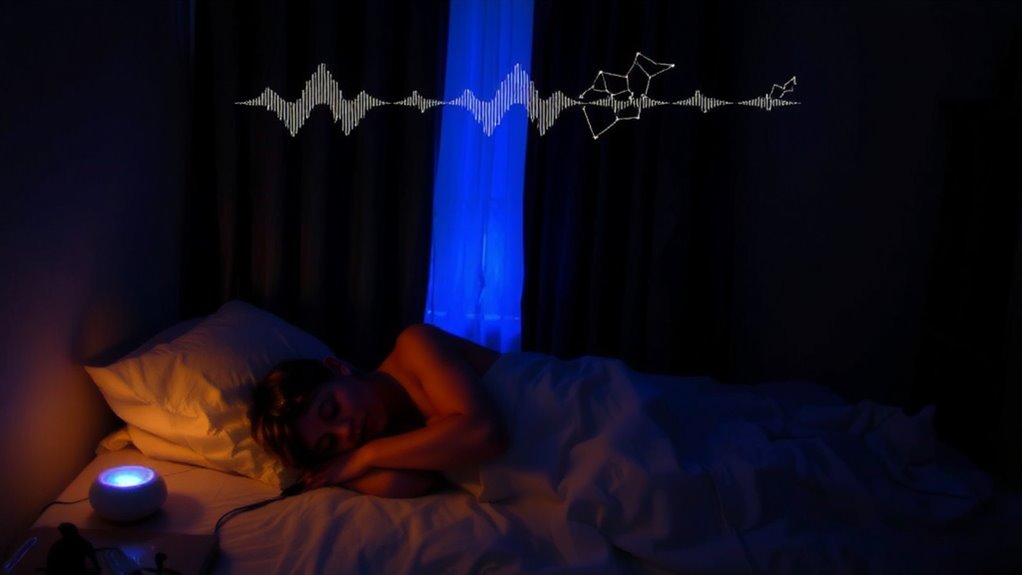
Sleep isn’t just downtime-it’s when your central nervous system (CNS) hits the reset button. While you sleep, your brain waves shift from wakeful beta to slow, rhythmic delta patterns during deep stages. These changes signal your body to initiate neural repair, clearing toxins and re-establishing synaptic balance. Your CNS isn’t passive-it’s actively restoring function, improving signal efficiency, and consolidating motor learning critical for athletic recovery. This phase supports cognitive sharpness and physical responsiveness, both essential after intense training. Without this nightly recalibration, even the best fitness gear won’t compensate for diminished neural function. Quality sleep enhances how well your nervous system communicates with muscles, optimizing everything from reaction time to endurance. You’re not just resting-you’re rebuilding. Consistent, deep sleep means stronger CNS resilience, helping you train smarter, not just harder, and maintain peak performance without overtraining risks. Using the right cervical pillows for neck pain can further support restorative sleep by maintaining proper spinal alignment.
How Poor Sleep Blocks CNS Recovery

Why does your performance plateau despite perfect form and top-tier fitness gear? Because poor sleep is silently sabotaging your central nervous system (CNS) recovery. When you skimp on quality rest, your brain can’t properly regulate key functions, leading to neurotransmitter imbalance-critical for mood, focus, and motor control. Without recalibration during deep sleep phases, neural efficiency drops, slowing reaction time and coordination. You might feel sharp, but your reflexes and decision-making are compromised. Chronic sleep loss also triggers cortisol elevation, increasing inflammation and keeping your body in a stressed, catabolic state. This hinders tissue repair and weakens immune function, making every workout harder to recover from. Even the best fitness gear can’t compensate for a fatigued CNS. Over time, stagnation and overtraining become likely. In short, no amount of advanced equipment or optimized training will override the biological necessity of restorative sleep.
Proven Techniques for Restorative Sleep

You’ve likely noticed how even with flawless technique and the most advanced fitness gear, progress can stall-and now you know poor sleep is often the hidden culprit, disrupting CNS recovery and undermining neural repair. To optimize restoration, align your sleep with natural dream cycles, ensuring you complete full 90-minute REM stages. Tracking brain waves through affordable EEG-based wearables reveals when deep sleep peaks, helping you adjust timing for maximum CNS repair. Prioritizing sleep continuity over duration allows brain waves to stabilize, supporting synaptic recalibration. Techniques like controlled breathing and targeted supplementation-such as magnesium or glycine-have demonstrated measurable improvements in both sleep quality and next-day cognitive performance. While recovery tech like compression gear or cold therapy has its place, none override the foundational role of quality sleep. Without syncing with your body’s internal rhythms, even the best fitness tools deliver subpar results.
Evening Habits That Enable Restorative Sleep
An effective evening routine sets the stage for restorative sleep by signaling your central nervous system (CNS) that it’s time to shift from activation to recovery. You can enhance this shift by optimizing your sleep environment-keep the room cool, dark, and quiet, and remove electronic distractions that disrupt melatonin production. Consistent bedtime consistency reinforces your circadian rhythm, making it easier to fall and stay asleep. Aim to go to bed and wake up at the same time daily, even on weekends. Limit screen exposure an hour before bed, and consider relaxation practices like light stretching or breathing exercises. These habits aren’t just supportive-they’re essential for CNS recovery and long-term performance gains. Over time, disciplined evening routines compound, improving sleep depth and next-day clarity. Your recovery quality depends as much on these behaviors as on any fitness gear or supplement regimen.
Measure Sleep to Accelerate CNS Recovery
How well are you really sleeping? Without data, you’re guessing-guessing that could slow your CNS recovery and undermine performance. Sleep tracking isn’t just for tech enthusiasts; it’s a practical tool to monitor sleep cycles, detect disruptions, and assess sleep quality objectively. Devices like wearables and smart mattresses measure heart rate variability, total sleep time, and REM cycles-key indicators of neural adaptation. When your CNS rebuilds during deep sleep, tracking helps verify you’re hitting those restorative stages consistently. You’ll spot patterns, like how late workouts or screen time shorten deep sleep. Over time, this feedback loop accelerates recovery by guiding adjustments to your routine. While no tracker is perfect, the trends they reveal support smarter decisions. Used wisely, sleep tracking becomes essential fitness gear-not for vanity, but for measurable gains in neural adaptation and long-term performance.
On a final note
You’re now equipped to prioritize restorative sleep for real CNS recovery and peak performance. Quality sleep isn’t passive-it actively repairs neural pathways, balances hormones, and sharpens cognition. Poor sleep undermines even the best fitness gear and training. Techniques like consistent sleep scheduling, minimizing blue light, and tracking sleep stages with reliable wearables deliver measurable benefits. Investing in recovery tools only works if you pair them with disciplined sleep hygiene-your nervous system depends on it.