Cervical Mobility Drills With Lateral Neck Stretch Using Arm Assistance
You can enhance cervical mobility by combining lateral neck stretches with arm assistance, where gentle pressure from your hand deepens the stretch on the sternocleidomastoid and upper trapezius. This method improves neuromuscular feedback and joint lubrication while minimizing strain. Done correctly, it boosts range of motion and reduces stiffness more effectively than passive stretching. Maintaining proper alignment is key to avoiding injury. Consistent practice at ideal times-like morning or post-workout-sharpens results, and pairing it with complementary movements increases functional gains.
Notable Insights
- Perform lateral neck stretches with arm assistance to safely intensify the stretch on the sternocleidomastoid and upper trapezius muscles.
- Use controlled arm pressure during the stretch to enhance neuromuscular feedback and precision without causing strain.
- Combine lateral neck stretches with cervical mobility drills to address joint stiffness and improve overall neck range of motion.
- Execute the stretch in a seated position with neutral spine, using exhales to deepen the movement and maintain shoulder relaxation.
- Practice daily at optimal times-morning, midday, post-workout, or evening-to reduce stiffness and support long-term joint health.
What Is a Lateral Neck Stretch (and Why Use Arm Help)?
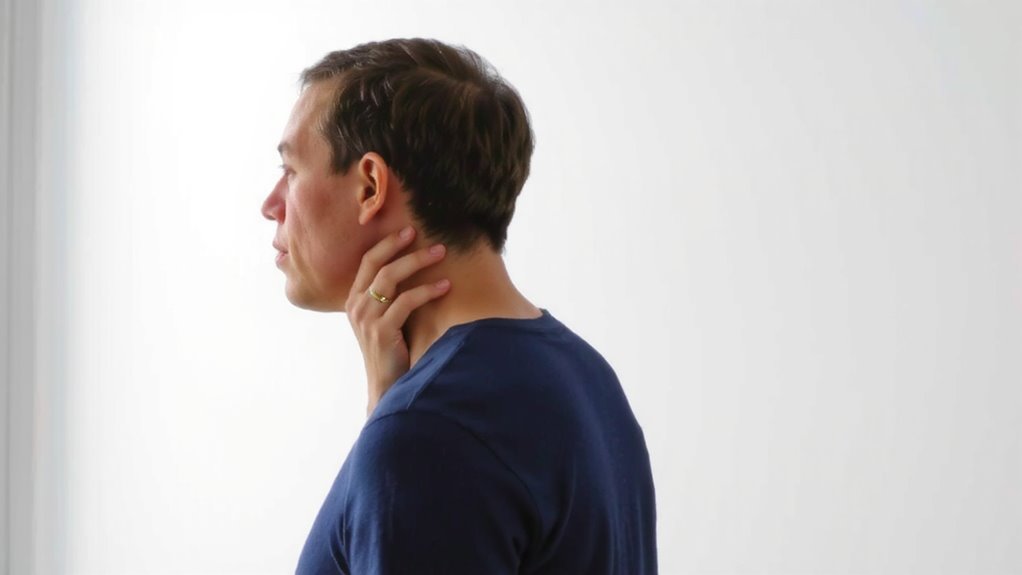
Why do so many athletes and rehab patients use arm assistance during a lateral neck stretch? You’re probably doing it to enhance anatomical benefits and control muscular engagement. By gently pulling your head sideways with the opposite hand, you increase the stretch along the sternocleidomastoid and upper trapezius-key muscles often tight from poor posture or repetitive motion. The added arm pressure allows you to modulate intensity, making it safer and more effective than passive stretching. This controlled load promotes better neuromuscular feedback, helping you identify asymmetries and correct imbalances over time. Without arm assistance, the stretch may feel vague or uneven, limiting results. Fitness recovery isn’t just about mobility-it’s about precision. Using your arm as a guide maximizes mechanical advantage while minimizing strain, offering a smart, accessible technique whether you’re in a gym, clinic, or home setting. For added support, consider pairing this stretch with a neck decompression device to further relieve cervical tension.
How Cervical Mobility Drills Ease Neck Tension
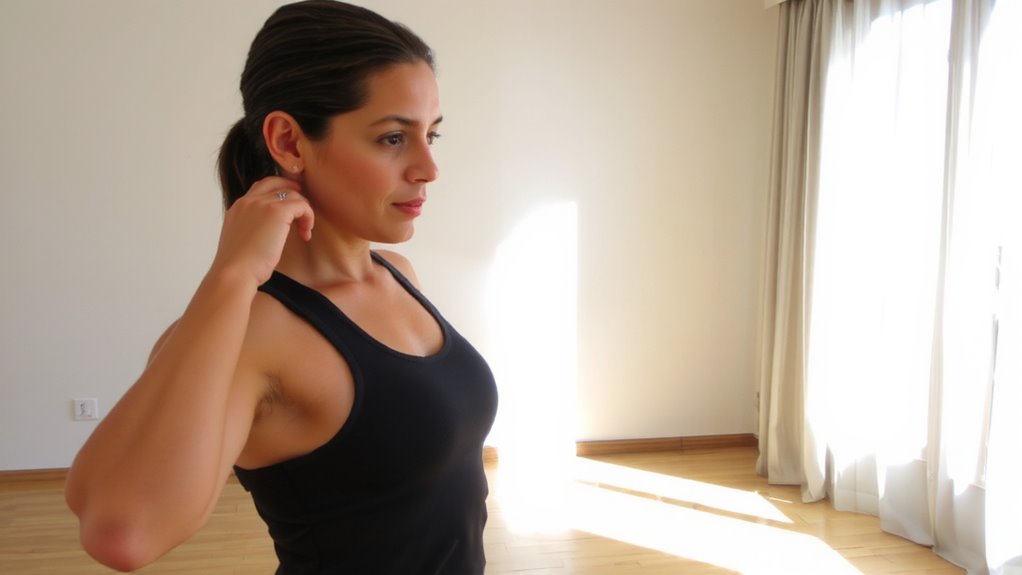
Tension in the neck often stems from accumulated stiffness and restricted joint movement, not just muscle tightness-so addressing it requires more than passive stretching. Cervical mobility drills actively lubricate the facet joints and retrain movement patterns, gradually restoring range of motion. As you perform controlled movements like chin tucks or lateral glides, you stimulate mechanoreceptors that signal the nervous system to allow muscle relaxation. Pairing these drills with deep breathing enhances parasympathetic response, reducing protective tension around the cervical spine. Unlike relying solely on fitness gear like foam rollers or massagers, these drills correct dysfunction at the source. Devices may offer temporary relief, but sustained improvement comes from neuromuscular re-education. Over time, consistent practice leads to better posture and less strain, especially if you sit for long hours. You’ll notice less stiffness in daily movements and greater ease when turning or tilting your head. For those seeking supportive sleep solutions, pairing mobility work with the right best cervical pillows can enhance recovery and alignment.
Step-by-Step: Do the Arm-Assisted Neck Stretch Safely

You can build on the joint lubrication and neuromuscular control gained from cervical mobility drills by incorporating targeted stretches like the arm-assisted neck stretch, which adds mild overpressure to increase lateral flexibility. Maintain proper posture alignment-spine neutral, shoulders relaxed-and use controlled breathing techniques to deepen the stretch without strain. Avoid jerking or forcing the movement; instead, gently guide your head sideways with your arm. For those seeking additional support, exploring best relief options can complement stretching routines effectively.
| Phase | Key Focus |
|---|---|
| Starting Position | Upright seated, feet flat |
| Hand Placement | Gently on side of head |
| Motion | Slow lateral flexion |
| Breath Pattern | Inhale to prepare, exhale to stretch |
This stretch enhances recovery by promoting muscle relaxation and reducing stiffness. When paired with consistent posture alignment and rhythmic breathing techniques, it supports long-term neck health.
Don’t Make These Neck Stretch Mistakes
Isn’t it frustrating when a stretch meant to relieve discomfort actually makes things worse? That’s often the case when you rush into a lateral neck stretch without attention to neck posture. Tilting your head too far or using excessive arm force can strain tissues and deepen muscle imbalance. You might think more pressure equals better results, but that’s a myth-overstretching irritates sensitive cervical structures. Avoid shrugging your shoulders or hunching forward; keep your spine tall and relaxed. Remember, the goal is gentle tension, not pain. Holding improper form, even briefly, compromises joint alignment and limits mobility gains. Without balance between both sides, you’re likely worsening asymmetries. Consistency with correct technique beats aggressive, irregular efforts. Check your posture in a mirror if needed. Small errors add up, turning recovery into a setback-don’t let poor habits undermine your progress in cervical mobility.
Best Times to Do Cervical Mobility Daily
Often, the most effective cervical mobility work happens when timed deliberately throughout your day. Integrating lateral neck stretches into your morning routine primes the neck for activity, reduces stiffness, and enhances posture awareness. Doing these drills during post workout recovery aids in releasing muscle tension and supporting neuromuscular relaxation. Below are ideal times and benefits:
| Time of Day | Purpose | Key Benefit |
|---|---|---|
| Morning | Morning routine | Reduces overnight stiffness |
| Midday | Posture reset | Counters desk-related strain |
| Post Workout | Post workout recovery | Enhances circulation and flexibility |
| Evening | Relaxation | Eases daily tension accumulation |
Performance improves when timing aligns with natural body rhythms. Consistency across these windows amplifies long-term joint health and functional range. You’ll notice better mobility retention when pairing arm-assisted stretches with intentional timing, avoiding passive holds in favor of active engagement. Use minimal gear-just your body and awareness.
Pair Your Neck Stretch With These Mobility Moves
While targeting the neck with lateral stretches improves cervical flexibility, combining them with complementary mobility drills enhances overall spinal alignment and movement efficiency. You’ll achieve better neck alignment by pairing your stretch with thoracic rotations and shoulder rolls, which alleviate tension that often contributes to poor posture. These moves promote muscle balance by engaging often-neglected upper back muscles while reducing strain on the neck’s lateral structures. Incorporating gentle chin tucks and scapular retractions further supports this balance, especially if you sit at a desk all day. For best results, use a foam roller under your upper spine to release tightness-this aids movement fluidity and supports recovery. Quality gear, like a firm roller or supportive mat, makes a tangible difference in consistency and comfort. When done regularly, this combo doesn’t just ease stiffness-it builds resilient, coordinated movement patterns essential for long-term fitness recovery and daily ease.
On a final note
You’ve learned cervical mobility drills, like the arm-assisted lateral neck stretch, ease tension by improving range of motion and reducing muscular stiffness. These moves, when done correctly, support neck health and posture. Pairing them with quality recovery gear-think ergonomic pillows or massagers-enhances results. Consistency matters more than intensity. Done daily, these stretches boost long-term mobility, especially post-screen time or lifting. Avoid overpulling; control beats force. Practical, science-backed, and low-risk, they’re smart recovery tools.