Navigating Delayed Onset Muscle Soreness: From Science to Practical Application
Your muscles get sore after tough workouts because tiny tears form during unusual or intense exercise, especially in eccentric moves like lowering weights. This delayed onset muscle soreness (DOMS) peaks 24–48 hours later, signaling adaptation but also weakening strength and mobility. Foam rolling, sleep, and hydration help speed recovery, while active recovery beats full rest. Eating anti-inflammatory foods and progressing gradually reduces severity. Smart training and recovery choices keep you strong and minimize setbacks-there’s more to optimizing your routine just ahead.
Notable Insights
- DOMS results from microscopic muscle tears during intense or unfamiliar exercise, especially eccentric movements.
- Soreness peaks 24–48 hours post-exercise due to inflammation and the muscle repair process.
- Active recovery like walking or cycling enhances blood flow and reduces DOMS more effectively than rest.
- Foam rolling, sleep, hydration, and anti-inflammatory nutrition significantly decrease soreness and speed recovery.
- Gradual progressive overload and proper recovery minimize DOMS risk and support long-term strength gains.
Why Are My Muscles So Sore After Working Out?
Why does your body suddenly feel like it’s been hit by a truck, two days after a solid workout? That soreness you’re feeling is delayed onset muscle soreness (DOMS), commonly triggered by unfamiliar or increased exercise intensity. Tiny tears form in your muscle fibers during strenuous activity, especially during eccentric movements like lowering weights. This damage isn’t harmful-it’s actually part of muscle adaptation. Your body responds by repairing and strengthening the tissue, preparing it for future stress. The soreness peaks 24–48 hours post-exercise because inflammation and repair processes take time. While fitness gear like compression garments may offer mild relief, they don’t accelerate healing. True recovery hinges on consistent training, proper nutrition, and rest. Over time, your muscles adapt, making future soreness less intense-even if you push the exercise intensity higher.
How DOMS Weakens Strength and Slows Progress
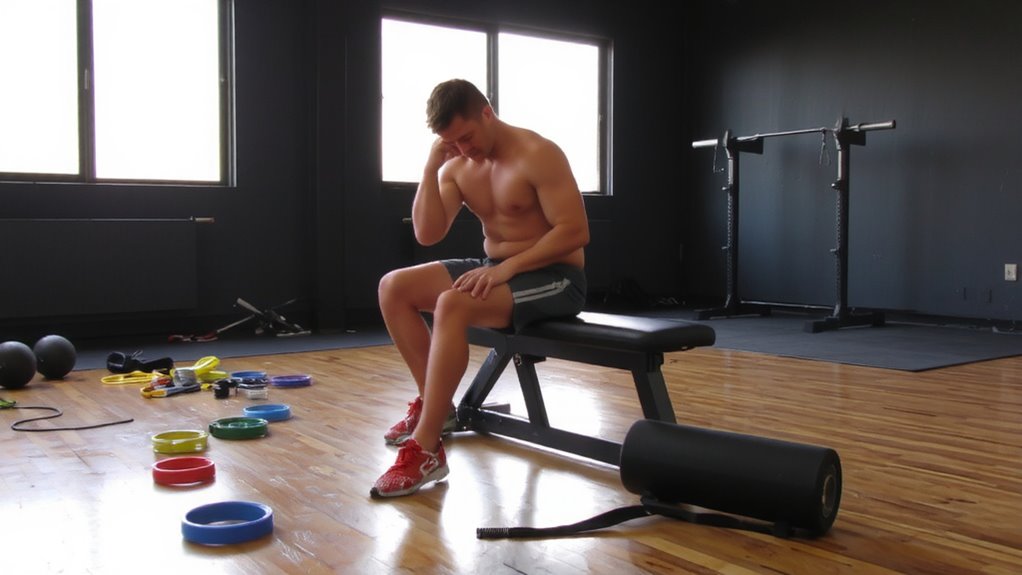
That post-workout stiffness isn’t just uncomfortable-it’s a clear signal your muscles are temporarily weakened. DOMS impairs strength because muscle inflammation disrupts fiber function, reducing force production and range of motion. You’re not just sore-you’re physically limited. This inflammation also triggers neural fatigue, meaning your brain-to-muscle signaling slows, further decreasing coordination and power output. So even if you feel ready to push, your body isn’t firing on all cylinders. Studies show strength can drop by up to 20% during peak soreness, undermining workout quality and progression. Training while severely impaired increases injury risk and diminishes returns. While some soreness is normal, persistent weakness from frequent DOMS suggests inadequate recovery. Top-tier fitness gear-like compression wear or advanced foam rollers-may support structural repair, but they can’t override the physiological downtime your body needs. Progress stalls when fatigue outweighs adaptation. Emerging recovery tools such as best compression boots can help reduce inflammation and accelerate circulation to support faster muscle recovery.
How to Reduce DOMS: Proven Recovery Methods
You’re not stuck with soreness dictating your workout schedule-strategies backed by research can cut down DOMS duration and intensity. Foam rolling, for instance, applies targeted pressure to muscle tissue, improving blood flow and reducing stiffness. Studies show consistent use post-exercise can lessen soreness by up to 30%, making it a practical addition to your recovery toolkit. Equally essential is sleep quality, which directly influences muscle repair. During deep sleep, your body releases growth hormone, essential for tissue recovery. Skimping on rest undermines even the best recovery gear. While compression garments and recovery boots have merit, they don’t outweigh the foundational role of proven, accessible methods. Prioritize foam rolling and optimize sleep quality-they’re cost-effective, evidence-backed, and efficient. These strategies don’t just soothe symptoms; they enhance long-term performance by supporting physiological recovery when it’s most needed. For best results, choose a foam roller with appropriate density and texture to match your needs and best foam rollers can make a significant difference in effectiveness.
Active Recovery or Full Rest? What Science Says
How should you spend your rest days-completely off your feet or moving gently through a recovery workout? Science leans toward active recovery for most people. Light exercise, like walking or cycling, boosts circulation and may reduce DOMS intensity without straining fatigued muscles. Complete rest isn’t wrong, but it often prolongs discomfort. The key lies in exercise timing: scheduling low-intensity movement 24 to 48 hours post-strength workout aligns with ideal recovery duration. Active recovery typically shortens muscle soreness by enhancing metabolic clearance and tissue repair. Full rest can extend recovery duration, especially after intense sessions. While some gear-like compression wear-claims to aid this process, evidence remains mixed. Ultimately, gentle movement supports physiological recovery better than immobilization. Your muscles aren’t built for stillness. So, on rest days, consider tempering total inactivity with purposeful, low-impact motion-it’s not about performance, but progress. Incorporating tools like recovery bands can further enhance flexibility and blood flow during active recovery sessions.
DOMS-Fighting Foods and Hydration Tips
Recovery starts from the inside out, and what you eat and drink plays a critical role in how quickly your muscles bounce back after a tough workout. You’ll want to prioritize anti inflammatory foods like tart cherries, fatty fish rich in omega-3s, and leafy greens-these have been shown to reduce muscle soreness and speed up repair. Think of them as internal support, working just as hard as your recovery gear. Hydration timing matters just as much: drink fluids consistently throughout the day, not just post-workout, to maintain ideal muscle function and flush out metabolic waste. Dehydration amplifies soreness, so don’t wait until you’re thirsty. Pair smart nutrition with disciplined hydration timing, and you give your body the tools it needs to recover efficiently-no gimmicks, just science-backed results. Your recovery system isn’t complete without both.
How to Train Without Causing Severe DOMS
A well-structured training regimen doesn’t have to leave you sidelined by crippling soreness, and that’s where smart programming makes all the difference. You can still achieve progressive overload while maintaining workout consistency-just prioritize gradual increases in volume and intensity. Abrupt spikes in eccentric loading are a prime culprit behind severe DOMS, so ease into new movements. Active recovery, proper warm-ups, and cooldowns further buffer against extreme soreness. Below are key training variables and their impact on DOMS risk:
| Strategy | Effect on DOMS | Practical Use |
|---|---|---|
| Gradual Progressive Overload | Low | Add 5–10% load weekly |
| Regular Workout Consistency | Low-Moderate | Train muscle groups 2–3x/week |
| High Eccentric Volume | High | Limit new eccentric focus |
| Inadequate Recovery | High | Schedule deload weeks |
Smart planning lets you progress without prolonged downtime.
On a final note
You’ll manage DOMS more effectively by combining active recovery with targeted nutrition and hydration. Science shows light exercise boosts blood flow without stressing muscles, while protein and antioxidants aid repair. Though recovery gear like foam rollers or compression wear can help, they’re most effective alongside proven strategies, not代替 them. You won’t eliminate soreness entirely-but with consistent, informed practices, you’ll reduce downtime and maintain training momentum safely.