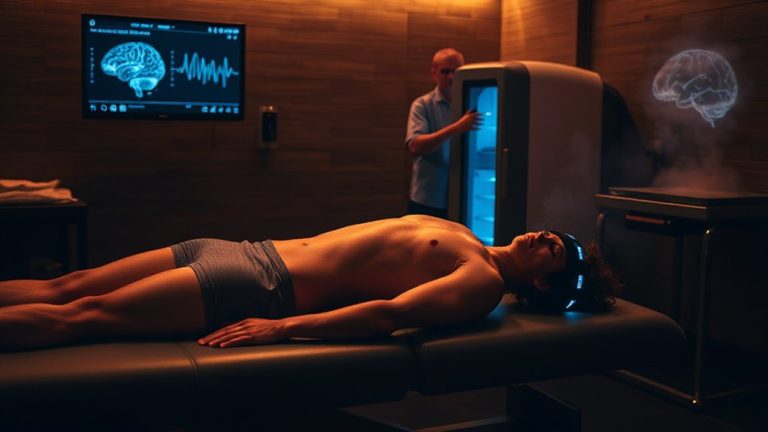
Maximizing Recovery Through Strategic Application of Low-Level Laser Therapy (LLLT)
You can speed up recovery by using low-level laser therapy (LLLT) within 24–48 hours of injury, when inflammation peaks and healing begins. Aim the device directly at the injury site-joints at the joint line, muscles along the fiber direction-with wavelengths between 800–880 nm for deep penetration. A dose of 4–10 J/cm² boosts ATP production, cuts oxidative stress, and reduces downtime. Pair LLLT with ice and compression for stronger anti-inflammatory effects. Fine-tuning timing, placement, and combo therapies activates its full repair potential. There’s more to optimizing your recovery stack with precision tools and protocols.
Notable Insights
- Apply LLLT within 24–48 hours post-injury to target peak inflammation and accelerate cellular repair.
- Use 800–880 nm wavelengths for deep tissue penetration or 600–700 nm for superficial injuries.
- Deliver 4–10 J/cm² energy density with proper power and exposure time for optimal dosing.
- Position the laser directly on the injury site, moving slowly along muscle fibers or joint lines.
- Combine LLLT with cold therapy, compression, and mobility work for synergistic recovery benefits.
How LLLT Accelerates Muscle and Tissue Recovery
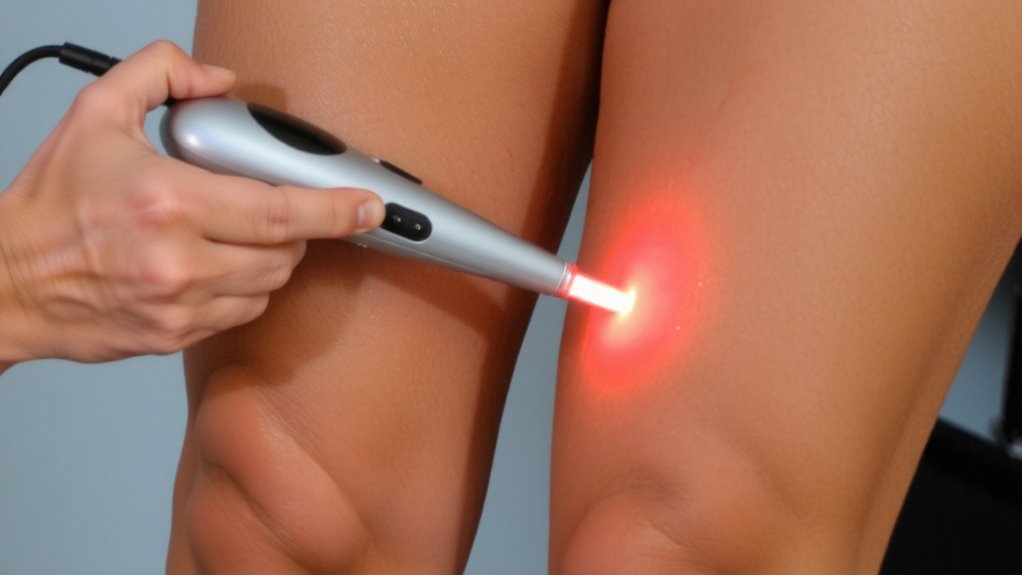
When it comes to speeding up muscle and tissue recovery, low-level laser therapy (LLLT) stands out as a non-invasive option backed by growing research. You’ll find it increases cellular repair by stimulating mitochondria, boosting ATP production so your muscles heal faster. It’s not just about energy-LLLT also supports inflammation reduction, calming swollen tissues and minimizing downtime after intense workouts. Unlike bulky recovery gear, LLLT devices are often compact and easy to use, though results depend on proper wavelength and dosage. You’re better off with units that emit red or near-infrared light between 600–900 nm, proven effective in clinical settings. While it won’t replace rest, LLLT enhances recovery when applied consistently. Fitness professionals increasingly value it not for flash, but function-making it a credible addition to smart recovery routines that prioritize science over hype.
When to Use LLLT for Fastest Healing Results
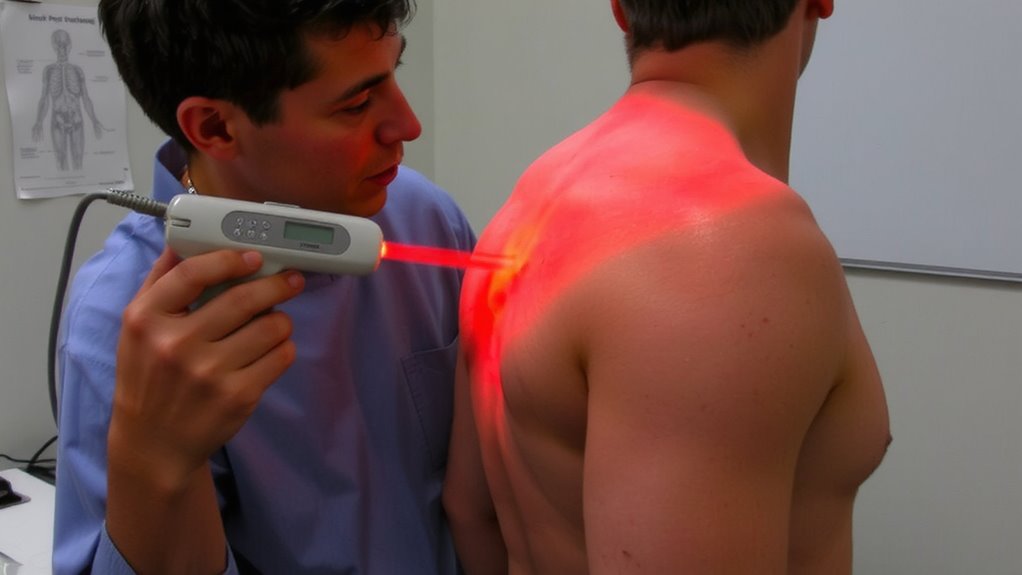
Why wait for soreness to peak before taking action? You’ll get the fastest healing results when you align LLLT with your body’s natural recovery phases. Applying treatment early-right after exercise or injury-kickstarts cellular repair, reducing downtime. Research-backed timing protocols suggest using LLLT within the first 24 to 48 hours post-injury for peak impact, when inflammation is peaking but tissue regeneration is just beginning. This early intervention supports ATP production and lowers oxidative stress, accelerating your progression through recovery. Delaying treatment often means missing the window when laser energy can most effectively modulate the inflammatory response. Whether you’re managing muscle fatigue or soft tissue damage, consistent use during acute and subacute phases improves outcomes. Top-tier LLLT devices enhance this effect with precise wavelengths and power density, making strategic application essential. Don’t just treat symptoms-optimize timing to influence healing at the cellular level.
Where and How to Apply LLLT on Injured Areas
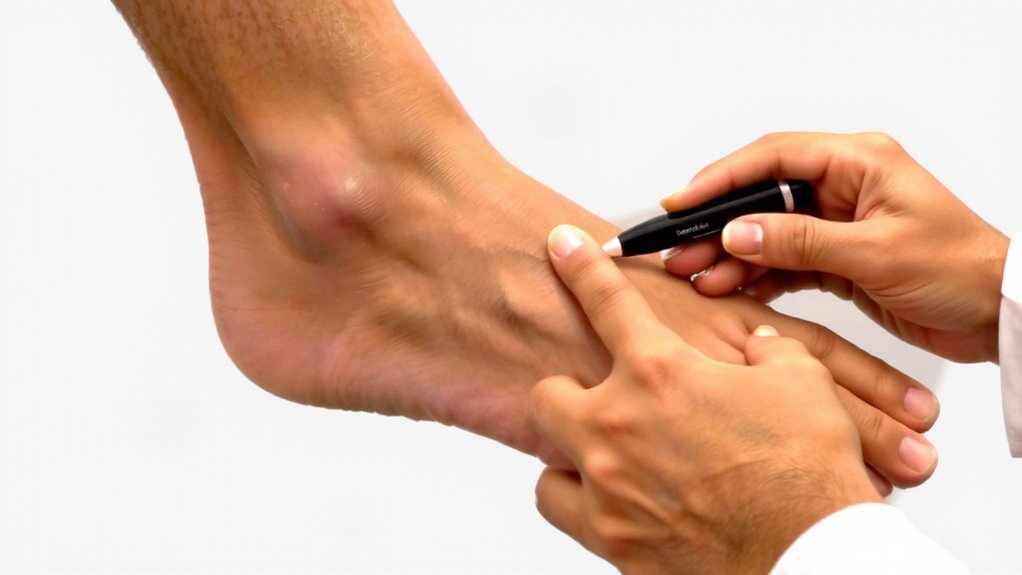
Where should you point that handheld laser device for the best recovery results? Laser positioning is essential-target the precise site of injury, ensuring the beam covers inflamed or damaged tissue without missing key areas. For joint injuries, aim directly at the joint line; for muscle strains, follow the fiber direction. Don’t neglect surrounding regions that may bear compensatory stress. Maintain treatment symmetry by applying equal exposure to both the injured side and its healthy counterpart. This supports balanced recovery and helps prevent overcompensation. Hold the device perpendicular to the skin and move it slowly in small circles or sweeps, depending on the device’s recommended protocol. Consistent, even coverage matters more than duration. Proper technique enhances cellular response, but poor placement can limit effectiveness. With thoughtful application, your LLLT device becomes a precise tool-maximizing healing where it counts.
Wavelength and Power: Optimizing LLLT Settings
A well-chosen wavelength and proper power output can make or break your LLLT results, so you’ll want to get these settings right. For deeper tissue penetration, aim for wavelengths between 800–880 nm-these reach muscles and joints more effectively than shorter ones. If you’re targeting superficial tissue, 600–700 nm works well. Power output influences treatment time and energy density; too low, and you won’t deliver enough energy, too high, and you risk diminishing returns. Most effective protocols use energy densities between 4–10 J/cm², depending on injury depth and tissue type. You’ll need to balance intensity with exposure time to achieve ideal dosing. Devices with adjustable settings give you more control, letting you tailor treatments as recovery progresses. Getting the combo of wavelength, power, and energy density right isn’t guesswork-it’s science-backed strategy.
Pairing LLLT With Ice, Compression, and Mobility Work
How can you get the most out of your LLLT sessions? Pair them strategically with ice, compression, and mobility work. Combining LLLT with cold therapy creates a powerful cold therapy synergy, reducing inflammation while boosting cellular repair. Apply ice for 15–20 minutes post-LLLT, especially after intense training, to lock in the anti-inflammatory benefits. Compression garments further enhance recovery by improving circulation and minimizing swelling. Then, incorporate dynamic movement pairing-gentle, controlled mobility drills that reactivate stiff tissues without strain. This combo not only speeds recovery but also primes your body for the next session. Unlike passive recovery, this integrative approach leverages each modality’s strengths: LLLT penetrates deep, cold therapy calms surface inflammation, and mobility work restores range of motion. Used together, they offer a smarter, more efficient recovery strategy for serious fitness enthusiasts.
On a final note
You’ll find LLLT most effective when applied shortly after exercise or injury, targeting muscles with precise wavelengths-typically 600–900 nm-for ideal cellular absorption. Used alongside compression and mobility work, it reduces inflammation faster than passive recovery. Devices with 5–500 mW output offer reliable penetration without overheating tissue. Proper technique matters: direct contact, slow movement, and consistent sessions yield measurable improvements in recovery speed and tissue healing.