Maximizing Recovery Through Strategic Application of Active Isolated Stretching (AIS)
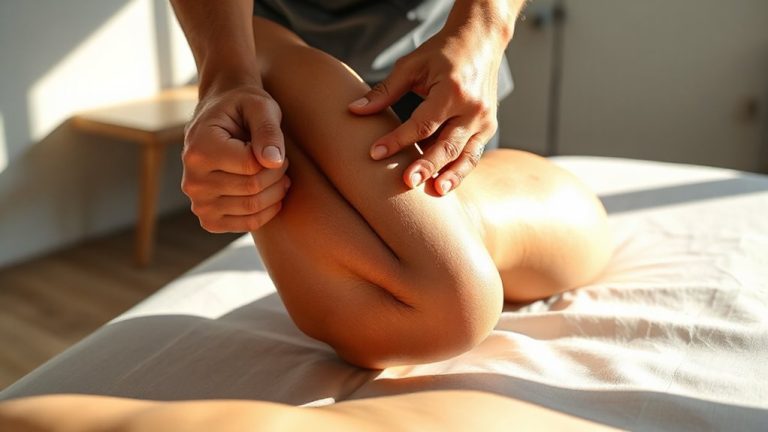
You can speed up recovery by using Active Isolated Stretching (AIS) right after workouts, when your muscles are warm and blood flow is high. Hold each stretch for just 2 seconds, repeating 8–10 times to boost circulation without triggering protective tension. This short-duration stretching enhances oxygen delivery, reduces stiffness, and supports fascial release. Avoid overstretching or breath-holding, as these disrupt recovery. Doing AIS correctly optimizes neuromuscular repair-there’s more to discover about refining your routine for long-term gains.
Notable Insights
- Perform AIS within 5 to 10 minutes post-workout to leverage peak blood flow and muscle temperature.
- Hold each stretch for only 2 seconds to prevent triggering protective reflexes and maintain optimal muscle response.
- Repeat each movement 8–10 times with mild tension to boost circulation without overloading recovering tissues.
- Focus on controlled breathing-exhale during the stretch, inhale during release-to enhance oxygenation and reduce stress.
- Avoid common errors like overstretching, breath-holding, or prolonged holds to ensure effective neuromuscular recovery.
How Does AIS Speed Up Muscle Recovery?
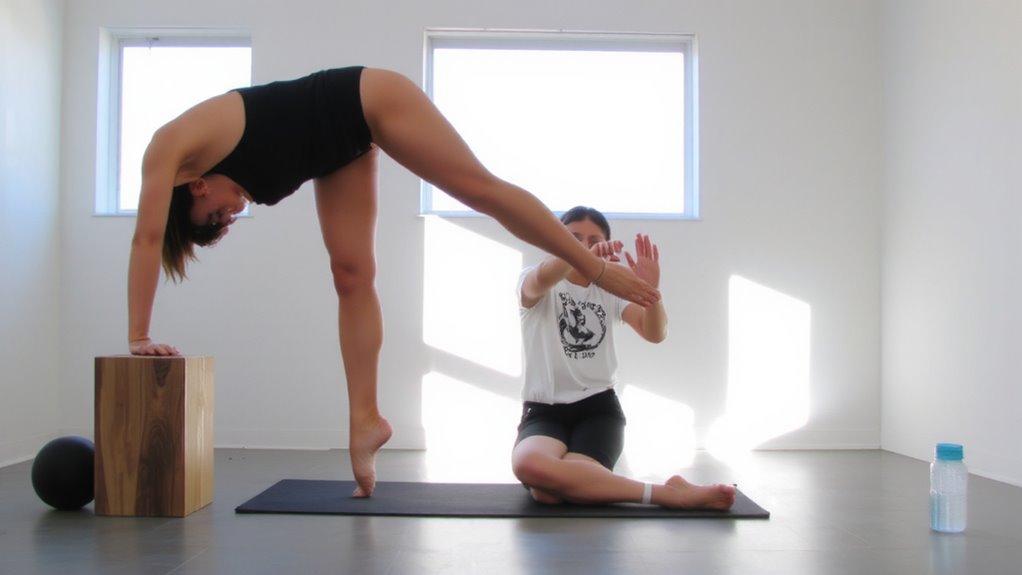
While traditional recovery methods often emphasize rest or passive stretching, Active Isolated Stretching (AIS) actively engages your muscles to accelerate recovery by improving circulation and reducing tension. You perform short, controlled movements that enhance muscle oxygenation, delivering essential nutrients while flushing out metabolic waste. Each 2-second stretch prevents protective reflexes, letting you go deeper safely. AIS also promotes fascial release, helping restore mobility between tissue layers often restricted after intense workouts. This method isn’t just about flexibility-it refines neuromuscular communication, supporting quicker repair. Compared to static stretching or recovery tools like foam rollers, AIS offers more targeted results, especially when combined with proper fitness gear like supportive footwear and breathable apparel. Though it demands attention to form, the return on investment is clear: reduced soreness, better range of motion, and sustained performance. It’s a practical upgrade to standard recovery routines. Incorporating tools like best recovery bands can further enhance the effectiveness of AIS by providing controlled resistance and support during stretching exercises.
When to Use AIS for Post-Workout Recovery
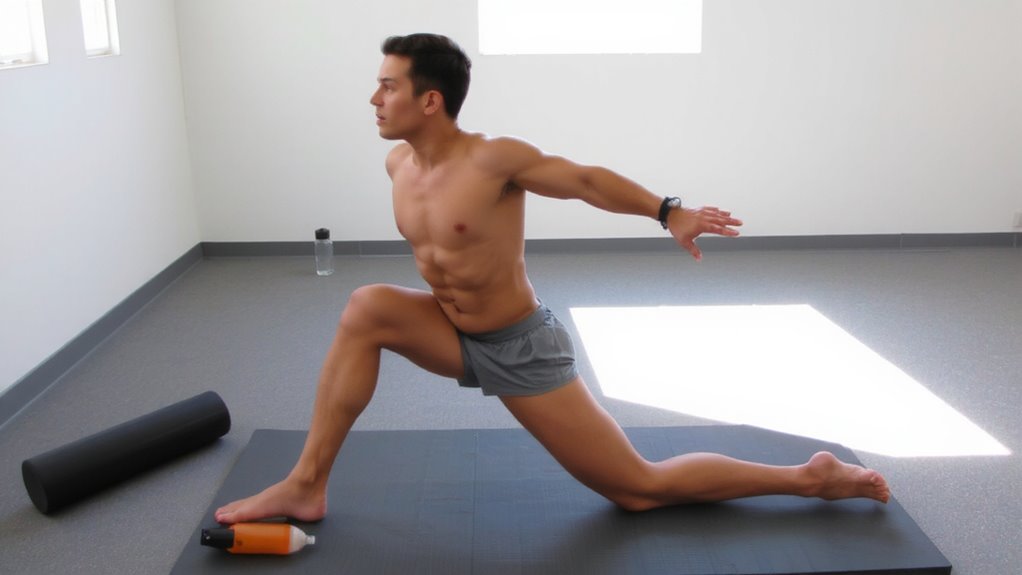
Because your muscles are most pliable right after exercise, initiating Active Isolated Stretching (AIS) within 5 to 10 minutes post-workout capitalizes on elevated blood flow and core temperature, making it an efficient strategy to kickstart recovery. Proper timing considerations guarantee you stay within the ideal recovery window, enhancing circulation and reducing stiffness. Skipping this window may delay repair and increase soreness.
| Feeling | With AIS Timing |
|---|---|
| Stiffness | Sharply reduced |
| Energy | Renewed, not drained |
| Mobility | Noticeably improved |
| Recovery | Faster, more complete |
Integrating AIS immediately after training supports long-term joint and muscle health. Unlike passive stretching, AIS promotes active engagement, aligning with modern recovery science. Delaying beyond the peak recovery window diminishes its effectiveness, so act promptly. Fitness gear like resistance bands can aid execution, but consistency matters more than equipment.
Best AIS Techniques for Faster Healing
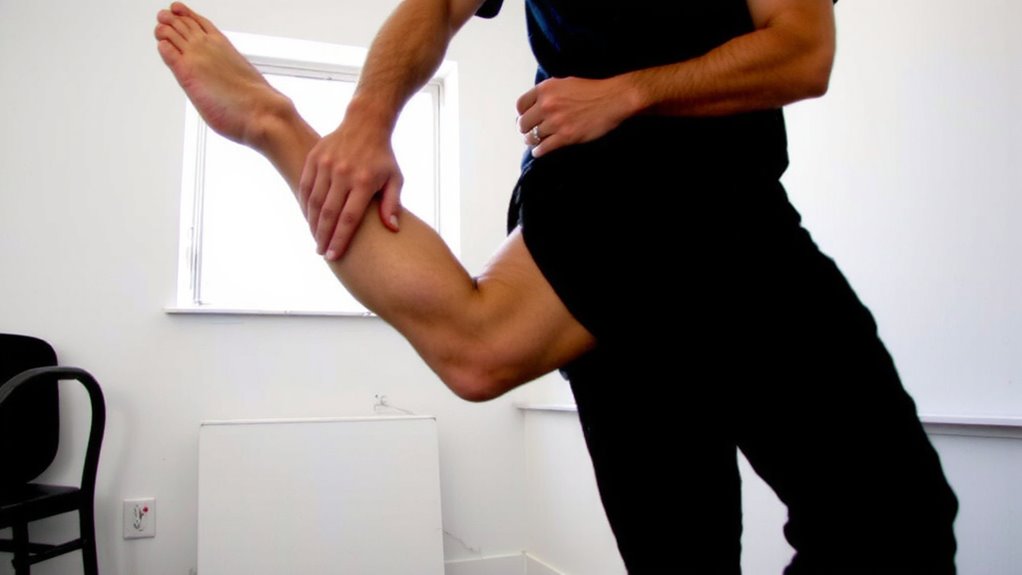
How do you guarantee your AIS routine actually accelerates healing instead of just going through the motions? Focus on proper timing and ideal intensity-two pillars of effective recovery. You’re not just stretching; you’re signaling your body to repair. Hold each stretch for no more than two seconds to avoid triggering the stretch reflex, allowing safer, deeper elongation. Repeat each movement 8–10 times, promoting blood flow without overloading tissues. Apply ideal intensity by stretching only to the point of mild tension-never pain. This precision prevents setbacks and supports consistent progress. Proper timing means performing AIS when your muscles are warm, ideally post-workout or after light cardio. This synchronization boosts circulation and nutrient delivery. Combined, these techniques enhance elasticity, reduce scar tissue, and speed up recovery. You’ll notice quicker mobility gains and fewer lingering aches, proving that smarter execution beats sheer effort every time. Using the right tools can amplify these benefits, and incorporating a dedicated stretching strap ensures consistent, controlled repetitions with proper form.
5 AIS Stretches for Recovery and Flexibility
When done right, active isolated stretching doesn’t just improve flexibility-it actively supports recovery by targeting connective tissues with precision. You engage each muscle group through controlled movements, pairing each stretch with deliberate breathing control to enhance oxygen flow and reduce tension. Joint mobilization is key, as gentle, repetitive motions maintain synovial fluid circulation, keeping joints supple during recovery phases. Unlike static methods, AIS promotes dynamic lengthening, making it ideal for rehab and long-term flexibility. Consistency matters, especially when integrating supportive fitness gear like resistance bands or alignment props to refine technique.
| Stretch Focus | Recovery Benefit |
|---|---|
| Hamstring Pull | Enhances pelvic alignment |
| Shoulder Circles | Boosts joint mobilization |
| Hip Flexor Lift | Reduces lower back strain |
| Calf Raise & Hold | Improves circulation and breathing control |
Common AIS Mistakes That Slow Recovery
Frequently, people undermine the effectiveness of Active Isolated Stretching without realizing it, often due to subtle errors in form or timing that diminish recovery benefits. You might be overstretching muscles, thinking more tension equals faster results, but this triggers protective tension, slowing recovery instead of aiding it. AIS relies on gentle, controlled movements-holding stretches beyond two seconds or forcing range disrupts this. Improper breathing is another common fault; holding your breath elevates stress hormones and limits oxygen flow, counteracting the regenerative goals of your session. You should inhale during relaxation and exhale with each stretch to support nervous system balance. Skipping proper form or rushing repetitions reduces neuromuscular feedback, weakening the technique’s precision. Even with high-quality fitness gear designed to assist flexibility, these mistakes reduce performance gains. Correcting these issues enhances circulation, joint mobility, and soft tissue repair-critical for efficient recovery. Using a stretching strap can improve alignment and control during AIS exercises.
On a final note
You’ll recover faster with Active Isolated Stretching (AIS) when you apply it consistently and correctly. Used within 15–30 minutes post-workout, AIS boosts circulation and reduces muscle tension, supporting quicker tissue repair. Performing each stretch for 2 seconds, 8–10 reps, enhances flexibility without overextending. Pairing AIS with quality recovery gear-like foam rollers or compression wear-adds measurable benefit. Avoid bouncing or holding too long-precision matters most.