Thoracic Ring Rotation Drills to Unlock Segmental Mobility in Desk-Bound Athletes
You lose thoracic ring mobility with every hour spent seated, and without targeted rotation drills, your spine compensates by overloading your hips and shoulders. Effective segmental movement requires controlled, ring-by-ring articulation-foam rollers help, but aren’t enough alone. Supine, quadruped, and standing rotations restore true mobility when performed with proper rib control and breathing. Master these, and you’ll access better posture, performance, and spinal resilience; there’s a smarter way to rebuild what sitting destroys.
Notable Insights
- Prolonged sitting restricts thoracic ring mobility, leading to stiffness and compensatory movement patterns.
- Supine thoracic rotations restore segmental mobility by promoting controlled vertebrae articulation with minimal compensation.
- Quadruped rotations integrate scapular stability and mid-back mobility, enhancing neuromuscular control in functional positions.
- Standing oblique reaches combine breathing with movement to retrain alignment and improve rotational symmetry.
- Maintaining ribcage control and spinal neutrality during drills ensures targeted thoracic engagement and prevents lumbar substitution.
Why Thoracic Rotation Matters for Desk-Bound Athletes
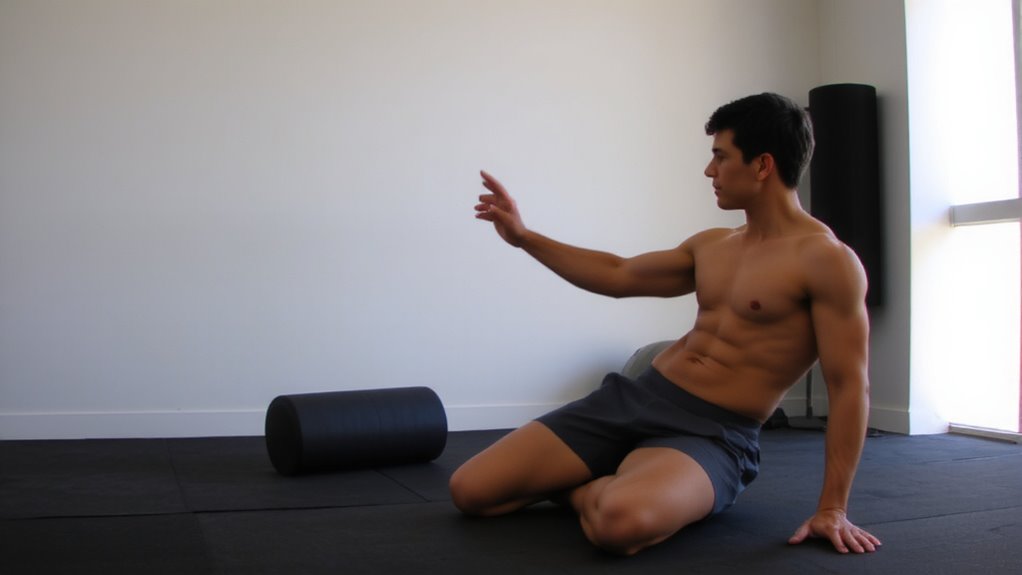
While sitting all day might seem harmless, it’s actually sabotaging your athletic performance-especially when it comes to thoracic rotation. You lose essential segmental mobility, leading to compromised spinal alignment and poor muscle balance. This stiffness forces your lumbar spine or shoulders to compensate during rotation, increasing injury risk. For desk-bound athletes, maintaining thoracic mobility isn’t just beneficial-it’s essential. Proper rotation supports efficient movement in sports, lifting, and even daily function. Without it, your body can’t generate or transfer force effectively. Fitness recovery tools like foam rollers or mobility bands help, but they’re not enough if you ignore segmental control. A well-designed mobility routine restores motion and enhances neuromuscular coordination. Prioritizing thoracic rotation improves posture, boosts performance, and reduces wear on joints. It’s not about flexibility alone-it’s about control, alignment, and balanced strength across your core’s rotational system.
How Sitting Destroys Thoracic Ring Mobility

Posture shapes performance, and your chair is working against you. Sitting for hours collapses your thoracic rings into flexion, stacking vertebrae unevenly and promoting spinal stiffness. Each hour spent hunched taxes your postural muscles, leading to postural fatigue that dulls neuromuscular control. Your ribcage sinks onto your pelvis, restricting rib-vertebral joint glide essential for rotation. As your mid-back stiffens, breathing efficiency drops and neck strain creeps in. This isn’t just discomfort-it’s a mechanical downgrade. The sustained flexion remodels connective tissues, reinforcing immobility. Even if you train hard, that sitting posture undermines segmental thoracic control. Without intervention, stiffness becomes default, movement becomes compensatory, and performance plateaus. You’re not weak-you’re restricted. The chair didn’t just slow you down; it rewired your baseline alignment, making rotation a challenge, not a reflex.
3 Best Thoracic Ring Rotation Drills
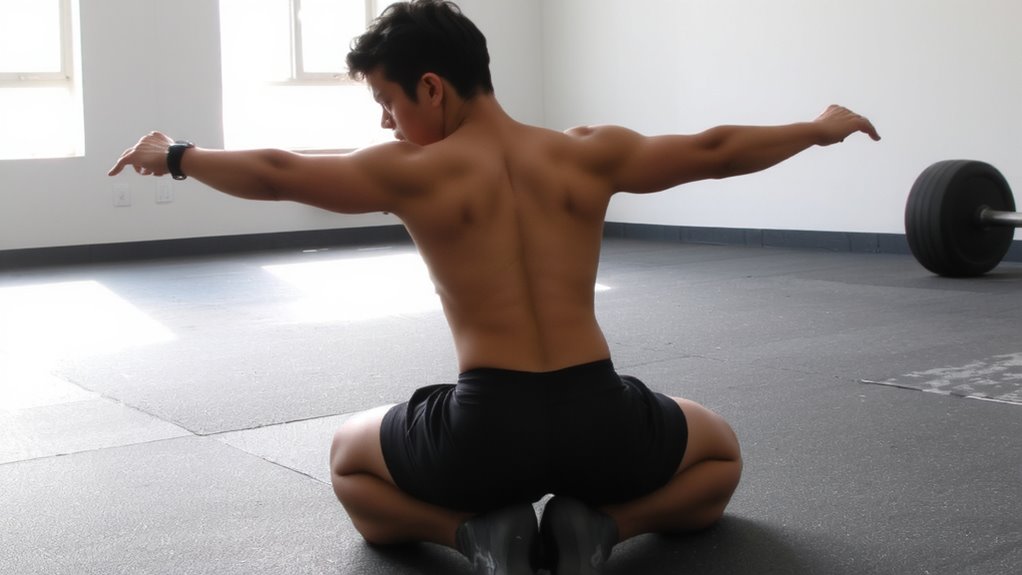
You’ve felt the stiffness set in after hours of sitting, and you know thoracic mobility isn’t something you can just power through with brute strength. Instead, targeted drills restore segmental motion and promote spinal symmetry. The supine thoracic rotation is one of the best starters-lying on your back with knees bent, you rotate your arms side to side, feeling controlled joint articulation across each vertebra. Add the quadruped thoracic rotation to engage scapular stability while enhancing mid-back rotation. For more advanced mobility, try the standing oblique reach: it integrates breathing with movement, encouraging alignment and symmetry. These drills aren’t just about flexibility-they retrain neuromuscular control, ensuring each segment contributes. Consistent use improves posture, reduces compensatory patterns, and supports better performance in lifts and sprints. Equipment isn’t necessary, though foam pads or mobility benches can enhance comfort and range.
How to Nail the Technique on Every Rep
Consistency in movement quality separates effective thoracic rotation drills from mere motion. You must maintain spinal alignment and maximize joint articulation with every rep to truly access segmental mobility. Focus on controlled rotation from the mid-back, not the neck or lumbar spine. Engage your core, set your rib cage, and move with intent.
| Phase | Key Cue | Common Fault |
|---|---|---|
| Setup | Ribs down, chin slightly tucked | Flared ribs, forward head |
| Initiation | Anchor bottom hand | Shoulder hiking |
| Rotation | Rotate through thoracic spine | Compensating at hips |
| Return | Control via obliques | Collapsing into rotation |
This technique guarantees precision, enhancing both drill effectiveness and long-term joint articulation. You’ll notice improved spinal alignment and reduced stiffness over time-especially essential for desk-bound athletes craving mobility without strain.
Fit These Rotations Into Your Daily Routine
Regularly incorporating thoracic ring rotation drills into your day can make a meaningful difference in mobility and postural resilience, especially if you spend long hours seated. You don’t need lengthy sessions-just short bursts work. Try using desk breaks to slip in a set of 8–10 controlled reps per side. These movement snacks add up, retraining your spine’s segmental control without disrupting workflow. Performing them every few hours combats stiffness and resets alignment, especially after intense training or prolonged sitting. The drills require minimal space and no equipment, making them ideal for office or gym locker rooms. While specialized fitness gear like mobility rings or foam rollers can enhance recovery, they’re unnecessary here-your body and breath are the real tools. Consistency matters more than intensity. Done right, these rotations integrate seamlessly into your routine, supporting long-term spinal health and movement efficiency without fanfare or extra time.
Fix These Common Thoracic Drilling Mistakes
Just because thoracic ring rotations are simple doesn’t mean they’re immune to misuse-poor form can turn a corrective drill into a compensation pattern. Spinal misalignment often goes unnoticed when you’re focused solely on range, but it undermines the goal of segmental control. Muscle imbalances can also hijack movement, especially if one side rotates farther than the other. Avoid these pitfalls with mindful execution.
| Mistake | Fix |
|---|---|
| Flaring ribs | Keep ribcage down to engage core |
| Leading with head | Initiate rotation from mid-back |
| Holding breath | Breathe smoothly (prepares next segment) |
| Uneven rotation | Match range side-to-side |
| Arching low back | Brace abs to prevent lumbar dominance |
Track your form weekly. Small tweaks combat spinal misalignment and correct muscle imbalances, ensuring the drill enhances mobility instead of reinforcing dysfunction. Consistency with precision beats aggressive reps every time.
Why Breathing Boosts Your Rotation Quality
How often do you consider what your breath is doing during a thoracic rotation? Not much, probably-but it’s key to accessing quality movement. Your breath isn’t just rhythm; it drives diaphragmatic engagement, which creates intra-abdominal pressure to stabilize the lumbar spine. This allows your thoracic segments to rotate freely without compensation. When you inhale deeply into the back and sides of your rib cage, you prime the thoracic ring for mobility. On the exhale, you promote spinal unwinding-releasing stiffness between vertebrae for smoother, more controlled motion. Without this breath-movement coupling, your drills lose effectiveness, limiting segmental gains. Desk-bound athletes especially benefit, as sedentary postures dull respiratory mechanics. Prioritizing breath in rotation re-sequences neuromuscular patterns, turning passive motion into active, functional mobility. It’s not just about moving more-it’s about moving better.
On a final note
You’ve learned these drills boost spinal mobility, counteract sitting’s toll, and enhance athletic performance. When done right, thoracic ring rotations improve segmental control and breathing mechanics. Pair them with recovery gear like foam rollers or massage balls to maintain gains. Consistency matters more than intensity-daily minutes beat weekly bursts. Smart technique and breath integration separate effective practice from wasted effort. These moves aren’t flashy, but they deliver measurable functional returns.