Maximizing Recovery Through Strategic Application of Contrast Water Immersion
You’re using contrast water immersion wrong if you treat it as a daily cooldown. It’s a strategic tool-use it 2–4 times weekly post-training, with 3 minutes cold (10–15°C) and 1 minute hot (38–42°C), to boost circulation and clear metabolic waste. This method reduces inflammation and accelerates recovery, especially for endurance athletes. Avoid daily use and extreme temps to prevent tissue stress-timing and consistency matter. Optimize with hydration, sleep, and clean equipment, and you’ll see real gains in readiness and performance. There’s more to fine-tuning this protocol than most realize.
Notable Insights
- Use a 3:1 ratio of cold to hot water immersion for optimal circulation and recovery benefits.
- Schedule contrast water immersion 2–4 times weekly, primarily after intense training sessions.
- Maintain water temperatures between 10–15°C (cold) and 38–42°C (hot) for safety and effectiveness.
- Time sessions within 1–2 hours post-exercise to enhance blood flow and metabolic waste removal.
- Avoid daily use, especially in strength athletes, to prevent interference with muscle adaptation.
What Is Contrast Water Immersion and How Does It Work?
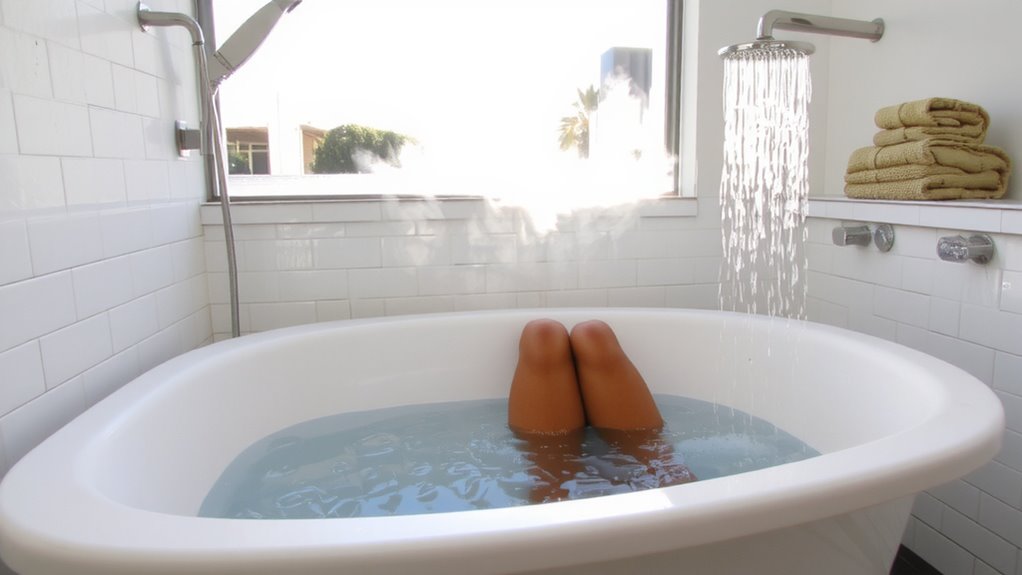
Why do so many athletes turn to alternating hot and cold water to speed up recovery? You’re likely exploring contrast water immersion (CWI) for its reputed benefits. This method involves moving between hot and cold water baths, typically in cycles of one to three minutes. Its historical origins trace back to ancient Roman and Greek bathing traditions, where temperature shifts were believed to invigorate the body. Today, the physiological mechanisms behind CWI are better understood-vasoconstriction and vasodilation help flush metabolic waste and reduce inflammation. Though research is mixed, many fitness enthusiasts and professionals still use it because it feels effective. The gear needed-tubs, temperature controls, timers-is accessible and low-tech, making it practical for home or gym use. While not a miracle solution, CWI remains a popular tool in recovery protocols.
How Contrast Therapy Boosts Recovery and Performance
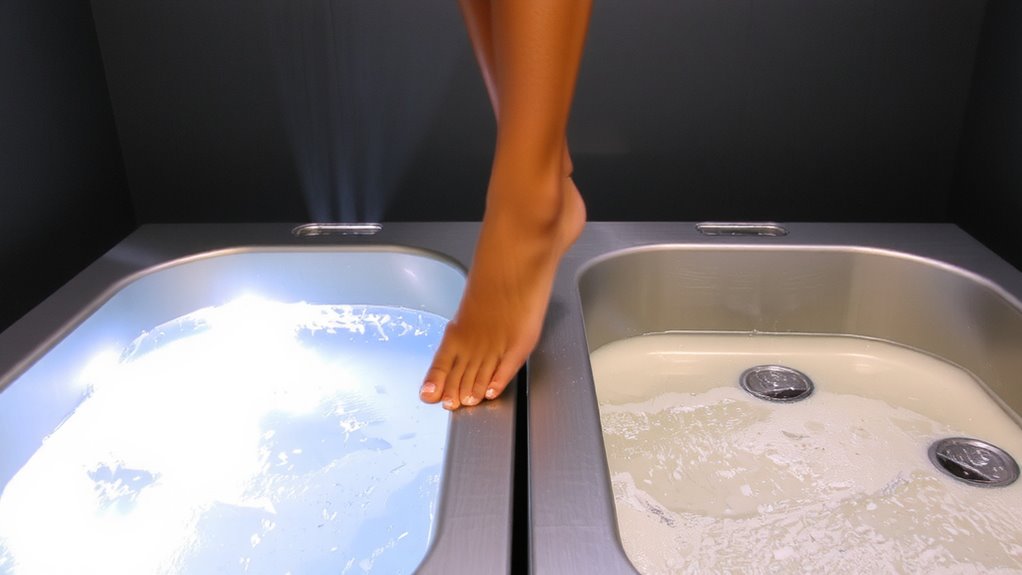
While you might not see dramatic gains overnight, contrast water immersion can meaningfully accelerate recovery by leveraging the body’s natural circulatory responses. Alternating hot and cold water exposure promotes improved circulation, helping flush metabolic waste and deliver oxygen-rich blood to fatigued tissues. You’ll also experience reduced inflammation, which supports faster muscle repair and less soreness. This isn’t just theory-many athletes report better readiness for subsequent training sessions. The right fitness gear, like insulated tubs and digital thermometers, guarantees precise temperature control for consistent results. For those seeking enhanced recovery, incorporating top muscle recovery devices can complement contrast therapy and further optimize performance outcomes.
How to Build a CWI Recovery Plan
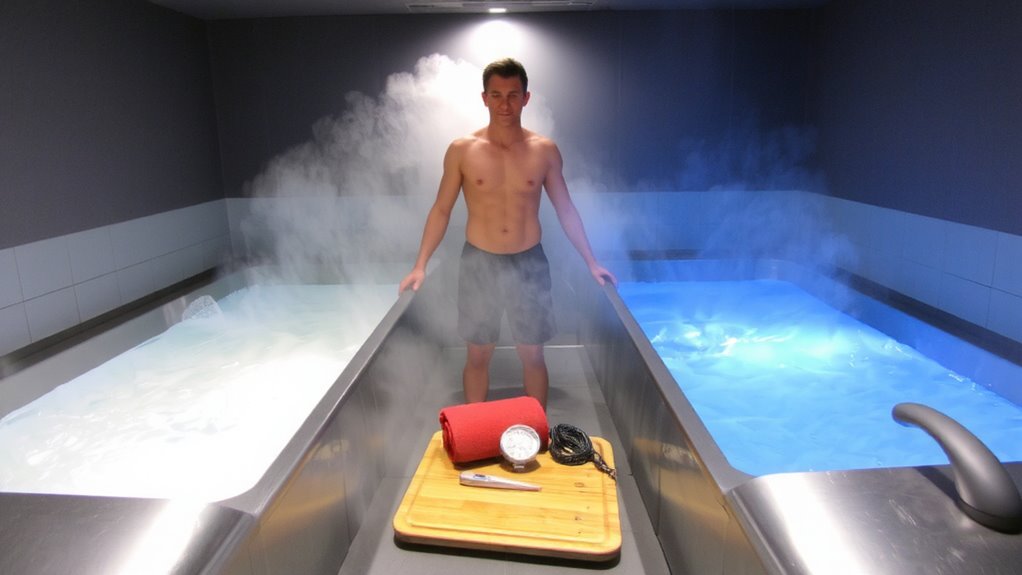
You’ve seen how alternating hot and cold water exposure enhances circulation, reduces inflammation, and speeds up recovery between training sessions. Now it’s time to build your CWI recovery plan. Start by scheduling sessions 2–4 times weekly, post-training, to maximize physiological benefits. Use a 3:1 cold-to-hot ratio-three minutes cold, one minute hot-for 15–20 minutes total. Consistency matters, so integrate workouts, immersion, Hydration protocols, and nutrition strategically. Prioritize clean water systems and well-maintained tubs to prevent contamination and guarantee temperature accuracy. Don’t overlook recovery’s foundation-sleep integration amplifies CWI’s effects. Aim for 7–9 hours nightly, aligning immersion timing with your sleep cycle for peak parasympathetic activation. Pair CWI with foam rolling and mobility work to enhance tissue response. The right foam roller density can improve myofascial release and complement contrast therapy. Track performance markers like soreness and readiness scores to evaluate effectiveness. A well-structured CWI plan isn’t just about immersion-it’s a system combining gear, timing, and recovery pillars to boost long-term fitness resilience.
How Hot and Cold Timing Affects Results?
How long you stay in hot versus cold water isn’t just routine-it’s a key factor shaping your recovery. The immersion duration and temperature cycles you choose directly influence blood flow, inflammation control, and muscle repair. Too short, and you won’t trigger enough physiological response; too long, and you risk tissue stress or diminished returns. Most research supports alternating 1-3 minutes in each bath to balance effectiveness and safety. Strategic timing amplifies the “pumping” effect-vasodilation during heat, followed by vasoconstriction in cold-boosting metabolic waste removal. Below is a breakdown of common protocols:
| Cycle | Hot (°C) | Cold (°C) | Immersion Duration (min) |
|---|---|---|---|
| 1 | 38–40 | 10–15 | 3 hot / 1 cold |
| 2 | 38–40 | 10–15 | 2 hot / 2 cold |
| 3 | 38–40 | 10–15 | 1 hot / 3 cold |
Adjust based on your tolerance and recovery goals.
When Should You Use Contrast Therapy?
When should you actually use contrast therapy, and how do you know if it’s the right recovery tool for your situation? You’ll want to apply it during periods of intense training or after high-effort sessions where muscle soreness and inflammation are likely. The ideal timing is typically within one to two hours post-exercise, when blood flow and metabolic clearance can be maximized. Contrast water immersion supports injury prevention by enhancing circulation and reducing muscle stiffness, making it especially useful during taper weeks or before competitions. It’s not just for elite athletes-anyone using fitness gear like compression tools or recovery boots can integrate contrast therapy to amplify results. But effectiveness depends on consistency and proper scheduling. Use it strategically, not daily, to avoid adaptation fatigue. With thoughtful application, it becomes a powerful component of a smart recovery plan, helping maintain performance while lowering injury risk over time. Pairing contrast therapy with best compression boots can further optimize recovery by combining hydrostatic pressure with sequential pneumatic compression.
Avoid These Common CWI Mistakes
Many athletes and fitness enthusiasts already incorporate contrast water immersion (CWI) into their recovery routines, especially after demanding workouts or during intense training blocks. But watch out-improper temperature control can undermine your efforts. Water that’s too hot or too cold increases injury risk and may amplify inflammation instead of reducing it. Stick to recommended ranges: around 10–15°C for cold and 38–42°C for warm. Timing matters, too; cycling too quickly or staying too long disrupts physiological benefits. You also can’t ignore inadequate hydration levels-CWI stresses your cardiovascular system, and dehydration worsens that strain. Always hydrate before and after. Poorly maintained gear, like unclean immersion tubs or malfunctioning temperature controls, compromises results and hygiene. Consistency matters, but so does precision. Avoid these missteps, and CWI becomes a reliable recovery tool-efficient, science-backed, and far more effective when applied correctly and safely.
CWI for Endurance vs. Strength Athletes
Why do endurance athletes seem to benefit more from contrast water immersion than strength trainers, despite using the same recovery gear and protocols? It boils down to how each group’s body responds physiologically. Endurance athletes rely on aerobic capacity and rapid metabolic response, making CWI effective for clearing lactate and reducing inflammation. Strength athletes, focused on muscle adaptation for power and hypertrophy, may find frequent CWI blunts key anabolic pathways.
| Factor | Endurance Athletes | Strength Athletes |
|---|---|---|
| Primary Goal | Recovery speed | Muscle growth |
| Metabolic Response | Enhanced clearance | Minimally improved |
| Muscle Adaptation | Supports capillary density | May inhibit hypertrophy |
| Inflammation | Reduced beneficially | Potentially over-suppressed |
| CWI Frequency | Ideal daily | Limited to 2–3x/week |
Strategic timing enhances benefits-align immersion with training demands.
On a final note
You’ll find contrast water immersion effective when applied strategically. Alternating hot and cold exposures boosts circulation, reduces inflammation, and speeds recovery. Timing matters-shorter cold phases (1–3 min) followed by longer heat (3–4 min) yield ideal results. Used correctly, CWI enhances performance, especially post-exercise. Avoid overuse and improper temps, and tailor protocols to your training type-endurance or strength-for best outcomes.