Using Resisted Bear Crawls to Improve Neuromuscular Coordination and Core Bracing
You’re building better neuromuscular coordination and core bracing every time you perform resisted bear crawls. The added load from bands or vests increases muscle fiber recruitment, sharpening joint control and movement precision. Your stabilizers fire more efficiently, enhancing anti-rotation strength and dynamic balance. Proper form keeps your spine neutral and core engaged, translating gains into real-world movement. You’ll notice improvements in both athletic performance and everyday function-and there’s more to uncover about optimizing this drill.
Notable Insights
- Resistance during bear crawls enhances neuromuscular coordination by improving motor unit recruitment and inter-segmental timing.
- Added load increases proprioceptive feedback, refining joint position sense and dynamic balance.
- Core bracing is amplified under resistance, strengthening anti-rotation stability and lumbo-pelvic control.
- Coordinated limb movements with resistance improve neural drive and movement efficiency.
- Scalable resistance via bands or vests allows progressive overload for long-term neuromuscular adaptation.
Why Resisted Bear Crawls Improve Functional Mobility
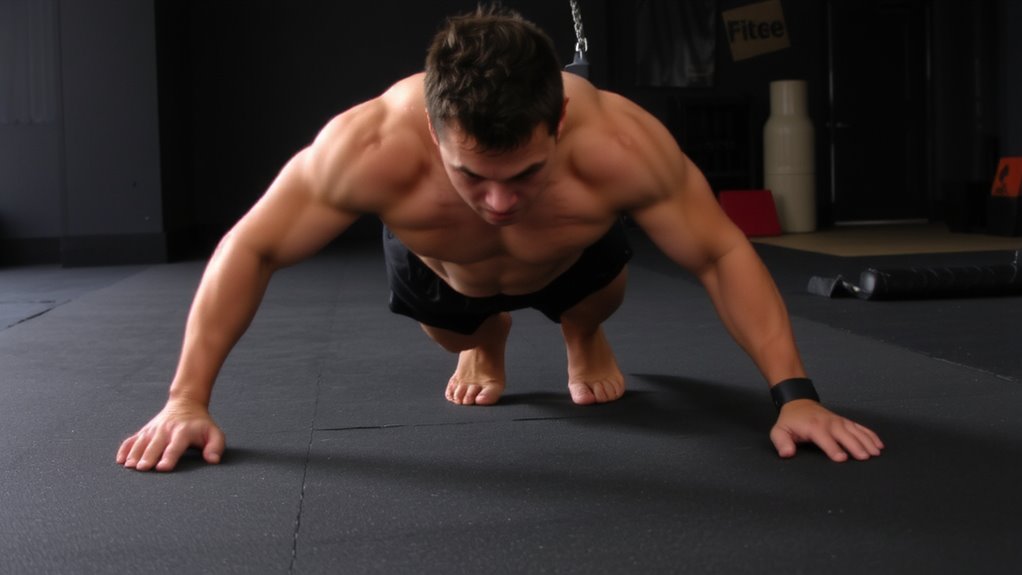
While most people overlook the role of resistance in foundational movement patterns, adding external load to bear crawls actually amplifies their impact on functional mobility. You engage more muscle fibers, forcing your body to adapt under tension, which strengthens joint stability across wrists, shoulders, and hips. This isn’t just about brute strength-it’s about control. The added resistance challenges muscle symmetry, reducing imbalances that often lead to faulty movement. Without even realizing it, you’re training your body to move more efficiently in daily life and sport. Equipment like resistance bands or weighted vests makes this possible, offering scalable load options that suit various fitness levels. High-quality gear distributes weight evenly, minimizing strain while maximizing benefit. Poorly designed tools, though, can throw off alignment, negating gains. When done right, resisted bear crawls become a functional powerhouse-building stability, balance, and body awareness where it counts most.
How Resistance Sharpens Neuromuscular Control
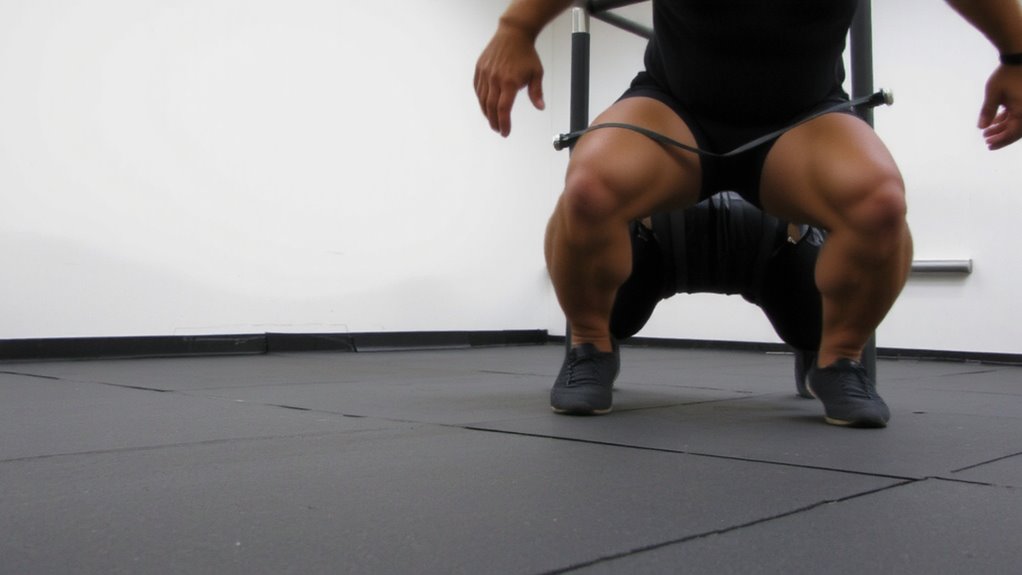
Because your nervous system constantly communicates with your muscles to coordinate movement, adding resistance to bear crawls forces that connection to become faster and more precise. You’re enhancing motor learning by demanding your body adapt to load, sharpening the neural pathways responsible for smooth, efficient motion. The added tension increases proprioceptive feedback, meaning your joints and muscles send richer data to your brain about position and effort. This heightened awareness helps refine control during dynamic movements, making coordination more reliable under stress. Resisted bear crawls challenge stabilizing muscles in ways free-body versions can’t, promoting neuromuscular efficiency. You’re not just building strength-you’re training your nervous system to respond with better timing and accuracy. Consistent use of resistance bands or weighted vests adds progressive overload, essential for long-term improvement. When recovery follows smart programming, gear like foam rollers and compression tools support sustained performance gains without overtraining. Choosing the right best foam rollers can enhance recovery by improving myofascial release and circulation.
How to Maintain Proper Form and Core Bracing
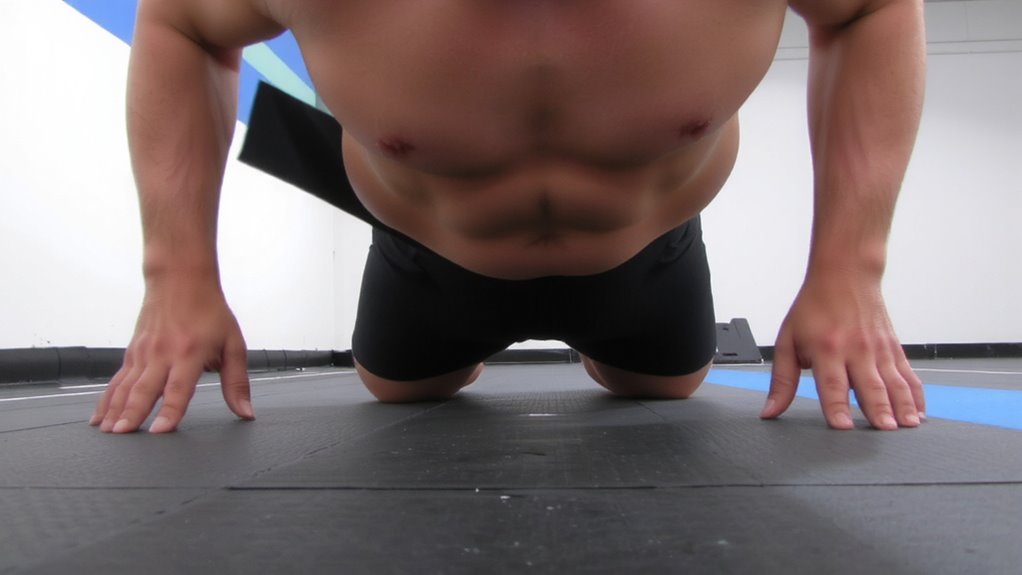
With your torso parallel to the floor and hands directly under shoulders, maintaining proper form during resisted bear crawls starts by engaging your core like you’re bracing for a light punch to the gut-tight but not rigid. Proper alignment means keeping hips level, spine neutral, and knees slightly bent, avoiding sagging or hunching. Your gaze stays a few feet ahead, not down, to reduce neck strain. As you move forward, coordinate limbs deliberately-left hand and right knee advance together, then switch-preserving balance and control. Use a steady breathing technique: inhale through the nose during setup, exhale during each step to reinforce core bracing. This rhythmic breath prevents stiffness and supports intra-abdominal pressure. Consistent form maximizes neuromuscular engagement while reducing injury risk. Over time, these small corrections improve stability, coordination, and functional strength, making each repetition more effective than the last. Recovery footwear such as best recovery slides can further enhance post-workout neuromuscular recovery by supporting foot and arch alignment.
Top Resistance Tools for Bear Crawls
You’ve mastered the alignment and breathing patterns that keep your bear crawl efficient and safe, so now it’s time to explore how resistance tools can elevate the movement’s neuromuscular challenge. Resistance bands are among the top choices, especially loop and tube varieties-different band types offer varying tension levels to match your strength. Loop bands stay in place well around limbs, while tube bands with handles allow easier attachment to anchor points like racks or poles. Properly secured anchor points guarantee consistent resistance without slippage, which is essential for maintaining control. Some athletes prefer sleds, but they demand significant space and floor durability. Bands, on the other hand, are portable, affordable, and adaptable. For best results, pair moderate tension with full-range crawling patterns. Quality matters-opt for latex-free or reinforced bands to avoid snapping. With smart selection, you’ll enhance core activation and coordination without compromising form.
Most Frequent Resisted Bear Crawl Mistakes
While resistance can sharpen neuromuscular engagement in bear crawls, it also amplifies the consequences of poor technique, and common mistakes often undermine both safety and effectiveness. You’ll frequently see improper breathing patterns, which disrupt core bracing and reduce endurance. Uneven limb loading throws off coordination, increasing joint stress and limiting motor control gains. Maintaining a neutral spine and rhythmic breath is critical under resistance.
| Mistake | Effect on Performance | Fix |
|---|---|---|
| Rounded back | Reduced core activation | Engage abs, brace spine |
| Improper breathing patterns | Decreased stamina | Sync breath with movement |
| Uneven limb loading | Poor neuromuscular feedback | Focus on symmetrical steps |
| Sagging hips | Lower back strain | Lift pelvis, stay tight |
How to Program Resisted Bear Crawls Into Workouts
Because resisted bear crawls demand both neuromuscular precision and sustained core engagement, integrating them effectively into your workout routine hinges on matching resistance load and volume to your current fitness capacity. Proper load selection is essential-too heavy compromises form, too light limits adaptation. Start with lighter resistance bands or a modest sled load, focusing on controlled, rhythmic movement. Use programming variations like timed sets (20–30 seconds), distance-based intervals (10–20 meters), or integrate them into circuits targeting strength or conditioning. These variations help avoid fatigue-related breakdown while reinforcing motor control. Perform 2–3 sets 2–3 times weekly, allowing rest days for neuromuscular recovery. Quality trumps quantity here: clean execution builds resilience without overstressing joints. Monitor performance-if your torso wobbles or pace stutters, reduce load or volume. Consistent, well-structured implementation enhances coordination and bracing with minimal gear wear or injury risk.
Advanced Progressions for Resisted Bear Crawls
Once you’ve built consistent neuromuscular control and core stability with basic resisted bear crawls, advancing the movement can meaningfully amplify coordination and strength-endurance under load. Try explosive shifts-quick changes from forward to backward crawl or sudden halts under resistance-to challenge reflexive bracing and improve power transfer through the trunk. These dynamic changes force real-time adaptation, enhancing motor control. Lateral variations, like side-to-side crawls with a band around your wrists or ankles, increase demand on obliques and hip stabilizers, promoting true multi-plane strength. They also reveal asymmetries you might miss in sagittal plane work. Both progressions require quality resistance gear-look for durable, low-stretch bands or adjustable sleds that maintain consistent tension. Poorly designed equipment can disrupt rhythm and reduce effectiveness. When programmed wisely, these advanced crawls integrate strength, stability, and coordination, making them worthwhile additions to athletic and rehab-focused regimens alike.
On a final note
You’ll find resisted bear crawls effective for building functional mobility and core stability. The added tension sharpens neuromuscular control, improving movement precision. When paired with proper bracing, they reinforce spinal alignment and coordination. Tools like resistance bands or sleds enhance performance without compromising form. Common errors-hip sagging or short strides-can hinder gains. Programming them early in workouts guarantees quality. Advanced variations challenge strength and endurance, making them a practical, scalable choice for serious training progression.