Thoracic Mobility Drills With Prone Spinal Extensions
Do prone spinal extensions daily to boost thoracic mobility, lying face down with hands by your shoulders and pressing up gently while keeping hips grounded. Avoid arching your lower back-focus on controlled mid-back extension. Engage your glutes and core to stabilize the spine. Perform each rep mindfully, not rushing through. Most people see improved mobility in two weeks. You’ll learn best techniques and progressions by following the next steps.
Notable Insights
- Perform prone spinal extensions by lying face down and pressing up gently while keeping hips grounded.
- Focus on extending the thoracic spine, not the lower back, to improve mid-back mobility.
- Engage glutes and core to stabilize the pelvis and prevent lumbar hyperextension.
- Master bodyweight form with 15 controlled reps before progressing to weighted variations.
- Use prone extensions regularly to enhance thoracic mobility and reduce shoulder compensation and pain.
Do This Prone Spinal Extension Daily
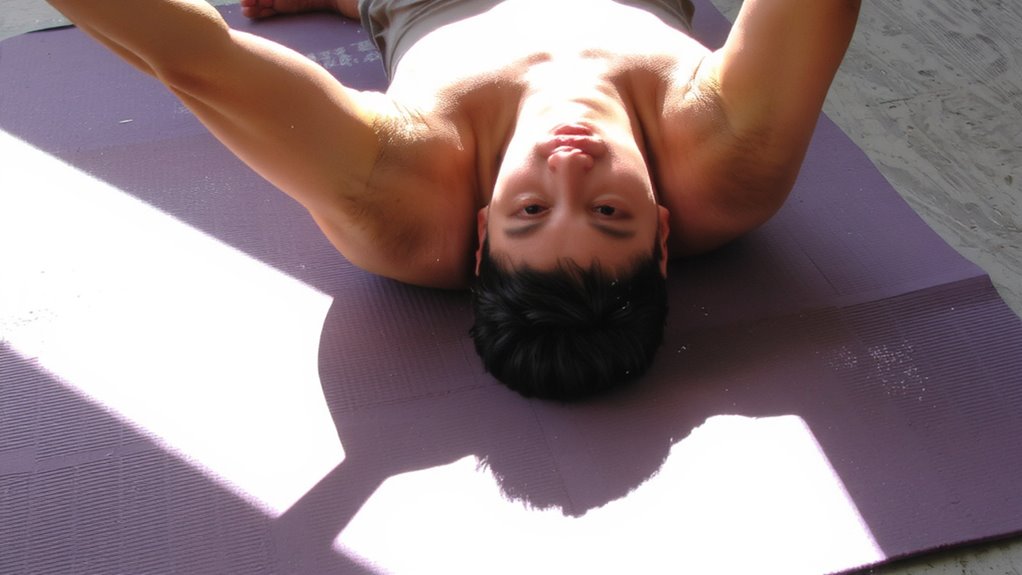
Often overlooked but highly effective, the prone spinal extension is a simple yet powerful drill you can do daily to improve thoracic mobility. Lying face down with hands beside your shoulders, you gently press up while keeping your hips grounded-this controlled motion isolates mid-back movement efficiently. The exercise requires no gear yet delivers noticeable results when performed with daily consistency. Over time, structured repetitions enhance spinal articulation and reduce stiffness caused by prolonged sitting. While not intense, its cumulative effect supports posture, breathing mechanics, and upper-body function. You’ll see clear long term benefits-especially if paired with mindful alignment and recovery practices. Though basic in design, this movement demands precision over speed; focus on form guarantees joint safety and muscular engagement. Ideal for warm-ups or cooldowns, it fits seamlessly into most routines without extra equipment. When applied consistently, even brief daily sessions yield meaningful improvements in mobility and movement quality.
Fix These Thoracic Extension Mistakes
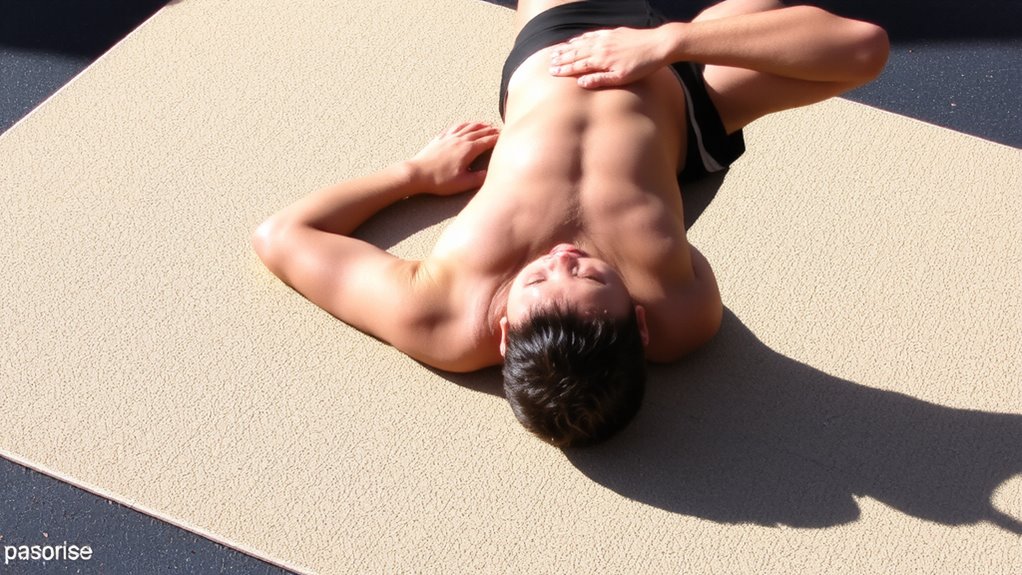
How many times have you tried thoracic extension drills only to feel strain in your lower back instead of a controlled stretch across the mid-spine? The issue usually lies in poor spinal alignment and incorrect muscle engagement. When you arch from the lumbar instead of initiating movement through the mid-back, you overload the wrong segments. You’re not activating the right stabilizers-your thoracic extensors aren’t doing the work, so compensation kicks in. To fix this, maintain a neutral pelvis and focus on lifting through the chest, not the waist. Squeeze your glutes to lock the hips and prevent hyperextension. Proper form guarantees targeted mobility, not just movement. You’ll get better results with mindful reps than dozens done wrong. Without correct muscle engagement, even daily drills fail. You need precision, not volume. Check your alignment often-it’s easy to drift without real-time feedback, especially on softer surfaces.
3 Prone-Based Mobility Drills for Mid-Back Relief
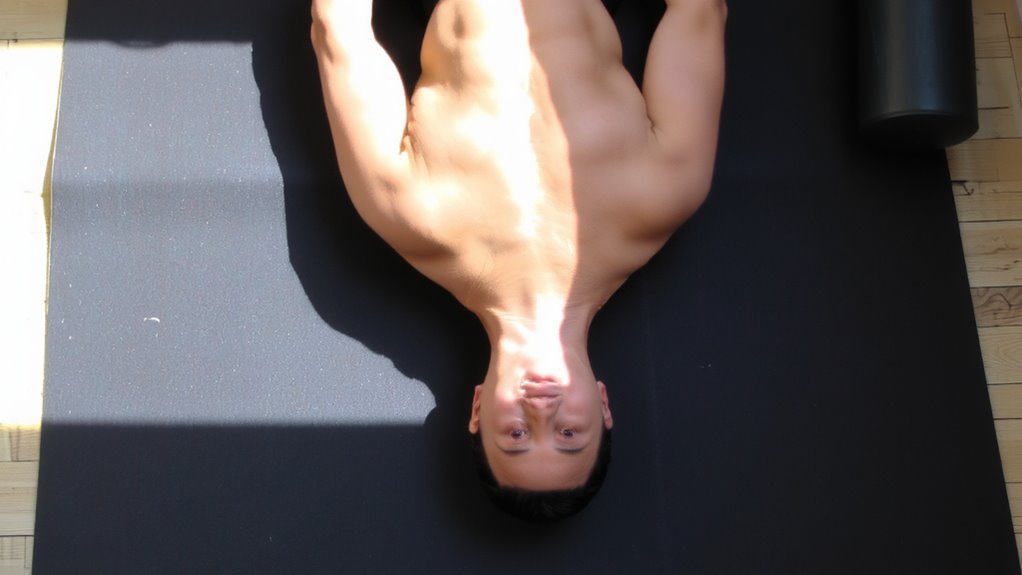
Why do so many people struggle to find relief in their mid-back despite doing mobility work? You’re likely missing key elements like spinal alignment and proper muscular activation during prone-based drills. When you lie facedown and begin lifting your chest, it’s not just about height-it’s about control. Your thoracic spine should extend segmentally, not hinge at the lumbar. Poor form shifts stress to the lower back, reducing effectiveness. Focus on squeezing your glutes, engaging your core, and lifting with your mid-back muscles, not your arms. This guarantees true thoracic extension. Tools like foam rollers or spine-savers can support proper positioning, enhancing feedback and alignment. These drills build neuromuscular awareness, priming your body for better movement patterns. Done consistently, they improve posture and decrease stiffness. You’ll notice less tension and greater ease in daily motions-proof that targeted muscular activation and attention to spinal alignment deliver real mid-back relief.
When to Progress to Weighted Thoracic Extensions
Isn’t it frustrating when your thoracic mobility feels stuck, no matter how many bodyweight drills you do? That’s when increased resistance can make a difference. Once you’ve mastered prone spinal extensions with control and full range, it’s time to contemplate progressive loading. This doesn’t mean piling on weight-it means smart, gradual advancement to stimulate adaptation.
| Criterion | Indicator |
|---|---|
| Form Consistency | No compensation, smooth motion |
| Repetition Quality | 15+ clean reps before fatigue |
| Recovery Time | Minimal soreness post-session |
Weighted thoracic extensions suit those with solid bodyweight performance. A light plate or sandbag across the upper back introduces resistance without compromising mechanics. Progressive loading enhances neuromuscular engagement and joint resilience. But remember: more isn’t better if form slips. Use supportive fitness gear like padded mats and maintain consistent recovery protocols to sustain long-term mobility gains.
How Thoracic Mobility Relieves Shoulder Pain
While shoulder pain often draws attention to the joint itself, limited thoracic mobility might be the real culprit behind restricted movement and discomfort. When your mid-back is stiff, it disrupts scapular stability, forcing your shoulder to compensate during overhead motions. This faulty mechanics impairs joint articulation, increasing strain on tendons and muscles. But improving thoracic extension restores proper movement sequencing, letting the shoulder glide smoothly over a stable base. You’ll notice less impingement and sharper performance in lifts or daily tasks. Think of it as decluttering a jammed hinge-it just works better when aligned. Prone spinal extensions help retrain this motion, especially when done consistently. Over time, you’ll find your shoulders sit healthier, move freer, and hurt less. It’s not about brute strength; it’s about smart mechanics. Prioritize mobility, and you’ll build a sturdier, more resilient upper body without over-relying on gear or passive recovery tools.
On a final note
You’ll see better posture and reduced shoulder strain by consistently doing prone spinal extensions. These drills boost thoracic mobility, correcting stiffness that limits movement. When performed correctly, they enhance recovery and support shoulder health. Pair them with quality fitness gear-like a firm mat-for ideal spinal alignment. Over time, progression to weighted extensions builds resilience. It’s practical, evidence-backed, and essential for long-term mobility.