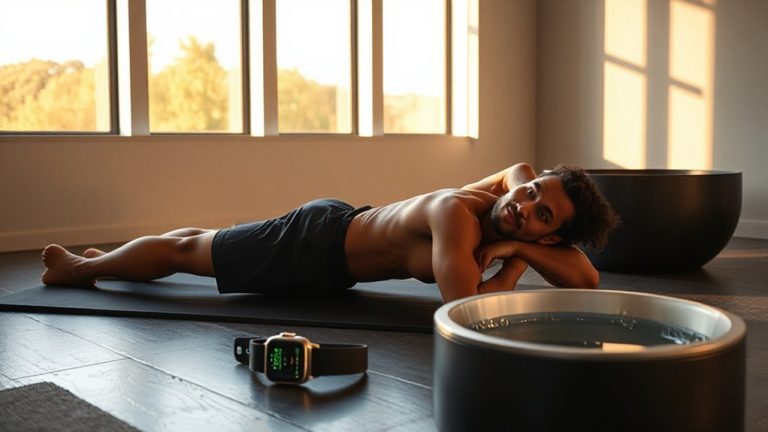
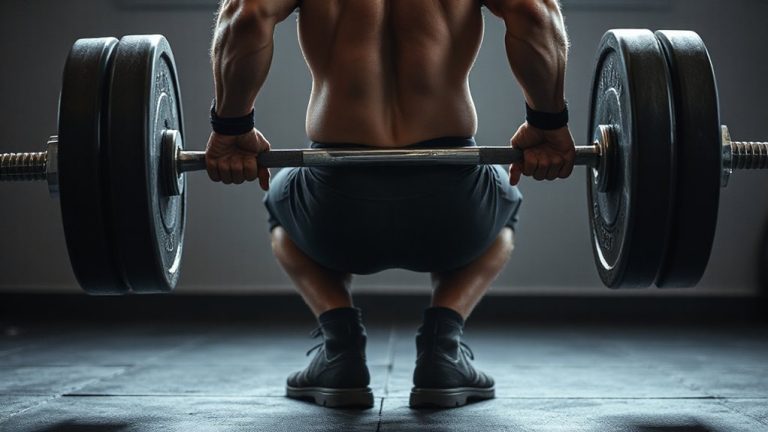
Understanding Eccentric Exercise Recovery: How Wearables Track Muscle Damage Biomarkers
Eccentric exercise stresses muscles more than concentric movements, causing microtrauma that smart wearables now detect early. They track your body’s response through biomarkers like heart rate variability, sweat electrolytes, and movement symmetry. Reduced HRV, altered gait, or increased skin conductivity signal strain before soreness hits. These devices offer real insights into recovery, helping you avoid overtraining. Understanding these signals lets you train smarter-there’s more to discover about optimizing your recovery just ahead.
Notable Insights
- Eccentric exercise causes microtrauma and structural strain, increasing recovery demands on muscles and connective tissues.
- Wearables detect early muscle damage using accelerometers and gyroscopes to identify movement asymmetries and gait changes.
- Bioimped cynometry in wearables tracks fluid shifts linked to inflammation markers like interleukin-6.
- Heart rate variability (HRV) and sweat analysis provide real-time insights into autonomic recovery and electrolyte balance.
- Smart devices guide training decisions by alerting users to fatigue, reduced muscle responsiveness, and poor recovery markers.
What Eccentric Exercise Does to Your Muscles
While eccentric exercise builds strength more efficiently than concentric movements, it also places greater mechanical stress on your muscle fibers, especially during the lengthening phase. You’re likely to experience more microtrauma during muscle elongation, as the fibers resist force while extending. This isn’t inherently harmful-rather, it’s a necessary trigger for growth-but it increases connective stress, particularly in tendons and fascia. Research shows these forces can lead to delayed onset muscle soreness (DOMS) and temporary reductions in strength. The structural impact is significant: muscle proteins like titin and collagen undergo intense strain, demanding longer recovery. That’s why fitness gear focusing solely on performance tracking often falls short. Without accounting for recovery depth, even advanced wearables miss a key part of adaptation. Eccentric work improves resilience, but you’ll need more than motivation-you’ll need smart recovery aligned with the actual physiological cost. Top recovery tools can help bridge this gap by targeting the specific needs of post-eccentric muscle repair through features like recovery tracking.
How Wearables Detect Muscle Damage Early
Because your muscles undergo subtle changes long before soreness kicks in, modern wearables now tap into biomarkers and movement patterns to catch signs of damage early. They monitor muscle stiffness through changes in movement symmetry and force distribution during daily motion, detecting imbalances that suggest microtears. Accelerometers and gyroscopes track gait deviations, while some devices use bioimpedance to spot fluid shifts linked to inflammation markers like interleukin-6. Though not lab-precise, these sensors give real-world insights when calibrated properly. You’ll get alerts if your stride shortens or muscle responsiveness drops-early red flags. However, false positives can occur without context, so pairing device data with how you feel still matters. Wearables aren’t perfect, but their ability to flag stiffness and rising inflammation markers puts early recovery strategies in your hands, helping you act before performance plummets.
HRV and Sweat: Real-Time Recovery Signals
What if your body could send you a text before you’re overtrained? With today’s wearables, it kind of already does. Heart rate variability (HRV) and sweat analysis offer real-time recovery signals that help you adjust training before fatigue sets in. You can see drops in HRV linked to stress, while elevated skin conductivity often means your nervous system is still working hard. Meanwhile, monitoring electrolyte balance through sweat helps prevent imbalances that delay recovery.
| Signal | What It Measures | Why It Matters |
|---|---|---|
| HRV | Autonomic nervous activity | Low values suggest poor recovery |
| Skin Conductivity | Sweat gland response | Reflects stress and fatigue levels |
| Electrolyte Balance | Sodium/potassium in sweat | Affects hydration and muscle function |
These metrics, when combined, give you a clearer, science-backed picture of your readiness-no guesswork needed.
Why Your Smartwatch Knows You’re Sore
Could your smartwatch actually detect soreness before you feel it? Yes-by monitoring subtle changes in movement patterns, heart rate variability, and activity levels, it picks up on muscle fatigue early. After eccentric workouts, microscopic muscle damage triggers inflammation, leading to delayed onset muscle soreness (DOMS), typically peaking 24–72 hours post-exercise. Advanced wearables analyze reduced stride efficiency or decreased workout performance, flagging signs of lingering strain. They correlate this with sleep disruption and elevated resting heart rate, both linked to recovery demands. While not medical devices, these smart tools offer practical insights, helping you interpret physiological feedback you might overlook. Their real strength lies in trend tracking over time, giving a clearer picture of recovery than any single metric. Still, accuracy varies-sensor quality and algorithm design greatly affect reliability. Used wisely, your watch becomes a personalized recovery assistant.
When to Train Harder or Back Off
Your smartwatch might flag muscle fatigue, but knowing whether to push through or pull back depends on how you interpret that data in context. If your recovery metrics show prolonged inflammation markers and reduced heart rate variability, it’s often smarter to back off-even if motivation’s high. Pushing hard during poor recovery can stall progress and deepen a performance plateau. On the flip side, when biomarkers like sleep quality and muscle oxygenation stabilize, that’s your cue for aggressive training. Training timing isn’t just about the clock; it’s about syncing effort with physiological readiness. Wearables help identify these windows, but they don’t replace self-awareness. Relying solely on device alerts without considering exertion history or stress load risks misguided decisions. Used wisely, however, they turn guesswork into strategy-helping you train smarter, not just harder, and avoid spinning your wheels when progress stalls. Incorporating tools like a best massage gun can further aid in reducing muscle soreness and improving recovery speed when used post-training.
Can Wearables Prevent Overtraining?
How often do alerts from your fitness tracker prompt you to scale back-or push forward-when fatigue starts creeping in? Modern wearables now detect early signs of overtraining by monitoring heart rate variability, sleep quality, and movement patterns. These metrics help gauge your body’s readiness, offering cues before muscle damage accumulates beyond repair. When recovery lags, sensors may detect delayed muscle adaptation, signaling you to adjust intensity. While not foolproof, consistent data trends support better training balance, reducing the risk of burnout. Devices can’t replace self-awareness, but they enhance decision-making by spotlighting patterns you might miss. Over time, this feedback loop promotes smarter progression, aligning workout loads with physiological tolerance. Still, accuracy depends on sensor quality and user consistency. Used wisely, wearables don’t prevent overtraining outright-but they’re powerful allies in sustaining performance and guiding long-term muscle adaptation.
On a final note
Your smartwatch doesn’t just count steps-it tracks recovery by monitoring HRV dips and sweat-based biomarkers, clues that your muscles are repairing after eccentric exercise. While not perfect, these wearables offer real-time insights into muscle damage, helping you decide when to push or rest. They won’t replace blood tests, but their predictive power makes overtraining less likely, turning data into a practical tool for smarter, safer training progression.