Using Percussion Massage Guns to Break Down Scar Tissue in Recovering Hamstrings
You should start using a percussion massage gun on your hamstrings 3–5 days post-injury, once swelling decreases. It helps break down stiff scar tissue by delivering rapid pulses that improve collagen alignment and increase blood flow. Use light pressure along the muscle, avoiding the nerve-rich center. Pair it with stretching to boost flexibility. Done right, it enhances recovery-there’s more to optimizing your routine effectively.
Notable Insights
- Avoid using a massage gun on hamstrings during the first 48–72 hours post-injury to prevent worsening inflammation.
- Begin light percussion therapy after 3–5 days, once swelling decreases and acute pain fades.
- Use slow, controlled movements from glutes to knee, avoiding the hamstring’s center to protect the sciatic nerve.
- Target tight areas for 15–20 seconds to break up fibrous adhesions and stimulate collagen realignment.
- Combine 30–60 seconds of vibration with dynamic stretching to enhance flexibility and reduce re-injury risk.
Why Scar Tissue Delays Hamstring Healing
While your hamstring starts repairing itself after a strain, the rapid formation of scar tissue can actually interfere with proper healing. Your body’s initial inflammation response is necessary, but when it’s prolonged, it encourages excessive scar tissue buildup. This tissue is less elastic than muscle, restricting movement and increasing reinjury risk. Unlike healthy muscle fibers, scar tissue features disorganized collagen alignment, reducing tensile strength and flexibility. You might feel tightness or stiffness, clear signs that recovery isn’t progressing ideally. Left unmanaged, this disorganized structure hampers functional return, especially during dynamic activities. While rest supports early recovery, passive healing alone won’t correct faulty collagen alignment. Effective rehab requires strategies that remodel the scar tissue, encouraging realignment closer to natural fiber patterns. Percussion therapy devices, when timed correctly, may aid this process by stimulating blood flow and influencing connective tissue structure, though their success depends on precise usage and individual healing stages. Incorporating best recovery bands can further support healing by enhancing flexibility and providing targeted compression during rehabilitation.
When to Start Using a Massage Gun After Injury
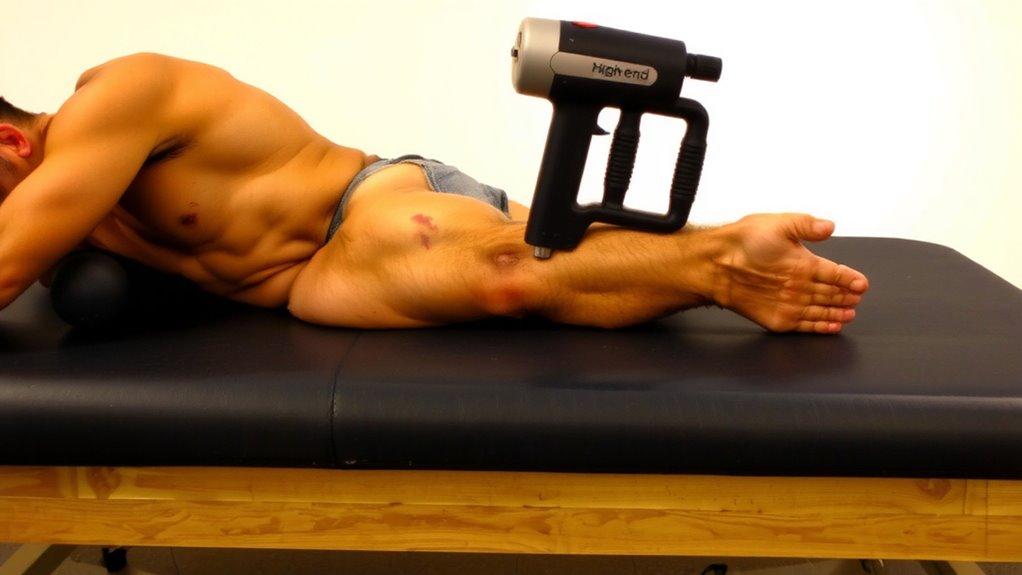
How soon is too soon to reach for that percussion massage gun after pulling your hamstring? Using it too early can worsen inflammation, especially during the first 48 to 72 hours-this is when delayed onset peaks. Early intervention sounds appealing, but premature use may disrupt the body’s natural repair process. Most experts recommend waiting until the acute phase passes and swelling decreases, usually after about three to five days. At that point, light sessions on the lowest setting can support circulation without stressing damaged fibers. You’ve got to balance stimulation and recovery; rushing rarely helps. Percussion therapy isn’t a quick fix but a recovery aid, best introduced once initial soreness fades. Watch your body’s signals-if pain increases, stop. Timing matters just as much as technique when integrating massage guns into hamstring rehab. For optimal results, choose a device with adjustable percussion intensity levels.
How Massage Guns Break Up Scar Tissue
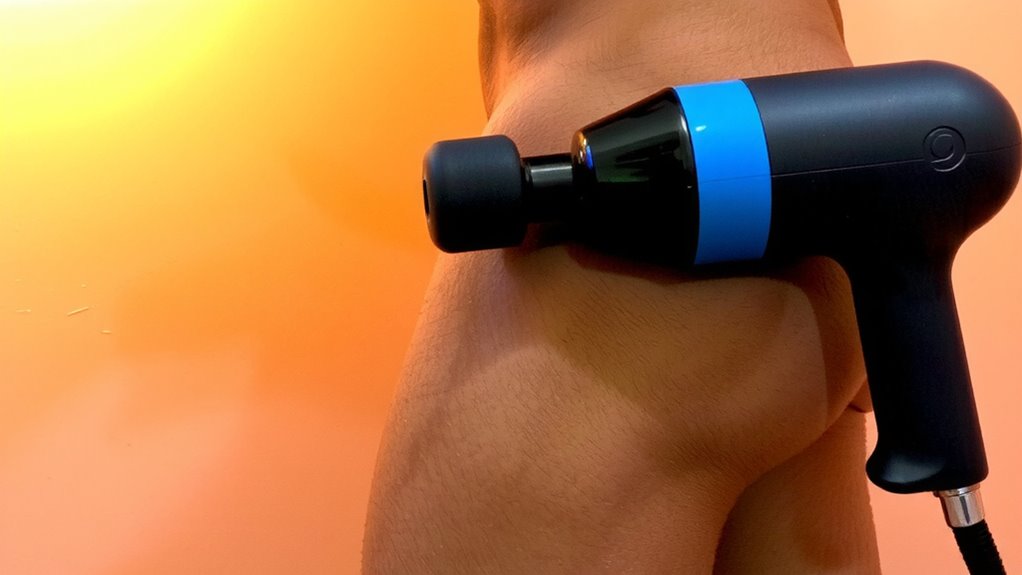
If you’ve ever felt the tight, knotted texture of healed hamstring tissue, you know scar tissue can restrict movement and delay full recovery. Massage guns help by delivering rapid, focused pulses deep into the muscle, promoting tissue remodeling through controlled micro-stimulation. This process breaks up dense, fibrous adhesions and encourages collagen realignment, restoring flexibility over time. The percussion also boosts blood flow, aiding inflammation reduction and clearing metabolic waste. While not a standalone cure, consistent use supports the body’s natural healing mechanisms. You’ll likely notice improved tissue texture and range of motion with regular sessions. High-amplitude devices tend to penetrate deeper, making them more effective for thick scar tissue. Still, results vary based on injury severity and timing. When used correctly, massage guns are a practical tool-enhancing tissue remodeling while helping manage residual inflammation in recovering hamstrings. For targeted recovery, consider choosing one of the best massage guns based on amplitude and adjustable settings.
How to Use a Massage Gun on Your Hamstrings
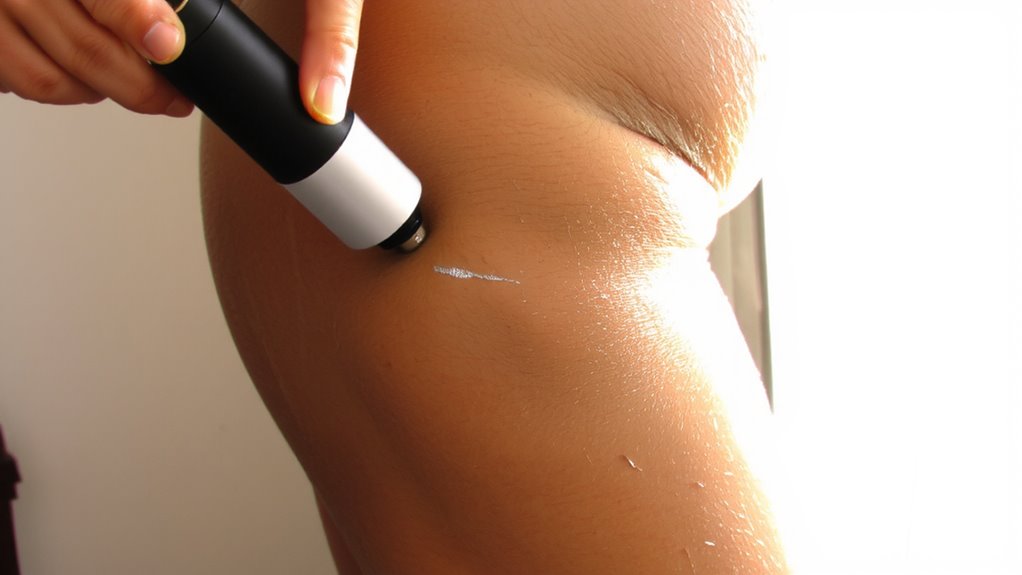
Since proper technique enhances both safety and effectiveness, start by positioning yourself comfortably-either seated on the floor with legs extended or lying face down-to expose the full length of your hamstrings. Glide the massage gun slowly from your glutes down to the back of your knee, using light pressure. You’ll want to avoid the sciatic nerve by skipping direct contact along the very center. If you hit a tight spot, pause for 15–20 seconds-this is trigger pointing, and it helps release stubborn knots more effectively than foam rolling. While foam rolling offers broad myofascial release, a massage gun delivers precise, rapid pulses that penetrate deeper layers. Use lower speeds to start, especially if new to percussion therapy. Most users report reduced stiffness within minutes. Just don’t overdo it-limit sessions to 2 minutes per leg. Consistent, correct use improves blood flow and tissue mobility, making it a smart addition to recovery routines.
Pairing Massage Guns With Stretching for Faster Recovery
You’ve already seen how targeting your hamstrings with a massage gun can loosen tight tissue and increase circulation, but pairing that stimulation with intentional stretching takes recovery further. Using targeted vibration before a dynamic warm up primes muscle fibers, reducing stiffness and improving elasticity. That prep work allows you to stretch deeper and more safely, promoting flexibility and range of motion. Think of the massage gun as a neuromuscular wake-up call-your muscles respond faster, letting stretches be more effective. Apply 30 to 60 seconds of targeted vibration per hamstring before moving into dynamic stretches like leg swings or walking lunges. This combo doesn’t just feel good-it’s backed by performance data showing quicker recovery times and reduced soreness. Used consistently, this method supports better movement patterns and lowers re-injury risk, making it a smart addition to any rehab or training routine.
5 Common Massage Gun Mistakes to Avoid
When using a massage gun on your hamstrings, skipping the warm-up entirely or diving in too aggressively can do more harm than good. Applying excessive pressure right away may irritate already-sensitive tissue, increasing inflammation instead of reducing it. You’re better off starting gently to encourage blood flow before gradually increasing intensity. Another common error is using incorrect attachments-broad, rounded heads are usually ideal for the large muscle mass of the hamstrings, while pointed tips may concentrate force too much, raising injury risk. Holding the device in one spot for too long or moving it too quickly also limits its effectiveness. You won’t get deep penetration if you’re rushing over the area. For best results, move slowly and deliberately, allowing the percussive action to work without bruising or overstimulating the muscle.
Massage Gun Features That Aid Hamstring Recovery
Choosing the right massage gun can make a noticeable difference in how well your hamstrings recover after intense activity. Look for adjustable vibration intensity-this lets you start gently on tender areas and gradually increase as your muscle warms up. Higher intensity settings help penetrate deep into thick hamstring tissue, improving blood flow and breaking down scar tissue more effectively. Attachment variety also plays a key role; the standard ball head is ideal for broad coverage, while a flat or wedge attachment allows targeted work along tight bands or near the sit bones. A well-designed gun balances power with precision, so you’re not just delivering force, but applying it strategically. Models with quiet motors and long battery life enhance convenience, especially during daily recovery routines. Ultimately, a device that combines strong vibration intensity with thoughtful attachment variety delivers the most value for hamstring rehab.
On a final note
You’ll find percussion massage guns can speed hamstring recovery by improving blood flow and softening scar tissue when used correctly. They’re not a cure-all, but paired with stretching and timed after the acute injury phase, they add real value. Opt for adjustable speed, quiet motors, and ergonomic designs-they make consistent use easier. Used wrong, they can do harm, so follow guidelines carefully. Your recovery gear should support smart habits, not replace them.