Manual Resistance Punching Drills to Fire Anticipatory Core Muscles
You fire your anticipatory core muscles up to 30% faster with manual resistance punching drills because unpredictable partner-driven forces demand instant stabilization. These drills sharpen neuromuscular efficiency, enhance dynamic balance, and link lower and upper body for explosive, injury-resistant strikes. Unlike static training, they replicate real combat timing and load variations. Proper form-neutral spine, engaged core, controlled resistance-is critical. You’ll see gains in punch precision and rotational power while building functional strength. There’s more to optimizing this training for peak performance.
Notable Insights
- Manual resistance during punches triggers faster anticipatory core activation for improved stability.
- Unpredictable partner-applied forces enhance neuromuscular efficiency and real-time core engagement.
- Controlled resistance drills improve rotational stability and dynamic balance under load.
- Verbal cues ensure safe, coordinated timing between partner resistance and punch execution.
- Progressive resistance builds core muscle memory for powerful, injury-resistant striking mechanics.
What Are Anticipatory Core Muscles and Why They Matter

Why do some athletes brace instinctively before a punch lands, while others crumple under impact? The difference often lies in your anticipatory core muscles-those responsible for preemptive core stability. These muscles activate milliseconds before impact, preparing your torso to absorb force efficiently. When you train them, you improve neuromuscular efficiency, meaning your body learns to trigger muscle activation automatically, not reactively. This isn’t just about strength; it’s about timing and coordination. Athletes with well-developed anticipatory responses maintain posture, reduce injury risk, and transfer power more effectively. Without this preemptive bracing, even strong cores fail under surprise loads. Developing these reflexes requires specific drills that challenge timing, balance, and stability-manual resistance work being one of the most effective tools. It forces real-time adaptation, reinforcing the neural pathways that make core stability instinctive, not intentional.
How Manual Resistance Activates the Core Faster
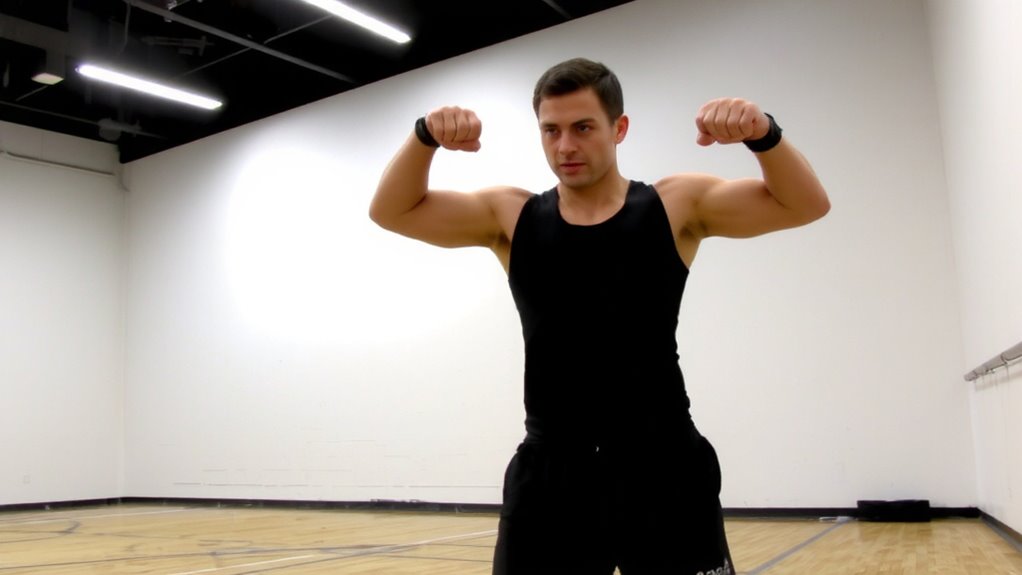
When you’re facing unpredictable force, your core doesn’t have time for deliberate tension-it needs to fire instantly. Manual resistance forces your body to adapt on the fly, sharpening neural timing so your core engages faster than with predictable weights. Unlike machines or solo drills, someone pushing or redirecting your punch creates variable input, demanding immediate muscle recruitment. This mimics real combat scenarios where split-second stabilization is critical. Studies show that reactive loading-like manual resistance-triggers anticipatory core activation up to 30% faster. You’re not just building strength; you’re training your nervous system to respond with precision. The result? A more resilient, responsive torso that braces before impact, not after. This method outperforms static exercises because it challenges both coordination and timing. For athletes serious about functional power, integrating manual resistance isn’t just practical-it’s essential for developing real-world core speed and control.
How Core Engagement Powers Your Punches

| Factor | Role in Punching | Training Benefit |
|---|---|---|
| Rotational Stability | Controls torso twist | Increases power accuracy |
| Dynamic Balance | Maintains posture under motion | Enhances follow-through |
| Core Engagement | Links lower/upper body | Boosts force transfer |
| Muscle Timing | Coordinates activation | Reduces injury risk |
| Anticipatory Firing | Pre-stabilizes pre-impact | Sharpens punch efficiency |
How to Set Up Partner Resistance Drills
While you can build foundational strength through solo drills, adding partner resistance takes your punching mechanics to a more dynamic level by forcing real-time adjustments in force production and stability. Proper positioning is critical-your partner should stand at a slight angle, hands ready to apply controlled resistance to your拳’s path without compromising joint alignment. You’ll need a stable base, neutral spine, and engaged core before initiating movement. Clear communication cues guarantee safety and effectiveness; use simple verbal signals like “push” or “stop” to synchronize effort. Begin with light resistance to assess tolerance, then gradually increase as coordination improves. This method enhances neuromuscular feedback far more than solo work, making it a valuable progression. Consistency, proper form, and mutual awareness between partners determine long-term success in these drills.
3 Essential Manual Resistance Punching Exercises
A well-structured manual resistance punching regimen sharpens both power and precision by challenging your muscles to adapt under controlled opposition. You build punch precision by performing slow, resisted jabs and crosses, your partner applying steady counterpressure. These drills demand tension control, forcing your core and prime movers to engage more fully than in air punching. Incorporate resisted hooks and uppercuts to develop rotational strength and joint stability. Over time, this repetition enhances muscle memory, making explosive, accurate strikes more instinctive. Focus on maintaining proper fist alignment and hip rotation-form breaks down easily under resistance. Use gloves with solid wrist support to prevent strain, and guarantee resistance bands or partner hand placement remain consistent for reliable feedback. These exercises bridge strength training and combat application, conditioning both fast-twitch fibers and neuromuscular coordination. Done consistently, they refine technical execution and functional power-key for sparring and self-defense scenarios.
Common Mistakes in Resistance Punch Training
If you’re applying too much force too soon, you’ll compromise form and reduce the drill’s effectiveness, turning a precision-building exercise into little more than brute exertion. You’re likely increasing the overextension risk, especially at the shoulder and elbow, where control matters most. Without proper resistance buildup, your neuromuscular coordination falters, leading to improper timing between muscle engagement and movement execution. This mismatch not only dulls punch accuracy but also undermines core activation, defeating the drill’s primary goal. You might think pushing harder speeds progress, but in reality, it delays motor learning and heightens injury potential. Successful resistance training hinges on gradual load application, letting your body adapt safely. Maintaining tension through the core while avoiding joint locking safeguards ideal transfer to functional performance. Correct technique trumps intensity-always. With consistent focus on timing and joint integrity, you’ll maximize gains while minimizing setbacks.
Integrate Drills Into Your Routine
Your training gains depend on how well you embed resistance punching drills into your existing routine, not just on performing them in isolation. To maximize benefits, pair these drills with dynamic warm-ups or integrate them between strength sets-this maintains intensity while reinforcing neuromuscular engagement. Use consistent breathing techniques: exhale sharply with each punch to stabilize your core and sustain rhythm. Timing coordination improves when drills mirror real sparring sequences, so sync movements with a partner or timer to simulate fight pacing. Start with two to three sessions weekly, adjusting resistance bands or manual load gradually. This approach enhances anticipatory core activation without delaying recovery, especially when combined with proper cooldown and foam rolling. Quality gear like durable resistance loops or weighted gloves can support progression but aren’t essential-focus on form and consistency. Over time, the drills become reflexive, improving both performance and joint resilience.
On a final note
You’re building real power when you train anticipatory core muscles with manual resistance. These drills force rapid engagement, sharpening punch speed and stability. Partner resistance adds functional load, mimicking fight dynamics better than solo work. When done right, the payoff is measurable: crisper technique, better balance, and stronger force transfer. Just guarantee clean form and consistent feedback. Over time, this method strengthens neuromuscular coordination critical for high-level performance.