Why Nighttime Smartphone Use Disrupts Melatonin and Slows Muscle Repair After Workouts
Your nighttime smartphone use cuts melatonin by up to 50%, delaying sleep and robbing you of deep NREM stages when growth hormone peaks and muscle repair happens. Blue light suppresses recovery, disrupts circadian rhythms, and lowers protein synthesis. Evening workouts make good sleep even more critical, yet scrolling keeps cortisol high and slows tissue regeneration. Poor sleep hygiene undermines gains no matter how hard you train. You’re trading real recovery for fleeting distraction-and your muscles pay the price. There’s a better way to recharge.
Notable Insights
- Blue light from smartphones suppresses melatonin, delaying sleep and reducing sleep quality critical for muscle recovery.
- Poor sleep disrupts circadian rhythms, impairing growth hormone release needed for tissue repair after workouts.
- Evening screen use elevates cortisol, which hinders muscle recovery and protein synthesis during nighttime rest.
- Melatonin acts as an antioxidant and supports muscle repair, but blue light exposure reduces its production.
- Using phones before bed promotes sleep procrastination, shortening deep sleep when muscle fibers regenerate most effectively.
Why Blue Light Ruins Post-Workout Recovery

While you’re focused on optimizing your workout, you might not realize how late-night phone use could be undermining your muscle recovery. The blue light emitted by smartphones tricks your brain into thinking it’s still daytime, suppressing melatonin production and delaying sleep onset. This directly impairs sleep quality, which is essential for effective post-exercise recovery. Without deep, restorative rest, your body struggles to repair micro-tears in muscle fibers. Worse, disrupted circadian rhythms contribute to hormone imbalance-particularly in cortisol and growth hormone-further inhibiting recovery. Even if you track reps, heart rate, or wear recovery-focused gear like compression sleeves, none of it compensates for poor sleep hygiene. Your phone’s screen becomes the weak link. To maximize gains, limit screen exposure at least an hour before bed. It’s not just about sleep duration, but quality-controlled by light, timing, and consistent nighttime routines.
How Deep Sleep Powers Muscle Repair
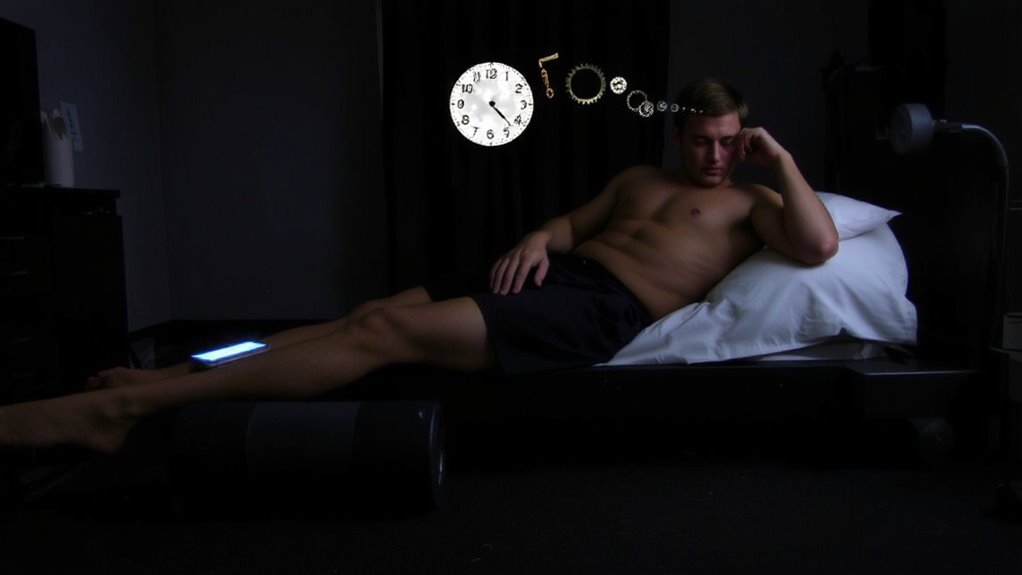
Since your body does most of its repair work during deep sleep, this stage isn’t just rest-it’s where muscle recovery actually happens. Your brain slows down, and breathing becomes rhythmic, triggering ideal conditions for tissue regeneration. Growth hormone peaks during these cycles, fueling the repair of stressed muscle fibers. These growth cycles don’t run efficiently without sufficient deep sleep, meaning your effort in the gym goes under-recovered. Fitness trackers often miss the depth of this phase, emphasizing total sleep over the quality that truly impacts gains. Without tracking brainwave patterns, consumer gear can’t fully assess deep sleep’s role. Yet consistent, uninterrupted sleep reliably boosts recovery. Smart regimens prioritize sleep as much as reps. You’re not just resting-you’re enabling biological processes that rebuild stronger tissue. Skimping on deep sleep means sacrificing the very foundation of muscle repair, no matter how advanced your fitness gear.
How Broken Melatonin Slows Your Gains
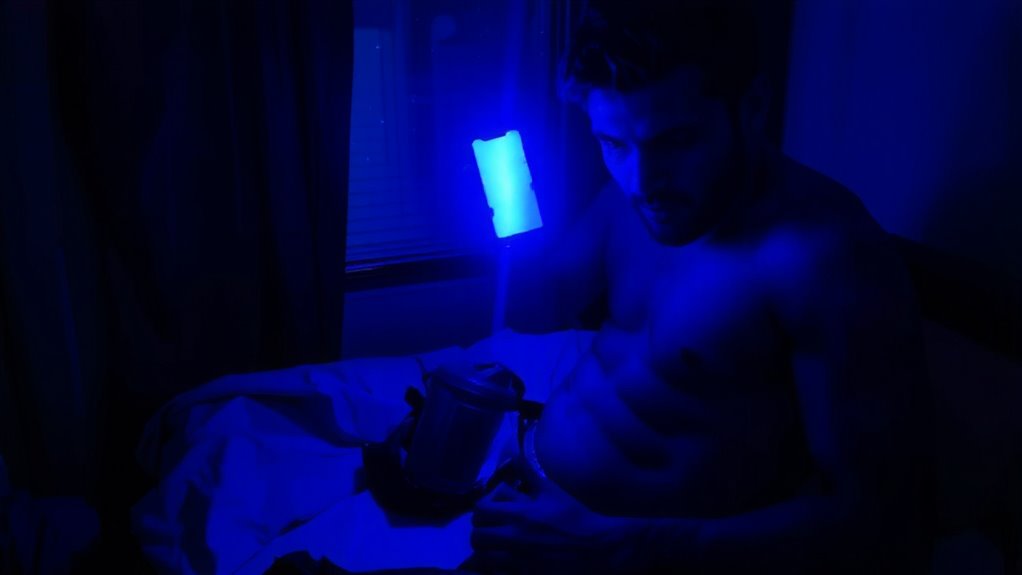
You just learned how deep sleep drives muscle repair, but getting there isn’t automatic-it depends heavily on melatonin, your body’s natural sleep signal. When you use your smartphone at night, blue light suppresses melatonin production, throwing your system off track. This triggers circadian misalignment, meaning your body’s internal clock no longer matches your environment. As a result, sleep onset delays and deep sleep phases shorten-exactly when growth hormone peaks and muscles rebuild. Without sufficient melatonin, you’re not just sleepy; you’re stuck in a hormonal imbalance that hampers recovery. Testosterone drops, cortisol stays elevated, and protein synthesis slows. Even with perfect workouts and nutrition, broken melatonin undermines gains. Recovery isn’t just about rest-it’s about timing, biology, and alignment. Fix the signal, and you reclaim the repair process where it counts.
Stop Scrolling: What Your Muscles Lose
Though you might not feel it immediately, every minute spent scrolling before bed chips away at your recovery. What seems like harmless downtime fuels phone addiction and sleep procrastination, directly undermining muscle repair. Blue light delays sleep onset, while mental stimulation keeps cortisol elevated-both sabotage growth hormone release essential for recovery. You’re not just losing sleep; you’re losing the quality of it, and that’s where gains disappear.
| What You Think You’re Gaining | What Your Muscles Actually Lose |
|---|---|
| Temporary stress relief | Deep NREM sleep stages |
| Social connection | Protein synthesis efficiency |
| Entertainment ease | Cortisol regulation |
| Routine comfort | Metabolic recovery rate |
Every swipe trades recovery potential for fleeting distraction. If you’re serious about fitness, your phone’s night mode isn’t enough-your discipline after dark defines your progress.
Protect Melatonin After Evening Workouts
Why does that evening workout sometimes leave you more drained than energized? Because post-exercise recovery relies heavily on melatonin, and poor sleep hygiene can sabotage its release. Even if you feel alert after lifting or running at night, your body needs circadian alignment to initiate muscle repair. Melatonin isn’t just for sleep-it’s a powerful antioxidant that aids tissue regeneration. When you keep your lights bright or check your phone post-workout, you delay melatonin onset, disrupting this critical recovery phase. Maintaining circadian alignment means winding down with dimmer lights and calm activities. Fitness recovery isn’t just about protein or foam rolling-it’s about timing and environment. You might use the best fitness gear, but without solid sleep hygiene, your gains could stall. Protect melatonin by treating your post-workout window like part of the training itself-structured, intentional, and recovery-focused.
Easy Swaps to Reduce Blue Light Tonight
Since blue light exposure at night suppresses melatonin more than any other wavelength, cutting it after an evening workout isn’t optional-it’s part of recovery. You can start tonight with simple, effective swaps. Replace overhead LEDs with amber lighting in living and sleeping areas; this wavelength minimally impacts melatonin and supports circadian alignment. Enable screen dimming on your smartphone and tablet, ideally pairing it with a blue light filter app set to activate at dusk. These adjustments aren’t gimmicks-they’re backed by sleep research and practical recovery protocols used by elite athletes. While fitness gear like smartwatches tracks your workout, neglecting light hygiene undermines those gains. Amber lighting and aggressive screen dimming aren’t luxuries; they’re low-cost tools that directly influence hormonal balance. Implement them consistently, and you’ll create an environment where recovery isn’t just possible-it’s optimized.
Optimize Your Night for Faster Recovery
You’ve already taken the first step by cutting blue light with amber bulbs and dimmed screens, but recovery goes beyond lighting adjustments-it’s about shaping your entire evening routine to support muscle repair. Prioritize sleep hygiene by setting a consistent bedtime and keeping your bedroom cool and quiet. Pair this with smart recovery nutrition: consume protein and carbs within 45 minutes post-workout. Avoid heavy meals late, but don’t skip nourishment-your muscles need fuel to rebuild.
| Factor | What to Do | Why It Matters |
|---|---|---|
| Sleep Schedule | Go to bed and wake at the same time daily | Regulates circadian rhythm, boosts melatonin |
| Evening Nutrition | Eat a small, balanced snack post-training | Supports recovery nutrition and muscle synthesis |
| Room Environment | Use blackout curtains, reduce noise | Enhances sleep hygiene, deepens rest quality |
On a final note
You’re sacrificing recovery every time you scroll post-workout. Blue light from your phone suppresses melatonin, delaying sleep onset and weakening deep sleep-the phase where muscle repair peaks. Without sufficient melatonin, growth hormone release falters, slowing tissue regeneration. Even quality fitness gear won’t compensate for poor recovery habits. Swap screens for dim lighting or blue-light blockers. Protect your sleep like your gains depend on it-because they do.