Thoracic Mobility Drills With Foam Roller Extensions in Supine
You’re likely sitting with poor posture, and that’s tightening your thoracic spine. A high-density foam roller placed just below your shoulder blades helps restore extension. Lie on your back, knees bent, and gently arch over the roller while keeping your core engaged and ribs down. Avoid flaring your ribs or crunching your neck. Do this 2–3 times per week for best results. With consistent form, you’ll notice better posture and shoulder movement-plus, there’s more to know about maximizing each session.
Notable Insights
- Position the foam roller vertically under the upper back just below the shoulder blades while lying supine.
- Keep knees bent and feet flat on the floor to stabilize the pelvis and prevent lower back strain.
- Gently extend the thoracic spine over the roller, allowing the head to move slightly backward with control.
- Engage the core and keep ribs down to avoid compensating with lumbar extension or neck crunching.
- Perform 2–3 times weekly for 8–12 minutes, using a high-density roller for effective segmental mobilization.
Why Poor Thoracic Mobility Hurts Your Posture
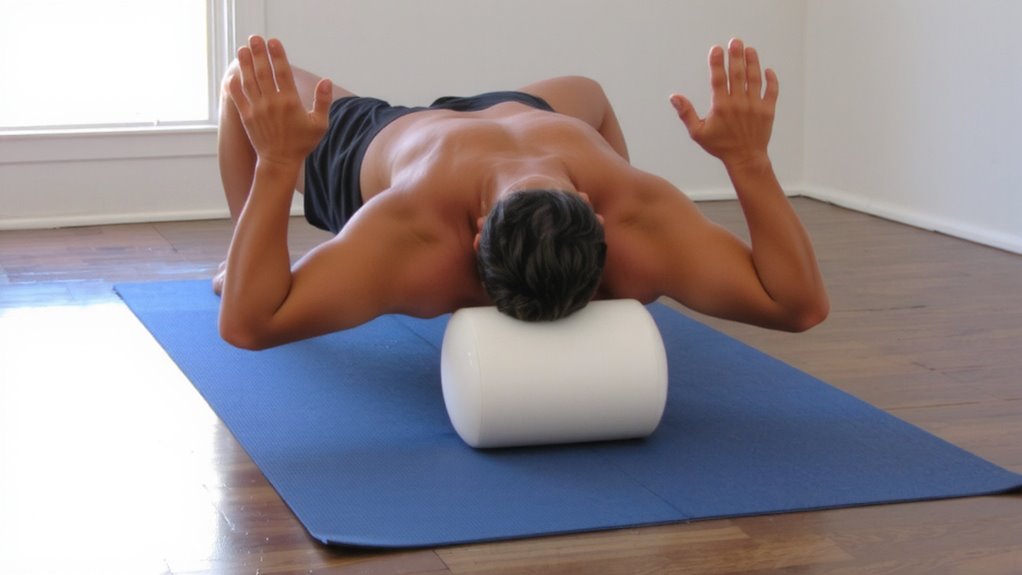
Let’s talk about your spine-specifically, the middle segment known as the thoracic spine-because if it’s stiff, your posture is already working against you. Spinal stiffness in this area forces your upper back into excessive curvature, which directly contributes to rounded shoulders and a forward head position. Without adequate thoracic mobility, even well-intentioned strength training or cardio can reinforce poor alignment. Over time, this dysfunction increases strain on your neck, shoulders, and lower back, undermining both performance and recovery. Foam rollers, particularly high-density cylindrical models, help restore segmental motion by gently encouraging extension. Their firmness supports controlled release of tight fascia and muscle guarding, especially when used under the mid-back. Properly implemented, this soft-tissue work reduces stiffness, improves postural feedback, and enhances movement efficiency-making foam rollers not just recovery tools, but essential gear for correcting alignment. For best results, choose a high-density foam roller that provides sufficient support without collapsing under pressure.
How to Know You Need Foam Roller Extensions
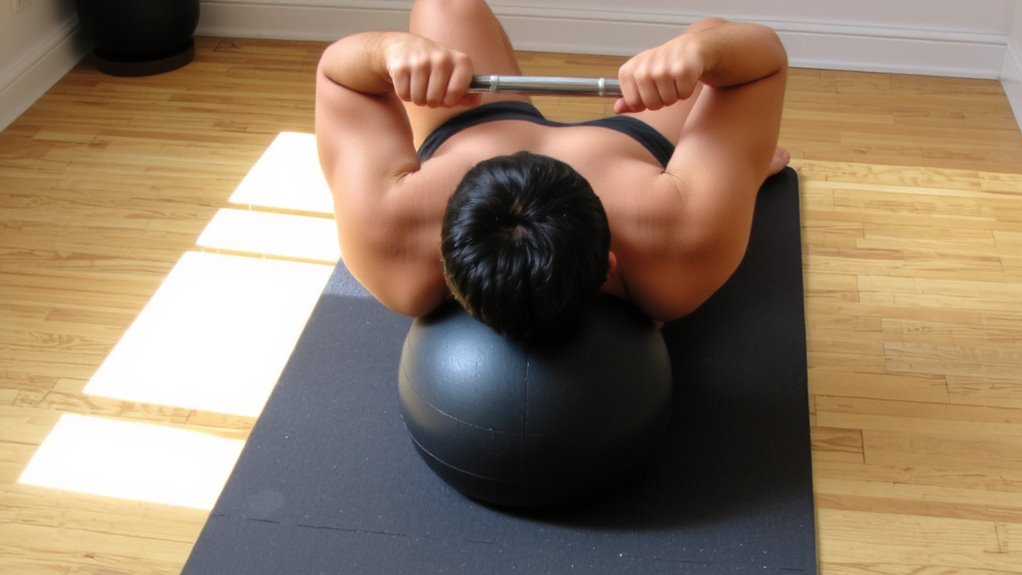
How often do you notice stiffness across your upper back after sitting for long periods or feel your shoulders rounding forward during daily tasks? If you’re frequently slouching or struggling to take deep breaths, especially during exercise, you might be dealing with restricted thoracic mobility. Breathing difficulties often arise when your mid-back can’t extend properly, limiting lung expansion. You may also experience shoulder impingement, particularly when reaching overhead, because tightness in the thoracic spine forces your shoulders to compensate. These aren’t minor aches-they’re signs your posture and joint mechanics are off. Foam roller extensions help restore natural curvature and movement, making them essential if you sit a lot or train intensely. Ignoring these symptoms can worsen alignment and reduce performance over time. If basic stretches don’t ease your discomfort, targeted mobilization with a foam roller likely isn’t just helpful-it’s necessary for recovery and long-term joint health.
Set Up the Foam Roller on Your Back
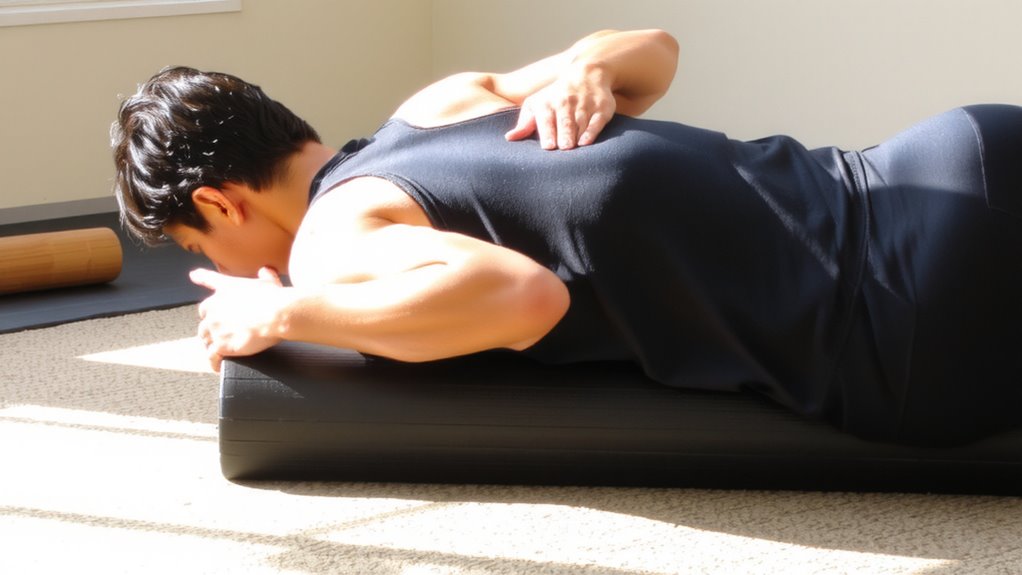
A properly positioned foam roller can make a noticeable difference in thoracic mobilization, especially when placed just beneath your mid-back with precision. Your roller placement should target the area just below the shoulder blades, avoiding the lower back to prevent strain. Position yourself so the roller runs vertically along your spine, with your knees bent and feet flat on the floor. The ideal foam density supports your body weight without collapsing-medium to high density works best for controlled mobilization. Too soft, and the roller won’t provide enough resistance; too firm, and it may cause discomfort. Make certain the roller stays stable during setup, as slipping disrupts alignment and reduces effectiveness. Proper setup enhances mobility gains, making it a critical foundation for safe, productive drills. Don’t rush it-accurate positioning improves outcomes considerably. For added comfort during extended sessions, consider using a best massage mat designed to complement floor-based mobility work.
Perform the Thoracic Extension Safely
Once you’re properly set up, initiate the thoracic extension by gently arching your upper back over the foam roller, allowing your head to move slightly backward as your spine curves around the support. Focus on maintaining proper spinal alignment-your lower back should remain stable, not over-arching. This position isolates the thoracic spine, promoting targeted mobility. Engage your core slightly to support your posture and encourage safe muscle activation across the mid-back extensors and scapular stabilizers. Avoid forcing the movement; let the roller support your natural range of motion. Controlled breathing helps ease tension and improves tissue response. Quality foam rollers-dense yet slightly compressible-offer the ideal feedback for safe extension. They maintain shape over time, ensuring consistent performance. Over-aggressive rolling risks strain, so precision matters more than intensity. Done correctly, this drill enhances spinal mobility without compromising joint integrity, making it a reliable recovery tool when performed mindfully.
Avoid These Common Form Mistakes
Why do so many people walk away from foam rolling with more stiffness than relief? It often comes down to poor breathing coordination and compromised spinal alignment. You’re likely arching your lower back or letting your neck crunch, which shifts stress to the lumbar spine instead of mobilizing the thoracic region. Keep your ribs down, core gently engaged, and chin slightly tucked to maintain neutral alignment. Many also hold their breath or breathe shallowly-this disrupts rhythm and tenses surrounding muscles. Sync your breathing with each extension: inhale deeply to prepare, exhale slowly as you extend over the roller. That coordination supports relaxation and effective movement. Using too much roller height too soon can also overload your spine, so start low and build gradually. Proper form guarantees you target the right segments without straining joints or soft tissues-this isn’t just about gear performance, but how intelligently you use it.
How Often to Do This Stretch for Results
Consistently performing thoracic mobility drills with a foam roller yields noticeable improvements in posture and movement efficiency, especially when integrated two to three times per week. Frequency consistency is essential-sporadic sessions deliver minimal change, while regular use enhances spinal articulation and shoulder mechanics. Ideal timing often aligns with post-workout routines or morning movement prep, when tissues are warm and responsive. A high-quality vibrating foam rollers can further enhance tissue release and neuromuscular feedback during these drills. Below is a guide to structure your practice effectively:
| Days Per Week | Recommended Duration |
|---|---|
| 2 | 8–10 minutes |
| 3 | 10–12 minutes |
| 4+ | Risk of overuse |
| Rest days | Light mobility only |
| Pre-event | Short, dynamic rolls |
Overdoing it can irritate soft tissue, so stick to moderate volume. Foam rollers made of medium-density EVA foam offer the best balance between support and comfort. Results typically emerge within 3–4 weeks with disciplined frequency consistency and smart recovery integration.
On a final note
You’ll find foam roller thoracic extensions effective for regaining spinal mobility and countering slouched posture. When done consistently, the drill improves extension range and eases upper back stiffness. Quality foam rollers-dense, 6-inch diameter, non-collapsible-deliver reliable support. Pair this move with mindful form and weekly use for tangible, long-term gains in movement and comfort.