Training the Uninjured Limb: How Bilateral Transfer Effects Benefit Rehabilitation
You can boost recovery by training your uninjured limb, thanks to bilateral transfer-a neural mechanism where gains in strength and coordination cross over to the injured side. This effect relies on shared brain pathways and spinal activation, preserving muscle memory and reducing relearning time. Studies show 10–35% strength retention in immobilized limbs, especially with resistance training. It’s not a standalone fix but a smart rehab supplement, especially when paired with visualization and consistent form. You’ll discover how to apply it effectively and which patients benefit most.
Notable Insights
- Unilateral training activates neural pathways in the opposite limb, enhancing strength and coordination through bilateral transfer.
- Neural adaptations from training the uninjured limb help maintain motor control in immobilized or injured limbs.
- Studies show 10–35% strength gains in the untrained limb after consistent unilateral resistance training.
- Cross-education preserves muscle memory and reduces relearning time during early rehabilitation phases.
- Combining physical training of the uninjured limb with mental rehearsal boosts neuroplastic changes and recovery outcomes.
What Is Bilateral Transfer: and How Can It Aid Recovery?
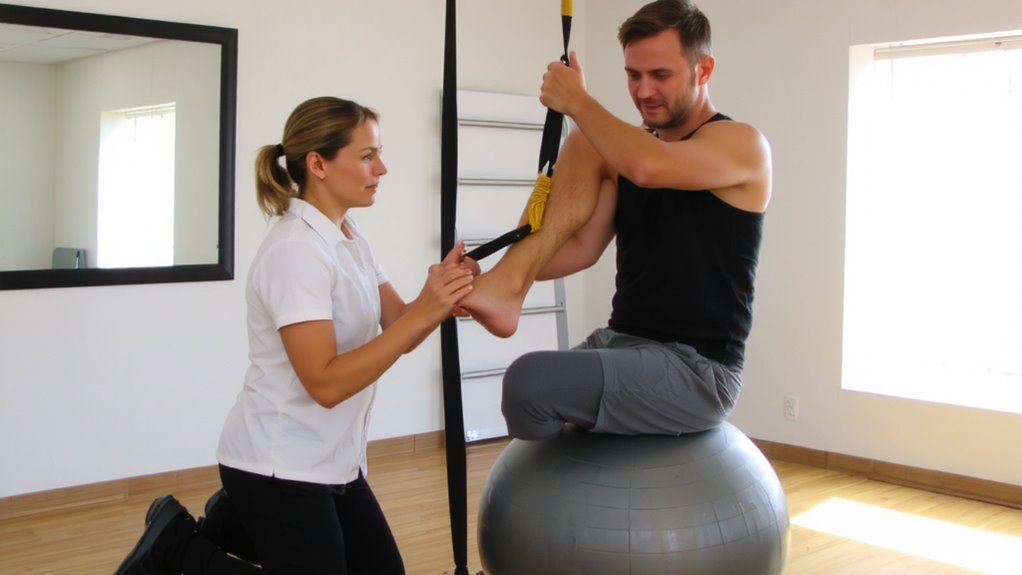
How is it possible that training just one arm or leg can actually benefit the opposite, injured limb? The answer lies in bilateral transfer, a phenomenon rooted in motor adaptation and neural plasticity. When you exercise one limb, your brain activates similar neural pathways used by the other. This cross-talk enhances coordination and strength in the untrained limb. Studies show that consistent training of the uninjured side helps maintain motor control in the injured one. Equipment like resistance bands or compact ergometers support this training effectively, especially when space or mobility is limited. While not a full replacement for direct rehab, these tools offer measurable benefits. You’re fundamentally leveraging your nervous system’s ability to adapt-proof that recovery isn’t always about direct effort, but smart, neurologically informed strategy.
Can Training One Limb Help the Other Heal Faster?
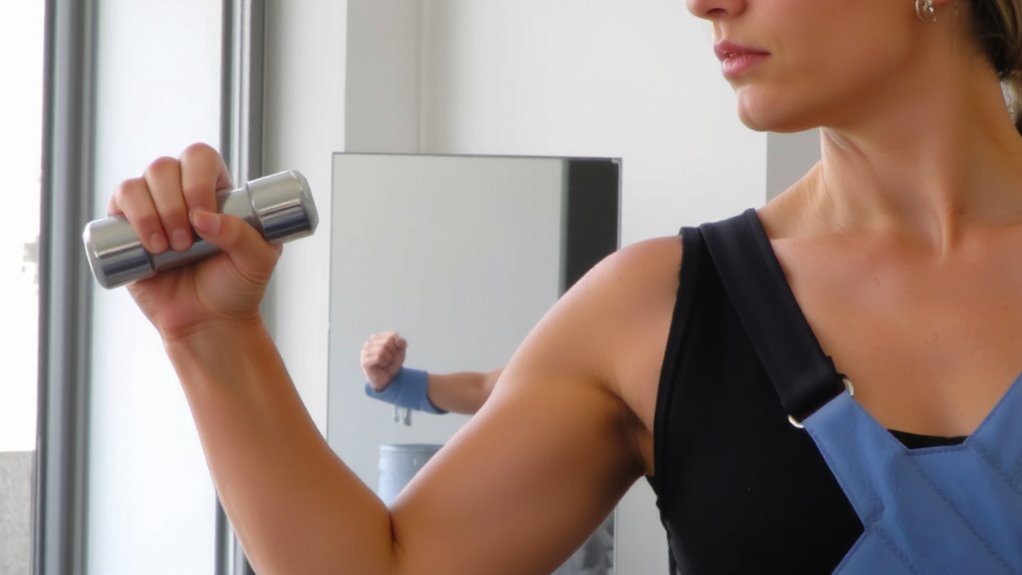
While you might not expect working one limb to influence the healing of the other, evidence shows it can indeed speed recovery through neurological adaptations. When you train your uninjured limb, neural adaptation occurs in the brain and spinal cord, improving signal efficiency to the affected side. This cross-education effect strengthens muscle memory, allowing the injured limb to regain function faster once rehabilitation begins. Though no substitute for direct therapy, this transfer helps maintain motor patterns and reduces relearning time. Fitness gear like resistance bands or adjustable dumbbells make it easy to tailor workouts safely. You preserve coordination and mental engagement during recovery-critical for long-term outcomes. Studies suggest these benefits are most pronounced in early rehab phases, when disuse could otherwise weaken neural connections. By focusing on what you can train, you’re not just maintaining fitness; you’re actively priming the nervous system for healing, making recovery more efficient and effective. Incorporating best dumbbell bicep curl exercises can enhance unilateral training effectiveness by promoting balanced strength and neuromuscular activation.
What Does Science Say About Strength Transfer in Rehab?
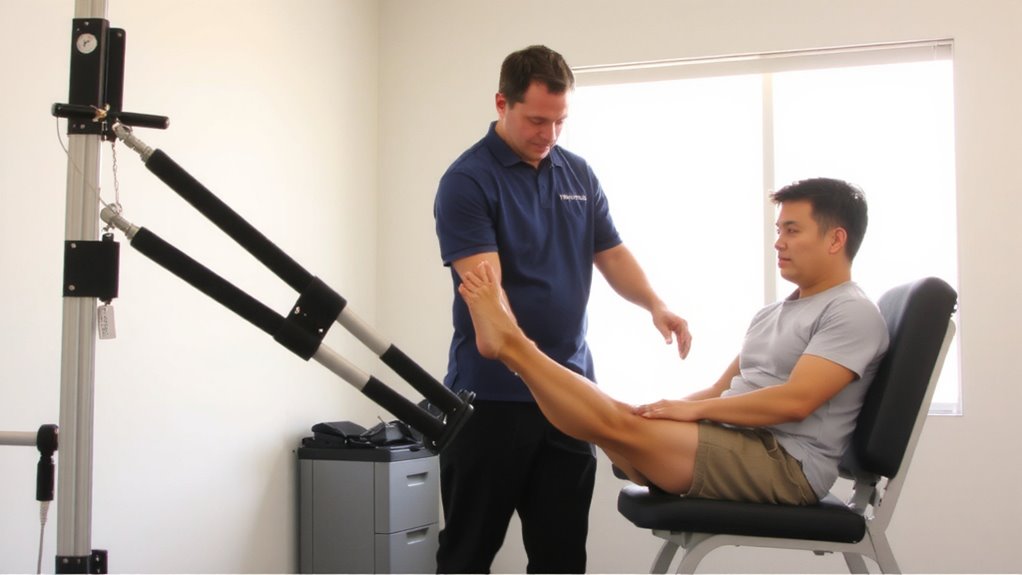
You’ve probably wondered whether working one arm or leg actually helps the other recover-and science confirms it does, thanks to neural cross-talk and strength transfer effects observed in rehabilitation studies. When you train your uninjured limb, neural adaptation occurs in the central nervous system, improving motor control even on the untrained side. This isn’t just about muscle strength; it’s driven largely by muscle memory-your brain’s ability to retain movement patterns despite injury. Studies show strength gains of 10–35% in immobilized limbs after unilateral training, proving it’s more than placebo. These effects are most consistent with resistance and skill-based exercises that stimulate cortical involvement. While not a full replacement for direct rehab, cross-education markedly boosts early recovery by priming neural circuits. The evidence supports its use as a valuable tool when equipment or mobility limits full-body workouts-especially with smart fitness gear that tracks symmetry and effort.
How to Use Your Uninjured Limb to Speed Recovery
Training the uninjured limb isn’t just a workaround when direct exercise is off-limits-it’s a strategic move grounded in neurophysiology that can accelerate recovery on the affected side. When you strengthen one limb, neural signals cross the spinal cord and cortex, triggering neuroplastic adaptation that improves motor control in the opposite limb. This bilateral transfer is especially effective when you combine physical training with mental rehearsal-imagining the injured limb performing the movement-because it activates similar brain regions. You don’t just maintain fitness; you rewire your nervous system. Studies show gains in strength, coordination, and endurance on the untrained side, sometimes reaching 30–50% of the trained limb’s improvement. For best results, focus on resistance training with consistent form and integrate visualization daily. It’s not a replacement, but a proven adjunct-one that smart rehab programs use early. Your brain adapts faster when both effort and imagination are engaged.
Who Gains the Most From Bilateral Training in Rehab?
Who benefits most when rehab leans on the strong side to heal the weak? You might, depending on age differences and injury severity. Younger patients often show quicker neural adaptation, meaning your brain picks up cross-transfer signals faster. But older adults still gain meaningful strength and coordination, just at a slower rate. If your injury is severe-say, a recent stroke or major orthopedic surgery-bilateral training can be a game-changer. It helps maintain motor pathways when the affected limb can’t move much. You’re not just keeping fit; you’re preserving neural real estate. Those with moderate to high injury severity often benefit most because the unaffected side keeps the nervous system engaged. Age differences influence pace, not outcome. With consistency, bilateral training boosts your recovery efficiency. It’s not a shortcut, but a smart strategy-especially when early movement on the injured side isn’t possible.
On a final note
You’re not just maintaining fitness when you train your uninjured limb-you’re actively aiding recovery. Research shows bilateral transfer can boost strength in the immobilized side by up to 20–40%, thanks to neural adaptations. It’s especially effective early in rehab, reducing atrophy and motor control loss. For best results, pair unilateral training with consistent, moderate loads and controlled movements. While gear like resistance bands or smart cuffs helps track progress, the real advantage lies in smart neuromuscular engagement-not equipment alone.