Aquatic Exercise Progressions for Lower Extremity Injuries Before Land-Based Training
You start rebuilding strength and mobility in injured legs days sooner with aquatic therapy, thanks to water’s support and resistance. Buoyancy in chest- or waist-deep water reduces joint stress, letting you move safely. Gentle exercises restore range of motion, while water resistance builds functional strength without compression. You’ll improve balance and retrain walking patterns through controlled movements. Progress is measurable, and early gains set a strong foundation-what comes next sharpens those results even further.
Notable Insights
- Begin with buoyancy-assisted exercises in shoulder- or chest-deep water to minimize weight-bearing stress during early mobilization.
- Use warm water immersion to reduce joint stiffness and enhance circulation for improved range of motion.
- Perform slow, controlled movements like leg swings and ankle circles to restore mobility without compressive loading.
- Progress strength training using water resistance, adjusting speed or adding aquatic equipment to increase challenge.
- Incorporate balance and gait drills in chest-deep water to develop stability and neuromuscular control before land transition.
How Aquatic Therapy Speeds Recovery
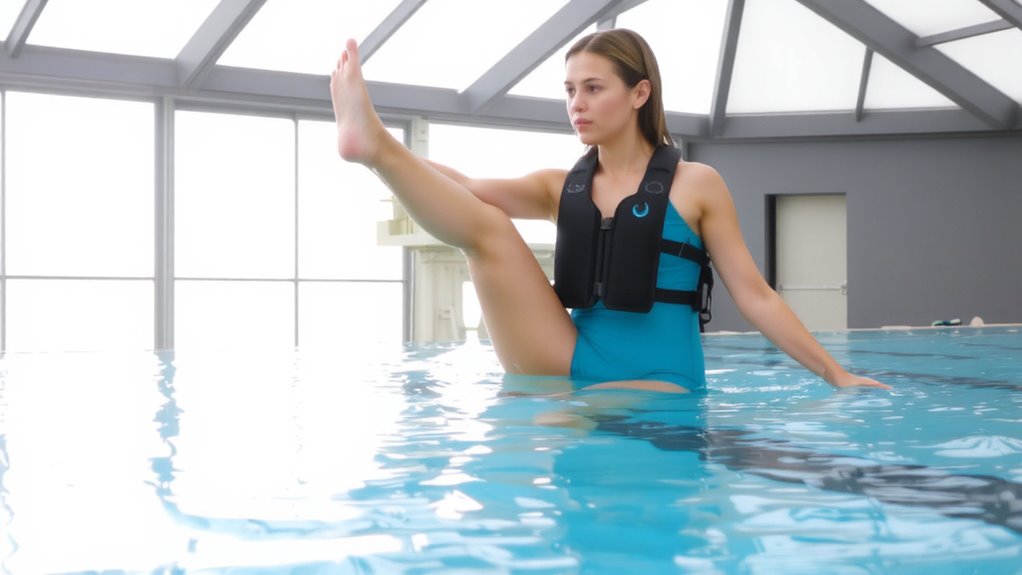
While traditional land-based rehab can strain healing tissues, aquatic therapy offers a smarter path to recovery by leveraging water’s natural properties to support movement with less stress. You benefit from hydrostatic pressure, which reduces swelling and enhances circulation, helping damaged tissues heal faster. This gentle, consistent force also improves joint proprioception without adding impact. At the same time, you maintain cardiovascular conditioning through controlled, low-impact exercises that elevate your heart rate safely. Unlike high-load land workouts, aquatic routines allow steady endurance development while protecting healing structures. Most patients see faster functional gains because water enables earlier mobilization. The resistance of water further strengthens muscles without weights, minimizing re-injury risk. Overall, the aquatic environment balances therapeutic support with effective physiological demand, making it not just an alternative, but often a superior phase in structured recovery programs focused on long-term fitness and joint health.
Use Buoyancy to Protect Healing Joints
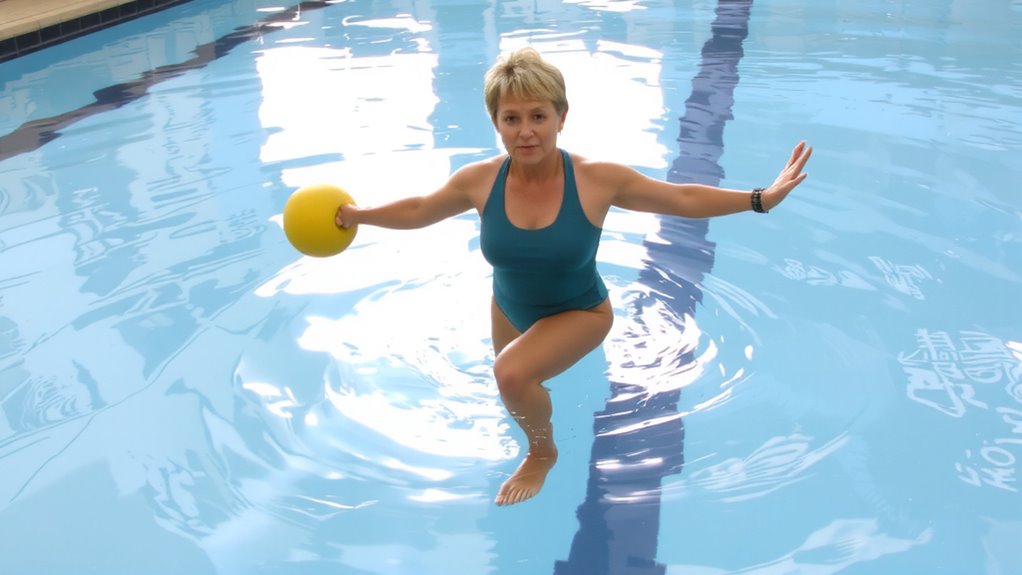
Water’s buoyancy gives you a powerful tool to protect healing joints while staying active, building directly on the circulatory and resistance benefits already discussed. This natural lift reduces weight-bearing stress, offering immediate joint protection during early recovery. With buoyancy supporting your body, you can move more freely without sacrificing healing support. It’s ideal for low-impact conditioning when land-based training is too risky.
| Depth Level | Weight-Bearing Impact |
|---|---|
| Chest-deep | ~30% of body weight |
| Waist-deep | ~50% of body weight |
| Shoulder-deep | ~10% of body weight |
These water depths let you adjust load precisely, tailoring exercises to your recovery stage. Buoyant movement preserves range of motion while shielding vulnerable tissues. Unlike bulky fitness gear that may restrict motion or irritate injuries, aquatic buoyancy provides consistent, invisible support-making it a smarter, more adaptable choice for effective rehabilitation.
Regain Motion With Gentle Water Exercises
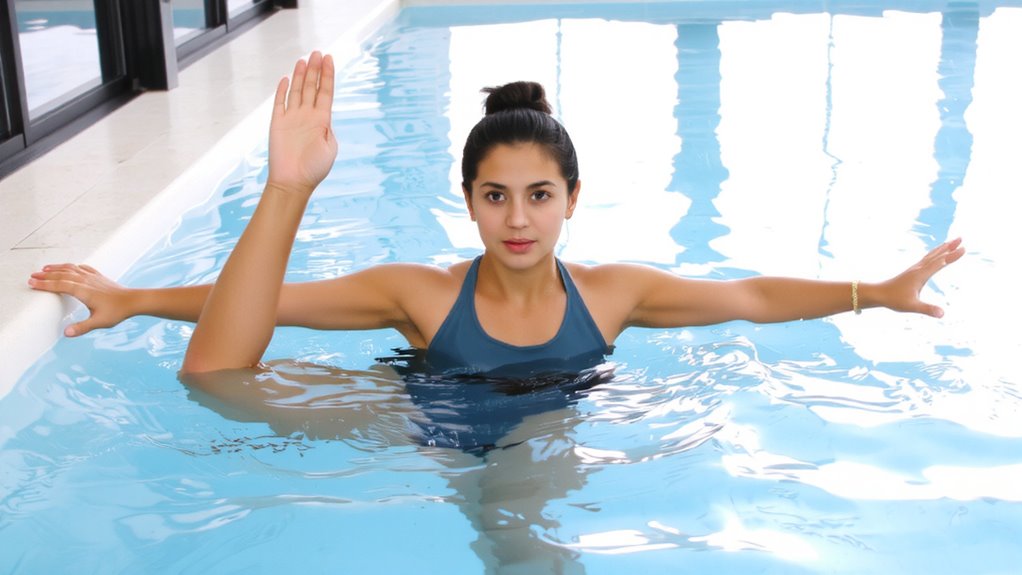
Since mobility is often the first thing you lose after a lower extremity injury, starting with gentle, controlled movements in water can make a real difference in how quickly and safely you regain range of motion. The hydrostatic pressure and warmth of therapeutic pools support joint mobilization by reducing stiffness and increasing circulation. Performing slow leg swings, knee bends, or ankle circles in chest-level water encourages fluid movement with minimal strain. Buoyancy unloads stressed joints, allowing you to focus on soft tissue release through dynamic stretching. You’ll notice improved flexibility and decreased muscle guarding within days, especially when exercises are repeated consistently. Unlike land-based routines, water enables early motion without risking re-injury. The resistance is mild enough to avoid inflammation, yet sufficient to stimulate neurological feedback. This phase isn’t about building strength-it’s about restoring mobility, re-establishing movement patterns, and preparing your body for more demanding work ahead.
Build Strength Using Water Resistance
A significant number of rehab professionals recommend progressing to strength training in water once basic mobility is restored, and for good reason-resistance provided by water is both adjustable and naturally variable, making it ideal for rebuilding muscle function after lower extremity injuries. You can increase water resistance by moving faster or using larger equipment like paddles, giving you control over intensity without adding joint stress. This environment supports effective strength building while minimizing compression forces, which is essential when bones or joints are still healing. Buoyancy unweights your body, allowing safer execution of movements like leg presses or squats. Clinical observations show patients consistently achieve earlier activation of key muscles, including glutes and quadriceps, in water than on land. Strength gains are functional and transfer well when moving to dry training. The consistency of resistance in all movement planes enhances muscular coordination, not just raw power. Equipment like aquatic dumbbells or resistance boots can further refine your program’s specificity and progression.
Rebuild Balance and Walking in Water
How do you regain stability and relearn natural movement after a lower extremity injury without overloading healing tissues? Water offers a controlled environment where buoyancy reduces joint stress while allowing functional movement. You can start with simple standing balance drills, progressing to single-leg stances as proprioception improves. The resistance of water challenges your core and stabilizing muscles without impact. Practicing walking in chest-deep water helps restore step rhythm and foot coordination, critical for confident gait patterns. You’ll find that the fluid drag promotes controlled leg lifts and heel-to-toe motion, mimicking natural walking mechanics. These drills build neuromuscular memory safely, letting you refine timing and weight shift. Consistent aquatic walking sessions improve dynamic balance and limb synchronization, preparing your body for eventual land-based function-without rushing the recovery process.
Know When to Return to Land Exercise
When can you safely shift back to land-based exercise after making progress in the water? You’re ready when daily movements cause little to no pain and you’ve regained strength and coordination comparable to your uninjured side. Successful aquatic rehab should leave you with effective pain management and improved joint stability-key markers for shift. Pain during or after activity is a red flag, not a normal part of recovery, so return only when discomfort is minimal and consistent. Proper injury prevention means ensuring muscles, tendons, and ligaments can handle increased load on land. Your balance, gait, and endurance should mirror functional demands, whether walking or returning to sport. Monitor your body’s feedback closely in early land sessions. Progress too fast, and you risk setbacks. Move forward with care, using what you’ve built in the water as a foundation-not a shortcut.
On a final note
You’ll find aquatic exercise accelerates recovery by reducing joint stress while maintaining strength and mobility. Buoyancy supports healing limbs, allowing safer movement, and water resistance builds muscle without heavy loads. It’s ideal for progressing toward land-based training, especially with lower extremity injuries. Though fitness gear like resistance jets or aquatic treadmills enhances results, consistent technique matters most. Overall, aquatic therapy offers a practical, effective bridge to full function.