Why Melatonin Supplementation May Improve Sleep Onset in Injured Athletes
Your injury hijacks your nervous system, turning up pain and stress when you need rest most. Melatonin counters this by reinforcing your brain’s sleep signal, helping you fall asleep faster despite discomfort or disrupted rhythms. At 0.5–3 mg, taken 30–60 minutes before bed, it resets your circadian clock without dulling the mind. It’s especially effective short-term, aligning with your body’s natural recovery needs better than sedatives. There’s more to how it supports healing beyond just sleep onset.
Notable Insights
- Injury-related pain and stress heighten nervous system arousal, delaying sleep onset.
- Inactivity and disrupted routines misalign circadian rhythms, impairing natural sleep signals.
- Melatonin supplements reinforce the body’s sleep-wake signal, especially when natural production is disrupted.
- Taking 0.5–3 mg of melatonin 30–60 minutes before bed accelerates sleep onset in circadian disruption.
- Short-term melatonin use helps reset sleep patterns, supporting recovery without suppressing natural production.
Why Injured Athletes Can’t Sleep
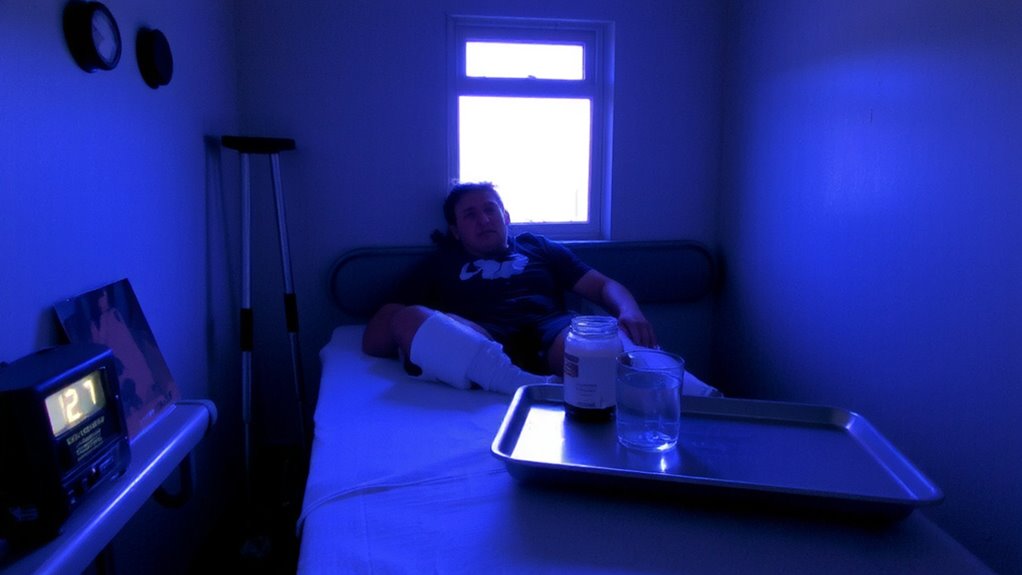
Why is it that, after an injury, sleep suddenly feels out of reach-even when you’re exhausted? You’re not imagining it. Physical trauma heightens pain sensitivity, turning minor discomforts into persistent distractions that disrupt rest. Your nervous system becomes hypervigilant, amplifying signals your body interprets as threats-especially in the quiet darkness of night. At the same time, emotional stress takes hold. The sudden halt in training, fear of setbacks, and identity tied to performance fuel anxiety and rumination. These mental burdens don’t just weigh on your mood-they directly interfere with falling asleep. Unlike functional fitness gear that supports performance, recovery tools often fall short when addressing invisible barriers like neurological pain responses or psychological strain. Understanding this dual impact-pain sensitivity and emotional stress-explains why rest doesn’t come easy, even though your body needs it most. Recovery isn’t just physical; it’s deeply psychological.
How Injury Wrecks Your Sleep-Wake Cycle
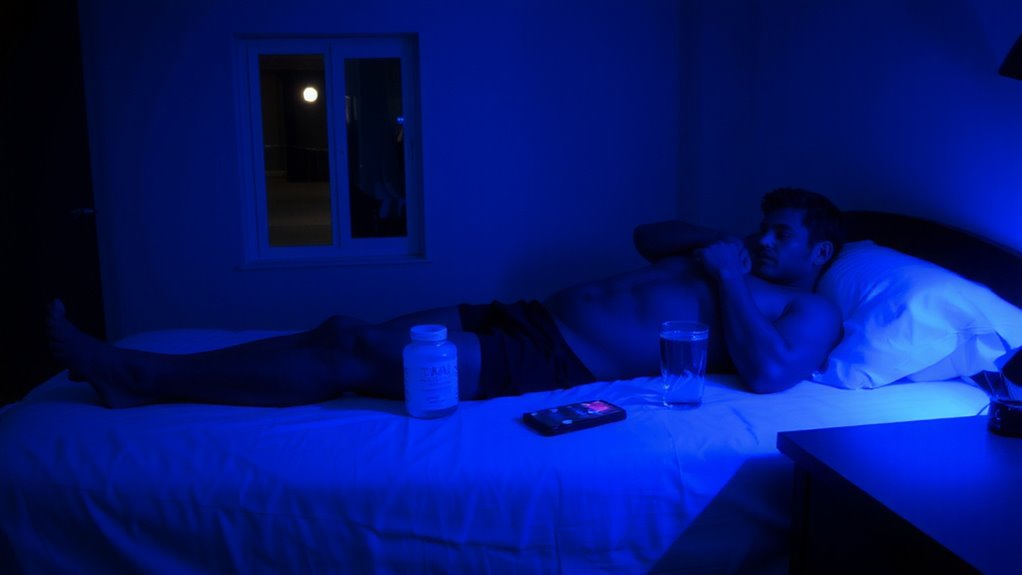
Your body’s internal clock, the circadian rhythm, relies on consistency-regular training times, sleep schedules, and daylight exposure all help keep it finely tuned. But injury throws that balance off. Sudden inactivity, altered light exposure, and pain all contribute to circadian disruption. You’re not just healing physically-neural inflammation can interfere with brain regions that regulate sleep. This internal chaos makes falling and staying asleep harder, slowing recovery.
| Factor | Effect on Sleep | Connection to Injury |
|---|---|---|
| Inactivity | Reduces sleep drive | Less physical output |
| Pain | Fragmented sleep | Alters sleep architecture |
| Light exposure shifts | Misaligned circadian rhythm | Changed daily routine |
| Neural inflammation | Disrupts sleep signals | Triggers circadian disruption |
Your recovery gear might support joints or muscles, but it won’t reset your rhythm-your biology needs realignment.
How Melatonin Helps You Fall Asleep Faster

While your body struggles to wind down after injury, melatonin can act as a biological signal to kickstart sleep. It mirrors your natural circadian rhythm, helping you fall asleep faster by binding to receptors in the brain that promote drowsiness. This is especially useful when pain or stress disrupts your usual sleep patterns. By taking melatonin at the right time, you support both sleep onset and overall sleep quality, giving your system the consistency it needs. Improved sleep isn’t just about feeling rested-it’s critical for neural recovery. During deep sleep, your brain clears metabolic waste and repairs damaged pathways, processes that are essential for cognitive and physical healing. For injured athletes, faster sleep onset means more time in restorative stages, enhancing recovery efficiency. Though not a sedative, melatonin’s role in regulating timing makes it a practical tool.
How to Use Melatonin Safely and Effectively
How do you make sure melatonin supports recovery without interfering with your body’s natural rhythms? Start with proper dosage timing-take 0.5 to 3 mg about 30–60 minutes before bedtime to align with your circadian rhythm. This enhances sleep onset without oversupplying hormones. Consistency matters, but so does caution: occasional use is well-supported, yet long term safety data remains limited, especially for athletes. Avoid dependency by using melatonin short-term while addressing root causes like pain or anxiety.
| Factor | Recommendation |
|---|---|
| Dosage | 0.5–3 mg |
| Timing | 30–60 min before bed |
| Duration | Short-term (≤3 months) |
| Long term safety | Insufficient evidence |
| Cycling use | Recommended to preserve natural production |
Use melatonin as a temporary tool, not a permanent fix, to support fitness recovery effectively.
What the Research Says About Melatonin and Sleep
Could melatonin actually improve sleep quality in injured athletes, or is its reputation bigger than the science? Research suggests it helps, especially when circadian disruption interferes with recovery. Injured athletes often face altered sleep-wake cycles due to pain, stress, or reduced activity, and melatonin can help reset that internal clock. Studies show it shortens sleep onset, with effects amplified when timing and dosage align with natural rhythms. You’re likely to see benefits if your neuroendocrine response is disrupted post-injury, since melatonin modulates hormonal signals tied to sleep and healing. While not a sedative, it supports sleep architecture indirectly by enhancing circadian strength. Evidence is strongest for short-term use, particularly in cases of jet lag or shift-like schedules. Though individual responses vary, the data backs its role in promoting earlier, more consistent sleep onset during recovery.
Melatonin vs. Other Sleep Aids for Athletes
Why choose melatonin over other sleep aids when you’re recovering from an injury? Unlike prescription sedatives or over-the-counter medications, melatonin works with your body’s natural sleep-wake cycle, making it a preferred option among natural alternatives. You’re likely avoiding substances that impair cognitive function or motor skills, especially during rehab. Melatonin, when used short-term, has fewer side effects and doesn’t lead to dependency. Other sleep aids may disrupt REM sleep or cause grogginess, interfering with recovery quality. Plus, the long term effects of many pharmaceutical options aren’t well understood in athletes. Melatonin’s safety profile, backed by research, supports its use without significant hormonal or neurological disruption. As a non-invasive, easily adjustable supplement, it aligns well with structured recovery protocols. For injured athletes prioritizing restorative sleep without compromising daytime function, melatonin offers a balanced, evidence-based solution worth considering.
On a final note
You’re likely under more stress when injured, and that disrupts your sleep cycle. Melatonin can help you fall asleep faster by supporting your body’s natural rhythm. Research shows it’s safer than many sleep aids, especially for short-term use. While not a cure-all, it’s a practical tool when combined with proper recovery habits. Always use the lowest effective dose-typically 0.5 to 3 mg-about 30 minutes before bed.