Straight Leg Raises With Toe Orientation Changes to Target Specific Iliopsoas Fibers
You can target specific iliopsoas fibers during straight leg raises by adjusting your toe position. Pointing toes in activates the psoas major, while turning them out emphasizes the iliacus. Keeping feet neutral balances overall hip flexor engagement. Maintain a stable pelvis and avoid arching your lower back by engaging your core. This precision boosts core stability, aids recovery, and enhances performance-especially when tailored to your movement goals. There’s more to optimizing this move than foot position alone.
Notable Insights
- Straight leg raises with toes in enhance psoas major activation by promoting internal hip rotation.
- Toes outward during the lift increases iliacus engagement, especially in the lower range of motion.
- Foot orientation alters muscle recruitment, allowing selective focus on specific iliopsoas components.
- Maintaining a neutral pelvis prevents compensatory arching and ensures targeted iliopsoas activation.
- Controlled tempo and core bracing maximize neuromuscular isolation with varying toe positions.
Why Strong Iliopsoas Muscles Support Hips and Core
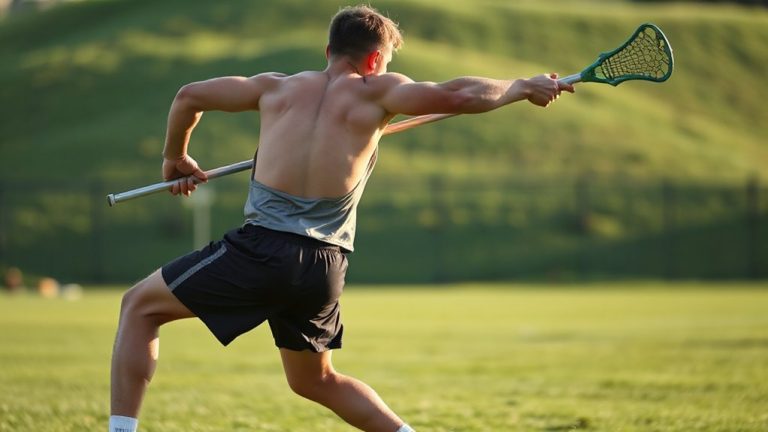
While most people focus on abs or glutes when thinking about core strength, your iliopsoas plays a quietly essential role in stabilizing both your hips and lower spine. This deep-seated muscle group, often overlooked, directly influences hip stability and efficient movement patterns. When your iliopsoas is weak, you’re more likely to experience lower back strain or compromised posture, especially during dynamic activities. Strengthening it enhances core strength not just superficially but at a functional level, supporting pelvis alignment and smooth gait mechanics. Athletes and active individuals benefit substantially-improved control and reduced injury risk are well-documented outcomes. While recovery tools like foam rollers or resistance bands can aid maintenance, consistent, targeted exercise remains key. Proper iliopsoas function doesn’t just boost performance-it sustains long-term joint health, making it a cornerstone of resilient movement.
Get the Form Right: Straight Leg Raise Basics
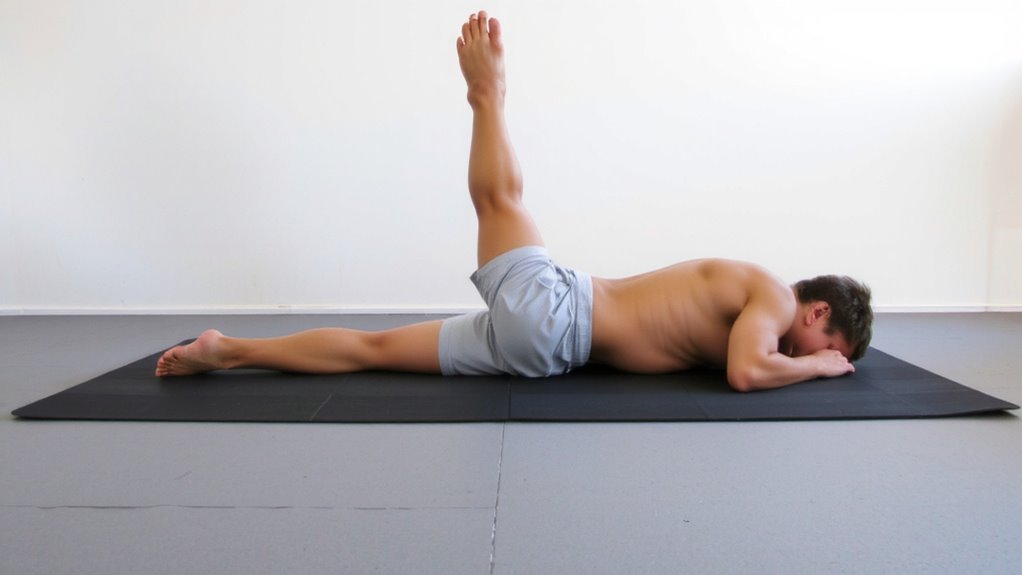
When executed with precision, the straight leg raise becomes a potent tool for targeting the iliopsoas without over-recruiting secondary muscles like the quadriceps or hip flexors. To get the most out of the movement, you need proper alignment: lie flat, press your lower back into the floor, and keep your pelvis stable throughout. Start with legs extended and engage your core to prevent arching. Lift one leg by initiating the motion from the hip, not the thigh. Maintain a controlled tempo-roughly two seconds up, a brief hold, then two seconds down-to maximize time under tension and reduce momentum. Avoid swinging or using inertia, as this reduces iliopsoas activation. Ideal for home workouts, this exercise requires no gear but benefits from a firm surface to maintain form. Consistent practice with correct technique builds strength efficiently and supports functional movement patterns.
Toes In: Activate the Psoas During Straight Leg Raises
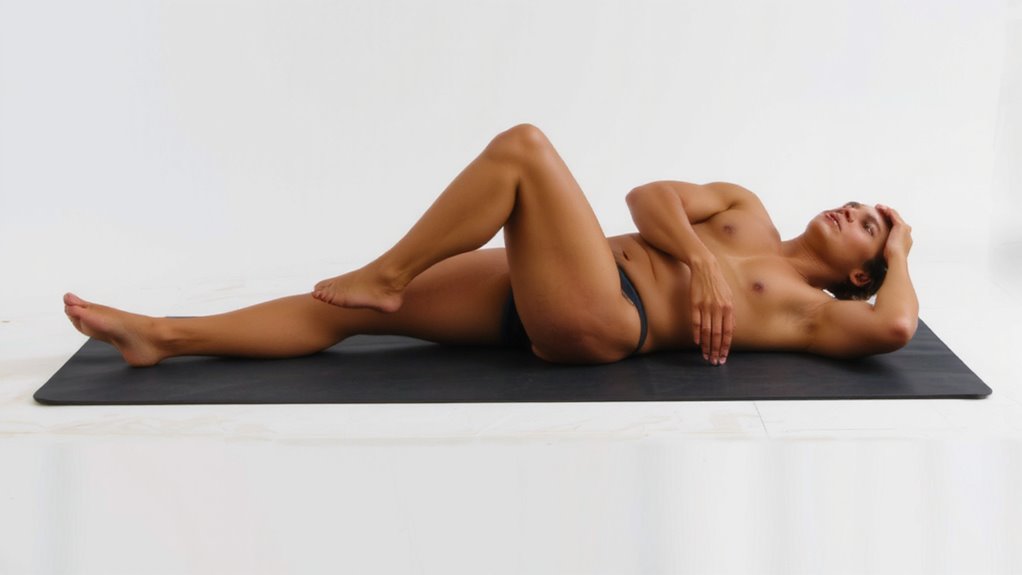
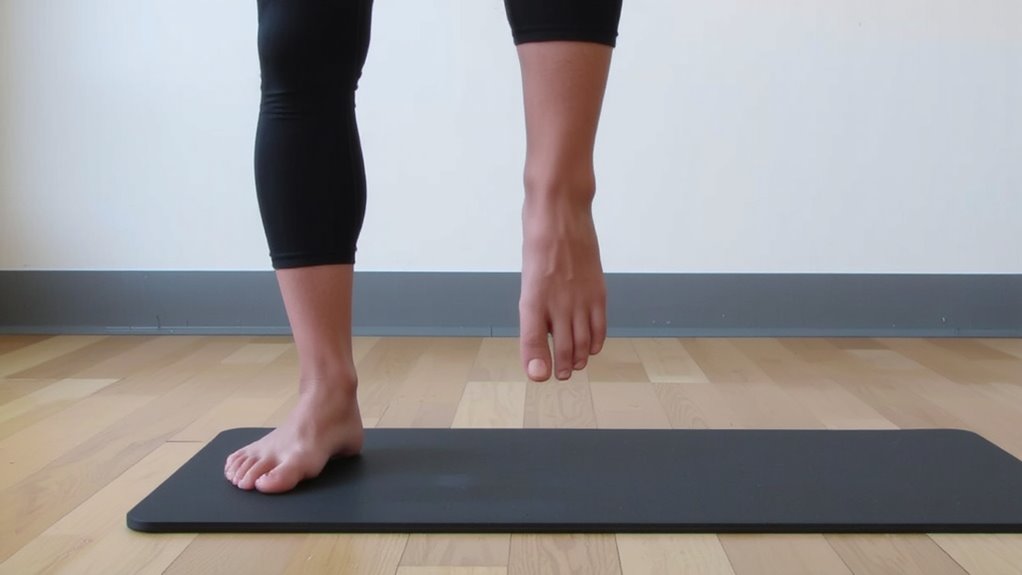
If you want to dial in psoas engagement during straight leg raises, try rotating your foot inward by pointing your toes slightly toward the midline-this small adjustment shifts the emphasis from the broader hip flexors to the deeper psoas major. You’ll notice improved muscle isolation, as internal rotation restricts synergist dominance, making the psoas work harder during hip flexion. This technique refines movement efficiency, especially useful when targeting specific iliopsoas fibers. Maintaining a neutral pelvis is key; otherwise, momentum reduces psoas activation. Performance improves when you pair this form tweak with controlled tempo and core bracing. Though subtle, toe orientation impacts neuromuscular recruitment, making it a valuable cue for advanced training. It’s not about gear-just body control. This method doesn’t require resistance bands or straps, but a mat with firm support helps sustain proper alignment. When done right, you’ll feel a deep, focused contraction near the lower abdomen-confirmation you’ve optimized the movement for psoas-specific activation.
Toes Out: Target the Iliacus During Straight Leg Raises
Pointing your toes outward during straight leg raises shifts the focus from the psoas major to the iliacus, the broad, fan-shaped muscle that lies along the inner surface of the hip bone. This foot alignment activates the iliacus more directly, enhancing muscle isolation and promoting balanced strength across the iliopsoas complex. The external rotation of the hip from the turned-out position increases demand on the iliacus fibers, especially in the lower range of motion. You’ll notice a distinct pull along the inner pelvis, confirming targeted engagement. Unlike neutral or toes-in variations, this version better isolates the iliacus, making it ideal for corrective work or rehab protocols. For peak performance, maintain a stable pelvis and avoid arching your lower back. Consistent practice with proper foot alignment improves neuromuscular control. Use a mat with adequate cushioning to support spinal alignment during repetitions.
Neutral Feet: Balance Hip Flexor Engagement
A moderate number of lifters find that keeping your feet in a neutral position-heels relaxed and toes pointing straight ahead-during straight leg raises delivers the most balanced activation across the entire hip flexor group, especially the iliopsoas as a functional unit. This alignment supports ideal hip alignment, reducing strain on the lumbar spine while promoting even recruitment from both the iliacus and psoas major. You’ll likely notice improved muscle symmetry over time, as neither internal nor external rotation biases one fiber group over another. Neutral feet also make it easier to maintain a stable pelvis, which is key for controlled, effective reps. Unlike rotated toe positions, this setup doesn’t isolate specific fibers but enhances overall coordination and endurance in the hip flexors. It’s especially useful for athletes prioritizing functional strength and injury prevention. For best results, pair the movement with mindful pacing and recovery-focused gear like compression wraps or foam rollers to maintain tissue quality.
Avoid Arching: Fix Pelvic Tilt in Leg Raises
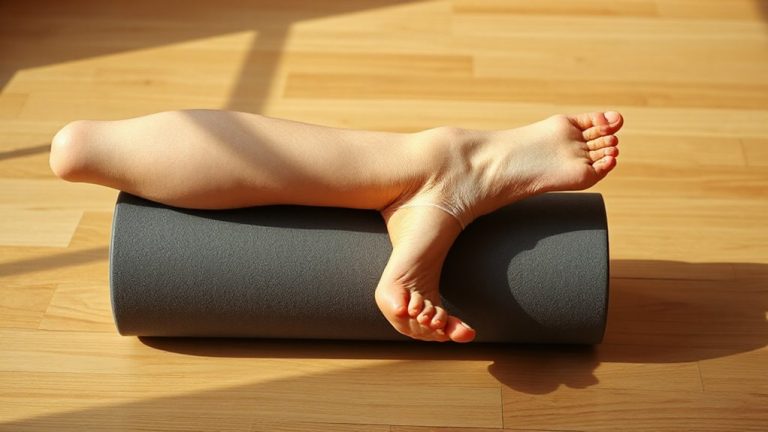
While maintaining control throughout the movement, you’ll want to keep your lower back pressed gently into the floor to prevent excessive arching during straight leg raises, as an anterior pelvic tilt can shift stress from the iliopsoas to the lumbar spine. Engaging your core and bracing your abdominals supports pelvic stability, ensuring the target muscles do the work. Without proper form, you risk compromising lower back protection and reducing exercise effectiveness. Think of your pelvis as a bowl-tilting it posteriorly slightly prevents spillage, or in this case, compensatory motion. This subtle adjustment enhances muscle isolation and reduces shearing forces on the spine. Maintaining contact between the lower back and floor isn’t about rigidity-it’s about controlled engagement. Whether using a mat or recovery gear like foam rollers for feedback, consistency in pelvic positioning improves neuromuscular efficiency. Over time, this builds resilience, strengthens deep stabilizers, and aligns movement patterns critical for both fitness and recovery. A high-density foam roller can provide real-time biofeedback to help maintain proper spinal and pelvic alignment.
Customize for Sport or Recovery
How do your goals shape the way you perform straight leg raises? If you’re training for sport specificity, you’ll tweak toe orientation and tempo to mimic movement demands-pointed toes may engage anterior fibers vital for sprinting, while dorsiflexed toes could aid kicking sports. These adjustments guarantee the iliopsoas activates in patterns that transfer to performance. For recovery adaptation, the focus shifts to controlled motion, reduced range, and neutral toe positioning to safely rebuild strength without strain. You’ll likely use slower cadences and add isometric holds to promote tendon healing and joint stability. Recovery isn’t just about rest-it’s about prescribing the right variation with precision. Whether you’re rehabbing or optimizing, customization is essential. Gear like resistance bands or EMG feedback tools can refine execution, but mindful movement often matters more. Ultimately, your intent-sport or healing-should dictate technique, load, and progression.
On a final note
You’ve now seen how straight leg raises, with simple toe adjustments, can isolate key iliopsoas fibers for targeted strength. Toes in favor psoas engagement, toes out recruit the iliacus, and neutral offers balance-making these variations smart for recovery or performance. When paired with proper pelvic control, they enhance hip and core stability efficiently. For fitness recovery, consistency beats intensity, and the right technique guarantees lasting benefit without strain.