Shoulder Mobility Drills With Cross-Body Arm Pull With Band
You stand on the band’s center and pull one end across your body at chest height, using mid-level resistance for best shoulder mobility without sacrificing form. This drill activates your rotator cuff and scapular stabilizers through dynamic tension, making it ideal for warm-ups or recovery. Keep your spine neutral, elbow tucked, and avoid hiking your shoulder. A latex or fabric band 40–60 inches long guarantees smooth performance. Fixing common errors sharpens results-consistency here builds long-term joint resilience. There’s more to learn about refining each phase.
Notable Insights
- Perform the cross-body arm pull by standing on a resistance band and pulling one end across your chest at shoulder height.
- Use mid-level resistance to maintain proper form while effectively engaging the scapular and rotator cuff muscles.
- Keep the elbow slightly bent and close to the body to avoid strain and maximize shoulder mobility benefits.
- Maintain a stable spine and engaged core to promote active stretching and prevent compensatory shoulder hiking.
- Incorporate slow eccentrics (3–5 seconds) during the return phase to enhance tissue resilience and joint control.
How to Do the Cross-Body Arm Pull
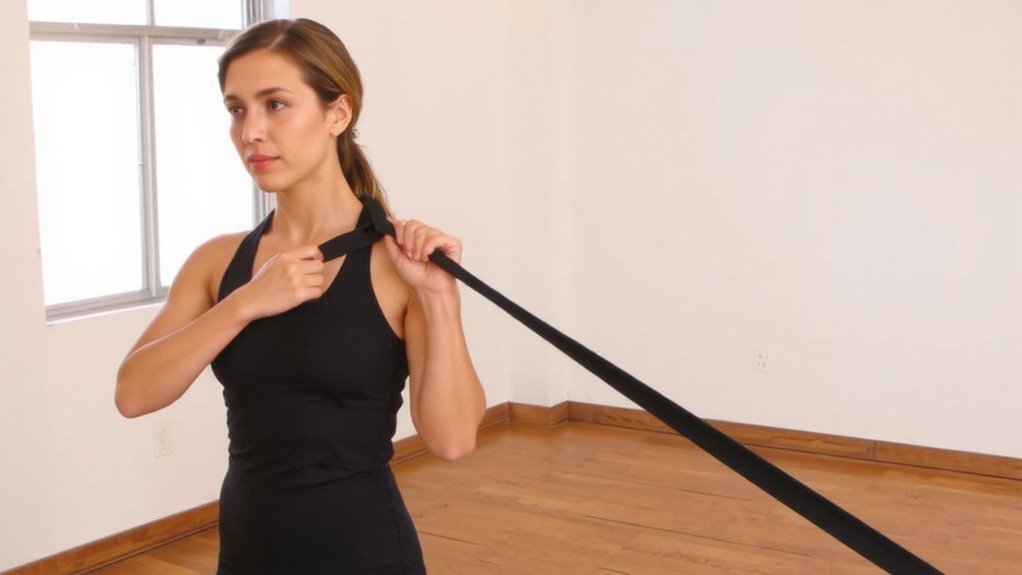
The cross-body arm pull is a straightforward yet effective shoulder mobility drill when performed with a resistance band. You stand on the band’s center, pull one end across your body at chest height, and keep your core engaged. This movement promotes scapular activation, helping stabilize and mobilize your shoulder girdle. Dynamic tension from the band challenges your muscles through controlled, full-range motion-ideal for warming up or rehab. Most bands, like latex or fabric ones, deliver consistent resistance, but durability varies. Choose a mid-level resistance initially; too much strain limits form, too little reduces benefit. Users report improved posture and reduced stiffness over time. It’s practical for home or gym use, requiring minimal space. Just make certain the band is free of nicks to prevent snapping. With proper execution, this drill enhances joint awareness and muscle engagement efficiently.
Boost Shoulder Mobility With This Resistance Band Stretch
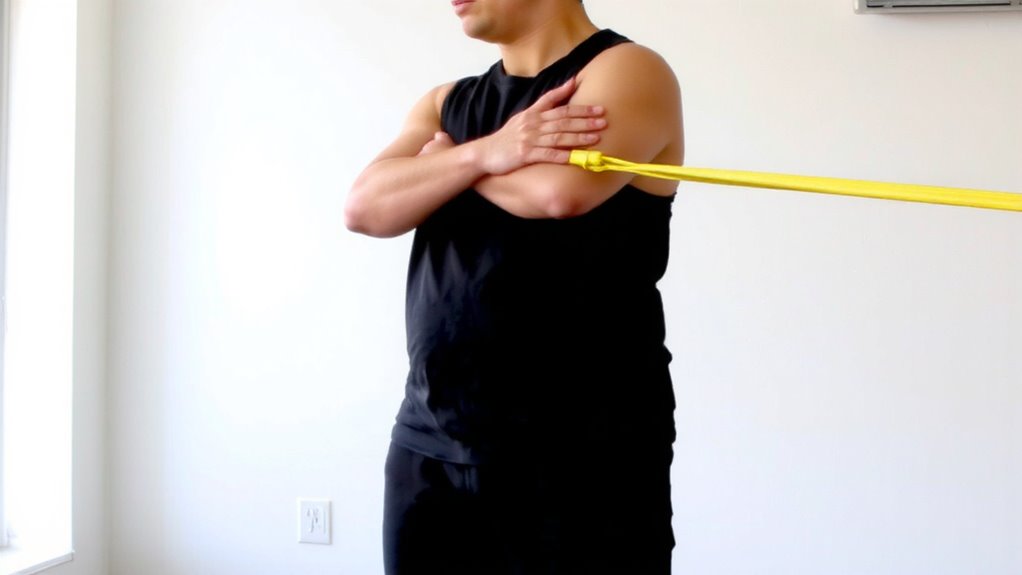
You’ve already used the resistance band to engage your shoulder girdle dynamically with the cross-body arm pull, and now you can extend that benefit into a deeper mobility-focused stretch. This resistance band stretch targets tight posterior shoulder tissues, improving range of motion through sustained tension. Anchor the band at shoulder height, grasp it with one hand, and gently pull it across your body while maintaining a stable spine. The controlled resistance enhances muscle activation in the rotator cuff and surrounding stabilizers, promoting balanced strength and joint health. Unlike passive stretches, this method encourages active engagement, which supports long-term mobility gains. The band’s elasticity allows progressive overload without compressive joint stress, making it ideal for daily use. Consistent practice not only boosts flexibility but also reinforces neuromuscular control. With proper form, you’ll notice improved posture and reduced stiffness-especially beneficial after heavy lifting or prolonged inactivity.
Pick the Right Resistance Band

Choosing the right resistance band isn’t just about picking a color or brand-size, material quality, and resistance level actually matter when it comes to effectiveness and durability. You need to take into account band material; latex offers great elasticity and grip, while fabric bands provide more stability and longevity. If you’re doing mobility drills, lighter resistance levels are usually sufficient-going too heavy can compromise form. Most people benefit from a set that includes multiple resistance levels, so you can progress as your shoulder mobility improves. Look for bands with even thickness and no weak spots, as poor construction leads to snapping. A 40–60 inch length works well for cross-body pulls, giving you enough slack to move smoothly. Always inspect your band before use. Good design combines reliable band material with practical resistance levels, making your recovery work both safe and effective.
Fix These 5 Cross-Body Pull Mistakes
A surprising number of people struggle with cross-body band pulls, often unknowingly reinforcing poor movement patterns instead of correcting them. You’re probably rounding your shoulders or yanking the band too hard, causing joint compression instead of smooth mobilization. Avoid hiking your shoulder-keep your neck relaxed and your scapular stability in check. A common mistake is letting your elbow flare out, which reduces effectiveness and strains the joint. Instead, keep it slightly bent and close to your body. You might also be anchoring the band too high or low, altering the pull angle and limiting range. Use a secure, waist-level anchor. Rushing reps won’t help; slow, controlled motion improves shoulder mechanics. Finally, don’t forget posture: stand tall, core engaged. These adjustments maximize benefits while minimizing wear on tendons and joints-key for recovery and long-term joint health.
Warm-Up or Recovery: When to Use It?
Performing cross-body pulls with proper form sets the foundation for effective shoulder mobility work, but knowing when to include these drills matters just as much as how you execute them. The timing benefits vary depending on your goal-using the band for activation pre-workout increases joint readiness, while post-training it aids in releasing tension. Understanding usage scenarios helps you make smarter choices. These drills excel in both prep and recovery, but context shapes their impact. A well-rounded recovery routine can also include the use of a massage gun to further alleviate muscle tightness and improve circulation. Below is a quick guide:
| Phase | Purpose | Outcome |
|---|---|---|
| Warm-Up | Activate mobility | Enhanced joint lubrication |
| Recovery | Reduce stiffness | Improved tissue recovery |
| Daily Use | Maintain range of motion | Sustained shoulder health |
3 Progressions to Deepen the Stretch
Why settle for basic stretches when you can systematically increase the depth and effectiveness of your shoulder mobility work? You can enhance the cross-body arm pull with band by applying dynamic tension-actively engaging the muscles around the shoulder joint while resisting the band. This boosts neuromuscular control and increases joint awareness. For deeper release, incorporate eccentric loading: slowly lengthen the muscle under tension as you return the arm to the starting position, controlling the band’s resistance over a count of 3–5 seconds. This method improves tissue resilience and promotes greater range of motion over time. Progressive overload applies here just like in strength training-gradually increasing band resistance or slowing movement deepens adaptation. Use durable, loop-style resistance bands with consistent elasticity to guarantee reliable performance. These progressions aren’t just flashy variations-they’re evidence-based upgrades that refine mobility quality, especially when recovery and long-term joint health are priorities.
Modify the Stretch for Shoulder Pain
You’ve likely pushed into deeper stretches using band resistance and eccentric control, but if shoulder pain flares up, continuing the same way could do more harm than good. Pain management should be your priority-especially during recovery-focused mobility work. Instead of forcing the cross-body pull, try gentle modifications: reduce the band tension, shorten your range of motion, or perform isometric holds at a pain-free angle. These adjustments maintain joint engagement without aggravating sensitive tissues. A softer band or anchoring it closer to your body can also minimize strain while still promoting blood flow and mobility. Evaluating your form is essential-ensure your scapula moves smoothly without shrugging or compensating. Fitness gear like resistance bands offer excellent versatility, but their effectiveness depends on smart usage. Listening to your body and incorporating gentle modifications isn’t a setback; it’s a strategic part of sustainable shoulder recovery and long-term joint health.
On a final note
You’ll find the cross-body arm pull with a resistance band effective for boosting shoulder mobility, especially when performed correctly. It’s portable, adaptable, and pairs well with warm-ups or recovery. A quality latex band lasts longer and delivers consistent tension. While simple, its benefits shine with proper form and progression. Used wisely, it supports long-term joint health and movement efficiency-making it a practical choice in both performance and rehabilitation settings.