Seated Forward Bend Modifications for Cyclists Managing Quad Stiffness
Tight quads from cycling limit hip flexion and pull your pelvis backward, forcing lower back rounding in seated forward bends. Elevate your hips 4–6 inches on a firm cushion to restore pelvic tilt and reduce spinal strain. Keep knees bent and use a yoga strap around your feet-this maintains alignment while protecting joints. Hinge from the hips, not the waist, moving your torso as one unit. A high-density foam roller helps release quad tension, improving flexibility over time-adjust your approach to build safer, more effective habits.
Notable Insights
- Use a 4–6 inch hip cushion to elevate pelvis and reduce quad tension during forward bends.
- Bend knees slightly to decrease lower back strain and accommodate tight quads.
- Initiate movement with a forward pelvic tilt to engage hips, not spine, in the hinge.
- Apply a yoga strap around feet to maintain alignment and avoid rounding the back.
- Incorporate foam rolling before stretching to improve quad and fascial tissue mobility.
Why Tight Quads Block Forward Bends
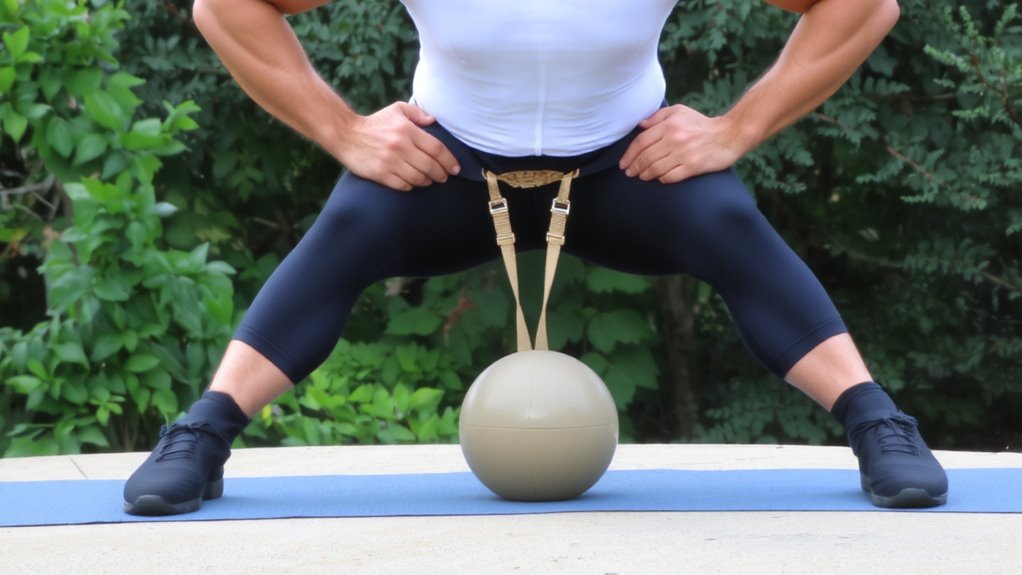
Many cyclists struggle to deepen their forward bends, and tight quads are often the hidden culprit. When your quadriceps are stiff from repetitive pedaling, they restrict hip flexion, limiting how far you can hinge forward. This restriction isn’t just discomfort-it reflects real anatomical limitations influenced by muscle imbalances. Your quads, especially the rectus femoris, cross both the hip and knee joints, so when they’re shortened, they pull against forward tilt of the pelvis. Over time, this imbalance can promote compensatory rounding in the lower back, increasing injury risk. You might think more stretching is the fix, but without addressing underlying muscular disparities, progress stalls. Recovery tools like foam rollers or massage balls can help release tension, but consistency matters. Effective flexibility work must include both strength and length restoration across the entire kinetic chain, not just isolated quad stretches. Using a high-density foam roller can enhance myofascial release and improve tissue quality over time.
Sit Taller: Elevate Hips With a Cushion
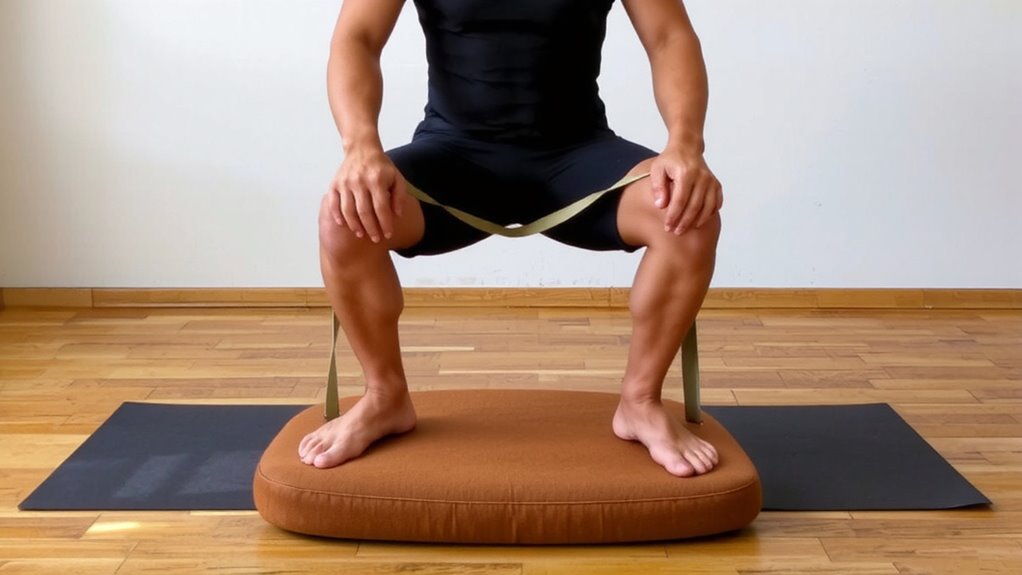
You’ve likely noticed that tight quads make it tough to fold forward comfortably, especially after long rides that leave your hip flexors locked short. Elevating your hips slightly with a cushion creates necessary hip elevation, shifting your pelvis into a more neutral position and letting your spine lengthen instead of rounding. This seated support reduces strain on the lower back and allows you to maintain an upright posture longer. A firm, 4–6 inch cushion works best-too soft and you lose structural benefit; too high and you risk tipping backward. Foam or buckwheat-filled props offer stable, durable support, ideal for regular practice. Cyclists using this modification typically report improved engagement in the hamstrings and less compensatory tension. Proper hip elevation doesn’t just increase comfort-it enhances the pose’s effectiveness, supporting long-term flexibility and recovery.
Bend Your Knees to Protect Your Back
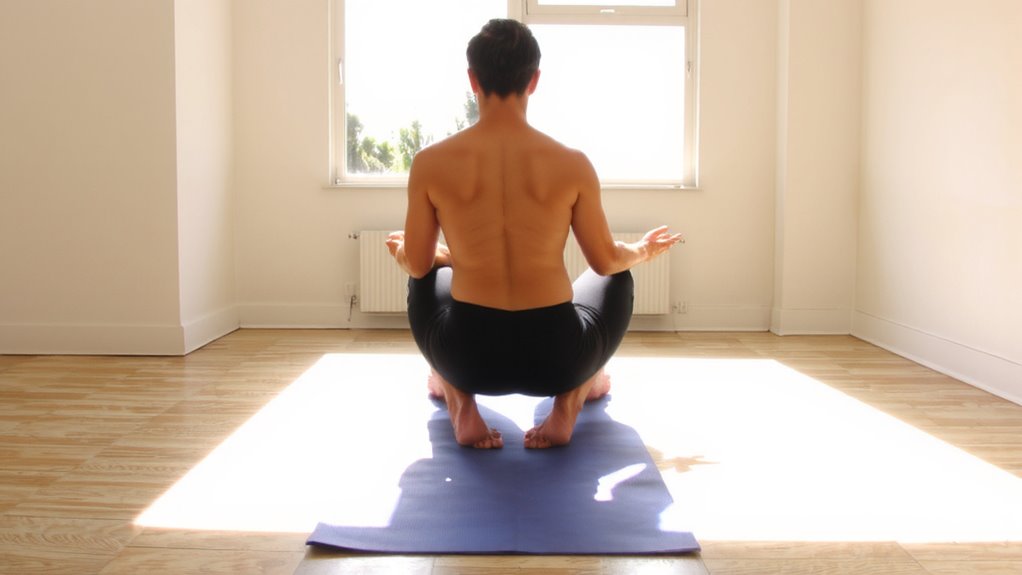
While maintaining a straight spine in Seated Forward Bend might seem like the goal, rounding forward with locked knees often does more harm than good-especially for cyclists carrying tightness through the lower back and hamstrings. You’re better off bending your knees generously-it reduces strain and supports healthy spine alignment. Think of it as prioritizing form over depth. Using a cushion under your hips helps, but don’t forget to let your knees soften to enhance knee support and prevent overpulling from tight quads. A strap around your feet can guide gentle progress without forcing the stretch. This small tweak doesn’t weaken the pose-it protects your back while still releasing tension. Over time, you’ll find greater mobility without compromising joint safety. For cyclists, this version isn’t a compromise; it’s smarter recovery.
Hinge at the Hips, Not the Waist
If you’ve ever leaned into a forward bend only to feel a sharp tug in your lower back, you’re likely hinging from the waist instead of the hips-a common misalignment that undermines both safety and effectiveness, especially for cyclists with tight posterior chains. Proper hip articulation is essential: initiate the movement by tilting your pelvis forward, allowing controlled pelvic rotation rather than rounding your spine. This shift engages the hamstrings and glutes more efficiently, reducing strain on lumbar structures. You’ll notice improved reach and less compressive force when the motion originates at the hip joint. Think of your torso as a solid block moving from the hip sockets, not a fold at the waist. Maintaining this form enhances flexibility gains and supports recovery by targeting the right tissues. Consistent attention to hip-based movement also trains neuromuscular patterns crucial for both cycling posture and injury prevention, making it a cornerstone of effective, sustainable practice.
Use a Strap to Reach Your Feet Safely
Maintaining a proper hip hinge sets the foundation for an effective forward bend, but reaching your feet without compromising form remains a challenge-especially when tight hamstrings limit your range. That’s where a yoga strap helps: it extends your reach while preserving alignment. Proper foot positioning-feet flexed and hips-width apart-guarantees targeted stretch without joint stress. Adjusting the strap length allows customization based on flexibility, letting you progress safely over time. A well-constructed strap (preferably cotton or recycled fiber) holds knots securely and resists fraying, essential for consistent recovery use. For optimal performance and safety, choose a high-quality stretching strap that meets durability and material standards.
| Factor | Ideal Setting | Purpose |
|---|---|---|
| Strap Length | 6–12 inches from feet | Maintains tension without overreach |
| Foot Positioning | Flexed, parallel | Protects knees, engages calves |
| Grip | Mid-strap, even hold | Prevents torque on shoulders |
| Material | Non-slip, durable weave | Guarantees longevity and safety |
Engage Your Hamstrings Without Strain
You don’t need to force your way into a deep stretch to activate your hamstrings effectively-doing so often leads to strain rather than recovery, especially after long rides that leave the muscles tight and fatigued. Instead, focus on active engagement by gently pressing your sit bones into the mat and lifting your chest slightly, encouraging your hamstrings to work without overloading them. This approach builds muscle awareness, helping you distinguish between productive tension and harmful strain. Cyclists often default to their quads, neglecting hamstring activation, but mindful positioning-knees soft, spine long-allows for safer, more effective engagement. Using a yoga strap supports this alignment, letting you maintain control while fine-tuning the stretch. Quality matters more than depth; a moderate pose with full awareness yields better recovery than an intense, forced fold. Over time, this technique enhances flexibility and reduces stiffness, making seated forward bend a sustainable tool in your recovery routine.
Breathe to Release Tension in Front of the Hips
Why does tightness in the front of your hips feel so stubborn after a long ride? Because hours in the saddle shorten your hip flexors, creating tension that resists stretching. That’s where breath awareness becomes essential. Instead of forcing your way into a deeper forward bend, breathe deeply into the front of your hips. Each inhale should expand your lower abdomen and pelvis; each slow exhale encourages relaxation. This mindful rhythm supports a natural hip flexor release without strain. You’re not just stretching-you’re signaling your nervous system to let go. Cyclists using this method report greater mobility and less post-ride soreness. Unlike aggressive stretches or recovery gadgets, breath awareness requires no gear, just focus. It’s low-tech but highly effective, fitting seamlessly into recovery routines. Combine it with proper form in seated forward bend, and you’ll notice real improvement in flexibility and comfort.
On a final note
You’ll find these seated forward bend modifications especially effective if you cycle regularly and battle tight quads. Elevating your hips and bending your knees reduces lumbar strain while improving alignment. Using a strap helps maintain form without overreaching. When you hinge properly at the hips and engage your hamstrings mindfully, you increase functional flexibility. These techniques, paired with consistent breathing, enhance recovery and support long-term joint health-valuable for any serious cyclist investing in proper recovery practices and well-designed fitness gear.