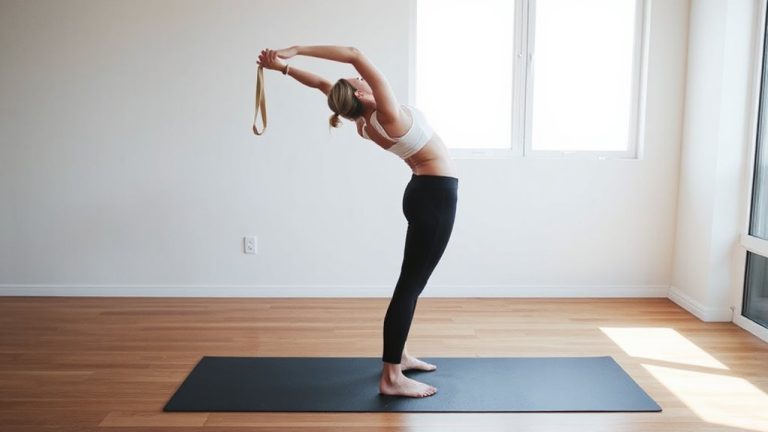
Adapted Chair Yoga Flow for Athletes Recovering From Knee Surgery
You’ll need a sturdy, non-slip chair with armrests and proper lumbar support to safely practice chair yoga post-knee surgery. Focus on gentle, seated movements like ankle circles and spinal twists to maintain joint mobility without strain. Align your kneecap over the second toe, avoid deep flexion, and breathe deeply to enhance circulation and tissue repair. Use resistance bands for gradual strength gains, and track daily progress to stay consistent-there’s a smarter way to rebuild function from the ground up.
Notable Insights
- Use a stable, non-slip chair with armrests to ensure safety and support during seated yoga movements.
- Align kneecaps over the second toe and avoid deep knee flexion to protect the surgical joint.
- Perform gentle warm-ups like ankle circles and seated marches to enhance circulation and mobility.
- Integrate diaphragmatic breathing with movement to promote tissue repair and reduce post-op stiffness.
- Combine chair yoga with prescribed rehab exercises, limiting sessions to 10–15 minutes initially for gradual progress.
How to Set Up a Safe Space for Post-Surgery Chair Yoga
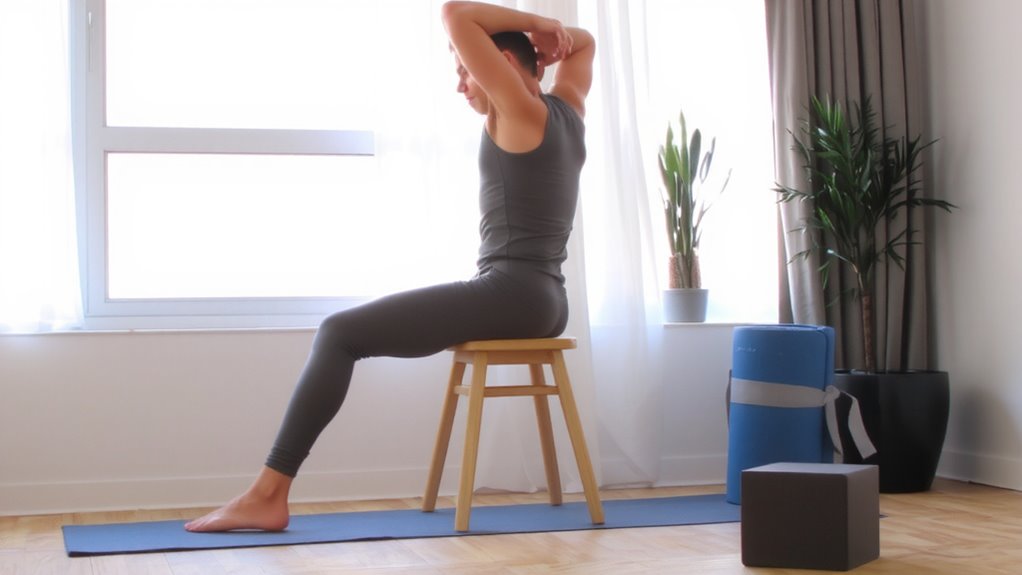
After your surgery, creating a safe environment for chair yoga becomes essential to support effective recovery without risking further injury. You’ll need a sturdy chair with solid armrests and non-slip legs-chair stability is vital to prevent shifting during movement. Avoid rolling office chairs or unstable stools; they compromise form and safety. Position yourself on a non-slip mat, ensuring your feet rest flat, hips-width apart. Mind your knee alignment throughout-your kneecap should point over the second toe to reduce joint strain. Keep your chair close to a wall for added balance if needed. Lighting should be soft but sufficient, reducing distractions. This setup supports disciplined recovery-practical, minimal, and effective. Investing in proper gear like supportive props or ergonomic chairs reflects sound judgment in fitness recovery. It’s not just comfort-it’s about enabling safe, consistent progress. A well-chosen top ergonomic office chairs model can further enhance support during seated recovery sessions.
Easy Warm-Ups That Won’t Stress Your Knee
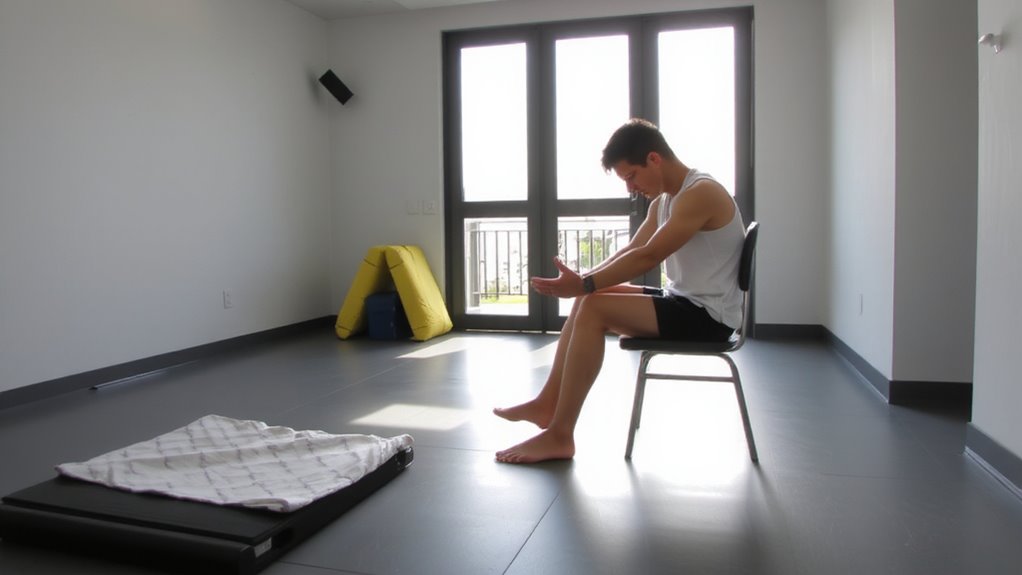
Why risk aggravating your knee when gentle, effective warm-ups exist that protect your joint while prepping your body for movement? Se timed twists are a smart starting point-they mobilize your spine and hips without loading the knee, enhancing circulation and body awareness. Paired with gentle stretches for the hamstrings and calves-performed while remaining fully seated-you maintain control and minimize strain. These warm-ups aren’t just safer; they’re efficient at activating neuromuscular pathways critical for recovery. Unlike aggressive routines or unstable props, chair-based movements offer consistent support, especially when using a sturdy, non-slip surface. The design prioritizes joint integrity, which is essential during early recovery phases. You’ll notice improved warmth in the muscles and smoother shifts into movement, without the sharp resistance or discomfort that can delay healing. This approach reflects modern recovery principles: progressive, respectful, and rooted in function.
Essential Chair Poses to Restore Knee Mobility
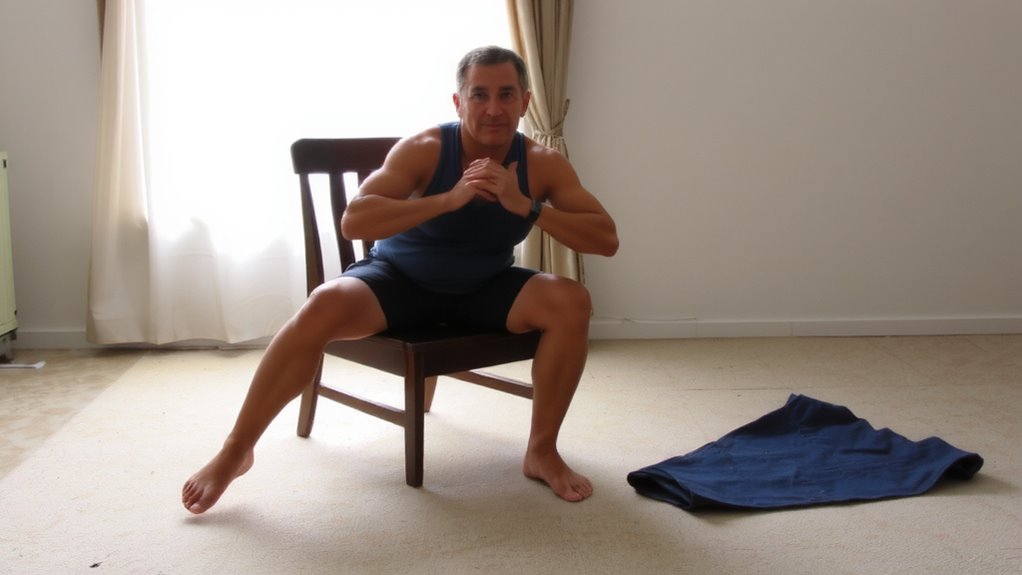
While your knee needs time and care to regain full function, you don’t have to wait to start rebuilding mobility-seated yoga poses offer a controlled, effective way to restore range of motion without overloading the joint. Begin with ankle circles to stimulate circulation and gently activate the lower leg muscles, which support knee stability. Rotate each foot slowly, ten times clockwise and ten counterclockwise, maintaining steady contact between your hips and the chair. Next, perform seated marches by lifting one knee at a time a few inches, alternating legs in a rhythmic pattern. This movement enhances coordination and builds neuromuscular connection without strain. You’ll notice improved control and reduced stiffness over time. These foundational movements are low-risk but high-reward, especially when done consistently. They’re particularly effective when paired with proper recovery gear like compression sleeves that support joint awareness during motion. For added support and faster recovery, consider wearing best leg compression sleeves designed to improve circulation and reduce swelling.
How Breathing Supports Joint Healing
When you focus on your breath, you’re not just calming the mind-you’re actively supporting your body’s recovery at a physiological level, especially in how joints heal after strain or injury. Diaphragmatic breathing enhances oxygenation benefits by increasing oxygen delivery to damaged tissues, promoting cellular repair in the knee joint. This deep, controlled breathing reduces inflammatory markers and supports lymphatic drainage, which helps clear metabolic waste. You’ll notice less stiffness and faster recovery when you pair chair yoga with intentional breathwork. Unlike passive recovery tools, diaphragmatic breathing is a functional, cost-free technique that directly influences healing speed and tissue quality. It doesn’t replace medical care, but it complements rehabilitation by creating an internal environment conducive to repair. Incorporating this method consistently into your routine maximizes the oxygenation benefits critical for joint regeneration, making it a smart, accessible addition to any athlete’s recovery protocol.
Signs You’re Ready to Progress (and When to Hold Back)
Progression in chair yoga isn’t just about adding harder poses-it’s about reading your body’s signals accurately. You’re ready to advance when movements feel smooth, discomfort has decreased, and your range of motion improves without triggering warning signs. If you notice increased swelling or experience sharp pain during or after practice, it’s a clear cue to scale back. These symptoms indicate the joint is under too much stress, possibly due to overexertion or premature progression. Consistent strength gains and better balance while seated are positive indicators. However, pushing through pain risks re-injury and delays healing. Monitor your response over 24 hours-delayed swelling or lingering discomfort means your body isn’t ready. Trust these signals more than any set timeline. Adjusting your routine based on real-time feedback guarantees sustainable recovery and maximum joint function over time.
How Often to Practice for Best Recovery Results?
You’ve learned how to recognize your body’s cues for advancing in chair yoga, and now it’s time to think about how often you should practice to support ideal recovery. For most athletes post-knee surgery, a recommended practice frequency is 4 to 5 sessions per week, each lasting 20 to 30 minutes. This rhythm supports consistent recovery pacing without overloading healing tissues. Research shows regular, moderate movement enhances circulation, reduces stiffness, and maintains neuromuscular activation-critical during early rehab phases. Too little practice slows progress; too much risks inflammation flare-ups or compensatory strain. Your rehab timeline isn’t a race, so align your schedule with medical guidance and physical feedback. Prioritize quality over quantity, letting each session build joint awareness and muscular endurance. Ultimately, steady practice frequency enhances long-term outcomes by syncing with the biological demands of tissue repair, making recovery pacing a cornerstone of effective rehabilitation.
Simple Ways to Stay Consistent During Rehab
Though recovering from surgery can feel like a slow process, staying consistent with chair yoga doesn’t require grand efforts-just small, deliberate habits that add up. You can anchor your routine by scheduling short sessions at the same time daily, minimizing decision fatigue. Mindset shifts are essential; view each session not as a test of intensity but as active recovery that supports knee healing. Instead of focusing on what you can’t do, emphasize controlled movement and breath. Progress tracking strengthens accountability-use a simple journal or app to log mobility improvements, reduced discomfort, or better balance. These subtle changes may go unnoticed day to day but reveal meaningful gains over weeks. Pairing your practice with supportive gear, like a non-slip mat or ergonomic cushion, enhances comfort and function. Consistency isn’t about perfection; it’s about showing up. Over time, these small efforts compound, turning rehabilitation into measurable recovery. Consider integrating compact office exercise equipment to maintain overall mobility while seated.
On a final note
You’ll find chair yoga builds stability and flexibility safely after knee surgery. This routine supports healing by blending controlled movement with breath, reducing stiffness without overloading the joint. Consistent practice, three to five times weekly, improves circulation and range of motion. Pair it with quality rehab gear-like a sturdy chair and non-slip mat-for ideal alignment and safety. Progress only when pain-free; rushing delays recovery. It’s not a cure-all, but done right, it’s a proven tool in functional rehabilitation.