How Mindful Movement Practices Enhance Nervous System Regulation During Recovery
You calm your nervous system during recovery by practicing mindful movement, which syncs breath with gentle motion to signal safety and reduce cortisol. These practices-like yoga or tai chi-enhance parasympathetic activation, sharpen interoception, and reset stress responses through consistent, intentional effort. Over time, your body learns to stay regulated even under strain, improving both physical and emotional resilience. Tools like foam rollers and biofeedback mats support this process, making regulation more accessible and effective-their full potential becomes clear with dedicated, ongoing practice.
Notable Insights
- Mindful movement synchronizes breath and gentle motion to signal safety and calm the autonomic nervous system.
- It reduces cortisol levels and promotes parasympathetic activation, supporting recovery and neuroplasticity.
- Body scanning during movement helps detect early tension, enhancing interoceptive awareness and self-regulation.
- Practices like yoga and tai chi retrain stress responses through controlled, intentional physical engagement.
- Consistent mindful movement builds emotional resilience by reinforcing nervous system balance and adaptive responses.
Why Nervous System Regulation Matters in Recovery
While you’re focused on rebuilding strength and endurance, it’s easy to overlook the role your nervous system plays in true recovery-but getting this part right can make or break your progress. Your nervous system isn’t just managing stress; it’s the control center for neuroplasticity adaptation, allowing your brain to rewire in response to new, healthier patterns. Without regulation, your body stays locked in survival mode, undermining even the most disciplined fitness routines. Recovery isn’t only physical-trauma integration requires nervous system stability to process and release stored tension. When your autonomic state is balanced, you’re not just resting; you’re actively retraining your body’s responses. Tools like heart rate variability monitors and recovery wearables can give real-time feedback, but their effectiveness depends on how well you sync them with nervous system awareness. Ignoring regulation limits adaptation. Prioritize it, and you’ll see deeper, more sustainable recovery.
How Mindful Movement Calms Stress in Recovery
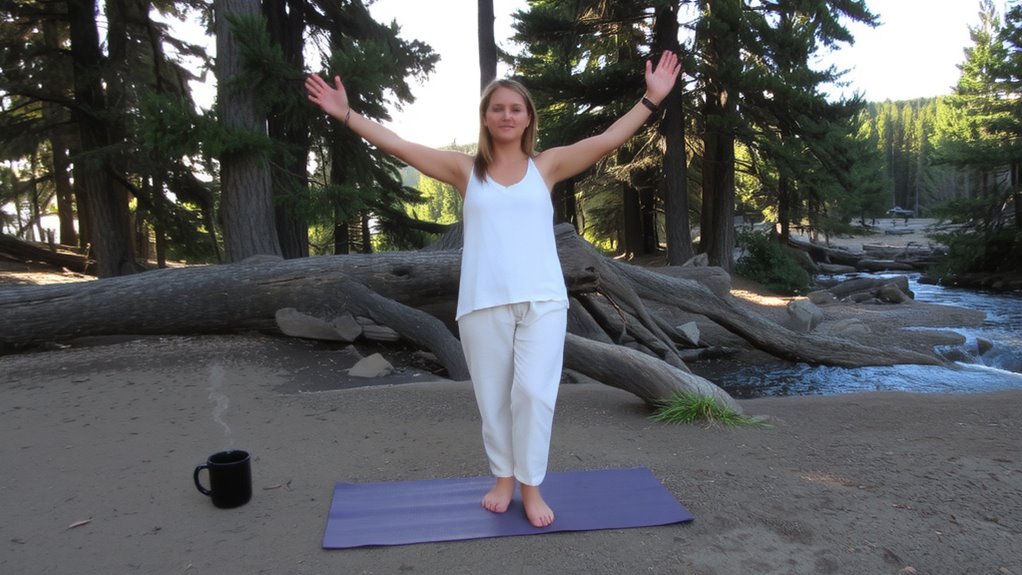
You’re already tracking your resting heart rate and logging recovery scores, but data alone won’t shift your nervous system out of high alert-your movement patterns have to do the real work. Mindful movement calms stress by syncing breath awareness with gentle, intentional motion, signaling safety to your autonomic system. When you slow your breath and pair it with fluid shifts, you reduce cortisol and support parasympathetic activation. Body scanning during movement helps you detect tension early-clenched shoulders, shallow breathing-so you can adjust in real time. It’s not about intensity; it’s about precision and presence. Unlike fitness gear designed solely for performance, tools that support mindfulness-like supportive mats or wearable biofeedback devices-enhance this process by improving comfort and feedback accuracy. Over time, these practices retrain your nervous system’s stress response, making recovery more sustainable and less dependent on metrics alone. For those integrating physical recovery, incorporating a best massage gun can further release muscular tension and complement mindful movement by promoting somatic awareness.
Yoga, Tai Chi, and Somatic Tracking: Tools for Regulation
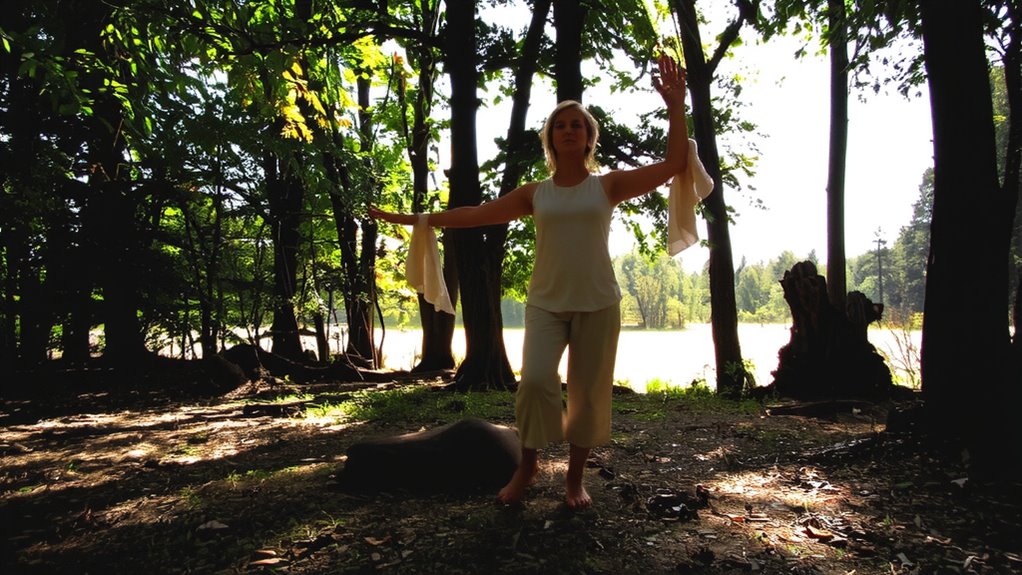
Yoga, tai chi, and somatic tracking offer structured yet adaptable approaches to nervous system regulation, each emphasizing the interplay between breath, movement, and bodily awareness. You use breath awareness to steady your rhythm, slowing the heart and signaling safety to the brain. In yoga, controlled poses paired with deep breathing help recalibrate stress responses, while tai chi’s fluid motions enhance proprioception and balance. Somatic tracking relies heavily on body scanning, guiding you to notice tension, temperature, and subtle shifts within. This real-time feedback sharpens interoceptive sensitivity, letting you identify early signs of dysregulation. Unlike fitness gear focused on performance metrics, these practices prioritize internal cues over external output. They’re low-impact, require minimal equipment, and adapt easily across recovery stages. When practiced regularly, they support resilience not through intensity, but through sustained attention-helping you stay grounded, present, and better equipped to manage physiological arousal as it arises.
How Consistent Practice Builds Emotional Strength
Regularly returning to mindful movement practices builds emotional resilience in much the same way physical training strengthens muscle-through repetition, adaptation, and gradually increasing capacity. You develop emotional resilience not in dramatic breakthroughs but through daily commitment, learning to stay present even when discomfort arises. Each session reinforces inner stability, training your nervous system to remain balanced under stress. Over time, this consistency reshapes your emotional responses, making reactivity less intense and recovery faster. Think of it like cross-training for your feelings: just as recovery gear supports physical healing, mindful movement supports psychological endurance. The structured repetition cultivates a reliable internal foundation, so life’s challenges feel less overwhelming. You’re not avoiding pain-you’re building the strength to move through it with awareness. With practice, emotional resilience becomes a default state, not a goal.
From Reacting to Responding: Stay Grounded in Recovery
Why do some people seem to weather emotional storms with calm, while others spiral after a minor setback? The difference often lies in how they regulate their nervous systems. In recovery, shifting from reacting to responding is key-and mindful movement helps you get there. When you practice breath awareness, you give your nervous system a cue: it’s safe to relax. This isn’t just calming-it literally reduces cortisol and activates the parasympathetic response. Pair that with body scanning, and you gain real-time feedback on tension, pain, or fatigue. You learn to notice a clenched jaw or tight shoulders before they escalate. Fitness recovery isn’t just about muscle repair; it’s nervous system training. Tools like foam rollers or compression gear support physical healing, but breath awareness and body scanning build resilience from within. You stay grounded, make better choices, and respond-instead of react-when stress hits. That’s progress you can feel. Choosing the right best foam rollers can enhance physical recovery and support nervous system regulation.
On a final note
You’ve seen how mindful movement supports nervous system regulation during recovery, and research confirms it: practices like yoga and tai chi reduce cortisol levels while improving heart rate variability. These tools don’t just soothe stress-they build lasting emotional resilience. When paired with quality fitness recovery gear, such as compression wear or foam rollers, results improve further by aiding physical restoration. Consistent, intentional movement helps shift you from reactive to responsive states, grounding your recovery in both body and mind.