Reactive Neuromuscular Training to Correct Movement Compensations Post-Injury
You use reactive neuromuscular training (RNT) after injury because it targets the root of movement compensations-faulty brain-muscle signals. By introducing controlled instability through bands, wobble boards, or manual resistance, RNT sharpens motor control and recalibrates coordination. It’s more effective than static exercises, demanding real-time adjustments that rebuild proper activation patterns. When timed right and progressed thoughtfully, RNT restores efficient movement-so you move safer, stronger, and with less risk of setbacks. There’s a smarter way to regain control.
Notable Insights
- RNT corrects post-injury compensations by retraining the nervous system to restore optimal movement patterns.
- It uses unpredictable challenges to improve motor control and recalibrate brain-muscle communication.
- RNT addresses muscle imbalances by activating underused muscles and reducing overreliance on unaffected areas.
- Devices like wobble boards and resistance bands enhance proprioception and joint stability during dynamic tasks.
- Progression begins post-acute phase, once swelling subsides and baseline control supports safe neuromuscular challenge.
What Is Reactive Neuromuscular Training?
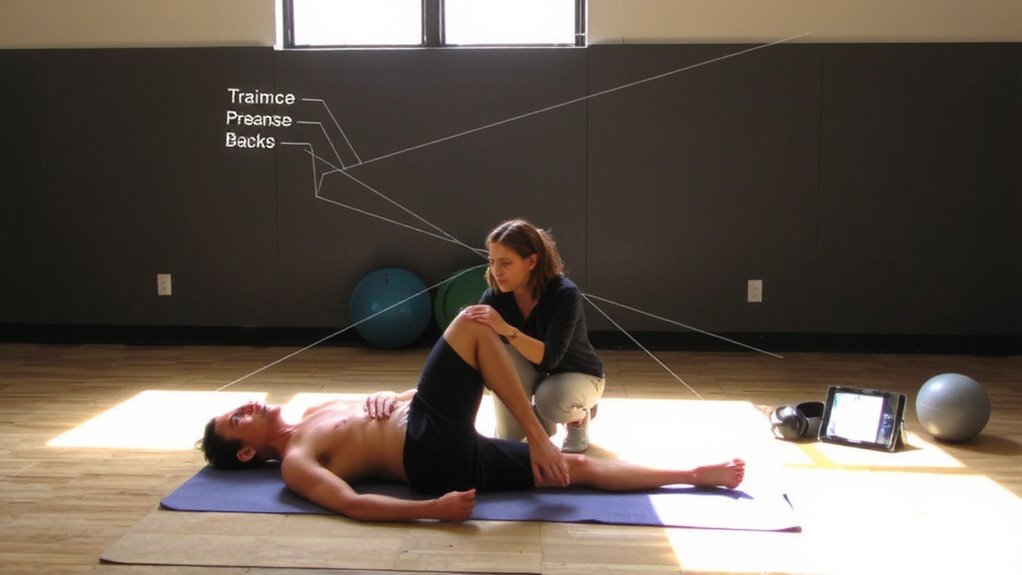
Think of your body as a finely tuned machine-responsive, adaptive, and capable of remarkable precision when properly trained. Reactive neuromuscular training (RNT) sharpens that precision by improving motor control and sensory integration through unpredictable stimuli. You’re not just moving-you’re reacting, adjusting your posture and motion in real time to external cues like shifts in balance or touch. This training recalibrates how your brain and muscles communicate, making movements more efficient and reducing error. Devices like wobble boards, resistance bands, and balance discs are commonly used, offering progressive challenges. Compared to standard exercises, RNT demands greater focus and coordination, making it a valuable tool in fitness recovery. It’s practical, evidence-based, and effective when applied consistently, especially for retraining foundational movement patterns with accuracy and control.
Why Your Body Compensates After Injury
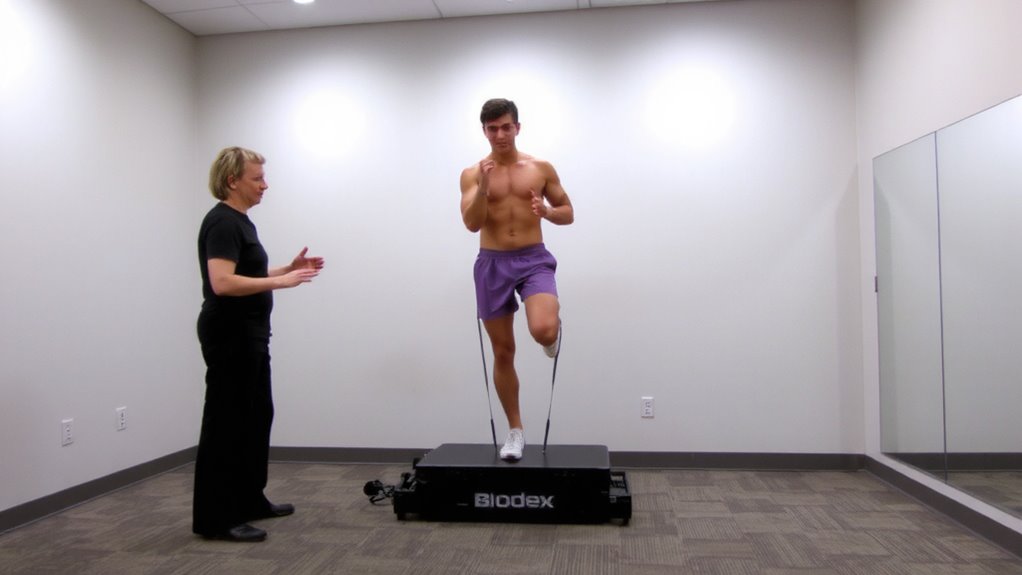
When you’re injured, your body quickly adapts by shifting workload to unaffected muscles and joints, a survival-driven strategy that keeps you moving but often leads to long-term imbalances. You don’t realize it, but this temporary fix can cause muscle imbalances, where some groups overwork while others weaken from disuse. These imbalances alter your movement patterns, increasing stress on certain areas. Over time, that stress contributes to joint instability, reducing your ability to control motion safely. Your body’s compensation is smart in the short term, but it’s not sustainable. Without targeted correction, you’re setting yourself up for re-injury or chronic discomfort. This isn’t just about strength-it’s about neuromuscular coordination. Ignoring these compensations means risking long-term dysfunction, especially during fitness recovery. That’s why understanding your body’s adaptive behavior post-injury is vital. Proper assessment and retraining are key to restoring balance, stability, and efficient movement.
How RNT Retrains Your Nervous System
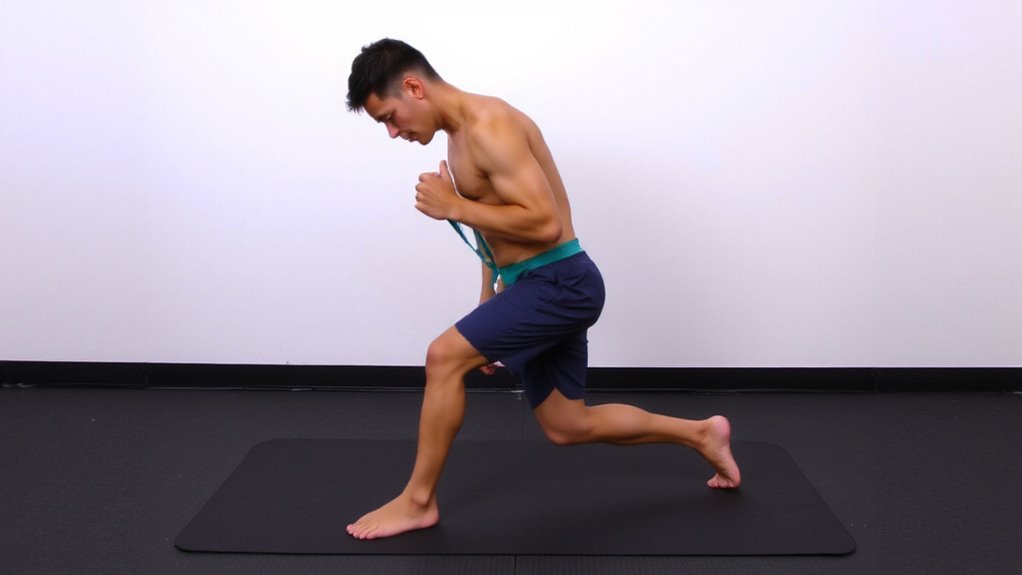
Because your nervous system adapts quickly to injury by rewiring movement patterns, it can stick with inefficient strategies long after healing, and that’s where Reactive Neuromuscular Training (RNT) steps in to correct the course. You leverage neural plasticity-the brain’s ability to reorganize neural pathways-by introducing controlled challenges that demand precise motor adaptation. RNT doesn’t just strengthen muscles; it retrains your body’s response under real-time stress, refining coordination and timing. Through subtle resistance and reactive cues, it forces your nervous system to recalibrate faulty signals, replacing compensations with efficient movement. This process hinges on consistent feedback, allowing your motor control to evolve with accuracy. Unlike passive rehab, RNT actively engages your neuromuscular system, making corrections stick. It’s not a quick fix, but a re-education-building resilience by reshaping how you move. The gear used, like resistance bands or balance tools, supports this by creating unstable conditions that demand adaptation, ensuring long-term functional gains.
RNT Exercises for Common Joint Injuries
How do you restore stability and control after a joint injury without reinforcing the very compensations you’re trying to correct? RNT exercises offer a solution by using controlled perturbations to improve joint stability and neuromuscular feedback. You’re not just moving-you’re responding, correcting, and adapting in real time. These drills target key areas like the ankle, knee, and shoulder, where poor muscle activation often leads to re-injury. By introducing slight instability-bands, wobble boards, or manual resistance-you force your body to recruit stabilizing muscles efficiently. It’s not about brute strength; it’s precision and timing. Studies show RNT enhances proprioception and coordination more effectively than static training. When applied correctly, it corrects faulty movement patterns while boosting dynamic control. You’ll notice sharper shifts, smoother landings, and fewer protective spasms. The gear-resistance loops, balance pads-may seem simple, but their impact on muscle activation is anything but.
When to Start RNT After Injury
Where do you draw the line between healing and retraining? You shouldn’t start RNT during the acute phase, when inflammation and instability dominate. Jumping in too soon risks reinforcing poor patterns or triggering a pain response that sets back recovery. Instead, wait until swelling decreases and active range of motion improves-clear signs you’re moving out of initial healing. RNT’s reactive demands require a baseline of joint control, something not feasible when pain still dictates movement avoidance. Once you clear those thresholds, introducing low-intensity RNT helps recalibrate neuromuscular communication. You’ll notice subtle shifts: better joint positioning, quicker corrections during instability. It’s not about pushing intensity, but re-educating movement under controlled, unpredictable forces. The goal is precision, not endurance or strength-at least not yet. Start smart, and you’ll build a sturdier foundation for full return to activity.
How to Make RNT Gains Last
While early RNT builds foundational joint awareness, you won’t lock in those gains without strategic integration into dynamic movement patterns. You must rehearse corrected motions under load, speed, and fatigue to trigger neural plasticity-the brain’s ability to rewire movement pathways. Without this, old compensations creep back. Consistency matters: long term adherence isn’t about grinding through pain, but smart progression using cues, resistance bands, or unstable surfaces that challenge control. You benefit most when drills mirror daily or sport-specific actions, bridging clinic gains to real-world function. Recovery tools like foam rollers or compression gear? They help manage soreness but won’t replace disciplined practice. Lasting change isn’t passive-it demands repeated, mindful repetition. When you embed RNT principles into functional movements, you solidify new neuromuscular habits. That’s how short-term corrections become permanent upgrades in movement quality and resilience.
Signs You’re Ready to Progress in RNT
Why keep repeating the same drill when your body’s already adapted? You’re likely ready to advance in Reactive Neuromuscular Training (RNT) if you’ve built balance confidence and achieved movement consistency. These signs mean your nervous system is recalibrating properly, reducing compensatory patterns. Progress isn’t just about effort-it’s about timing.
| What You Felt Before | What You Feel Now |
|---|---|
| Wobbling on one leg | Steady, controlled stance |
| Hesitation in motion | Smooth shifts |
| Doubt in your step | Balance confidence |
| Jerky corrections | Movement consistency |
| Fear of re-injury | Trust in your body |
If your form stays precise under slight load or distraction, it’s time to progress. Advancing too soon risks setbacks, but staying static limits gains. Monitor subtle cues-your neuromuscular control is more refined than you think. Use appropriate recovery gear to support adaptation, such as a Top Muscle Recovery Device, to enhance tissue repair and maintain training consistency.
On a final note
You’ve learned that reactive neuromuscular training (RNT) sharpens movement precision by retraining how your nervous system controls motion post-injury. It’s not just about strength-it’s about reprogramming faulty patterns. Used correctly, RNT devices like bands or balance tools offer measurable improvements in joint stability and proprioception. While results depend on consistency and proper timing, integrating RNT boosts long-term recovery more effectively than passive therapies alone.