Assessing Single-Leg Hop Symmetry as a Key Criterion for Returning to Cutting Sports After Ankle Sprain
You need at least 90% hop symmetry to safely return to cutting sports after an ankle sprain, since pain-free movement doesn’t guarantee proper neuromuscular control. Testing both legs with accurate setup and reliable footwear guarantees valid results. Good symmetry reflects balanced power, landing stability, and proprioception. But even with solid scores, you’re not fully prepared unless you’ve trained dynamic balance and reactive control under sport-specific loads-there’s more to uncover.
Notable Insights
- Single-leg hop symmetry assesses functional recovery beyond pain resolution after ankle sprains.
- Athletes should achieve at least 90% hop distance symmetry to reduce re-injury risk.
- Consistent testing conditions are critical for accurate and reliable symmetry measurements.
- Proper landing mechanics and balance reflect neuromuscular control during the hop test.
- Hop symmetry is necessary but not sufficient alone for safe return to cutting sports.
Why Hop Symmetry Matters After an Ankle Sprain
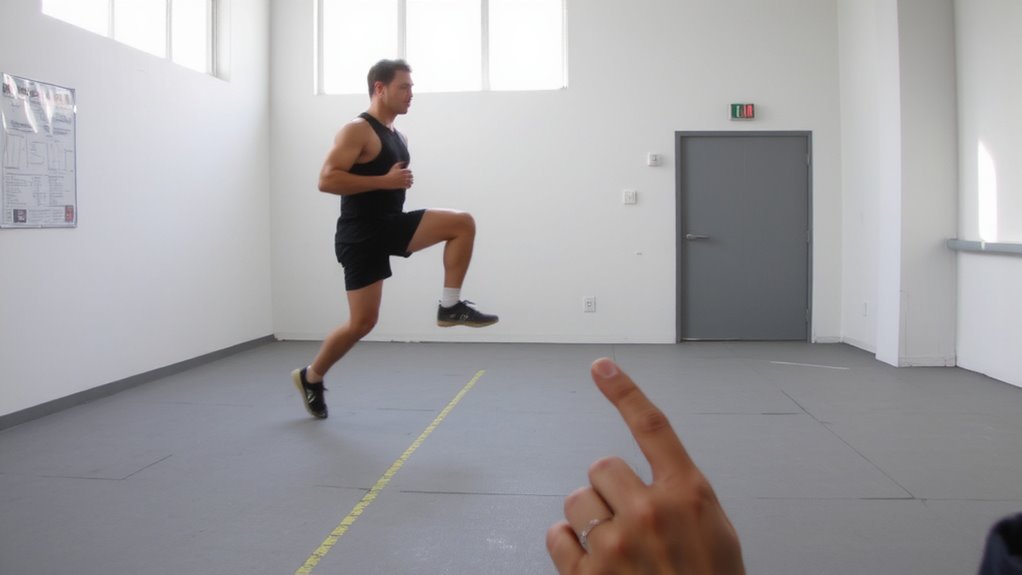
Even though you might feel ready to return to your sport after an ankle sprain, hopping symmetry gives a clearer picture of true recovery than pain alone ever could. You may not notice it, but lingering proprioception deficits often persist even after swelling and discomfort fade. These subtle imbalances impair your body’s ability to sense joint position, increasing re-injury risk during sudden cuts or jumps. Poor neuromuscular control further undermines performance, reducing coordination between muscles and nerves when stability is most needed. Research shows athletes with less than 90% hop symmetry are more likely to reinjure the ankle under load. Fitness recovery isn’t just about mobility or strength-functional metrics like hop symmetry reveal how well your body integrates balance, power, and control. Relying solely on pain as a guide ignores these deeper flaws. That’s why symmetry matters: it reflects not just healing, but preparedness.
How to Test Hop Symmetry Correctly
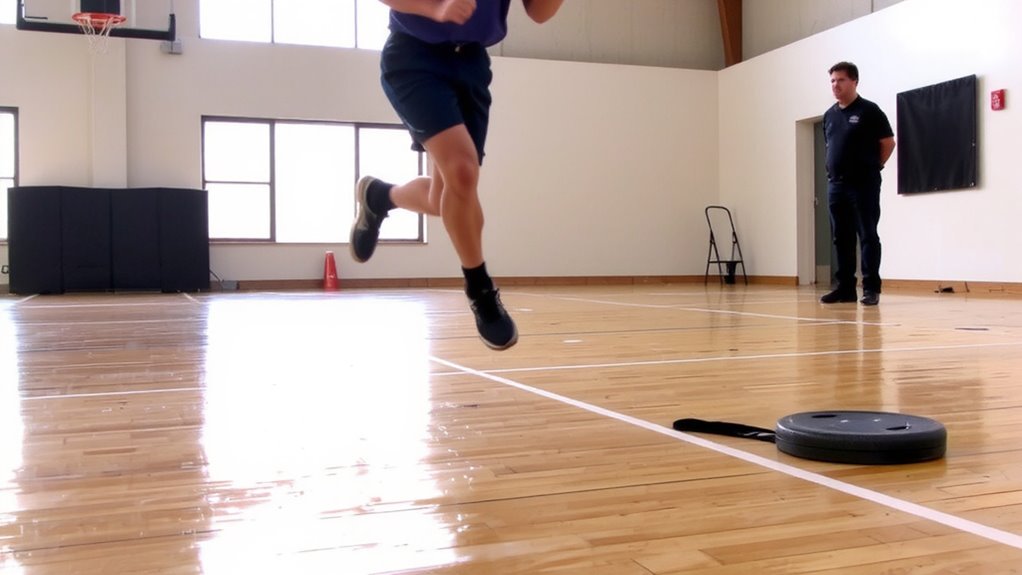
How do you know when your ankle is truly ready for the demands of sport? A properly conducted single-leg hop test gives you the answer. Start with a consistent test setup: use a flat, non-slip surface and mark a clear starting line. You’ll perform a series of hops-typically the single-leg hop for distance-on your uninjured leg first, then the injured one. Accurate limb comparison is essential; measure each hop’s distance with a tape measure or digital ruler and record the results. Perform three trials per leg and use the best for analysis. Make certain your knee stays aligned and you land stable, without hopping backward. This protocol minimizes variability and gives reliable data. Done right, this test reflects functional recovery, helping you avoid premature return and re-injury. Don’t skip precision-your comeback depends on it.
What Good Hop Symmetry Looks Like in Athletes
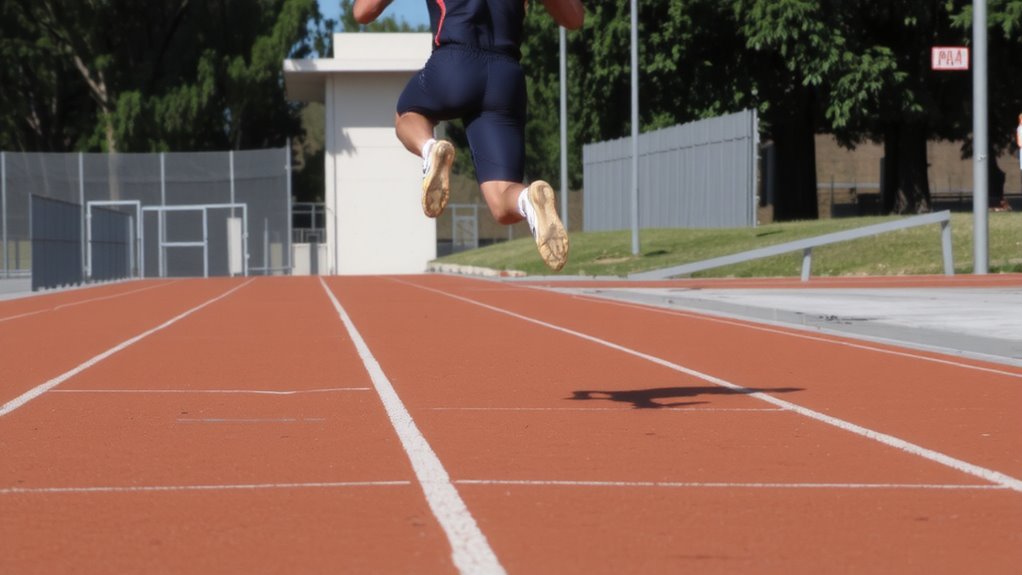
What does full recovery actually look like when you’re getting back into sport after an ankle sprain? You’ll demonstrate functional equivalence-your injured leg performing within 10% of the uninjured leg in single-leg hop tests. It’s not just distance, though; what matters is how you land. Good hop symmetry means you absorb force smoothly, maintain balance, and show minimal wobble. That reflects solid neuromuscular control-your brain and muscles coordinating efficiently to stabilize the ankle under load. You’re not just strong; you’re precise. The movement patterns should mirror the uninjured side: same takeoff power, same landing mechanics. This isn’t just about passing a test; it’s about lowering re-injury risk. When both legs respond similarly during dynamic tasks, you’re showing readiness for cutting, pivoting, and quick direction changes. True recovery blends strength, control, and confidence-without that, you’re not game-ready.
Mistakes That Undermine Hop Symmetry Scores
Why do some athletes still struggle with hop symmetry despite consistent rehab? You might be overlooking simple yet critical factors. Poor footwear often undermines performance-worn-out or unsupportive shoes reduce proprioception and stability, skewing your hop scores. Even if your strength and technique are solid, bad footwear alters force distribution with every landing. Training on inconsistent surfaces adds another layer of error. Testing on grass one day and concrete the next introduces variability that masks true symmetry. Reliable scores demand standardized conditions: flat, firm, non-slip surfaces every time. You can’t measure progress accurately if the test environment shifts. Re-evaluate your setup. Are your shoes providing consistent support? Is your testing surface reliable? Small fixes here could reveal real improvements and prevent misleading data from delaying your return to cutting sports. Upgrading to insoles designed for stability and impact absorption, such as those recommended in the best hiking boot insoles, can enhance shoe performance and support during dynamic movements.
Beyond the Hop Test: What Comes Next
You’ve addressed the basics-sorted out your footwear, locked in a consistent testing surface, and cleaned up your hop symmetry numbers. Now it’s time to move beyond the numbers. Symmetry might look good, but it doesn’t guarantee you’re ready for cutting or pivoting under pressure. What really matters next is neuromuscular control-your body’s ability to react quickly and efficiently during unpredictable movements. Without it, your landing mechanics can falter even if your hop distance matches. Dynamic balance also becomes critical; it reflects how well you stabilize across multiple planes, not just in a straight line. Tools like wobble boards or agility drills can help train these traits, but they must mimic sport-specific demands. Relying solely on hop tests risks missing these deeper performance gaps. Real readiness means your nervous system and musculature work together seamlessly when the game speeds up.
Putting Hop Symmetry Into Your Return-to-Play Plan
When you’re nearing the end of rehab after an ankle sprain, hop symmetry shouldn’t just be a checkpoint-it should be integrated into a broader return-to-play framework that prioritizes real-world performance. You need to demonstrate not only equal hop distance but also control, landing mechanics, and functional balance. Asymmetry greater than 10% can indicate lingering deficits that raise reinjury risk during cutting movements. Start incorporating sport specific drills-like shuttle runs, deceleration cuts, and reactive changes of direction-once symmetry is achieved. These tasks challenge proprioception and dynamic stability beyond what simple hops assess. Use hop testing as a baseline, but progress to integrated, multiplanar movements that mimic game demands. Your return isn’t complete until you can handle these loads confidently-both physically and neurologically-ensuring safe, effective re-entry to high-intensity sports.
On a final note
You’ve used hop symmetry to gauge readiness, and rightly so-it’s a reliable indicator of neuromuscular control after an ankle sprain. But don’t stop there; combine it with strength testing, dynamic balance, and sport-specific drills. Good symmetry suggests resilience, yet subtle imbalances may linger. Trust the test, but also assess functional performance and movement quality. Your return-to-play decision gains strength when hop data supports broader clinical judgment.