Resistance Band-Assisted Forward Fold to Protect Lumbar Spine in Tight Individuals
You can safely improve your forward fold with a resistance band, even with tight hamstrings. Sit with legs straight, loop the band around your feet, and hold an end in each hand. Hinge at your hips, not your lower back, using the band to gently guide your torso forward while keeping your spine long. This reduces lumbar strain by limiting excessive flexion and supporting proper alignment. The band’s adjustable tension lets you control the depth, protecting your spine while gradually improving flexibility. You’ll discover smarter ways to build mobility without compromise.
Notable Insights
- Use a resistance band looped around the feet to assist forward folding while maintaining a flat back and protecting the lumbar spine.
- Hinge from the hips, not the waist, to prevent excessive spinal flexion and reduce lower back strain.
- Tight hamstrings can cause pelvic tilt and increased disc pressure, making band-assisted folds essential for spinal safety.
- Keep knees slightly bent and engage the core to minimize lumbar stress and support proper alignment.
- Adjust band tension to match flexibility levels, allowing gradual progress without compromising spine integrity.
How to Do a Band-Assisted Forward Fold (Step by Step)
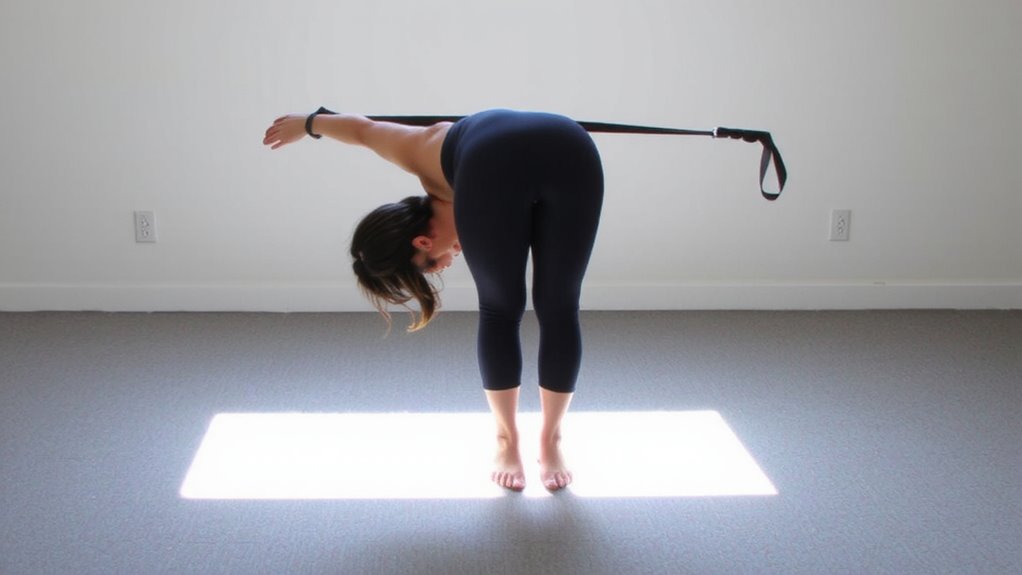
A sturdy loop of resistance band becomes your ally in mastering the band-assisted forward fold, guiding deeper flexibility with minimal strain. Start by sitting on the floor, legs extended. Loop the band around the balls of your feet, ensuring secure band placement-too loose, and you’ll lose tension; too tight, and it restricts motion. Hold one end in each hand, arms extended forward. Engage your core to maintain posture alignment as you hinge at the hips, not the waist. Gently pull the band to assist your torso toward your thighs, keeping your back flat. Avoid rounding your spine-this defeats the purpose and risks strain. The band should guide, not yank. Over time, consistent use improves hamstring elasticity safely. High-quality bands offer even resistance and resist fraying, making them reliable for daily recovery. This method enhances flexibility while protecting your lumbar spine, especially valuable for tight individuals.
Why Tight Hamstrings Strain Your Lower Back
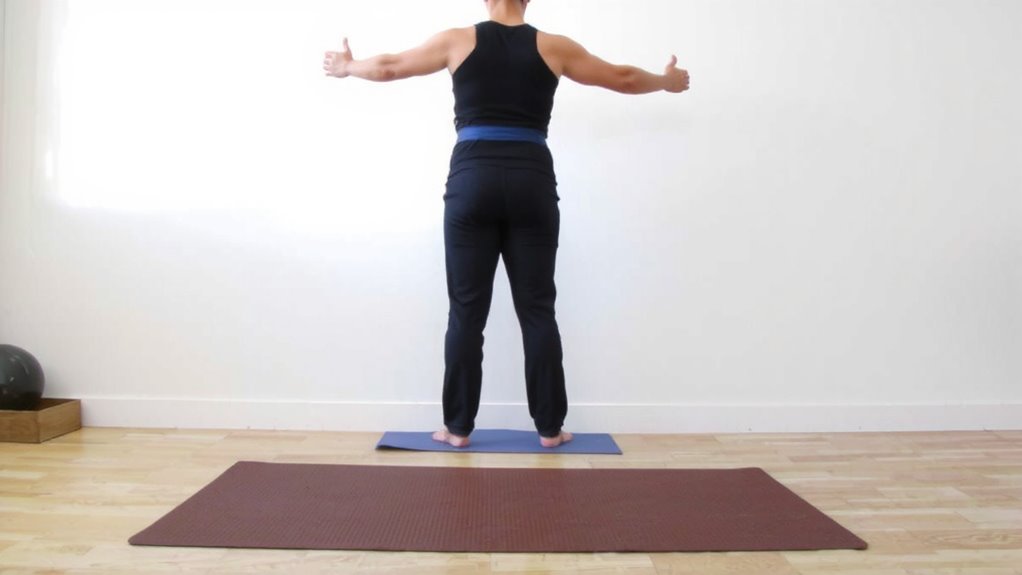
While your hamstrings might seem like simple muscles at the back of your thighs, tightness there can indirectly wreak havoc on your lower back. Limited hamstring elasticity restricts forward movement, forcing your spine to compensate during daily motions or stretches. This often leads to excessive pelvic tilt, where your pelvis rotates backward, flattening your lower back’s natural curve and increasing disc pressure. Over time, this strain can contribute to chronic discomfort or injury. Using tools like resistance bands during recovery helps restore flexibility, reduces reliance on spinal flexion, and promotes safer movement mechanics.
| Factor | Effect on Lower Back |
|---|---|
| Poor hamstring elasticity | Increases spinal load during forward bends |
| Excessive posterior pelvic tilt | Compresses lumbar discs |
| Regular flexibility work | Reduces compensatory spinal motion |
How a Resistance Band Protects Your Spine in Forward Folds
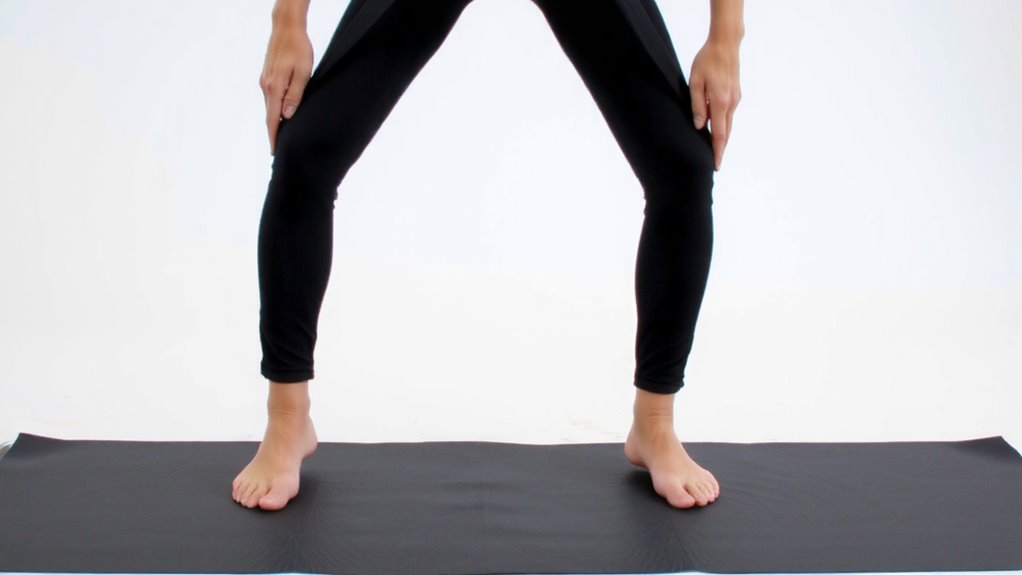
You’ve probably felt it-that pull in your lower back when trying to touch your toes, a clear sign your hamstrings are calling the shots. A resistance band helps by giving you support, letting you maintain proper spinal alignment even with tight posterior chains. Instead of rounding your back to reach forward, the band gently pulls your torso toward your legs, reducing lumbar strain. This controlled assistance promotes safer muscle activation, encouraging your hamstrings and glutes to engage without overloading the spine. The band’s tension is adjustable, so you can tailor the stretch as your flexibility improves. Unlike static stretching, which sometimes compromises form, the band supports progressive mobility while preserving technique. High-quality bands offer consistent resistance and durability, making them reliable tools in fitness recovery. Used correctly, they help maintain structural integrity during forward folds-turning a risky stretch into a spine-friendly movement.
Common Mistakes in Band-Assisted Forward Folds (And How to Fix Them)
Why do so many people still strain their backs even when using a resistance band in forward folds? You’re likely overarching your back or rushing depth instead of moving with control. When you tuck your pelvis too aggressively or force your chest down too fast, the band can encourage a false sense of safety, transferring stress to the lumbar spine. Instead of prioritizing how far you go, focus on hinging from the hips while keeping your spine long. Maintain a slight knee bend to protect your lower back, and let the band support-not lead-your movement. Overarching back motions often stem from tight hamstrings, but forcing the stretch defeats the purpose. Use the band to create ease, not leverage. Rushing depth compromises joint integrity and limits flexibility gains. Move slowly, breathe, and let each repetition build sustainable range. The right technique turns this into a spine-protective habit, not a risk.
Who Should Try This Lower Back-Safe Stretch
A resistance band-assisted forward fold isn’t just for seasoned yogis or hypermobile athletes-it’s a smart recovery tool for anyone looking to improve flexibility without compromising spinal health. If you’re tight in the hamstrings or hips, this stretch lets you maintain proper spine alignment while gradually easing into the movement. You don’t need advanced mobility to benefit-just a basic band and awareness of core engagement. That slight abdominal bracing helps stabilize your lower back, reducing shear forces during the fold. It’s ideal for desk workers, lifters, and rehab patients alike, offering support where passive stretching fails. The band acts like a guide, not a force, letting you control depth and form. With consistent use, you’ll notice improved neuromuscular coordination and safer, deeper stretches over time. This isn’t a shortcut-it’s a sustainable method to train flexibility intelligently, protecting your lumbar spine with every repetition.
Adjusting Band Tension for Your Flexibility Level
Some resistance bands deliver just enough tension to support limited range of motion, while others offer progressive resistance that adapts as your flexibility improves-making band selection essential for effective, safe stretching. You’ll want to take into account band material, as latex offers smooth elasticity and durability, while fabric bands provide less snap but better grip. If you’re stiffer, a looser band with higher stretch capacity reduces strain. Adjusting the anchor position also controls tension-holding it higher on your foot decreases pull, while gripping farther forward increases resistance. Test the feedback: if you feel strain in your back, the tension’s likely too high or your anchor’s off. Lighter bands work for early progress; stronger ones challenge improved mobility. This balance guarantees support without compromising spinal safety.
Improve Your Forward Fold Gradually: Without Spine Strain
While it might be tempting to push deep into a forward fold right away, doing so often compromises your spine-especially if your hamstrings are still tight or your movement pattern isn’t fully controlled. Instead, embrace progressive intensity by starting with a slight bend in the knees and using your resistance band to guide, not yank, your torso forward. This method supports mindful alignment, letting you hinge from the hips rather than rounding the lower back. Over time, you’ll gain flexibility without inviting disc compression or muscle strain. The band isn’t just a shortcut-it’s a feedback tool, helping you sense when you’re forcing the movement. Consistent, gradual loading trains the nervous system to accept new ranges safely. For tight individuals, this approach isn’t just smarter; it’s essential for sustainable mobility and spinal integrity. Incorporating tools like the best back stretching equipment can further enhance your routine by targeting deep muscle tension and supporting safe spinal alignment.
On a final note
You’ve seen how a resistance band supports proper mechanics in forward folds, especially when tight hamstrings limit mobility. It’s not a crutch-it’s smart technique. By maintaining a neutral spine and controlled tension, you protect your lumbar discs while gradually improving flexibility. This method works because it aligns joint loading with recovery goals, making it a reliable choice for sustainable progress in functional fitness.