Cervical Mobility Drills With Chin Tucks With Resistance Band
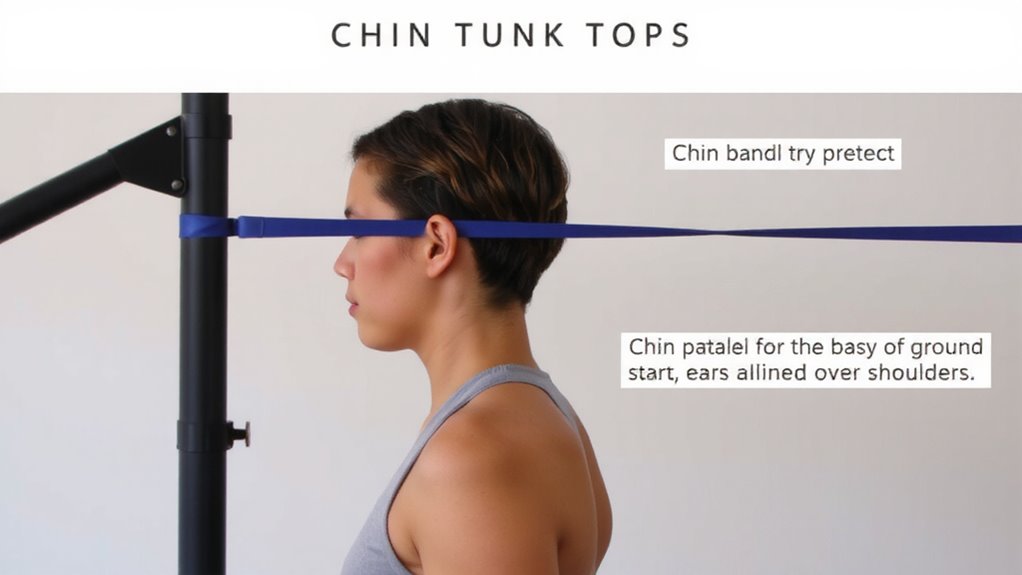
You should try chin tucks with a resistance band to improve cervical mobility and counteract forward head posture. Anchor the band behind you at eye level, hold the ends, and gently pull forward while tucking your chin straight back. Use a light band-like yellow or green-to maintain control without strain. This drill strengthens deep neck flexors, enhances alignment, and reduces neck load over time. Avoid common errors like shoulder shrugging or breath-holding to maximize effectiveness. Doing these 3–4 times weekly builds endurance safely. Proper form beats high reps every time. You’ll get more out of your routine by adjusting technique and progressing smartly.
Notable Insights
- Anchor a light resistance band at head height to maintain consistent tension during chin tuck exercises.
- Perform chin tucks by gently retracting the head to create a “double chin” without neck strain.
- Avoid common mistakes like shoulder elevation, breath-holding, and excessive tucking to ensure proper form.
- Practice chin tucks 3–4 times weekly with rest days to support cervical muscle recovery and alignment.
- Progress gradually using drills like lying tucks with neural flossing or dynamic rotations for enhanced mobility.
Do Chin Tucks With a Resistance Band (Step-by-Step)
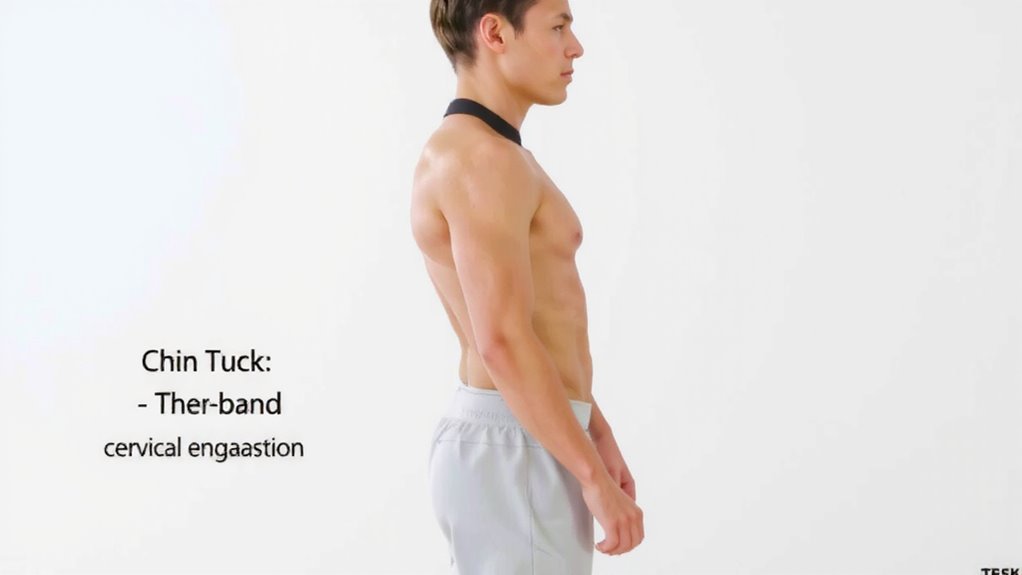
A chin tuck with a resistance band isn’t just a simple mobility drill-it’s a targeted movement that improves cervical alignment and counters the forward-head posture so common with prolonged sitting. Anchor the band behind you at head height, hold the ends, and gently pull forward to create consistent band tension. As you engage, retract your chin straight back, imagining making a “double chin.” This motion reinforces proper head alignment without neck strain. The band’s resistance encourages neuromuscular feedback, helping you feel misalignment instantly. Use a lightweight band to start-too much tension disrupts form. This drill works best with controlled, deliberate reps, not speed. Over time, you’ll notice improved posture awareness and reduced stiffness. Unlike passive recovery tools, this active technique builds strength and mobility simultaneously. A durable, latex-free band maintains elasticity and resists fraying, making it a practical long-term investment. Consistency here delivers measurable gains in function and comfort.
Fix Forward Head: Why Neck Mobility Matters
Why does your neck feel stiff after hours at a desk? Because poor neck alignment and slumped spinal posture place constant strain on your cervical spine. When your head drifts forward, each inch increases the effective weight on your neck by up to 10 pounds, stressing muscles and joints. This isn’t just uncomfortable-it can lead to chronic pain and reduced mobility over time. Proper neck mobility helps restore balance, realigning your head over your shoulders where it belongs. With better alignment, you ease tension and support healthier spinal posture overall. That’s where targeted drills like chin tucks with a resistance band come in-they don’t just stretch; they retrain muscle memory. You’re not just relieving stiffness; you’re correcting a postural flaw many overlook. Consistent practice strengthens deep neck flexors, promotes joint lubrication, and enhances movement efficiency. Fixing forward head isn’t cosmetic-it’s foundational to long-term spinal health and functional recovery. Using a neck and back stretcher can complement these mobility drills by providing structured support for spinal alignment.
Don’t Make These Chin Tuck Mistakes
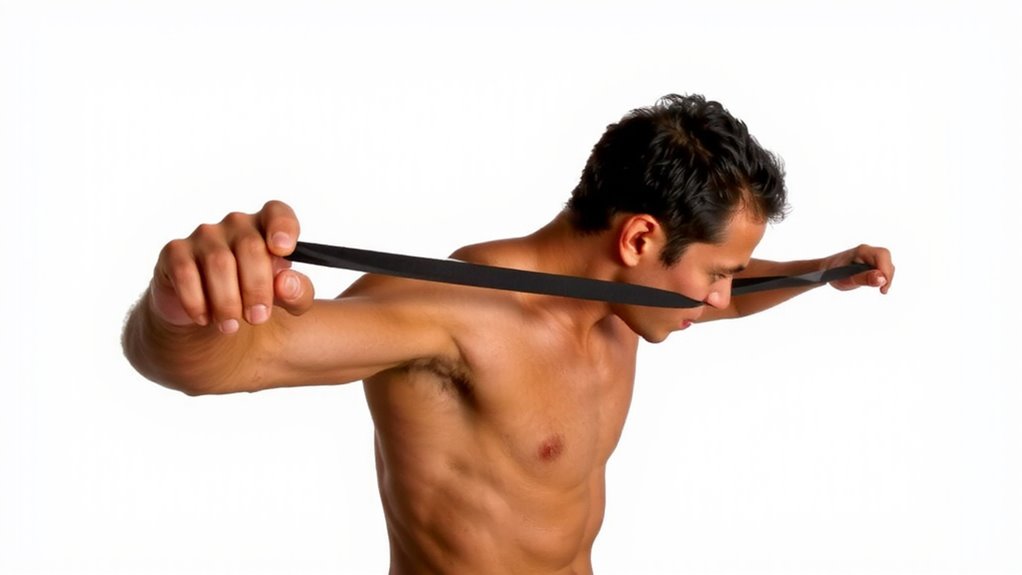
How often do you think your chin tuck is actually reinforcing poor movement patterns instead of fixing them? Many people perform chin tucks incorrectly, leading to neck strain and worsening poor posture. Avoid these common mistakes:
| Error | Correction |
|---|---|
| Tucking chin too far | Retract only until you feel gentle engagement |
| Holding breath | Breathe steadily throughout the movement |
| Raising shoulders | Keep shoulders relaxed and down |
| Overarching the neck | Maintain a neutral cervical spine |
| Rushing reps | Move slowly for control and accuracy |
You’re not just moving your head-you’re retraining neuromuscular patterns. If done wrong, the drill counteracts its purpose, reinforcing tension instead of reducing it. Proper technique guarantees mobility gains without strain. Focus on precision, not reps. That resistance band won’t fix poor posture if your form’s flawed. Consistent practice combined with proper neck support during sleep, such as using one of the best cervical pillows, can enhance long-term posture correction and neck pain relief.
How Often to Do Resistance Band Neck Drills
Typically, you’ll get the best results from resistance band neck drills when performing them 3 to 4 times per week, allowing at least one rest day in between sessions for tissue recovery and neuromuscular adaptation. Maintaining frequency consistency is key-regular sessions reinforce proper movement patterns and gradually build neck resilience. Without consistent timing, benefits plateau, and gains in mobility or strength stall. You’ll notice better outcomes when pairing this rhythm with attention to muscle recovery; overtraining small cervical muscles leads to stiffness or irritation. These drills aren’t meant for daily high volume. Instead, thoughtful repetition allows the neck’s stabilizers to adapt without overload. Quality matters as much as schedule-each session should emphasize control, not speed. Over weeks, this balance of frequency consistency and adequate muscle recovery supports lasting cervical health, especially when integrated into broader postural or rehab routines.
Pick the Right Band for Neck Strengthening
Choosing the right resistance band can make or break your neck strengthening routine-too much tension risks strain, while too little won’t challenge the stabilizing muscles. You need to assess band tension carefully; lighter bands, usually yellow or green, offer controlled resistance ideal for cervical work. Heavier bands increase risk without added benefit, given the neck’s sensitivity. Look for durable, latex-free materials that resist fraying after repeated use. Proper anchoring is non-negotiable-secure the band at eye level or slightly above, using a stable door anchor or gym fixture to maintain alignment. A poorly anchored band shifts during chin tucks, compromising form and reducing effectiveness. Test the setup before each session: if the band slips or stretches unevenly, adjust immediately. Consistent band tension and proper anchoring guarantee targeted muscle engagement, supporting safe progression. Over time, this precision aids in building endurance without overloading delicate cervical structures.
Level Up: 3 Advanced Chin Tuck Variations
Once you’ve built a solid foundation with basic chin tucks, stepping up to advanced variations can amplify neuromuscular control and cervical endurance-especially when resistance bands are leveraged strategically. Try the standing resisted chin tuck with shoulder retraction: anchor the band behind you, engage your scapular muscles, and perform slow chin tucks to reinforce postural stability. Next, progress to the lying chin tuck with neural flossing-extend one arm overhead while tucking your chin, creating a gentle neural glide that improves nerve mobility and coordination. Finally, the dynamic chin tuck with band rotation challenges balance and deep cervical flexor activation. Maintain scapular engagement throughout all movements to prevent compensation. These variations not only enhance muscular endurance, but also integrate neural flossing techniques that support overall neck health and recovery-especially beneficial when using durable, latex-free bands that maintain consistent resistance over time.
On a final note
You’ve got the tools to improve cervical mobility safely and effectively. Chin tucks with a resistance band build strength and alignment when done consistently and with proper form. This simple drill, paired with the right band tension, supports long-term neck health and counters forward head posture. As recovery-focused fitness gear, resistance bands offer measurable resistance and progressive overload-key for rehab and prevention. Used correctly, they’re a practical investment in posture and function.