Establishing Minimum Isometric Mid-Thigh Pull Values Prior to Deadlift Resumption After Low Back Injury
You should achieve 2.0–2.5 N/kg on the IMTP test before resuming deadlifts post-low back injury, as this reflects sufficient spinal stability and neuromuscular control. Use calibrated force plates, maintain proper form, and assess symmetry-avoid relying solely on peak force. Values below this range increase re-injury risk, especially under heavy loads. Consistency across sessions matters more than one high result. There’s more to contemplate when determining true readiness.
Notable Insights
- Athletes with prior low back injuries should achieve 2.0–2.5 N/kg relative force on IMTP before resuming deadlifts.
- IMTP assesses not only strength but also spinal stability and neuromuscular control post-injury.
- Force asymmetry greater than 10–15% indicates unresolved imbalances and increases re-injury risk.
- Consistent, proper technique during testing is essential to ensure valid and reliable IMTP results.
- Use multiple IMTP sessions to confirm strength consistency, not just a single peak value.
Why IMTP Testing Matters After Low Back Injury
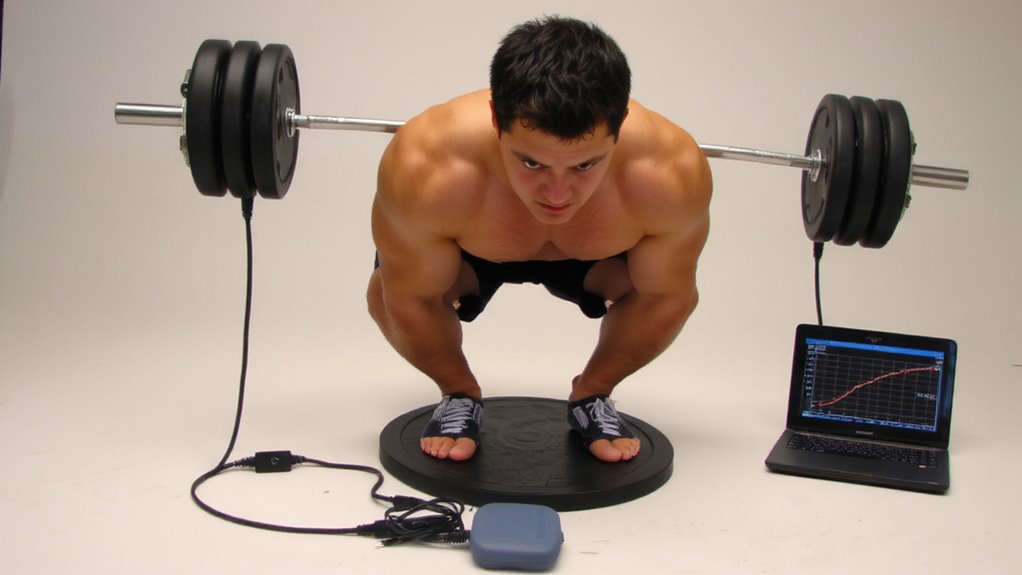
Why should you care about IMTP testing after a low back injury? Because it gives you critical insight into spinal stability and neuromuscular control-two factors essential to safe deadlift resumption. After an injury, your trunk muscles often weaken or fire improperly, putting your lower back at risk during heavy lifting. The IMTP test measures your ability to generate force while maintaining proper posture, reflecting how well your core stabilizes under load. You’re not just testing strength; you’re evaluating coordination and readiness. Equipment like portable force plates or digital dynamometers provide objective data, helping you avoid guesswork in rehab. Without this, you might return too soon, risking re-injury. In recovery, fitness gear that supports precise, repeatable assessment outperforms generic rehab tools. IMTP testing isn’t just useful-it’s a practical necessity for anyone serious about returning safely and effectively.
Minimum IMTP Force Targets by Athlete Profile
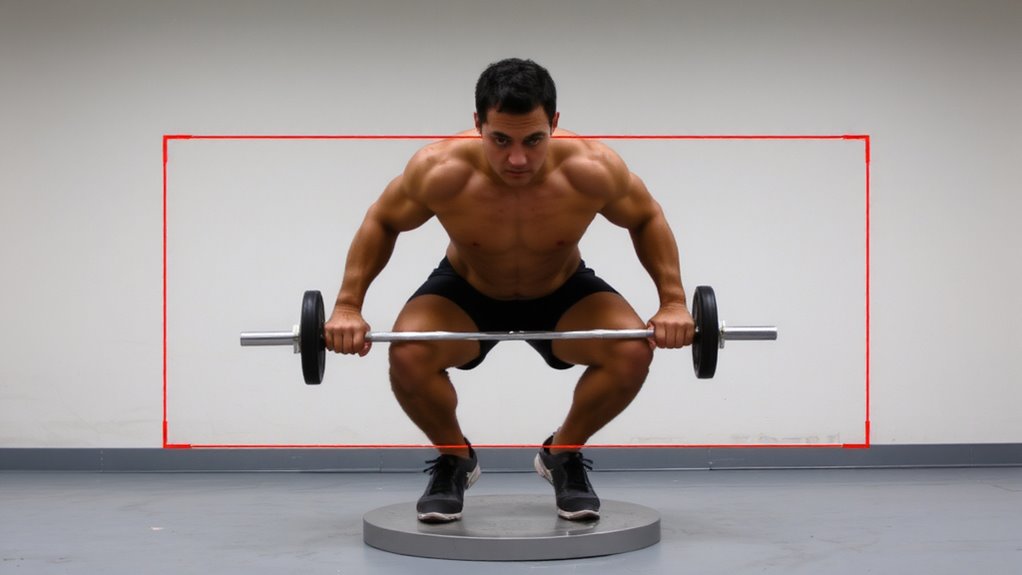
While your recovery progress depends on multiple factors, hitting minimum IMTP force targets gives you a reliable benchmark for identifying safe return-to-lift milestones, especially when supported by accurate fitness gear like force plates or calibrated dynamometers. Your load tolerance and injury history play key roles in shaping these targets. Athletes with prior low back injuries often require higher relative force outputs-typically 2.0–2.5 N/kg-to demonstrate sufficient strength resiliency before reintroducing deadlifts. Powerlifters or strongman athletes may need even greater thresholds due to sport-specific demands. Conversely, general strength athletes might safely return at slightly lower values if load progression is controlled. These targets aren’t one-size-fits-all; they adjust based on your recovery timeline and movement quality. Without accounting for injury history, you risk underestimating vulnerability or delaying progress unnecessarily. Proper testing equipment guarantees the data guiding your return is both valid and actionable.
How to Run a Valid IMTP Test
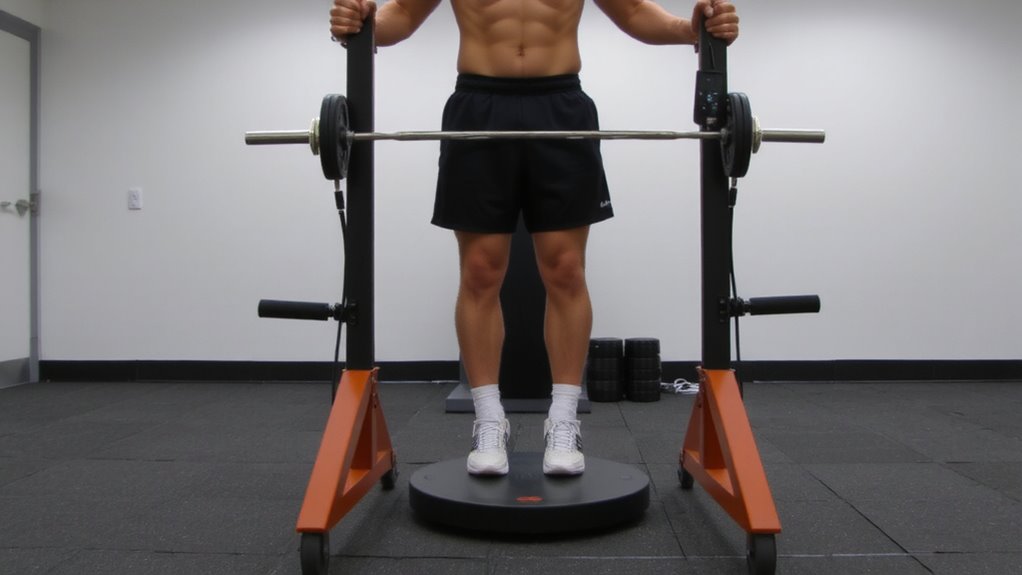
You’ve likely set your IMTP force targets based on injury history, sport demands, and recovery stage, but hitting those numbers means little without reliable testing procedures. To guarantee valid data, start with equipment calibration-uncalibrated force plates or load cells skew results and compromise rehab tracking. Your athlete must adopt a proper stance: bar positioned at mid-thigh, feet shoulder-width apart, knees at ~120°, back flat. Allow familiarization trials to refine technique. Avoid momentum; emphasize a gradual ramp-up to max force over 3–5 seconds.
| Factor | Why It Matters | Best Practice |
|---|---|---|
| Equipment Calibration | Guarantees measurement accuracy | Calibrate before each session |
| Proper Stance | Promotes consistent joint angles | Standardize bar height |
| Grip Width | Affects force output | Use marked bar for consistency |
| Rest Intervals | Prevents fatigue bias | Allow 2–3 min between trials |
| Verbal Encouragement | Boosts effort | Use standardized cues |
Using IMTP Symmetry to Clear Athletes for Lifting
How do you know when an athlete’s lower body is truly ready to handle the load? You assess left right symmetry during the isometric mid-thigh pull (IMTP). Poor force balance between limbs can signal lingering dysfunction, even if strength thresholds are met. Research suggests asymmetries greater than 10–15% may increase re-injury risk, especially in spinal loading tasks. You’re not just measuring peak force-you’re evaluating how evenly force is distributed. A balanced pull indicates both neurological coordination and muscular readiness. When left right symmetry improves and force balance stabilizes, you’ve got objective proof of post-injury recovery. This isn’t just about safety; it’s about performance efficiency. Without proper symmetry, compensatory patterns persist, undermining deadlift technique and increasing back strain. You can’t assume equal strength just because total force looks good. Use IMTP symmetry data as a key clearance criterion-it adds precision to return-to-lift decisions.
From IMTP to Deadlifts: Safe Progression
If you’re relying solely on how an athlete feels before reintroducing heavy deadlifts, you’re leaving too much to chance-objective metrics like the isometric mid-thigh pull (IMTP) offer a clearer, more reliable pathway. Using IMTP, you can assess load tolerance and movement efficiency systematically, guiding safe progression. Below are threshold values linked to readiness:
| Metric | Minimum Threshold |
|---|---|
| Peak Force | 2.0 x body weight |
| Rate of Force Development | 75% of pre-injury |
Athletes meeting these benchmarks demonstrate sufficient neuromuscular control and structural readiness. Without this data, you risk premature loading, reducing movement efficiency and increasing re-injury odds. Progressive reintroduction should begin only after consistent IMTP performance across multiple sessions, ensuring both load tolerance and symmetry. This approach shifts recovery from guesswork to precision, aligning fitness gear use-like force plates-with clinical decision-making for smarter, safer returns to deadlifts.
Common IMTP Return-to-Lift Mistakes
Too often, athletes and coaches cut corners during return-to-lift protocols, and one of the most frequent missteps lies in misinterpreting IMTP data. You might assume a single high pull force means readiness, but without consistent, bilateral symmetry and proper technique, that number’s misleading. Improper testing form-like hip hyperextension or slack in the chain-skews results, making you think you’re stronger than you are. That distortion often leads to premature lifting clearance, putting injured tissues at risk. You need reliable, repeatable data across multiple sessions, not just one standout effort. Even with decent force output, if movement patterns remain faulty or pain flares during assessment, you’re not ready. Relying solely on peak force without context ignores neuromuscular control and stability-critical for deadlift resumption. Smart recovery means respecting the full dataset, not chasing numbers. Skip the shortcuts; your spine’s worth the patience.
On a final note
You should view IMTP testing as a reliable benchmark post–low back injury, since it quantifies force production and symmetry critical for safe deadlift return. Meeting minimum force targets-adjusted for your body weight and athlete profile-supports neuromuscular readiness. Proper technique during testing guarantees valid data, while ignoring asymmetries risks re-injury. When you progressively bridge IMTP results to loaded lifts, you enhance recovery precision. Always prioritize evidence-based clearance over time-based assumptions.