Heat Therapy Applications: From Saunas to Heating Pads, Maximizing Its Benefits for Athletes
You can speed up recovery with heat therapy by boosting blood flow to repair muscles and reduce stiffness. Use a heating pad post-workout for targeted relief, or try an infrared sauna three to four times weekly for deeper tissue benefits and better sleep. Apply dry heat before training to loosen tight areas, but avoid it on acute injuries. Moist heat penetrates faster, while dry heat offers longer, cleaner sessions. Just remember timing and safety-short sessions, a barrier to prevent burns-and you’ll get even more out of your routine.
Notable Insights
- Infrared saunas enhance recovery by delivering deep heat that boosts circulation and accelerates muscle repair.
- Apply heat for 10–15 minutes pre-workout to improve flexibility, joint mobility, and neuromuscular performance.
- Use heating pads post-workout for localized relief to reduce soreness and increase blood flow to tired muscles.
- Moist heat penetrates faster and is ideal for stiff tissues, while dry heat offers convenient, longer-lasting warmth.
- Avoid heat immediately after intense exercise if inflammation is present; time sessions safely to prevent burns.
Speed up Recovery With Heat Therapy
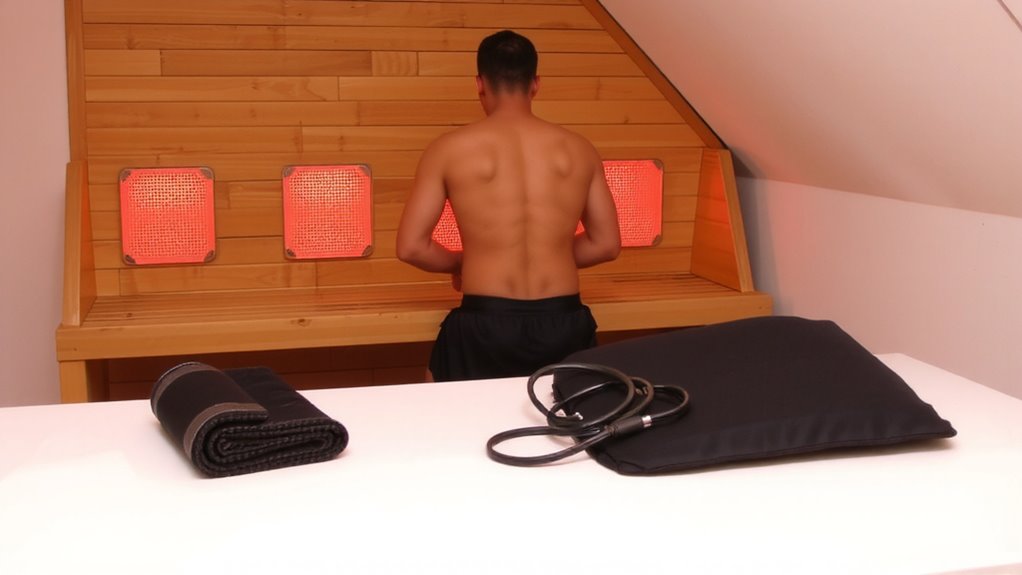
While cooling strategies often take the spotlight in post-workout routines, applying heat therapy at the right time can markedly accelerate your recovery as an athlete. You’ll find that heat boosts blood flow, loosening tight muscles and supporting deep muscle relaxation. This isn’t just soothing-it’s strategic. Enhanced circulation delivers oxygen and nutrients faster, helping repair microtears and reduce soreness. Consistent use of quality heating pads or infrared saunas shows measurable gains in flexibility and reduced stiffness, both key to injury prevention. Unlike passive recovery, targeted heat therapy actively prepares your body for the next session. Devices with adjustable settings and even heat distribution perform best, offering control without risk of burns. While not a cure-all, when used correctly, heat therapy is a practical tool. It complements training by improving tissue health, making it a smart choice in any athlete’s recovery gear. For localized relief, consider using a best heat pack designed for sustained, even warmth.
When to Use Heat: Pre-Workout vs. Post-Workout
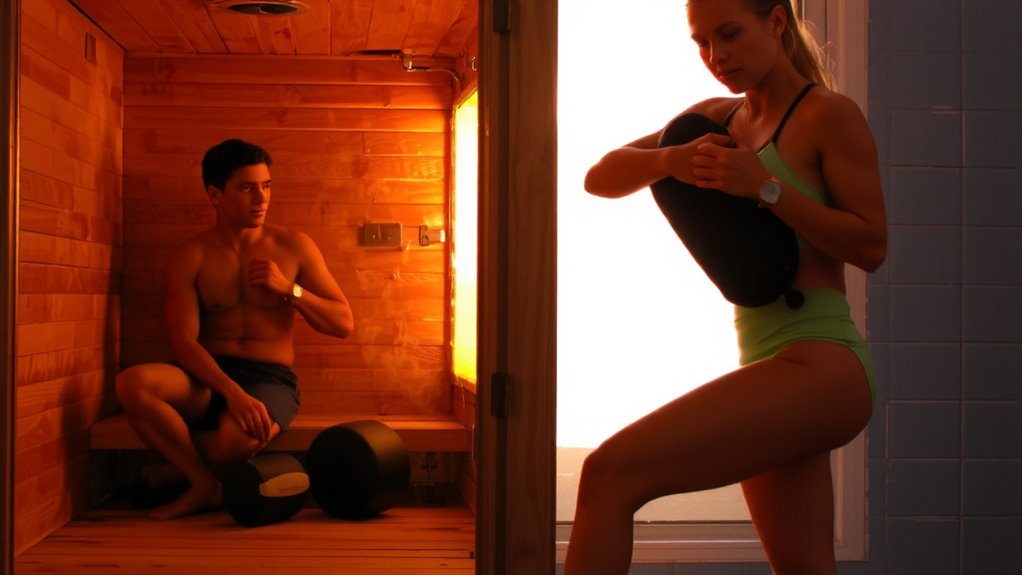
You’ve seen how heat therapy speeds recovery by boosting circulation and easing muscle tension, but knowing when to apply it makes all the difference in your routine. For pre-workout use, heat excels in preparing your body, enhancing your pre workout warm up by increasing blood flow and promoting muscle activation. Applying heat 10–15 minutes before training relaxes stiff tissues, improves joint mobility, and primes neuromuscular response-key for explosive performance. Think of using a heating pad or warm towel on tight hips or shoulders before lifting or sprinting. Post-workout, however, heat can hinder acute recovery by increasing inflammation when your body needs to cool and repair. Instead, save prolonged heat exposure for later in the day or the next morning. Timing matters: early application boosts readiness, while mistimed use can delay healing. Use heat strategically, not habitually. A high-quality best heating pads can make a significant difference in delivering consistent, therapeutic warmth.
Infrared Saunas for Athletes: Faster Recovery and Better Sleep
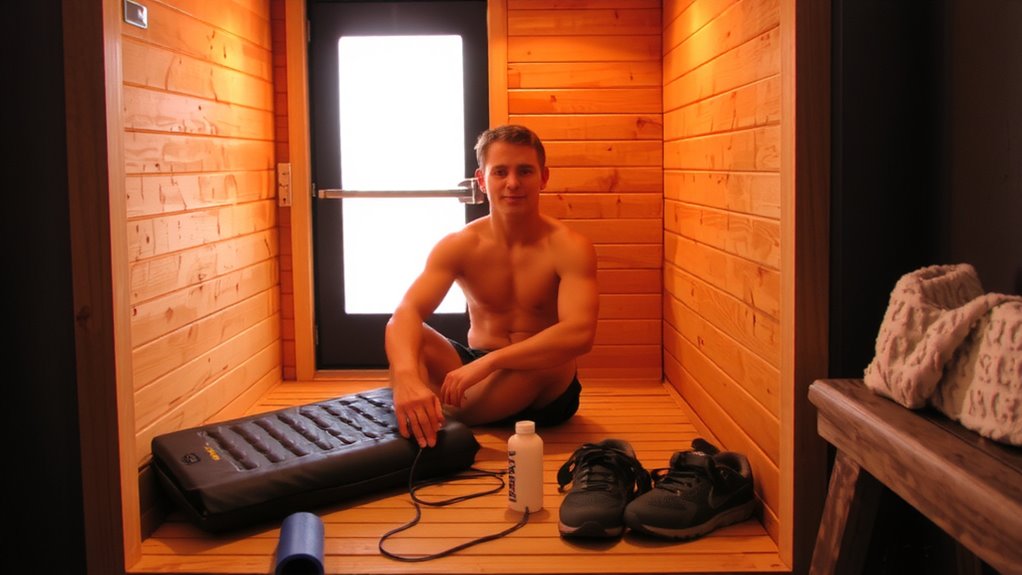
Since infrared saunas deliver heat directly to muscle tissue using electromagnetic wavelengths, they’ve become a go-to recovery tool for athletes focused on cutting downtime and improving regeneration. You experience deeper heat penetration than traditional saunas, which helps increase blood flow and accelerate cellular repair. That means less muscle breakdown after intense training and faster turnaround between sessions. The gentle, consistent warmth also promotes deep relaxation, lowering cortisol levels and improving sleep quality-critical for recovery. Unlike high-humidity saunas, infrared units operate at lower temperatures, making them more tolerable for longer sessions. Most athletes benefit from 30- to 40-minute sessions, three to four times a week. Models with medical-grade emitters offer better wavelength consistency, optimizing therapeutic output. Regular use, paired with hydration and rest, enhances recovery efficiency. While not a replacement for sleep or nutrition, infrared saunas are a valuable addition to your recovery toolkit, especially when performance and consistency matter. Top models feature medical-grade emitters for optimal therapeutic results.
Heating Pads for Post-Workout Soreness
Infrared saunas offer deep, systemic heat that supports full-body recovery, but when you’re targeting specific areas of post-workout discomfort, nothing beats the focused relief of a quality heating pad. You’ll get instant muscle relaxation and effective pain relief, especially after intense training. Modern pads combine adjustable heat settings with ergonomic designs, letting you target tight quads, sore shoulders, or stiff lower backs with precision. Consistent use improves circulation and reduces stiffness, speeding up recovery time.
| Feeling | Effectiveness |
|---|---|
| Soothing ache | High |
| Regaining mobility | Noticeable |
| Muscle relaxation | Immediate |
| Pain relief | Reliable |
Look for pads with auto-shutoff and moisture resistance-safety matters during extended sessions. While not ideal for on-the-go use, heating pads deliver dependable, localized results you can trust night after night.
Portable Heat Wraps for Recovery
How do you keep recovery going when you’re not at home? Portable heat wraps are your go-to solution, designed for athletes on the move. These wraps offer consistent warmth with built-in temperature regulation, maintaining therapeutic heat levels for extended periods-usually 6 to 8 hours. Unlike bulkier heating pads, they’re lightweight, flexible, and discreet under clothing, making them ideal for post-game travel or office recovery. The gentle heat promotes muscle relaxation by increasing blood flow and easing stiffness in targeted areas like the lower back, neck, or shoulders. Most models use carbon fiber heating elements for even heat distribution and include safety features like auto-shutoff. They’re rechargeable and durable, though battery life varies. While not as intense as clinical devices, their convenience and sustained performance make them a practical choice for consistent recovery support when mobility matters.
Moist vs. Dry Heat: Which Is Best for Athletes?
Why does one type of heat seem to penetrate deeper or feel more soothing than another? It often comes down to moisture absorption and heat retention. Moist heat, like that from a steamed towel or heated gel pack, transfers warmth more efficiently because water conducts heat better than air. This means it can soothe stiff muscles faster and reach deeper tissues, especially useful after intense workouts. Dry heat, such as from infrared saunas or electric heating pads, relies on air conduction and has strong heat retention, offering prolonged surface warmth. While dry options are convenient and less messy, they may not ease tightness as effectively. For athletes needing quick, deep relief, moist heat usually wins. However, if you’re prioritizing ease of use or sustained warmth during recovery, dry heat works well. Each has strengths-your choice depends on the injury type, recovery timeline, and gear access.
Safety Tips for Effective Heat Therapy
When using heat therapy, you’ll want to make sure you’re getting the benefits without increasing your risk of injury or skin damage. Always limit sessions to 15–20 minutes, especially with heating pads or saunas, to prevent overheating. For proper skin protection, never apply heat directly to bare skin-use a thin towel as a barrier to reduce the chance of burns or irritation. Check the skin regularly, particularly if you have reduced sensitivity. Hydration management is essential, especially in saunas, where fluid loss through sweat rises substantially. Drink water before, during, and after use to maintain performance and recovery. Avoid heat therapy on swollen or freshly injured areas, as it can worsen inflammation. Choose medical-grade devices with adjustable settings for safer, more effective results. When used correctly, heat therapy supports recovery, but safety ensures it enhances, rather than hinders, your fitness goals.
On a final note
You’ll find heat therapy most effective when applied strategically. Use it pre-workout to loosen tight muscles and post-workout to boost circulation and ease soreness. Infrared saunas offer deep tissue recovery, while portable wraps provide targeted relief. Moist heat often penetrates better than dry, but both have merit depending on your needs. Always follow safety guidelines-avoid prolonged exposure and never use on acute injuries. Used wisely, heat therapy enhances recovery and supports long-term athletic performance.