TENS Therapy Sessions for Chronic Sciatica Pain Relief: Personalized Treatment Plans to Reduce Lower Back Discomfort
You can manage chronic sciatica pain with TENS therapy by using low-voltage electrical pulses to block pain signals from reaching your brain. Place electrodes near the lower back or leg nerves-like the L4–S1 region-for targeted relief. Use frequencies between 80–120 Hz to boost endorphins and adjust pulse width for nerve sensitivity. Avoid common mistakes like poor pad placement or excessive intensity. A consistent daily routine enhances long-term comfort, and optimizing your setup delivers better results over time.
Notable Insights
- Customize TENS electrode placement near the lower back or leg to target sciatic nerve pathways effectively.
- Use frequencies between 80–120 Hz to block pain signals and boost endorphin release for chronic relief.
- Schedule consistent 20-minute sessions in the morning and evening to reduce stiffness and improve sleep.
- Adjust pulse duration to 150–200 microseconds for optimal nerve stimulation without overexcitation.
- Combine TENS therapy with movement and physical therapy for comprehensive sciatica pain management.
What Is TENS Therapy for Sciatica Pain?
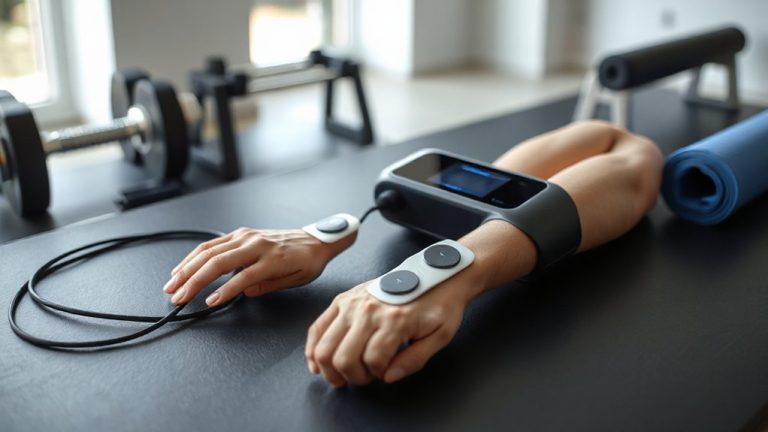
A TENS unit sends small electrical pulses through the skin to help manage sciatica pain, and you’ve probably seen one of these compact, battery-powered devices clipped to someone’s belt during daily activities. You use it by placing adhesive electrodes near the area of discomfort, typically along the lower back or leg, where sciatica causes like herniated discs or spinal stenosis contribute to nerve inflammation. While it won’t fix the root problem, the therapy can reduce pain signals and offer meaningful relief. TENS is non-invasive, portable, and adjustable, letting you control intensity based on comfort and symptom severity. Users often find it helpful during flare-ups or physical activity. Still, effectiveness varies-some report noticeable improvement, while others see minimal change. It’s best used as part of a broader approach including movement and therapy. TENS gear is low-risk but works best when matched to individual needs and pain patterns.
How TENS Stops Shooting Sciatica Pain
You’ve probably wondered how a small device sending electrical pulses can actually interrupt the sharp, shooting pain that races down your leg with sciatica. The answer lies in nerve stimulation. TENS units deliver low-voltage currents that overwhelm pain signals before they reach your brain-a concept known as pain blocking. By activating sensory nerves, the electrical impulses fundamentally “distract” your nervous system, reducing the perception of sciatic pain. Research shows this effect works best with consistent, properly timed sessions. While it won’t repair damaged nerves, TENS offers real-time relief without medication. It’s not a cure, but as part of a broader recovery plan, its performance in managing flare-ups is well-documented. The technology is simple, non-invasive, and portable-ideal for daily use. When used correctly, nerve stimulation via TENS provides measurable, practical pain blocking with minimal side effects.
Place Electrodes to Target Radiating Sciatica Pain
Where should you place the electrodes for the best relief from radiating sciatica pain? Proper electrode placement is essential for effective nerve targeting. You’ll want to position them near the source of radiating discomfort-typically along the lower back, just above the buttocks, or along the path where pain travels down your leg. Avoid placing electrodes directly on the spine. For broader coverage, a dual-channel TENS unit lets you target both sides simultaneously. Here’s a simple guide:
| Location | Purpose |
|---|---|
| L4–S1 region | Targets sciatic nerve root |
| Over gluteal nerve | Addresses rear radiating pain |
| Mid-lower back | Supports general nerve targeting |
| Along posterior thigh | Catches descending pain |
Accurate electrode placement enhances nerve targeting efficiency, helping disrupt pain signals before they intensify. Always follow device guidelines and consult your physical therapist for a personalized setup that matches your pain pattern.
Set Frequency and Pulse for Sciatic Nerve Relief
Now that you’ve positioned the electrodes to align with your pain pathways, it’s time to fine-tune the TENS unit’s settings for ideal nerve modulation. Proper electrode alignment guarantees the current reaches the sciatic nerve effectively, so accurate placement remains essential. Start with a frequency between 80–120 Hz to encourage endorphin release-this range often reduces perceived pain during daily activities. If your nerve sensitivity is high, lower the pulse duration to 150–200 microseconds to minimize discomfort while maintaining relief. Most users find moderate amplitudes work best; too high can overstimulate, too low may not trigger sufficient response. Adjust slowly, noting how your body responds. Reliable TENS units offer precise control over these parameters, making them valuable tools in targeted recovery. Remember, effectiveness depends not just on the device’s specs, but on your consistent, informed use of frequency and pulse settings matched to your nerve’s responsiveness.
Tailor TENS to Your Sciatica Symptoms
How do your sciatica symptoms shape the way you use a TENS unit? Your personal triggers-like prolonged sitting or sudden movements-demand customized settings to manage flare-ups effectively. If pain radiates down your leg, position electrodes along the lower back and glutes to target nerve pathways directly. For sharper, acute discomfort, higher frequencies with shorter pulses often bring faster relief. Chronic aches may respond better to lower frequencies promoting endorphin release over time. You’ll likely need lifestyle adjustments, such as scheduling sessions before or after physical activity, to maintain consistent relief. TENS shouldn’t disrupt your routine-it should adapt to it. Monitoring symptom patterns helps refine intensity, duration, and placement. A well-tailored plan increases compliance and effectiveness, letting you stay active without relying solely on medication. Ultimately, aligning therapy with your unique pain profile improves long-term outcomes.
Avoid These 5 Common TENS Mistakes for Sciatica
Most people trying TENS for sciatica make at least one critical error that limits its effectiveness, often without realizing it. Avoiding improper placement and incorrect duration is essential to getting real relief. Electrodes placed too far from nerve pathways reduce signal efficacy, while sessions that are too short or too long can worsen irritation instead of calming it. Below are common mistakes and how to fix them:
| Mistake | Solution |
|---|---|
| Improper placement | Position pads near the lower back, avoiding bones |
| Incorrect duration | Limit sessions to 20–30 minutes, max twice daily |
| High intensity | Start low, increase gradually to avoid muscle twitching |
| Reusing old pads | Replace every 10–15 uses for consistent conduction |
| Ignoring skin prep | Clean and dry skin before application for better adhesion |
Fix these, and your TENS unit works smarter.
Build a Daily TENS Routine to Reduce Sciatica
You’ve likely already adjusted your electrode placement and refined your session length to avoid common TENS pitfalls, but lasting sciatica relief depends on consistency, not just correctness. Establishing morning consistency helps reset pain thresholds early, priming your nervous system for daily activity with lower discomfort. A 20-minute session at moderate frequency can ease stiffness without overstimulating nerves. Pair this with proper posture and light stretching for best results. Equally important is evening relaxation-using TENS after work or physical exertion reduces muscular tension and supports recovery. Lower frequency settings during this session encourage endorphin release, aiding sleep quality. Using your TENS unit daily, both in the morning and at night, creates a rhythm that aligns with your body’s natural cycles. This dual-approach routine enhances long-term pain management more effectively than sporadic use.
On a final note
You’re using TENS therapy to manage chronic sciatica, and it shows real promise when applied correctly. With targeted electrode placement and adjusted frequency, you can disrupt pain signals and ease lower back discomfort. Personalized settings improve effectiveness, while avoiding common mistakes guarantees safety and consistency. A daily routine enhances long-term relief. Though not a cure, TENS is a credible, non-invasive recovery tool-especially when combined with proper fitness recovery practices and quality gear.