Acupressure Points for Muscle Pain Relief: A Guide to Using Acupressure to Reduce Soreness After Intense Workouts
You can ease post-workout soreness by targeting key acupressure points like GB21 for shoulders, LI11 for arms, and SP6 for legs, which boost blood flow and help clear lactic acid. Apply firm but gentle pressure for 30–90 seconds right after exercise, using your thumbs or a contoured tool for precision. Pair this with hydration and post-workout nutrition for faster recovery. Avoid over-pressing or mistimed sessions, and you’ll see better results than relying on passive recovery gear alone-there’s more to optimizing your routine.
Notable Insights
- Stimulate acupressure points like GB21, LI11, and SP6 to reduce muscle soreness after intense workouts.
- Apply firm, gentle pressure for 30–90 seconds on tender points to enhance blood flow and aid recovery.
- Use tools like jade rollers or acupressure balls for precise, effective stimulation without hand strain.
- Perform acupressure within 5–30 minutes post-exercise when muscles are warm for optimal results.
- Combine acupressure with stretching, hydration, and post-workout nutrition to accelerate muscle recovery.
How Acupressure Eases Muscle Soreness After Workouts
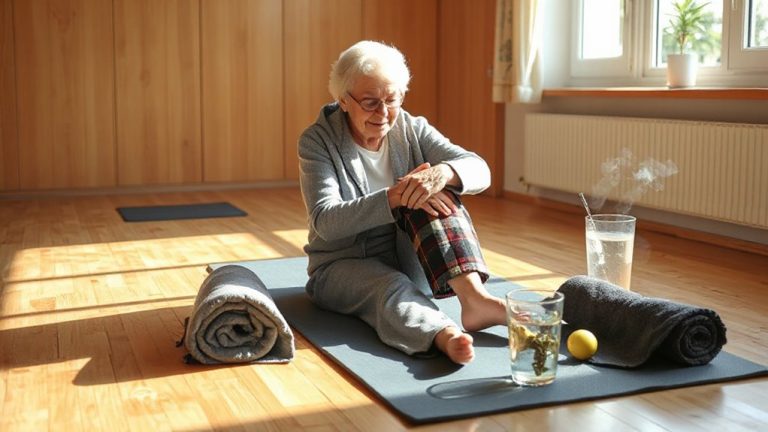
While your muscles ache after a tough workout, applying acupressure may help speed up recovery by targeting specific trigger points linked to muscular tension and circulation. You’ll notice reduced soreness because pressure stimulates blood flow, encouraging faster removal of metabolic waste like lactic acid. Proper hydration levels are essential-when you’re well hydrated, tissues respond better to acupressure, improving elasticity and reducing stiffness. Pairing this with smart nutrition timing, especially consuming protein and carbs within 45 minutes post-exercise, amplifies muscle repair. Unlike expensive recovery gear that relies on passive tech, acupressure gives you active control, using body awareness and precise pressure instead. It’s low-cost, portable, and effective when used consistently. Though it doesn’t replace proper cool-downs or sleep, it complements a solid recovery plan. Over time, you’ll find it enhances physical resilience, especially when integrated with other evidence-based recovery practices.
5 Best Acupressure Points for Post-Workout Recovery
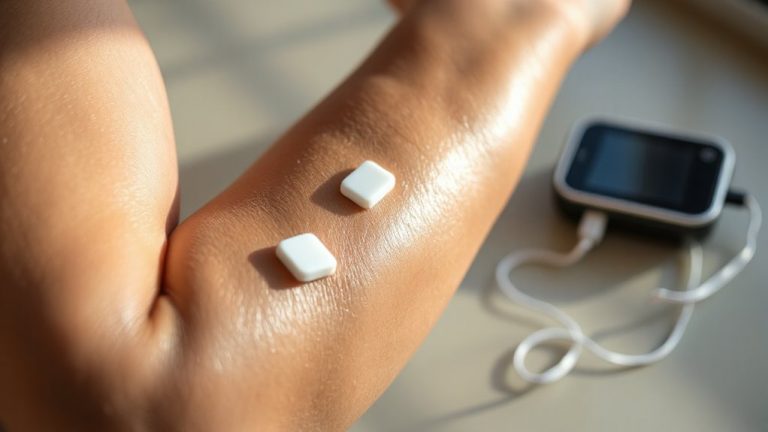
Ever wonder which acupressure points actually deliver the best results when your muscles are tight and fatigued after a workout? The most effective ones for post-exercise recovery include the Shoulder Well (GB21), Hidden Elbow (LI11), and Central Spleen (SP6). These points target common trouble zones like the shoulders, arms, and legs, helping ease tension and support circulation. You’ll find that consistent stimulation here can reduce soreness noticeably within hours. While you can use fingers, acupressure tools and pressure devices offer deeper, more precise application with less strain on your hands. Tools like acupressure mats or handheld probes let you maintain steady pressure, enhancing effectiveness. They’re portable, easy to clean, and especially useful after intense training. Though not all devices perform equally, quality ones improve accuracy and comfort, making them a worthy addition to your recovery gear.
Where to Find and How to Press Them Correctly
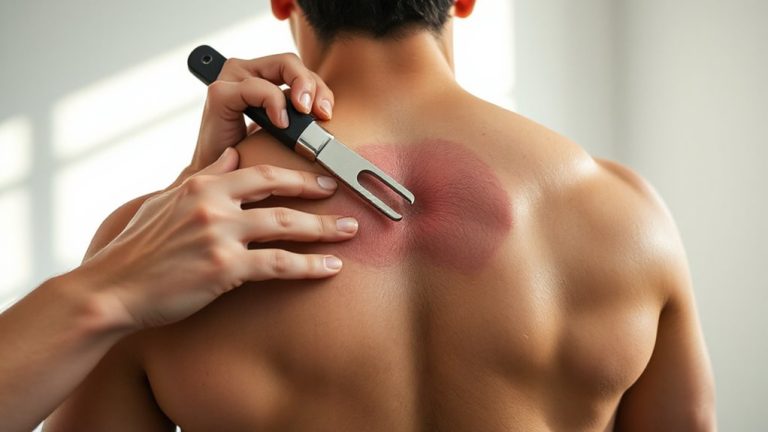
How do you actually locate and stimulate the key acupressure points without causing discomfort or missing the mark? Start by palpating areas described in reliable guides-these points often feel slightly tender or firm. Use your thumbs or fingers to apply firm but gentle pressure, avoiding sudden pain. For better accuracy and comfort, acupressure tools like smooth jade rollers or ergonomic pressure sticks can help maintain consistent contact, especially on hard-to-reach zones. Apply pressure for about 30 to 90 seconds per point-this pressure duration allows muscle fibers to relax and circulation to improve without overstimulation. While fingers work fine, tools offer more precision and reduce strain on your hands. Their performance varies, so choose ones with contoured edges that conform to body contours. Consistent use enhances recovery, though effectiveness depends on correct placement and moderate, sustained pressure-not force. A quality massage therapy tool can significantly improve the effectiveness and comfort of your acupressure routine.
Step-by-Step: Use Acupressure Right After Exercise
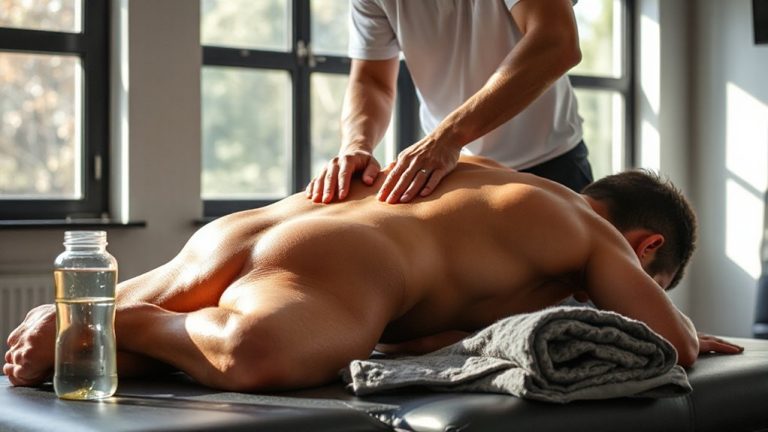
After you’ve finished your workout, incorporating acupressure into your cooldown routine can considerably enhance muscle recovery by reducing tension and improving blood flow. Use proper timing techniques-begin within 5 to 10 minutes post-exercise, when muscles are warm and most receptive. Focus on major points like the shoulder webbing, lower back, and hamstrings, applying firm but comfortable pressure for 30 to 60 seconds per site. You can use your fingers, but pressure tools like acupressure balls or massage sticks offer better leverage and precision, especially for hard-to-reach areas. These tools maintain consistent intensity and reduce hand strain, making them practical for regular use. While basic techniques work without equipment, investing in quality pressure tools improves effectiveness and adherence. Combined with stretching, acupressure supports faster recovery and reduced soreness. Proper execution matters more than force-accuracy and consistency deliver the best results in fitness recovery. For targeted relief, consider using best recovery balls designed to mimic deep tissue massage and enhance myofascial release.
When to Apply Pressure for Fastest Relief
Why do some athletes recover faster than others despite similar training loads? It often comes down to ideal timing. You’ll get the fastest relief when applying acupressure within 15 to 30 minutes post-workout, while muscles are still warm and blood flow is elevated. This window maximizes the therapy’s impact on circulation and inflammation reduction. Don’t wait until soreness sets in-delayed application lessens effectiveness. Pressure duration matters too: apply firm, steady pressure for 30 to 90 seconds per point. Too brief, and you won’t trigger the desired physiological response; too long, and you risk tissue irritation. Evidence suggests this balance enhances parasympathetic activation, promoting faster muscle recovery. Top performers don’t just train hard-they recover smart, using precise techniques like timed acupressure to maintain peak readiness. Your recovery gear should support this strategy, not replace the fundamentals.
Avoid These Common Acupressure Mistakes
Isn’t it frustrating when you’re doing everything right-training consistently, staying hydrated, even using recovery tools-yet still not seeing the results you expect? Chances are, you might be making common acupressure mistakes. Applying pressure with excessive force is a frequent error; it can trigger muscle tension instead of relieving it, counteracting your recovery goals. Your body responds best to firm, steady pressure-not pain. Another issue is incorrect timing; pressing too soon after intense exercise or holding points too long may reduce effectiveness. For best results, wait 10–15 minutes post-workout and limit each session to 2–3 minutes per point. Accuracy matters too-mislocating pressure points diminishes benefits. Using guided tools or charts can improve precision. Avoid these missteps, and your acupressure practice will support faster, more consistent muscle recovery, complementing your fitness gear and effort efficiently.
On a final note
You’ve seen how acupressure targets muscle soreness with precision, using key points like BL12 and GB34 to support natural recovery. It’s a practical, gear-free method that fits seamlessly into post-workout routines. While not a replacement for professional care, it complements hydration, stretching, and quality recovery tools. When done correctly, you’ll feel reduced tightness and improved circulation-backed by tradition and growing evidence.