Stretching Modalities That Work: Incorporating Flexibility Exercises Into Your Recovery Routine
You boost recovery when you stretch correctly, as it increases blood flow and reduces muscle stiffness. Dynamic stretches warm up your body before workouts, while static holds post-exercise cut soreness and speed repair. PNF stretching deepens flexibility using contractions and relaxation. For best results, stretch warm muscles within 10 minutes of training. Consistency beats gear-daily habits deliver real gains, and smart timing enhances performance. There’s a clear method to maximizing your routine.
Notable Insights
- Dynamic stretching before workouts enhances mobility and reduces injury risk through sport-specific movements.
- Static stretches held for 30–60 seconds post-exercise reduce muscle soreness and improve recovery.
- PNF stretching combines muscle contraction and relaxation to achieve deeper flexibility gains than static stretching alone.
- Stretching within 5–10 minutes after exercise optimizes blood flow and minimizes stiffness.
- Consistency is key-incorporate stretching daily by pairing it with existing habits for long-term adherence.
How Stretching Speeds Up Recovery
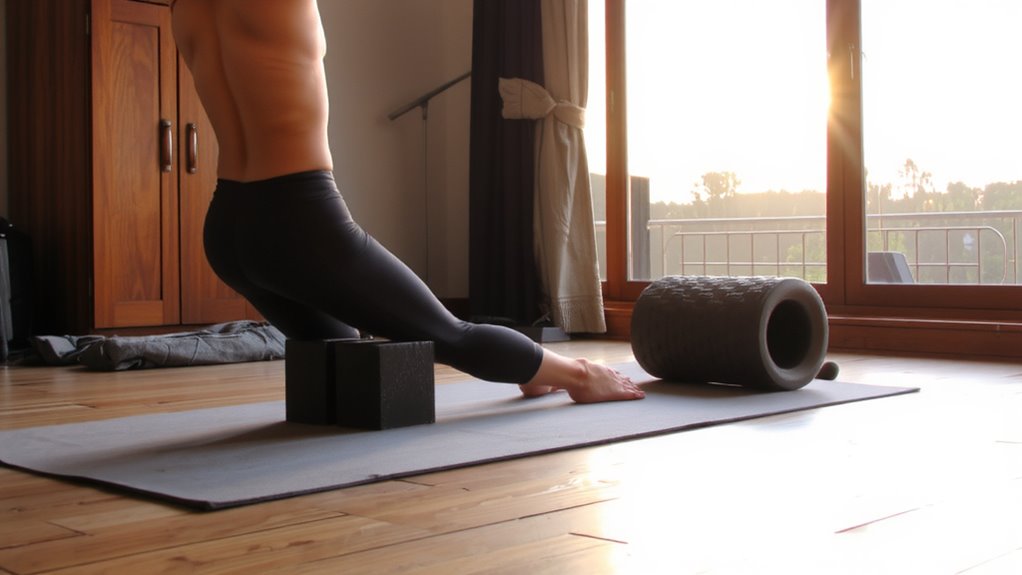
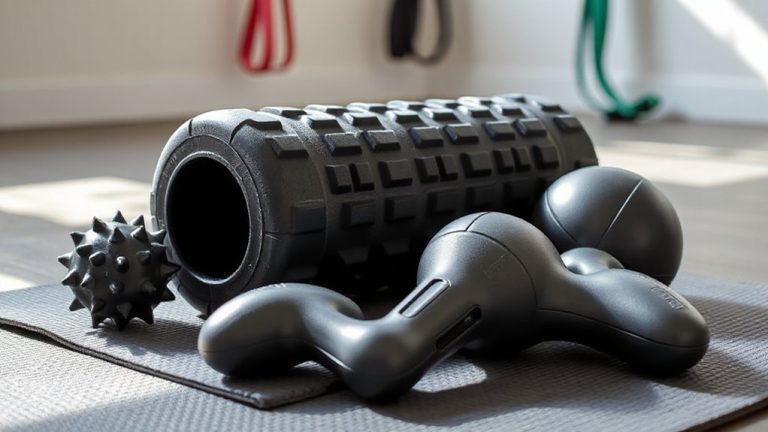
While your muscles repair after intense workouts, integrating stretching into your recovery routine can considerably accelerate the process by improving blood flow and reducing stiffness. You’re supporting muscle repair by delivering oxygen and essential nutrients more efficiently. Static stretches, especially when held for 30 seconds post-exercise, have shown measurable benefits in inflammation reduction, easing soreness and minimizing downtime. Evidence suggests stretched muscle fibers recover faster due to decreased mechanical tension and improved cellular signaling. Recovery-focused gear like foam rollers combined with consistent stretching enhances these effects, though consistency outweighs equipment sophistication. You don’t need high-end tools-just deliberate, regular practice. Think of stretching as active recovery: it’s not passive rest, but functional engagement aiding physiological balance. Over time, this approach boosts flexibility and resilience, making it a practical, low-cost component of fitness recovery. It’s effective, simple, and grounded in physiological response-ideal for long-term adherence. For optimal results, consider incorporating specialized tools such as a stretching strap to improve range of motion and target hard-to-reach muscles.
Dynamic Stretching for Warm-Ups and Mobility
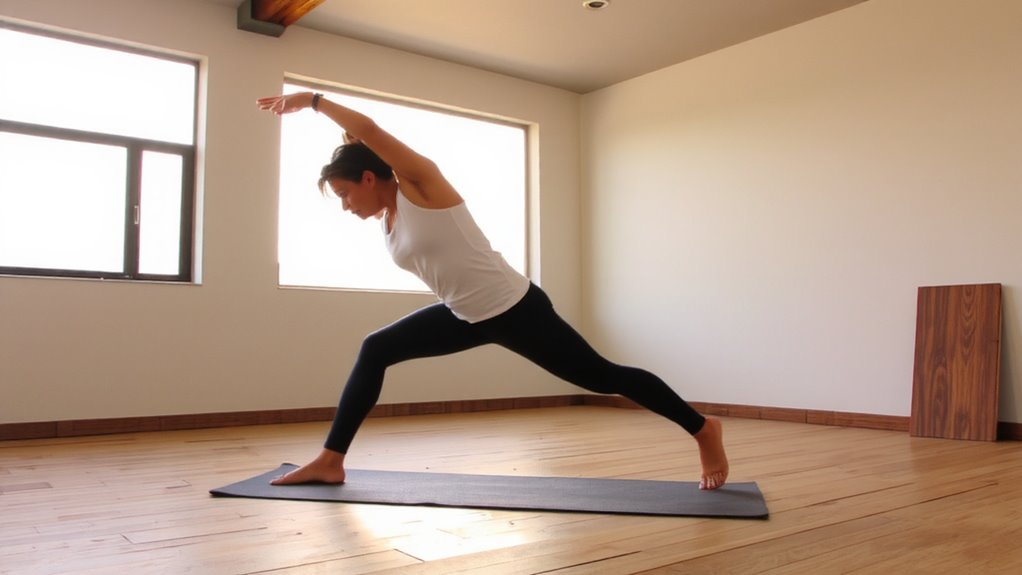
You’ve seen how stretching supports recovery by enhancing circulation and reducing muscle stiffness, but not all stretching serves the same purpose-timing and technique matter. For warm-ups and mobility, dynamic stretching is your best bet. It uses controlled active movement to prep muscles and nervous system for action, unlike static holds better saved for post-workout. Think leg swings, arm circles, or walking lunges-these boost blood flow while promoting joint activation, which improves range of motion and movement efficiency. Unlike passive methods, dynamic stretches mimic sport-specific motions, making them ideal before training or high-intensity sessions. Performance studies show they enhance power output and reduce injury risk when done correctly. Recovery-focused gear like resistance bands or foam rollers can support these drills but aren’t substitutes. Use dynamic routines early in your recovery protocol to prime the body, not heal it. They’re preventive, not reparative-but essential for long-term resilience.
Static Stretching to Reduce Soreness Post-Workout
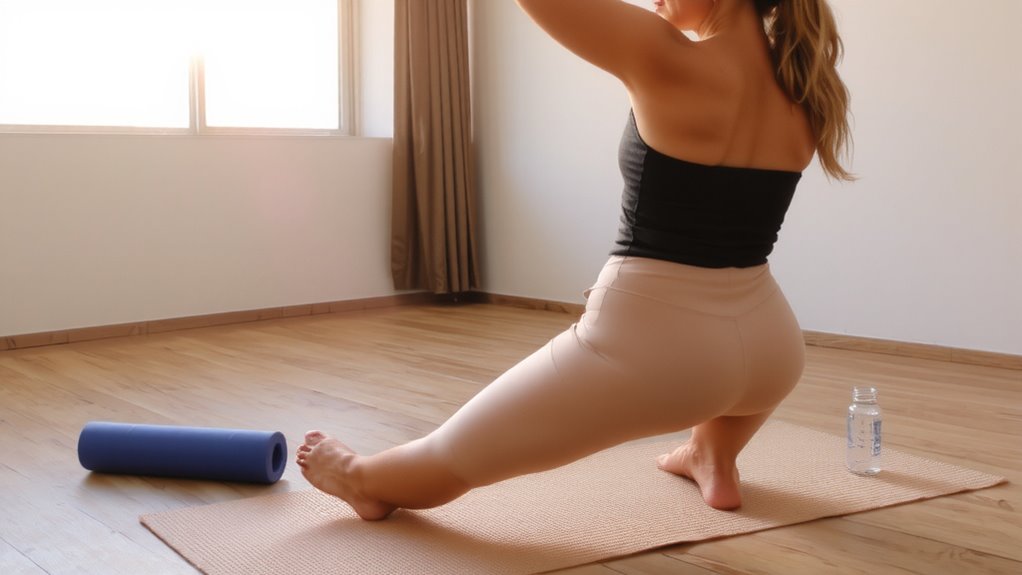
Since muscle tightness and micro-tears from intense exercise contribute to delayed onset muscle soreness (DOMS), static stretching offers a targeted way to ease discomfort and support recovery when used after workouts. You hold each stretch for 30 to 60 seconds, allowing your muscles time to lengthen and promoting muscle relaxation. Research shows this can reduce post-exercise soreness, especially when performed consistently. Unlike dynamic movements, static stretching post-workout helps reset muscle tension without activating the nervous system. When paired with proper breathing and technique, it enhances flexibility over time, aiding in injury prevention. Though it shouldn’t replace warm-ups, incorporating it into recovery improves long-term mobility. For best results, focus on major muscle groups you’ve worked and avoid bouncing. While tools like foam rollers or resistance bands can support this routine, static stretching remains foundational-simple, equipment-free, and effective when done correctly.
PNF Stretching for Deeper Flexibility Gains
If you’re looking to push past plateaued flexibility, proprioceptive neuromuscular facilitation (PNF) stretching delivers measurable gains by combining contraction and relaxation in targeted muscle groups. You’ll typically use a *contract-relax* method, where you gently push against resistance for 5–10 seconds, then relax into a deeper stretch. This exploits autogenic inhibition, letting your nervous system accept a new range of motion. Alternatively, the *hold-relax* technique involves isometric contraction without movement, followed by sustained stretching. Both methods enhance elasticity more effectively than static stretching alone. PNF demands focus and proper timing, so consistency matters more than intensity. You don’t need special gear-just a mat and possibly a strap or partner for resistance. While it’s more involved than passive stretching, the results in joint mobility and muscle responsiveness are well documented. For recovery-focused routines, PNF offers a structured path to meaningful flexibility gains when applied correctly. A high-quality stretching strap can enhance your PNF sessions by providing reliable resistance and better control over your range of motion.
When to Stretch for Optimal Recovery
Proprioceptive neuromuscular facilitation has proven effective for expanding flexibility, but even the most strategic stretching won’t yield ideal recovery if timed poorly. The best time to stretch for recovery is post-exercise, when your muscles are warm and pliable. This boosts blood flow, reduces stiffness, and supports muscle repair. Stretching within 5 to 10 minutes after your workout capitalizes on elevated body temperature, enhancing range of motion. Aim for a favorable duration of 15 to 30 seconds per muscle group-long enough to elicit change, short enough to avoid overstretching. Holding longer than 60 seconds offers minimal added benefit and may impair performance if done before activity. For maximal recovery, avoid static or PNF stretches pre-workout; save them for cooldowns. Consistency in timing improves long-term flexibility and reduces soreness, making post-exercise stretching a smart, science-backed recovery habit.
How to Stick to Stretching Daily
You’ll get the most out of your recovery when stretching becomes a non-negotiable part of your daily routine, not something you do only when muscles feel tight. Building routine consistency is key-schedule stretching at the same time each day, like after a workout or before bed, so it becomes automatic. Pair it with an existing habit, such as brushing your teeth or morning coffee, to reinforce the behavior. Habit tracking boosts accountability; use a simple calendar, app, or journal to mark completed sessions. Seeing progress visually motivates continued effort and highlights streaks worth preserving. While fitness gear like foam rollers or resistance bands can enhance flexibility, they’re most effective when used consistently. Don’t rely on equipment alone-your commitment to daily movement matters more. Over time, routine consistency transforms stretching from a chore into a valued recovery ritual, improving mobility and reducing injury risk without relying on shortcuts or gimmicks.
On a final note
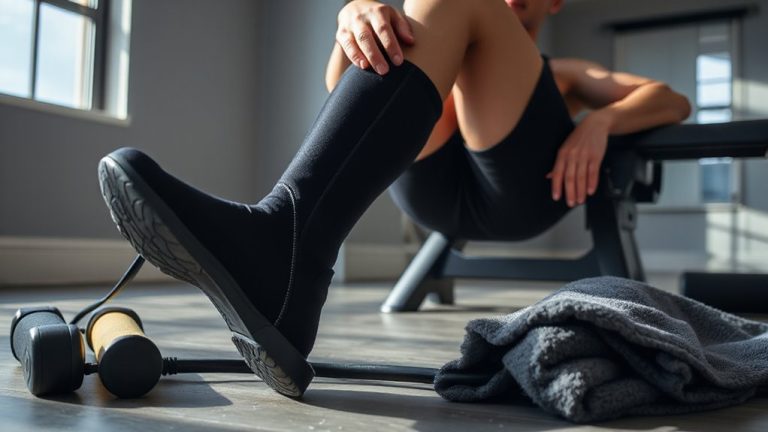
You’ll recover faster and move better by integrating smart stretching into your routine. Dynamic stretches prime muscles before activity, while static holds post-workout reduce soreness. PNF techniques boost flexibility effectively but require effort. Timing matters-stretch when muscles are warm for best results. Consistency beats intensity; daily, brief sessions outperform occasional extremes. Pair these practices with quality recovery gear like foam rollers or compression wear to enhance circulation and support tissue repair, making your recovery both efficient and sustainable.