Hip Mobility Drills With Lying Hip Abduction With Band
Lying hip abductions with a band help fix tight hips by reactivating weak gluteus medius and minimus muscles, especially after long periods of sitting. The band adds constant tension, improving muscle control and alignment. Keep your hips stacked and move slowly to avoid compensation. You’ll gain better hip stability and mobility over time, reducing injury risk. For best results, pair this move with targeted mobility drills.
Notable Insights
- Lying hip abductions with a band activate the gluteus medius and minimus to improve hip stability and mobility.
- Perform the exercise with proper form: side-lying, band above knees, and controlled 2-second movements.
- Use slow tempo and full range of motion to enhance neuromuscular engagement and joint alignment.
- Incorporate as a warm-up drill to prime hips or in rehab to correct muscle imbalances.
- Pair with other mobility drills like clamshells and leg swings for comprehensive hip activation.
Why Lying Hip Abductions Fix Tight Hips
Why are your hips so tight after long sits or intense workouts? Prolonged sitting weakens gluteal muscles and misaligns your pelvis, leading to poor joint alignment and reduced muscle activation. Lying hip abductions with a resistance band counteract this by re-engaging underused hip abductors like the gluteus medius. This exercise restores proper movement patterns, encouraging your hips to function as they should. The band adds consistent tension, enhancing neuromuscular feedback and promoting more effective muscle activation. When performed correctly, the move improves joint alignment by stabilizing the pelvis during motion. Over time, this leads to better hip mobility, reduced stiffness, and fewer compensations in your stride or squat. Recovery isn’t just rest-tools like resistance bands support functional restoration. For lasting results, consistency and correct form matter more than intensity. This drill isn’t flashy, but its impact on daily movement and injury prevention is undeniable.
Which Glutes This Banded Move Actually Works?
How often do you assume a banded hip abduction works all your glutes equally? While it seems like it should engage every part of your rear end, the reality is more about precise glute targeting. This move primarily activates the gluteus medius and minimus-key muscles for hip stability and movement control. During lying abductions, muscle activation is highest in these outer glutes, especially when tension from the resistance band is maintained throughout the motion. The gluteus maximus, responsible for powerful hip extension, gets far less involvement here. That doesn’t make the exercise less valuable-quite the opposite. For rehab, injury prevention, or correcting imbalances, this level of isolation is effective. If you’re using quality fitness gear like latex bands with consistent resistance, you’ll notice sharper muscle engagement. So while it’s not a full glute sweep, its focused activation makes it a smart addition to mobility and recovery routines.
How to Do Lying Abductions (Step-by-Step)
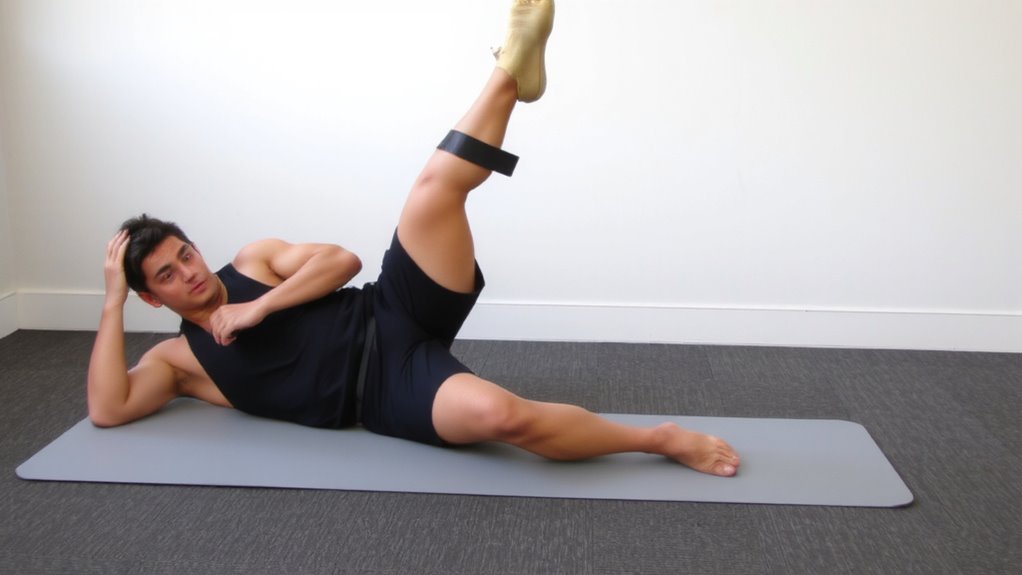
While lying abductions may look simple, doing them correctly demands attention to form and setup-especially if you’re using a resistance band to boost effectiveness. Start by lying on your side, legs stacked, and loop the band just above your knees. Keep your hips stacked and spine neutral to maintain proper alignment-this prevents unnecessary strain and targets the gluteus medius effectively. Engage your core slightly and press the top knee upward against the band, leading with the heel. Focus on slow, controlled movement to maximize muscle engagement and avoid jerking. Pause briefly at the top, then lower with control. Perform equal reps on both sides. This drill challenges hip stability and mobility, making it valuable for injury prevention and recovery. When done consistently, it supports joint health and improves movement mechanics, especially when using durable, properly tensioned fitness gear.
Fix These Common Form Mistakes
When you’re keen to feel the burn, it’s easy to overlook subtle errors that undermine your progress and increase injury risk, especially during lying abductions. Poor band placement is a common issue-positioning the band too close to the knees shifts stress unevenly, reducing glute activation. Instead, place it just above the ankles to guarantee balanced tension and proper muscle engagement. Many also rush through reps, sacrificing tempo control. Moving too quickly turns the exercise into momentum-driven motion, weakening its effectiveness. Slow, deliberate movement-roughly two seconds out, two seconds back-maximizes time under tension and fosters neuromuscular connection. You’ll see better results by focusing on form over speed. Check your alignment: hips stacked, feet neutral, lower back flat. These adjustments boost hip mobility gains while keeping joints safe during repetition.
When to Use Banded Abductions: Warm-Up to Rehab
You’ve already seen how proper form maximizes the effectiveness of banded abductions, but knowing when to use them is just as important as how to perform them. These drills shine in both warm-ups and rehab protocols, thanks to their ability to enhance muscle activation without overloading joints. Used before workouts, they prime the glutes and hip abductors, improving movement efficiency and supporting injury prevention during dynamic activities. The resistance band provides feedback, helping you engage the right muscles early. In rehab, banded abductions aid recovery by restoring neuromuscular control and addressing imbalances safely. Their low-impact nature allows consistent use, whether you’re returning from hip or knee issues or managing chronic tightness. When paired with intentional movement, they’re more than prep-they’re preventative care. The right band tension matters: too light lacks stimulus, too heavy risks compensation. Used wisely, this drill supports long-term joint health and performance.
Easier and Harder Versions for Your Level
How do you make banded abductions work better for your current strength and mobility level? You adjust resistance levels and apply progress variations. If you’re just starting, use a lighter band or perform the movement with bent knees to reduce strain. This modification maintains form while building foundational strength. For greater challenge, progress to thicker bands, straight legs, or add pauses at the end range to increase time under tension. Some even elevate the working leg slightly for more activation. These progress variations let you scale effectively, ensuring continued adaptation without compromising technique. Resistance levels aren’t just about strength-they affect joint feedback and muscle engagement, essential for functional mobility. Choosing the right band matters: latex quality, width, and durability influence performance and long-term use. Matching the band to your level supports sustainable improvement in hip control and stability-key elements in both injury prevention and movement efficiency.
Pair With These Mobility Drills
Banded abductions build foundational hip strength and joint awareness, but pairing them with complementary mobility drills enhances their impact by addressing surrounding muscle groups and joint dynamics. You’ll benefit from incorporating hip activation exercises like clamshells and fire hydrants, which prime the gluteus medius and support lateral movement efficiency. Follow with dynamic stretches such as 90/90 hip switches and seated pigeon mobilizations to improve rotational range and reduce capsular stiffness. These drills promote joint stability by integrating controlled motion with neuromuscular feedback. Using a resistance band with these movements increases proprioception and muscle engagement, but make certain it’s durable and properly anchored to avoid inconsistent tension. Together, these drills form a thorough routine that supports injury prevention, movement precision, and long-term hip health-essential for athletes and sedentary individuals alike seeking functional improvement and sustained joint stability.
On a final note
You’ll find lying hip abductions with a band effective for improving hip mobility and activating the gluteus medius, especially when performed with proper form. This drill suits various fitness levels and fits well into warm-ups or rehab routines. When paired with complementary mobility work, it supports recovery and movement efficiency. Quality resistance bands enhance performance, staying durable with consistent use-making them a practical investment for long-term joint health and functional strength.