Pelvic Floor Activation Within Functional Movements for Female Athletes Postpartum Return
You’re rebuilding more than strength-you’re reconnecting breath, core, and movement to restore pelvic floor function after childbirth. Inhale to expand the diaphragm, engage your deep core, then gently activate your pelvic floor during squats, lunges, or jumps to stabilize your pelvis. Timing matters more than intensity, ensuring muscles work together efficiently under load. Supportive gear helps comfort, but only smart neuromuscular training rebuilds true control. Master this synergy, and you’ll gain power, endurance, and resilience-key signs there’s more beneath the surface.
Notable Insights
- Sync diaphragmatic breathing with core engagement to restore intra-abdominal pressure control during functional movements postpartum.
- Activate the pelvic floor gently during squat and lunge descent to support spinal and pelvic alignment.
- Pre-contract the pelvic floor before running or jumping impact to enhance shock absorption and stability.
- Integrate timed pelvic floor contractions into sport-specific drills like lateral cuts and sprints for neuromuscular precision.
- Strengthen pelvic floor endurance to improve core stability, power transfer, and injury resilience in athletic performance postpartum.
Sync Breath and Core for Stability Postpartum
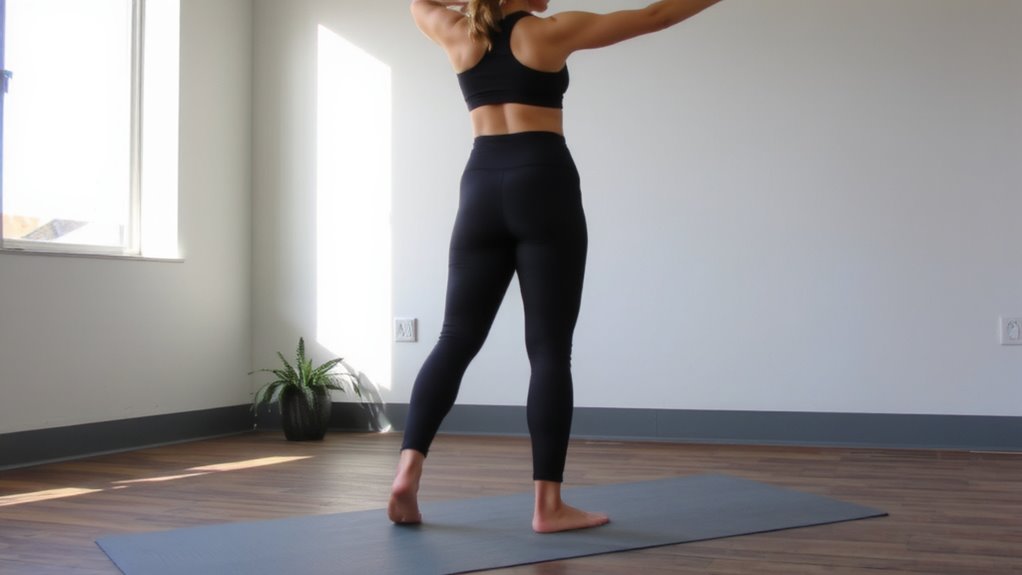
Why do so many postpartum athletes struggle with core stability even after returning to training? You’ve likely restored strength, yet something feels off-maybe a lack of control or subtle weakness during dynamic moves. The issue often lies in breath and core coordination. Diaphragmatic breathing isn’t just calm breathing-it’s foundational. When you inhale deeply, your diaphragm descends, increasing intra abdominal pressure, which should engage your deep core system. When you exhale, those muscles naturally co-contract, offering stability. But postpartum, this sync falters. Without retraining it, you’re compensating, risking strain or dysfunction. Gear like core rehab belts may offer feedback, but they can’t fix faulty mechanics. True recovery demands re-establishing the breath-pressure-muscle link. Relearn diaphragmatic breathing with purpose, and you’ll rebuild intra abdominal pressure effectively-creating a stable, resilient core that supports real athletic demand.
Engage Your Pelvic Floor in Squats and Lunges
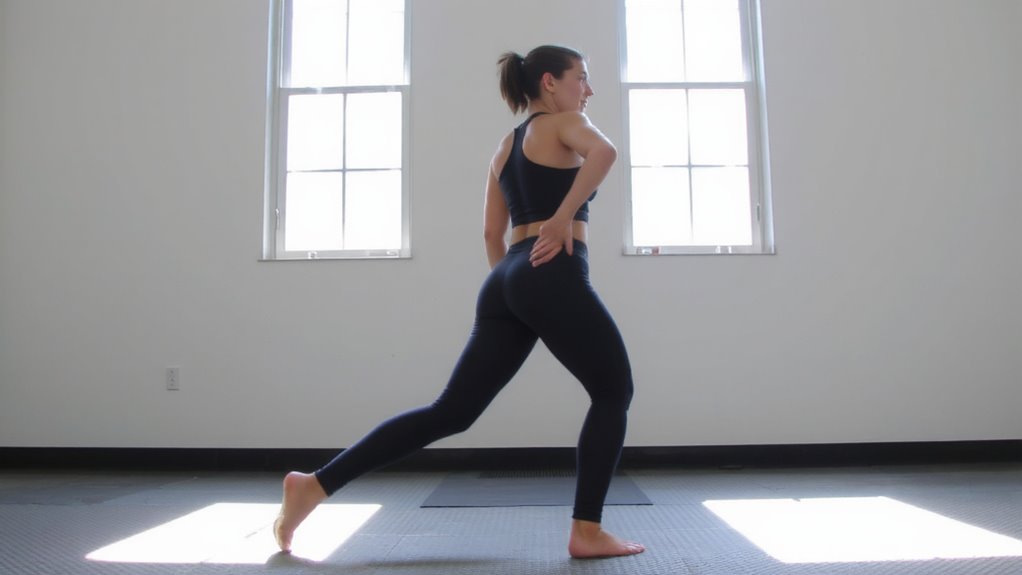
While you’re rebuilding strength in squats and lunges, don’t overlook the role of pelvic floor engagement-this isn’t just about squeezing at random, but timing activation to support intra abdominal pressure and spinal alignment. As you descend, gently contract your pelvic floor to maintain pelvic alignment and prevent strain. This co-activation with your deep core stabilizers enhances movement efficiency, allowing smoother force transfer through the hips and legs. You’ll notice better control, reduced pelvic gapping, and improved coordination. Think of it as internal bracing that works quietly beneath the surface, supporting joints and soft tissues alike. In functional training, where repetitions build quickly, consistent engagement guarantees sustainable progress. It’s not about maximum contraction, but precision and timing-key factors often missed in early postpartum return. When done right, your body moves as a unified system, boosting performance while protecting vulnerable areas during high-demand movements.
Control Impact When Running and Jumping
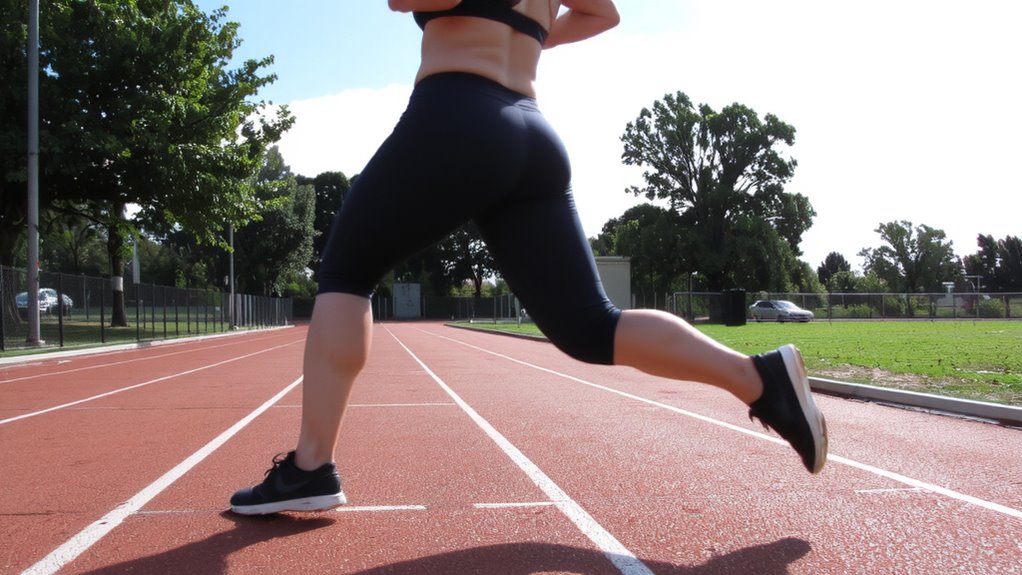
Every time you land from a jump or strike the ground while running, your pelvic floor absorbs a force equivalent to up to three times your body weight-so relying on passive support alone won’t cut it. You need active control to manage ground reaction forces efficiently. Without it, excessive strain can compromise tissue integrity and delay fitness recovery. Proper load absorption depends on timely pelvic floor engagement just before impact, which works synergistically with your core and glutes. Think of it as pre-tensing a shock absorber: your muscles respond better when braced in anticipation, not after the force hits. This neuromuscular coordination reduces downward pressure and stabilizes your pelvis. High-impact movements demand this prep work-especially postpartum, when tissues are still regaining resilience. Ignoring this phase limits performance and increases the risk of leakage or prolapse. While supportive gear like recovery shorts may help comfort, they don’t replace active control. You’ve got to train your body to handle impact from the inside out.
Train Sport Moves With Pelvic Floor Control
How do you guarantee your pelvic floor stays engaged during the dynamic demands of sport-specific movements? You train them together-not as isolated holds, but as integrated actions. Maintain neutral pelvic alignment so your core and pelvic floor work efficiently with each motion. This alignment supports ideal muscle activation and reduces compensatory patterns. Pair each sport-specific drill-lateral cuts, pivots, or sprints-from the start with intentional pelvic floor engagement. It’s not just about strength; it’s about movement precision. Your body learns to stabilize dynamically, making control automatic under load. Use mirrors or video feedback to assess form and refine timing. Consistent practice embeds neuromuscular coordination, so when game speed hits, your pelvic floor responds without thought. This integration isn’t optional-it’s fundamental to resilient performance. Train smart now to move safely, powerfully, and sustainably in your comeback.
How a Strong Pelvic Floor Powers Your Comeback
Because your body’s deep core system adapts substantially during pregnancy and childbirth, reclaiming pelvic floor strength isn’t just about recovery-it’s about rebuilding athletic power from the ground up. A strong pelvic floor enhances pelvic alignment, stabilizing your core during dynamic movements. It also supports muscular endurance, letting you sustain performance without fatigue compromising form. This foundational strength translates directly to agility, power transfer, and injury resilience in sport-specific actions.
| Functional Benefit | Athletic Impact |
|---|---|
| Ideal pelvic alignment | Improves biomechanics and force control |
| Greater muscular endurance | Delays fatigue during prolonged effort |
When integrated into functional training, pelvic floor activation becomes more than rehab-it’s a performance upgrade. Proper alignment and endurance don’t just protect; they empower, ensuring your comeback is strong, efficient, and sustainable.
On a final note
You’ve learned to sync breath and core, engage your pelvic floor during squats and lunges, and manage impact in dynamic moves. These strategies aren’t just rehab-they’re performance essentials. A strong pelvic floor supports power, endurance, and injury resilience. When trained progressively alongside functional movement, it enhances stability and control. Postpartum recovery isn’t a pause; it’s a reset. With mindful training, you return not just fit, but smarter, stronger, and more in tune with your body’s mechanics.