Floor-Based Side Bends With Pillow Stack to Address Asymmetrical Loading Effects
You’re probably worsening hidden muscle imbalances with everyday movements, but floor-based side bends using a pillow stack can help correct asymmetrical loading. By lying on your side with a firm pillow under your ribcage, you promote true lateral flexion and reduce compensatory twisting. This method supports spinal alignment, encourages pelvic symmetry, and allows both sides to engage equally-unlike standing bends. Pillow height and firmness matter: too low or too soft compromises spine neutrality, while the right stack provides consistent feedback and targeted release. You’ll notice improved posture and reduced tension over time, especially when performed regularly. Fine-tuning your setup reveals even greater balance benefits.
Notable Insights
- Floor-based side bends with pillow support correct asymmetrical loading by promoting balanced lateral flexion.
- Proper pillow height aligns the spine, keeping the ribcage parallel to the ceiling during the stretch.
- Using firm, equal-thickness pillows ensures consistent support and prevents compensatory postural shifts.
- Performing the stretch in the morning or post-workout optimizes spinal realignment and muscle recovery.
- Alternating sides equally enhances pelvic alignment and reduces long-term strain from muscular imbalances.
Why Asymmetrical Loading Causes Hidden Tension
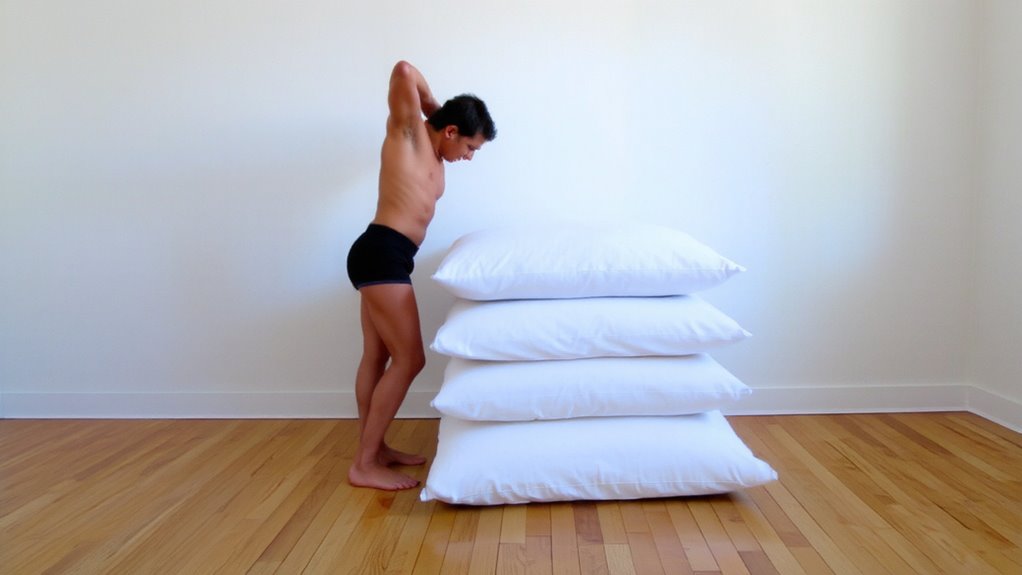
Your body’s response to uneven weight distribution during exercises like floor-based side bends with a pillow stack reveals how asymmetrical loading quietly amplifies tension in muscles not meant to bear the brunt. You might not notice it at first, but over time, muscle imbalances develop as dominant sides compensate, leaving weaker groups overstretched and underactive. This imbalance promotes postural drift-your spine tilts subtly, shoulders shift, and movement efficiency drops. The pillow stack, while supportive, can exaggerate the issue if height or density isn’t adjusted for your anatomy. Without mindful correction, you’re reinforcing faulty patterns instead of correcting them. Fitness recovery tools should enhance alignment, not reinforce asymmetry. Evaluating how you use props matters: a poorly stacked pillow setup increases shear forces along the torso. Over months, that subtle strain accumulates. Awareness and precision in setup are essential to prevent long-term dysfunction masked as progress. Choosing the right support, such as a pillow with optimal best pillows for back support, can help maintain spinal alignment and reduce compensatory strain.
How This Stretch Rebalances Your Sides
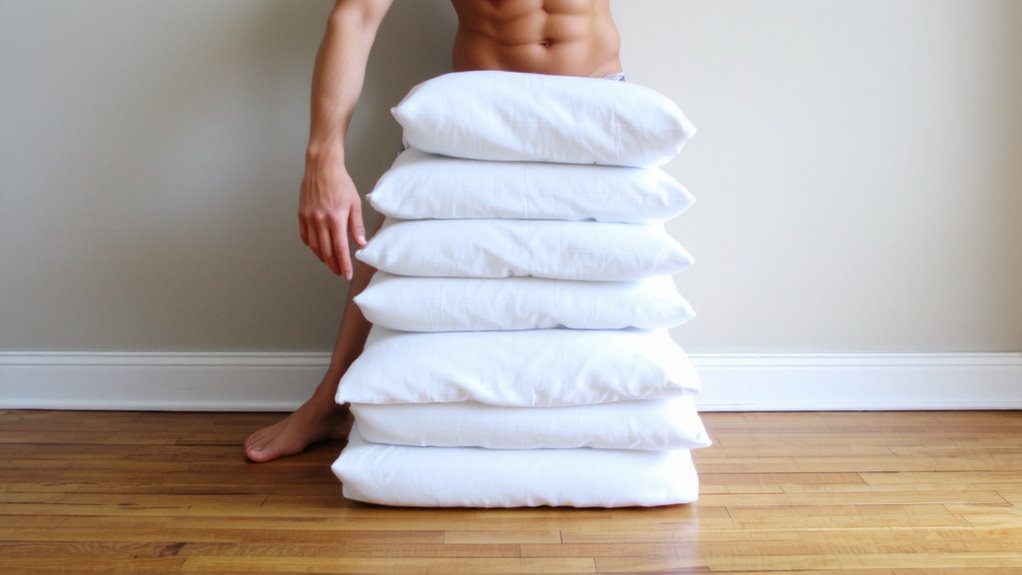
What if a simple tweak in your side bend routine could neutral kukke neutralize months of asymmetrical strain? This floor-based stretch with a pillow stack works by gently guiding your body back toward balance. By supporting your torso, the pillows reduce compens(by tilting, letting you focus on true lateral flexion. You’re not just stretching-you’re recalibrating. Over time, consistent practice promotes better pelvic alignment and encourages spinal symmetry, countering the subtle shifts caused by daily imbalances. Unlike standing bends that may exaggerate asymmetry, this method guarantees both sides engage equally. The floor provides feedback, helping you detect and correct uneven movement patterns. It’s low-risk, scalable, and effective for recovery, especially when asymmetrical loading has gone unchecked. With regular use, you’ll notice improved posture and reduced side-to-side tension. This isn’t just flexibility work-it’s functional restoration, grounded in biomechanical intent.
How to Do a Floor Side Bend With Pillows
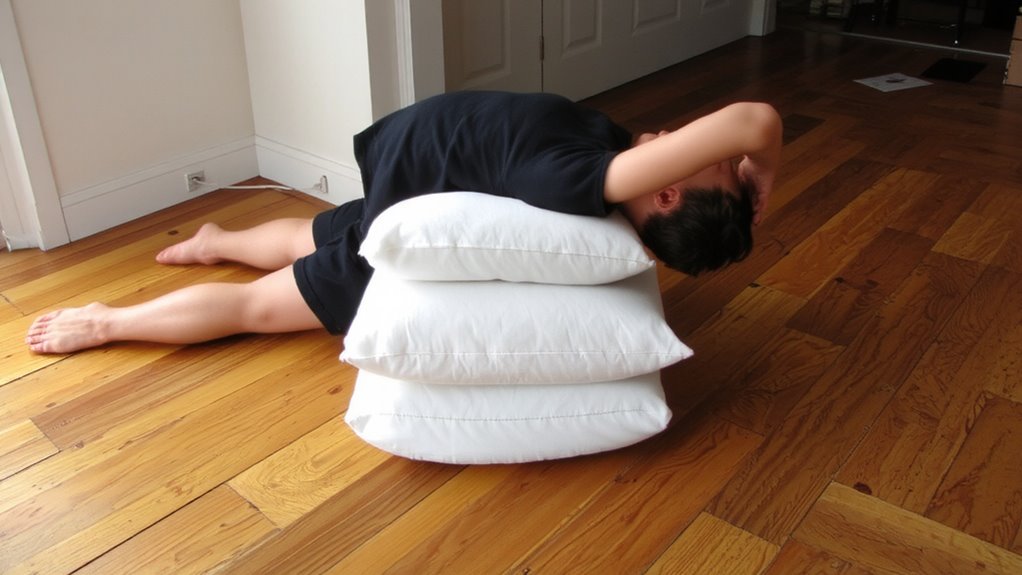
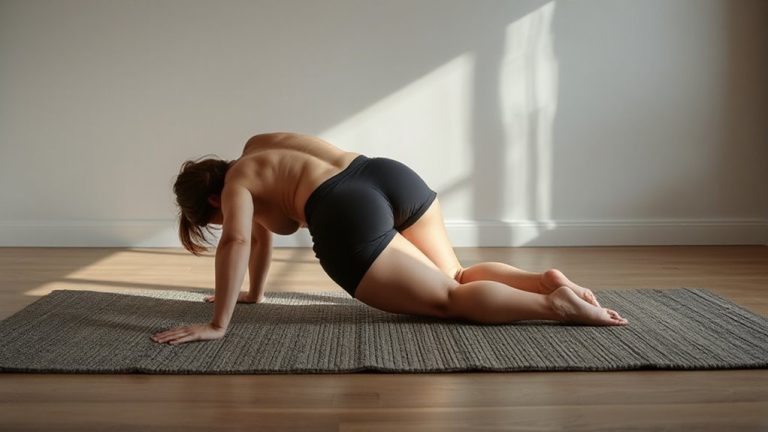
You’ll need two firm pillows-ideally of equal thickness-and a quiet spot on the floor to begin. Lie on your side with your legs extended and stacked, feet together, maintaining proper floor alignment from head to heel. Place the pillow beneath your bottom rib cage, guaranteeing pillow stability so it doesn’t collapse or shift during the stretch. Your top arm can rest on the floor in front for balance, or extend overhead to deepen the side bend. Hold for 30–60 seconds, focusing on even breathing and spinal elongation. Repeat on the opposite side. This setup supports controlled asymmetrical loading, promoting spinal mobility while minimizing strain. Pillows offer cushioning without compromising form, but only if they maintain shape-low-quality foam may hinder effectiveness. Proper floor alignment guarantees targeted engagement, enhancing recovery. Consistent practice aids postural balance and tissue release, especially after unilateral workouts. Always inspect pillow stability before each session. Choosing the right support is key, and best cervical pillows can provide the firmness and resilience needed for effective floor-based stretches.
Find Your Ideal Pillow Height
Pillow height isn’t just about comfort-it’s a key factor in achieving effective spinal alignment during floor-based side bends. Too low, and your spine won’t stay neutral; too high, and you’ll create unwanted strain. The ideal height supports your torso so your spine stays stacked and your movement stays controlled. Consider pillow compression-softer pillows may seem cozy but collapse under pressure, reducing support mid-rep. Firmer options maintain structure, offering consistent feedback and alignment. You’ll want to test different stacks, observing how your body responds. A height that keeps your ribcage parallel to the ceiling typically works best. Remember, the goal isn’t plush comfort-it’s functional support. Adjust incrementally, prioritize spine neutrality, and let compression behavior guide your choice. This small tweak enhances the exercise’s effectiveness, addressing asymmetrical loading with precision. Your recovery and form depend on it. For tailored solutions, consider expert-recommended pillows that are specifically designed to support spinal alignment.
Avoid These Side Bend Mistakes
Getting the right pillow height sets the foundation, but form breaks down quickly if common side bend errors go unchecked. You might think leaning farther intensifies the stretch, but that often leads to improper alignment-hips tilting, spine compressing, shoulders hunching. That defeats the purpose and risks strain. Keep your stacked pillows stable and your body in one plane; your side ribs should elongate, not crumple. Uneven breathing worsens the imbalance: if you’re holding your breath or gasping on one side, your nervous system stays guarded, reducing recovery benefits. Inhale evenly, let the ribs expand laterally. Quality foam pillows maintain height without collapsing, supporting consistent form. Avoid rushing through reps. Controlled movement with full awareness guarantees you’re retraining posture, not reinforcing dysfunction. This isn’t just stretching-it’s recalibrating how your body handles load.
Best Time to Do the Stretch
When should you perform floor-based side bends with a pillow stack for maximum recovery benefit? Timing matters, especially when targeting asymmetrical loading. Incorporate this stretch into your morning routine to gently reset spinal alignment after hours of static sleep posture. The supported position reduces strain while waking up tight lateral muscles. You’ll find even greater value as a post workout cooldown-your tissues are warm, and the pillow stack enhances neuromuscular release. Below is a quick guide comparing key timing options:
| Time of Day | Recovery Benefit |
|---|---|
| Morning | Reduces stiffness, improves daily posture |
| Post Workout | Enhances flexibility, accelerates recovery |
| Evening | Lowers tension but less effective than morning or post exercise |
Morning use primes your body. Post workout cooldown application optimizes tissue response. Choose wisely based on goals.
On a final note
This floor-based side bend with a pillow stack effectively counters asymmetrical loading by encouraging balanced muscular release and spinal alignment. Proper pillow height guarantees targeted engagement without strain. When performed correctly, the stretch enhances recovery, especially post-workout. Though simple, the technique relies on precision-misalignment or excessive height reduces efficacy. As fitness recovery gains focus, smart, accessible gear like supportive pillows become essential tools for sustainable, side-specific tension relief.