Understanding the Role of Neurotransmitters in Facilitating Muscle Recovery After Intense Workouts
Your intense workouts deplete acetylcholine, slowing muscle signaling and recovery, while dopamine and serotonin shifts affect motivation and fatigue. These neurotransmitters regulate repair, coordination, and rest, but recovery depends more on sleep, nutrition, and mindfulness than on EMS devices or fitness gear. Acetylcholine rebounds naturally with rest, and dopamine supports protein synthesis when you stay consistent. Smart recovery means optimizing your internal environment-what you do next fine-tunes the balance.
Notable Insights
- Acetylcholine enables neuromuscular signaling for muscle repair and is replenished naturally through rest and nutrition after intense workouts.
- Dopamine supports recovery by reinforcing training consistency and indirectly enhancing protein synthesis via growth hormone modulation.
- Serotonin aids recovery through improved sleep and emotional resilience but may signal overtraining if chronically elevated.
- Endorphins released during exercise reduce pain perception and promote neural adaptations that improve movement efficiency post-workout.
- Sleep and mindfulness practices optimize neurotransmitter function, creating an internal environment conducive to muscle recovery and adaptation.
How Workouts Change Your Brain Chemicals

While you’re pushing through the last few reps or powering down the final stretch of a run, your brain isn’t just along for the ride-it’s actively reshaping its chemical landscape. You trigger endorphin release, which dulls pain and boosts mood, helping you power through fatigue. This natural high isn’t just fleeting-it reinforces workout adherence over time. Simultaneously, neural adaptation occurs: your brain refines motor patterns, improving coordination and efficiency with each session. These changes aren’t immediate, but consistent training solidifies them, making movements feel smoother and less taxing. Fitness recovery gear, like percussion massagers or compression devices, supports this process indirectly by reducing soreness, allowing more frequent training. But no gadget replaces the brain’s role-adaptation hinges on workout consistency, not tech specs. Ultimately, your nervous system’s response to exercise is foundational. Understanding endorphin release and neural adaptation helps you train smarter, not just harder. Some athletes also use muscle stimulators to potentially enhance recovery through targeted neuromuscular engagement.
Neurotransmitters 101: How They Aid Muscle Recovery

Because your body relies on precise chemical signaling to repair and rebuild after exercise, understanding neurotransmitters is key to optimizing muscle recovery. You might not realize it, but these chemical messengers do more than transmit signals-they drive neuroplasticity adaptation, helping your nervous system adjust to repeated physical stress. With consistent training, synaptic efficiency improves, meaning neurons communicate faster and more effectively, which supports quicker muscle reinnervation and repair. This isn’t just about feeling stronger; it’s about your brain and muscles relearning coordination post-fatigue. While fitness gear like recovery boots or foam rollers aids circulation, they work best when your neuromuscular system is primed for adaptation. Boosting neurotransmitter function through sleep, nutrition, and structured recovery enhances this process. Ultimately, synaptic efficiency and neuroplasticity adaptation aren’t just lab terms-they’re the foundation of smarter, more resilient recovery you can actually feel. For targeted muscular relief that supports this recovery process, consider using the best recovery bands.
Acetylcholine: The Muscle-Activation Messenger
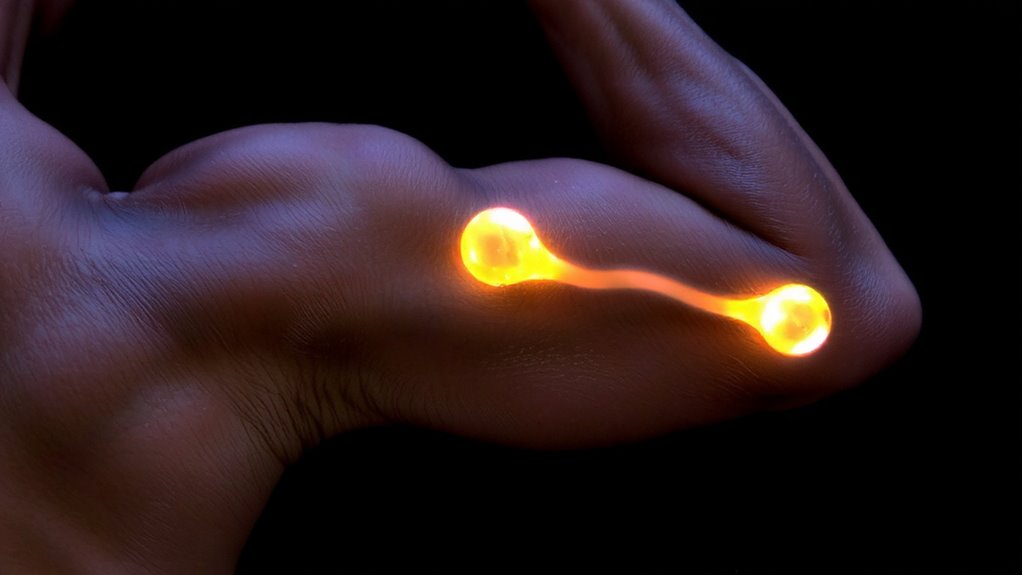
Acetylcholine is your neuromuscular go-between, the key neurotransmitter that fires up muscle contraction with every move you make. At the neuromuscular junction, it bridges the gap between nerve and muscle, triggering synaptic transmission so your muscles respond instantly. Without acetylcholine, signals from your brain wouldn’t reach muscle fibers-meaning no flex, lift, or sprint. During intense workouts, repeated synaptic transmission depletes acetylcholine stores, which can dull performance over time. Recovery isn’t just structural; it’s neurological. Replenishing this messenger helps reset neuromuscular efficiency, so you’re ready for the next session. Fitness gear like EMS devices claim to enhance neuromuscular activation, but they can’t replace natural acetylcholine-driven signaling. Ideal recovery means supporting your body’s own systems-not bypassing them. Nutrition, rest, and timing matter most. True readiness comes from inside, not just from external aids.
Dopamine: Motivation and Muscle Repair
When you push through a tough workout, dopamine isn’t just fueling your drive-it’s quietly shaping how your body repairs and rebuilds. Your brain’s reward pathways release dopamine not only when you achieve a fitness goal but also during the effort itself, reinforcing consistent training behavior. This neurotransmitter surge doesn’t just boost motivation; it indirectly supports muscle recovery by encouraging behaviors that promote rest and nutrition. Emerging evidence suggests dopamine influences protein synthesis by modulating hormonal signals like growth hormone and IGF-1, both critical in tissue repair. While fitness gear like recovery boots or smartwatches can track progress and stimulate routine adherence, they’re most effective when paired with the internal drive dopamine fuels. You’re not just rebuilding muscle-you’re reinforcing a recovery-ready mindset. Smart training isn’t just about load and rest; it’s about leveraging your brain’s chemistry to close the loop between effort and repair.
Serotonin: Fatigue, Mood, and Recovery
What if the key to bouncing back after intense training wasn’t just in your protein intake or sleep schedule, but in your brain’s management of serotonin? You’ve likely felt it-the mental fog and low motivation post-marathon session. That’s where serotonin levels come into play. While often linked to mood regulation, serotonin also influences how fatigued you feel during recovery. Elevated serotonin post-exercise can amplify perceived exhaustion, slowing your readiness to train again. But don’t mistake this as purely negative-balanced serotonin supports restful sleep and emotional resilience, both critical for recovery. You need enough for proper mood regulation, but not so much that it dampens drive. Monitoring training intensity and rest intervals helps modulate these levels. Though fitness gear tracks heart rate and movement, it can’t yet measure brain chemistry-so you’ve got to listen to your body. Smart recovery means respecting serotonin’s dual role: it aids healing but can also signal when you’re pushed too far.
Key Nutrients for Brain Chemical Recovery
You’re not just rebuilding muscle after a workout-you’re also restoring delicate brain chemistry that influences how fast and fully you recover. Proper brain nutrition is critical for cognitive replenishment and neurotransmitter synthesis. Key nutrients support neural repair and mood regulation, directly impacting your recovery resilience. Consider these essentials:
| Nutrient | Role in Recovery |
|---|---|
| Omega-3s | Reduce neuroinflammation, support membrane fluidity |
| B Vitamins | Aid dopamine and serotonin production |
| Magnesium | Regulates NMDA receptors, calms neural activity |
Omega-3 fatty acids, especially DHA, maintain neuronal integrity. B vitamins, particularly B6 and B12, act as coenzymes in neurotransmitter pathways. Magnesium promotes balanced excitatory signaling. Together, they form a foundation for mental and physical comeback. Ignoring them limits recovery potential, no matter how advanced your fitness gear. Smart supplementation and whole-food sources guarantee your brain chemistry keeps pace with your training demands. Cognitive replenishment isn’t optional-it’s part of performance.
Sleep, Stress, and Neurotransmitter Reset
Good nutrition sets the stage for brain and muscle repair, but even the most targeted supplements can’t fully reset your system without addressing how you rest and manage daily strain. You need consistent, high-quality sleep cycles to restore neurotransmitter balance-especially dopamine and serotonin-both critical for mood regulation and muscle recovery. During deep sleep, your brain clears metabolic waste and resets neural pathways, making rest non-negotiable. Poor stress management, on the other hand, spikes cortisol, which can impair GABA function and disrupt recovery signaling. When you’re chronically stressed, your body stays in a catabolic state, slowing repair. Think of sleep and stress control as foundational fitness gear: not flashy, but essential. They don’t just support recovery-they define it. Prioritize seven to nine hours of uninterrupted sleep and daily mindfulness or breathing exercises. This combo optimizes your internal environment so neurotransmitters can function efficiently, helping you recover faster, train smarter, and stay resilient.
On a final note
You’ve pushed your muscles hard, and now your brain chemistry helps rebuild them. Neurotransmitters like acetylcholine, dopamine, and serotonin don’t just regulate mood and movement-they actively support recovery. Proper nutrition and sleep boost their balance, enhancing repair. Fitness gear, from compression wear to smart trackers, complements this process by monitoring stress and recovery metrics. Together, biology and technology give you a clearer edge in performance and healing-when used wisely.