Ankle Mobility Drills With Resisted Inversion for Peroneal Strength
You need resisted inversion in ankle mobility drills to build true stability, not just flexibility. Using a band activates your peroneal muscles through controlled tension, improving joint alignment and dynamic support. These drills enhance proprioception and prevent compensation during movements like pivoting or walking on uneven ground. Perform them with proper form and progressive resistance to develop functional strength-skip shortcuts that risk strain. The right technique now means better performance and resilience down the line.
Notable Insights
- Resisted inversion during ankle mobility drills enhances peroneal muscle activation for improved joint stability.
- Banded ankle circles promote alignment and neuromuscular coordination under controlled inversion resistance.
- Heel walks with a resistance band engage peroneals dynamically, building strength and balance.
- Resisted inversion marches integrate knee lifts with controlled inversion to train functional stability.
- Use light to medium bands anchored below the knee to avoid compensation and ensure proper form.
Why Ankle Mobility Drills Need Resisted Inversion
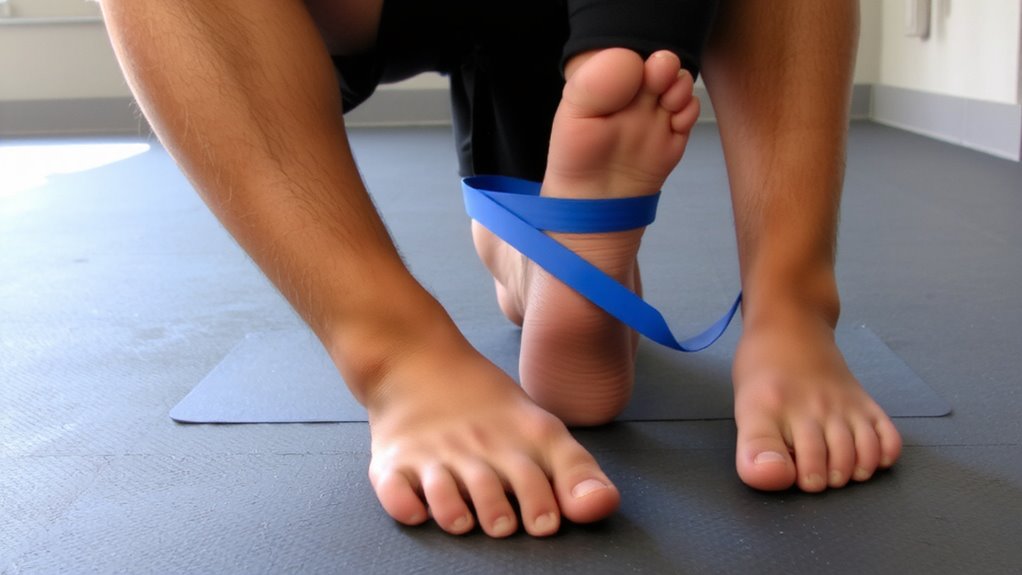
While mobility work often focuses on flexibility and range of motion, you’re missing a key piece if you’re not pairing ankle mobility drills with resisted inversion. True ankle stability isn’t built through movement alone-it requires controlled strength in the supporting musculature. Resisted inversion helps reinforce proper joint alignment by engaging the muscles that maintain your ankle’s position during dynamic tasks. Without this resistance, your body may compensate, leading to inefficient mechanics or over游戏副本 injuries. You’re not just increasing mobility-you’re training your ankle to stabilize under load, which is critical for cutting, pivoting, and uneven terrain. Joint alignment stays optimized when strength and mobility progress together. Relying solely on stretching or passive movements ignores the neuromuscular coordination needed for real-world performance. Adding resistance guarantees your ankle stability keeps pace with increased range, creating a more resilient foundation. It’s not optional-it’s foundational.
How Resistance Activates the Peroneal Muscles
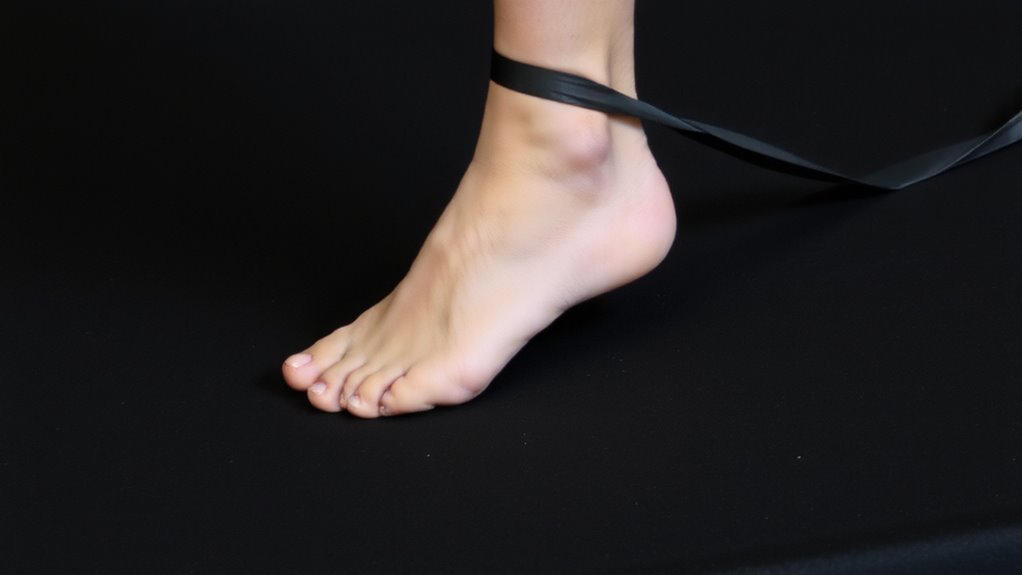
You’ve seen how resisting inversion supports joint alignment during mobility work, but now let’s look at how that resistance directly engages the peroneal muscles along the outside of your lower leg. Resistance triggers muscle activation techniques by challenging the peroneals to contract concentrically and eccentrically, improving both strength and control. This stimulation shapes favorable neuromuscular response patterns, enhancing joint stability and movement efficiency.
| Resistance Level | Muscle Engagement | Neuromuscular Demand |
|---|---|---|
| Light | Moderate | Low |
| Medium | High | Moderate |
| Heavy | Very High | High |
Controlled band tension during drills trains your nervous system to fire the peroneals more effectively, especially during dynamic motion. Over time, this boosts proprioception and reduces injury risk. The right resistance level guarantees functional overload without compromising form-key for long-term adaptation. Quality bands with consistent elasticity support reliable training progression and durability across sessions.
Top 5 Mobility Drills With Band Inversion
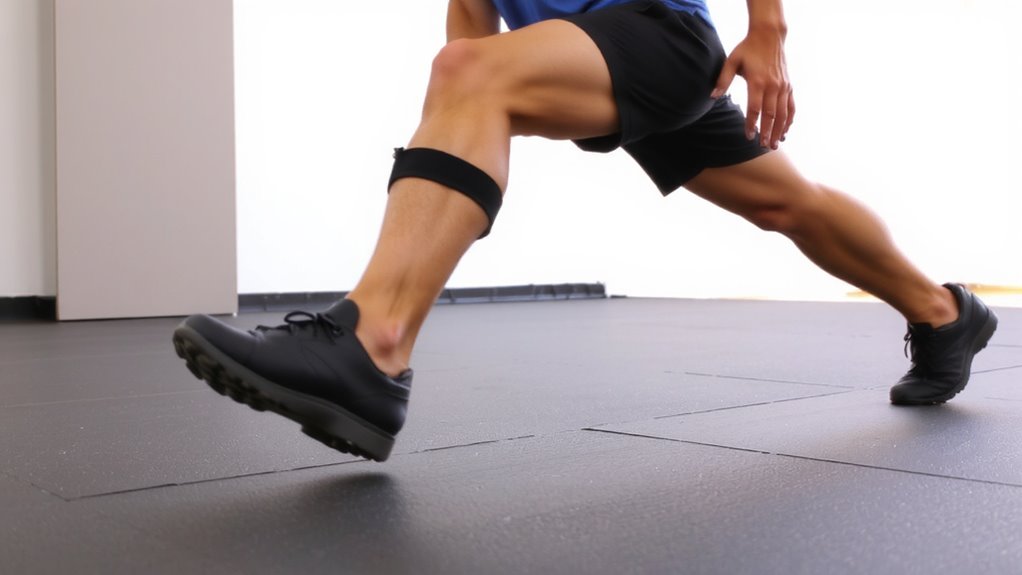
Resistance bands aren’t just accessories-they’re foundational tools when it comes to enhancing ankle mobility and peroneal strength through controlled inversion drills. You’ll improve ankle stability by performing banded ankle circles, where slow, resisted rotations refine joint alignment and neuromuscular coordination. Banded heel walks engage your peroneals dynamically, promoting proper alignment under tension. Try the resisted inversion march-lifting each knee while pulling the foot inward-to integrate balance with strength. Seated inversion holds build endurance, helping maintain control near end-range motion. Finally, standing banded eversion-to-inversion shifts train smooth, coordinated movement across the joint’s full spectrum. Each drill emphasizes precision, ensuring your ankle stability develops without sacrificing form. Consistent use strengthens supporting musculature, enhances joint alignment under load, and reduces injury risk. These drills aren’t flashy, but they’re effective-transforming basic bands into high-leverage tools for resilient, functional mobility.
How to Use Bands for Inversion Training
A resistance band is a simple yet powerful tool when it comes to inversion training, offering consistent tension that sharpens neuromuscular control and strengthens the peroneal muscles stabilizing the outer ankle. Your success hinges on proper band selection and anchor positioning-light to moderate bands work best to avoid overload while still challenging stability. Anchor the band securely below knee level on the opposite leg or a fixed point to guarantee consistent pull. Maintain slow, controlled movements to maximize muscle engagement.
| Factor | Recommendation |
|---|---|
| Band Selection | Light or medium resistance |
| Anchor Positioning | Below knee or stable base |
| Foot Position | Neutral, slightly off ground |
| Movement Tempo | Slow, controlled |
| Sets/Reps | 2–3 sets of 12–15 reps |
This setup promotes targeted strength without joint strain.
Avoid These Ankle Training Mistakes
While resistance bands can be effective for building peroneal strength and improving ankle stability, poor technique or misguided programming often undermines progress. You might unknowingly create more ankle instability by allowing improper alignment during resisted inversion drills. Avoid rushing through reps-doing so encourages sloppy form and reduces muscle engagement. Keep your foot in a neutral position, avoiding inward collapse or excessive rotation at the knee. Don’t over-tighten the band either; excessive tension promotes compensatory movements. Choose consistent resistance levels that challenge without distorting form. Also, skipping warm-ups or ignoring early signs of strain can delay recovery and increase injury risk. Remember, quality matters more than volume. A well-executed, controlled session strengthens joint integrity, while careless training weakens it. Focus on alignment, control, and gradual progression-your joints will respond better and stay resilient over time.
On a final note
You’ll find that combining ankle mobility drills with resisted inversion boosts both range of motion and peroneal strength effectively. Resistance bands offer可控 tension, enhancing muscle activation without joint strain. These drills support functional stability, especially in rehab or athletic prep. Consistent use improves proprioception and reduces reinjury risks. The gear is affordable, portable, and durable when maintained. Overall, this training method delivers practical, evidence-backed benefits for long-term ankle health and performance resilience.