Leveraging Cryotherapy Techniques for Accelerating Cellular Recovery Mechanisms Post-Exertion
You’re leveraging cryotherapy to accelerate cellular recovery by triggering vasoconstriction and flushing metabolic waste, then boosting circulation during rewarming. This cold-induced reset enhances protein synthesis and reduces oxidative stress. Whole-body chambers, ice baths, or cold showers deliver varying depths of cooling, with post-workout use within 20–30 minutes offering ideal inflammation control. Used 2–3 times weekly, it supports faster recovery-especially after intense sessions-while preserving adaptation. Athletes gain the most, balancing repair and resilience, and there’s more to how timing and method shape results.
Notable Insights
- Cryotherapy triggers vasoconstriction and rapid vasodilation to enhance circulation and clear metabolic waste post-exertion.
- It supports cellular metabolic reset, reducing oxidative stress and promoting protein synthesis for faster muscle repair.
- Whole-body cryotherapy and ice baths deliver rapid cooling, enhancing recovery without freezing tissues.
- Applying cold therapy within 20–30 minutes post-training optimizes inflammation control and metabolic clearance.
- Athletes benefit most from 2–3 weekly sessions, especially after intense workouts, to accelerate recovery and prevent overuse injury.
What Cryotherapy Does to Repair Muscles
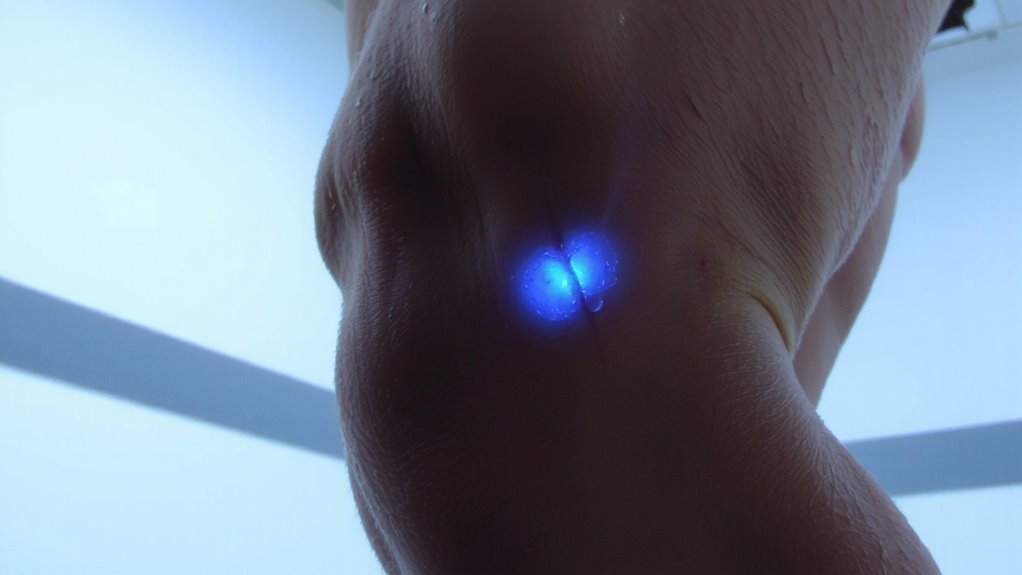
While your muscles respond to intense exercise by triggering inflammation and soreness, cryotherapy steps in to modulate that response, targeting recovery at a cellular level. It constricts blood vessels, reducing swelling and flushing out metabolic waste, then rapidly dilates them upon rewarming-this cycle enhances circulation and supports a metabolic reset. You’re not just soothing soreness; you’re creating ideal conditions for muscle adaptation by promoting protein synthesis and minimizing oxidative stress. Studies show regular exposure improves recovery speed, allowing you to train harder, more frequently. Though not a replacement for sleep or nutrition, it’s a high-performance addition to recovery protocols. Used correctly, cryotherapy doesn’t mask fatigue-it helps your body process it efficiently. As fitness gear evolves, this modality stands out for its physiological precision. Yet, effectiveness hinges on timing, frequency, and individual response, making informed use essential for real benefit.
Types of Cryotherapy for Post-Workout Recovery
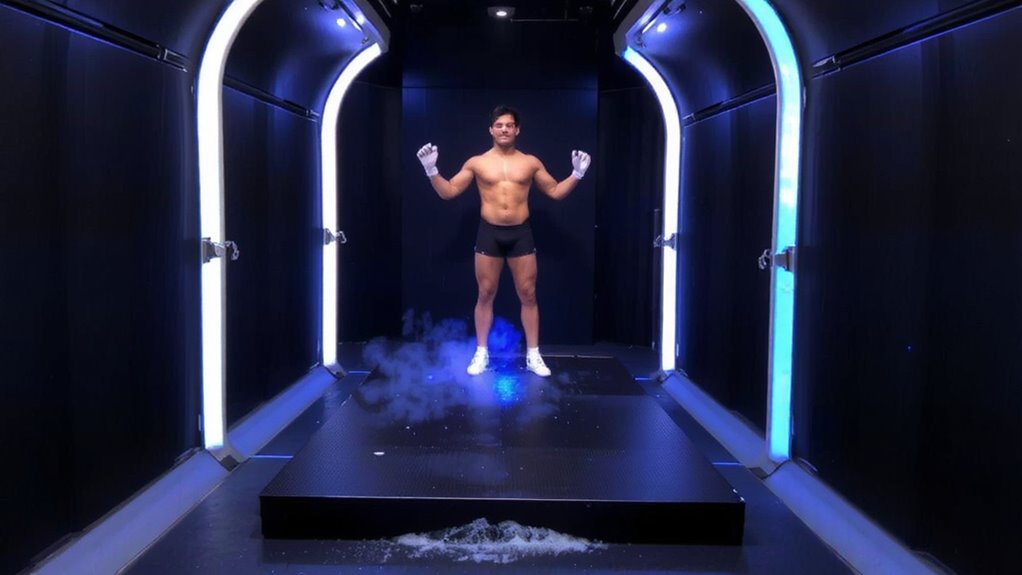
If you’re exploring ways to speed up recovery after tough workouts, you’ve probably come across different types of cryotherapy, each offering distinct benefits based on how they deliver cold exposure. Whole-body cryotherapy chambers expose you to extreme cold air for two to three minutes, lowering skin temperature rapidly without freezing tissues. They’re effective but require specialized facilities. For home use, ice baths remain a popular, accessible option-submerging in 50–59°F water for 10–15 minutes delivers deep tissue cooling and is proven to reduce soreness. Cold showers are less intense but easier to integrate daily; they mildly constrict blood vessels and help flush metabolic waste. While not as powerful as ice baths, they still support circulation and recovery with minimal discomfort. Each method varies in intensity, cost, and convenience, so your choice depends on your recovery demands and lifestyle.
How Cold Therapy Controls Post-Workout Inflammation
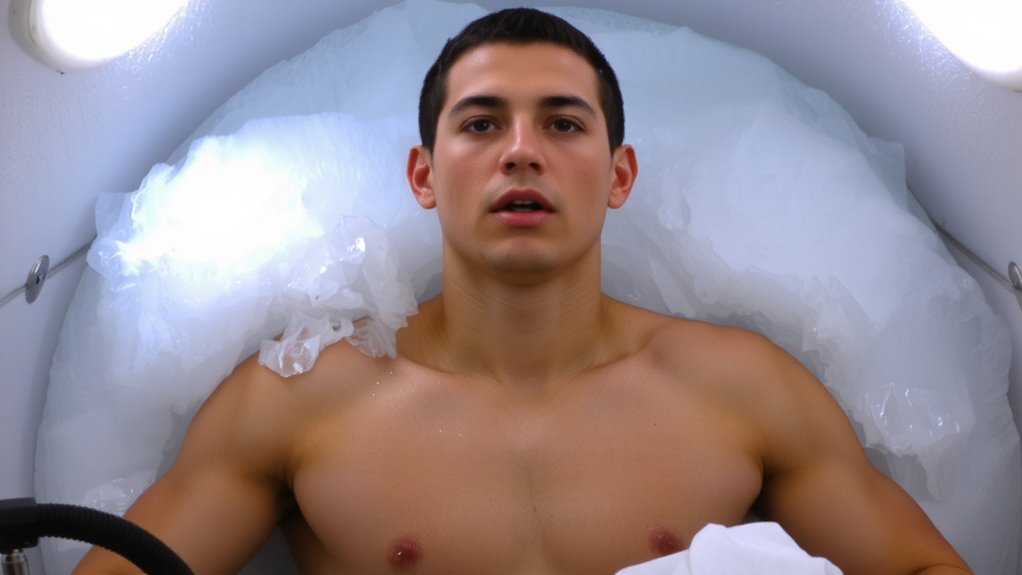
Why does cold therapy calm swelling so effectively after a hard workout? It’s largely due to the vasoconstriction effects triggered by sudden cold exposure. When you use ice immersion or whole-body cryotherapy, your blood vessels narrow, reducing blood flow to overactive tissues. This immediate response helps limit excessive inflammation and the buildup of metabolic waste. You’re not stopping inflammation entirely-your body still needs it for healing-but you’re managing its intensity. Ice immersion, in particular, delivers consistent cooling that penetrates deep into muscle layers. Studies show this controlled suppression supports faster return to training with less discomfort. While vasoconstriction effects are temporary, they reset the recovery timeline by stabilizing cell membranes and lowering local metabolic rate. Used correctly, cold therapy becomes a reliable tool in your recovery kit. It’s not flashy, but it’s physiologically sound, practical, and backed by measurable response patterns in athletic populations.
Best Timing and Frequency for Recovery
Though timing can vary based on workout intensity and individual physiology, hitting the recovery window shortly after exertion generally delivers the best results. You’ll want to use cryotherapy within 20 to 30 minutes post-training for ideal scheduling, as this aligns with peak inflammatory modulation and metabolic clearance. Short, frequent sessions-like 2 to 3 times weekly-support recovery consistency, especially after high-load or eccentric workouts. Overdoing it can interfere with long-term adaptation, so balance is key. Devices like portable cold cuffs or whole-body units offer targeted or systemic cooling, but you should track your response to fine-tune frequency. For best outcomes, pair cryotherapy with active recovery and proper hydration. While equipment varies, reliable models maintain consistent temperatures without excessive energy draw. Ultimately, integrating cold therapy with smart planning maximizes cellular repair without undermining performance gains.
Who Gains the Most From Cold Recovery?
Who really benefits most from diving into cold recovery after a tough session? You do-if you’re an athlete or highly active individual pushing physical limits regularly. Cold therapy boosts cellular repair and reduces inflammation, making it especially effective for those enduring frequent, high-intensity training. You’ll see clear gains in injury prevention, as lowered muscle temperature slows metabolic activity, reducing swelling and tissue breakdown post-exercise. Endurance athletes, strength trainers, and competitive competitors benefit most, particularly during compressed recovery windows. Beyond the physical, you build mental resilience-enduring cold exposure trains focus and breath control, translating to better stress management under pressure. Recovery gear like cryo tubs or cold dives offer consistent, measurable temperatures, enhancing reliability. While not essential for casual exercisers, serious performers find them worthwhile. With proper use, cold recovery supports long-term performance, helping you stay injury-free and mentally sharp throughout demanding training cycles.
On a final note
You’ll find cryotherapy effective for speeding post-exertion recovery by reducing inflammation and muscle soreness. Cold exposure constricts blood vessels, then dilates them upon warming, flushing metabolic waste. Whole-body cryo chambers, cold immersions, and localized units each offer targeted benefits. Timing matters-10–15 minutes within two hours post-workout works best. Though athletes gain the most, consistent use enhances recovery for active individuals. Always balance with proper hydration and rest for ideal results.