The Role of Hydrotherapy in Facilitating Post-Exercise Muscle Tissue Repair and Growth
You speed up muscle repair with hydrotherapy by boosting circulation and reducing inflammation. Warm water increases blood flow, delivering nutrients to tired muscles, while cold exposure clears waste and lowers swelling. Compared to ice baths, cold dunks offer consistent temperatures and better results. Contrast therapy enhances recovery by cycling heat and cold, optimizing oxygen delivery. For best outcomes, time your sessions right after exercise and stick to a reliable routine-there’s more to discover about fine-tuning the process for peak performance.
Notable Insights
- Hydrotherapy enhances muscle repair by boosting circulation, delivering oxygen and nutrients to damaged tissues more efficiently.
- Cold plunges reduce post-exercise inflammation and swelling through controlled vasoconstriction and improved metabolic waste clearance.
- Warm water immersion promotes vasodilation, increasing blood flow to muscles and accelerating recovery and tissue regeneration.
- Contrast hydrotherapy alternates hot and cold exposure to create a circulatory “pump” effect, optimizing recovery.
- Hydrostatic pressure in water reduces swelling and supports lymphatic drainage, facilitating faster muscle repair and growth.
How Hydrotherapy Speeds Up Muscle Recovery
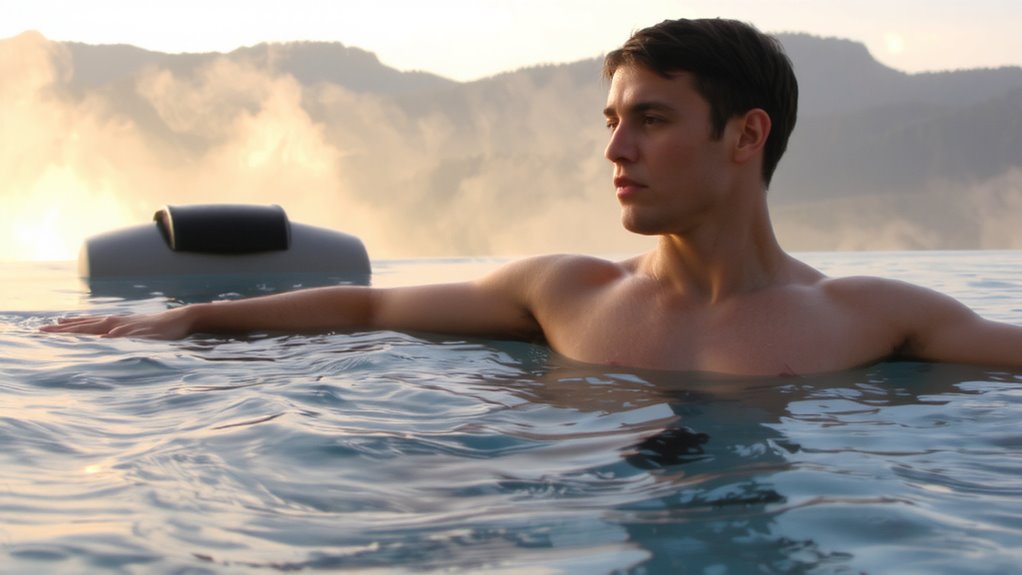
While your muscles ache after an intense workout, hydrotherapy can substantially accelerate recovery by improving circulation and reducing inflammation. You’ll notice quicker relief when warm water immersion boosts blood flow, enhancing nutrient delivery to fatigued tissues. This process supports muscle hydration, ensuring cells regain peak function faster. Hydrotherapy systems like immersion tanks or contrast showers offer consistent, controllable environments-ideal for athletes using recovery as part of training adaptation. Unlike passive rest, active hydro-recovery helps flush metabolic waste while increasing oxygen-rich blood flow. Most high-performance fitness regimens now integrate hydrotherapy because of its measurable impact on soreness and strength restoration. When you prioritize recovery with purpose-built gear, results improve without added strain. Devices ranging from portable whirlpool tubs to in-home spas deliver clinical benefits with practical design. As long as water temperature and duration are properly managed, you’ll see sustained gains in both muscle repair and overall resilience.
Cold Plunge vs. Ice Bath: Which Works Better?
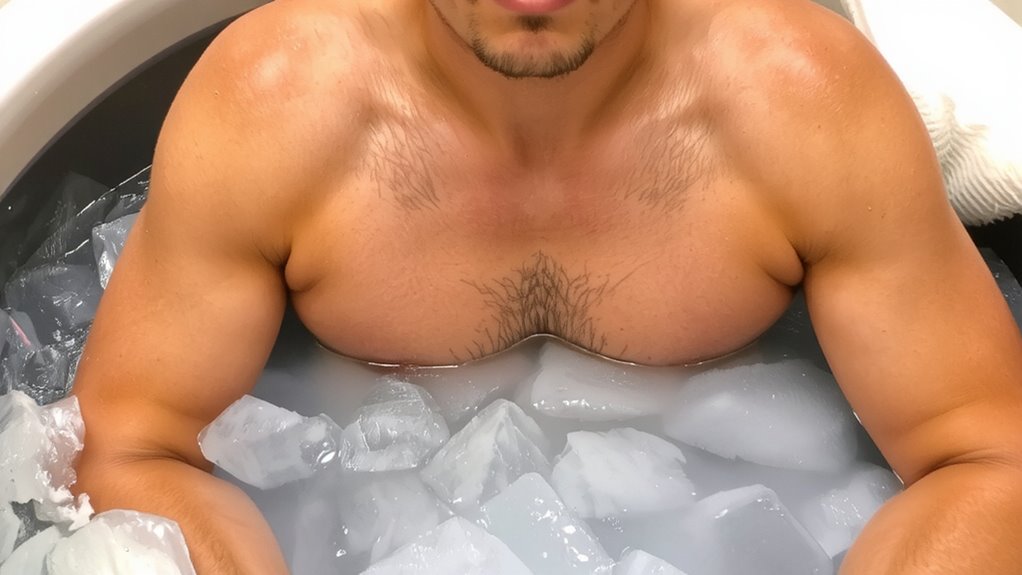
What separates a purpose-built cold plunge from a DIY ice bath? It’s the control and consistency. Cold plunges chill water to precise temps, usually between 50–59°F, and maintain ideal water density for even cold transfer. With an ice bath, adding bags of ice leads to fluctuating temps and uneven density-colder at the bottom, milder on top. That messes with immersion duration; you’re likely to exit sooner if parts of your body feel excessively cold. Purpose-built units let you stay in longer, safely hitting the 10–15 minute sweet spot most effective for recovery. They also circulate water, preventing stagnation. Ice baths work in a pinch, but they demand more effort and guesswork. For consistent immersion duration and best water density, cold baths outperform. They’re pricier, sure, but their reliability makes them a smarter long-term pick for serious recovery.
How Water Therapy Reduces Inflammation After Exercise
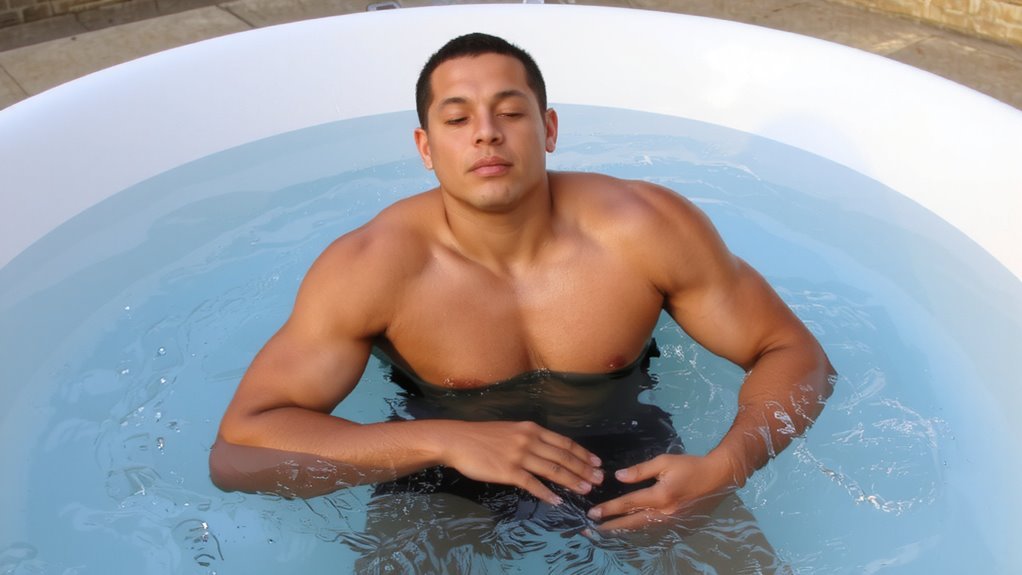
Using hydrotherapy after a tough workout isn’t just about feeling refreshed-it’s a strategic way to tamp down inflammation and speed up recovery. The water density provides consistent resistance while minimizing joint stress, allowing gentle movement that enhances circulation without aggravating sore tissues. You experience reduced swelling because hydrostatic pressure helps push excess fluid out of inflamed areas. Buoyancy effects markedly decrease the load on muscles and joints, giving you relief while maintaining mobility-ideal for active recovery. This combination supports lymphatic drainage and lowers pro-inflammatory markers over time. Unlike passive rest, water therapy keeps your body in motion, which clinical studies suggest accelerates healing. High-end hydrotherapy systems maximize these benefits with precise temperature control and targeted jets, though even basic immersion works effectively. When recovery’s the goal, leveraging water’s physical properties isn’t just practical-it’s physiologically sound.
Boosting Recovery With Cold and Heat Circulation
Why do elite athletes cycle between ice-cold immersions and steaming baths after intense training? You’re leveraging contrast hydrotherapy to optimize circulation balance. The cold constricts blood vessels, reducing swelling and flushing out metabolic waste, while heat dilates them, boosting oxygen-rich blood flow to fatigued tissues. This push-pull effect enhances muscle activation during recovery, priming fibers for repair. Studies show this alternation can accelerate healing more than either modality alone. It’s not just tradition-modern recovery gear, like temperature-controlled immersion systems, now lets you precisely regulate this cycle at home. You’re not chasing quick fixes; you’re supporting long-term adaptation. Consistent use improves vascular efficiency, which sustains performance. But results depend on proper timing and temperature gradients-too extreme, and you risk tissue stress. When applied correctly, you’re not only soothing soreness but actively shaping a more resilient muscular system through controlled thermal stress and recovery.
Best Times to Use Contrast Therapy for Recovery
When should you time your entry into icy water followed by a steaming soak for maximum recovery benefit? Right after intense workouts is ideal-your muscles are primed for repair, and contrast therapy helps flush metabolic waste while boosting circulation. The timing benefits are clearest within 30 minutes post-exercise, when inflammation is rising but not yet peaked. This window enhances blood flow oscillation, supporting faster tissue recovery. As for session frequency, two to four contrast cycles weekly-depending on training load-offer measurable gains without overstressing the system. Overuse can disrupt natural inflammation processes, so strategic timing is key. You’re not just cooling and heating skin-deep; you’re prompting vasoconstriction and vasodilation at the vascular level. This response aids nutrient delivery and reduces soreness more effectively than passive rest. For serious recovery, consistency beats intensity-stick to a smart rhythm, and let your body adapt.
Creating a Hydrotherapy Routine for Athletes
How do you build a hydrotherapy routine that actually aligns with your training demands and recovery needs? Start by matching session frequency to your workload-athletes in heavy training may benefit from daily sessions, while others might need just two to three per week. Hydrotherapy duration typically ranges from 10 to 20 minutes, depending on the method; contrast showers or ice baths don’t require long exposures to be effective. You’ll want consistency more than length-short, frequent sessions often yield better recovery results than sporadic, lengthy ones. Tailor temperature shifts and duration to your sport’s physical demands and your body’s feedback. Overuse can impair adaptation, so balance is key. Use reliable fitness recovery gear, like calibrated immersion tubs or portable contrast systems, to maintain control over variables. A well-structured routine enhances circulation, reduces soreness, and supports muscle tissue repair-making recovery as strategic as the workout itself.
On a final note
You’ll recover faster with hydrotherapy, especially when timing and method align. Cold dips reduce inflammation more efficiently than ice baths due to consistent temperatures and deeper immersion. Contrast therapy-alternating hot and cold-boosts circulation, aiding muscle repair. For best results, use it within 30 minutes post-workout. A well-structured routine enhances recovery, making tools like immersion tubs or cold dip tanks worthwhile for serious athletes seeking performance gains and long-term muscular health.