Eccentric Overhead Barbell Slides to Enhance Shoulder Control in Volleyball Players
You need eccentric overhead barbell slides to build shoulder resilience and control under the repetitive stress of spiking and blocking. This move strengthens muscles and connective tissues during the lowering phase, enhancing deceleration and scapular stability. Performed with a slow, controlled descent, it boosts neuromuscular coordination and joint awareness. Avoid bouncing or wrist collapse to maximize benefit and reduce injury risk. Doing them 2–3 times weekly in the off-season lays a stronger foundation for powerful, protected overhead motion-there’s more to how this translates into court performance.
Notable Insights
- Volleyball players need eccentric overhead barbell slides to improve shoulder deceleration control after spiking and blocking.
- The exercise strengthens muscles and connective tissues during the lowering phase, reducing injury risk from repetitive overhead motions.
- Eccentric overhead slides enhance scapular stability and neuromuscular coordination in overhead positions critical for volleyball performance.
- Proper form includes a slow 4–6 second lowering phase with engaged core, stable shoulders, and no bar drift toward the forehead.
- Perform 2–3 times weekly during off-season or pre-season using light to moderate weight for optimal shoulder resilience and control.
Why Volleyball Players Need Eccentric Overhead Barbell Slides
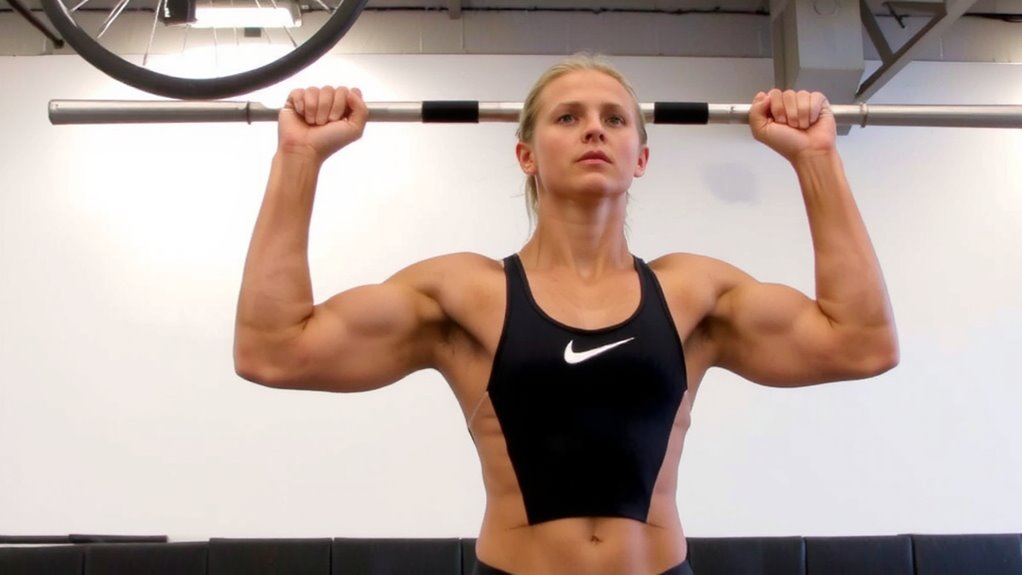
Why do so many volleyball players struggle with shoulder control despite hours of conditioning? You rely on repetitive overhead motions, yet most training neglects eccentric strength needed for real-world demands. Without it, your shoulder stability suffers, increasing injury risk during spiking or blocking. Traditional drills build muscle, but they don’t adequately prepare tendons and ligaments for deceleration forces. That’s where eccentric overhead barbell slides come in. They specifically target control during lengthening phases, enhancing neuromuscular coordination above the head. This focus boosts shoulder stability, a key factor in injury prevention. You’re not just stronger-you’re more resilient. Equipment like a smooth barbell and stable rack supports proper execution, minimizing compensation. When performed correctly, this drill addresses weak links other programs miss. For volleyball players, integrating eccentric training isn’t optional-it’s essential for long-term performance and joint health.
How Eccentric Overhead Barbell Slides Improve Shoulder Control
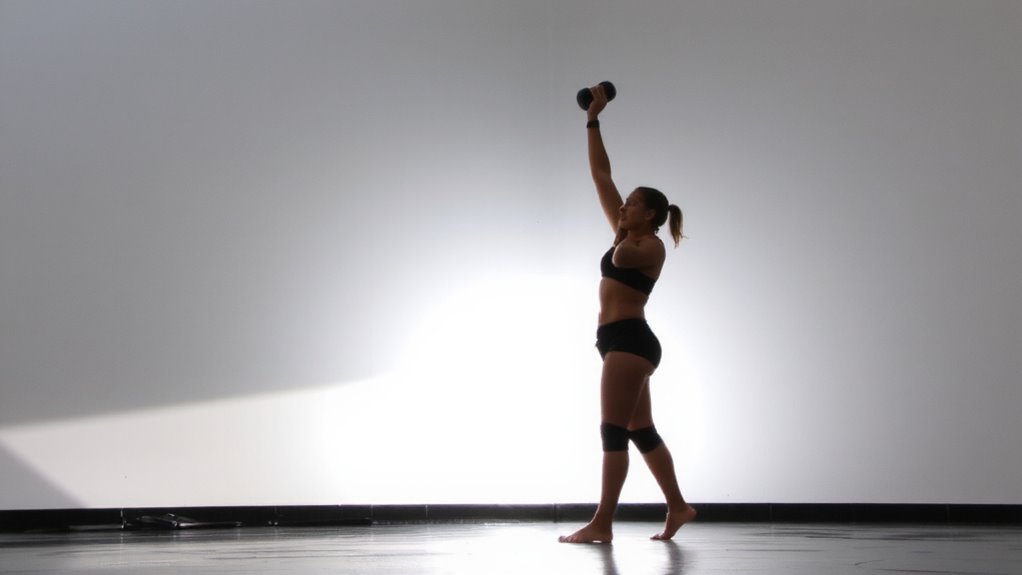
While you’re already familiar with the demands of overhead movement, eccentric overhead barbell slides take your shoulder control to the next level by emphasizing the lowering phase where most damage occurs. You’re forcing your muscles and connective tissues to work under tension, which builds strength where you need it most-around the rotator cuff and deltoids. This focus enhances scapular stability, ensuring your shoulder blades move correctly during dynamic actions like spiking. Over time, you’ll notice improved joint proprioception, meaning your brain gets better at sensing shoulder position and adjusting mid-motion. That’s critical when reacting quickly on the court. The barbell’s controlled slide challenges balance and coordination, making your neuromuscular system more efficient. Unlike standard lifts, this movement forces you to stay engaged throughout, reducing momentum and increasing muscle time under tension. For volleyball players, that translates to smoother, safer overhead mechanics and fewer overuse injuries.
Step-by-Step Form for Eccentric Overhead Barbell Slides
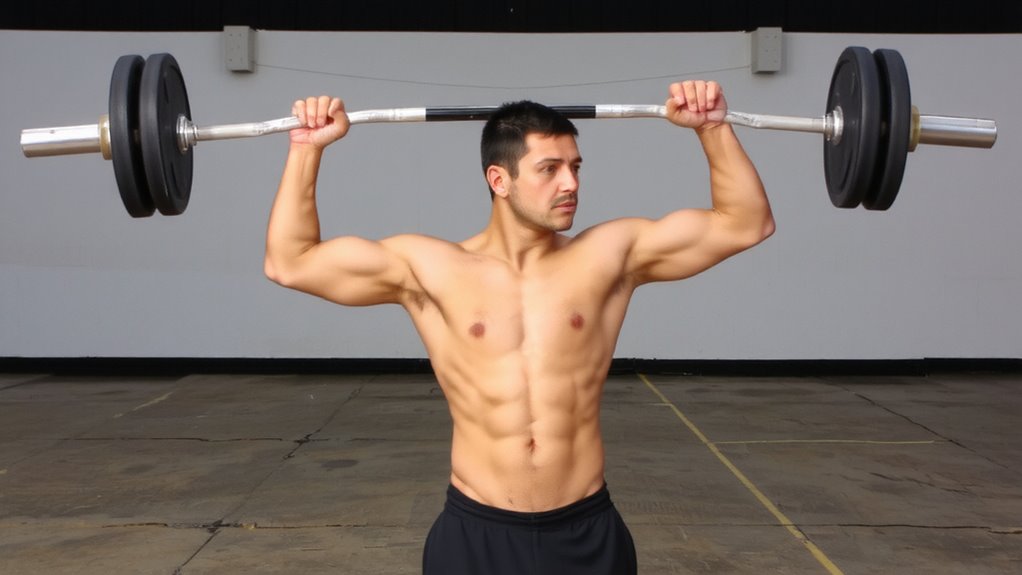
Though the eccentric overhead barbell slide looks simple at first glance, performing it correctly requires precise alignment and strict attention to tempo. Start by lying flat on your back, knees bent, feet on the floor. Grip the barbell with both hands, using a comfortable overhand barbell grip slightly wider than shoulder-width. Press the bar directly overhead until your arms are fully extended, elbows locked, and shoulders stable. From this position, begin the slide: slowly lower the bar in a controlled arc toward your forehead, resisting gravity for at least 4–6 seconds-that’s your slide tempo. Keep your ribs down, core engaged, and shoulders pinned to prevent compensation. Don’t let the bar drift forward or backward. Pause just above your face, then return with control. Each rep should emphasize tension and precision, not momentum. This strict form guarantees you build shoulder stability safely and effectively.
Top Mistakes on Eccentric Overhead Barbell Slides
How often do you lose tension the moment the bar starts moving? That’s where most athletes fail-letting the barbell bounce off the ground kills momentum control and turns a stability drill into a sloppy lift. You’re not gaining shoulder control when you rely on that rebound; you’re cheating the eccentric. Keep constant tension by lowering the barbell slowly, resisting all the way down. Another common error? Wrist collapse at the bottom. When your wrists cave, you shift stress from the shoulders to the joints, increasing injury risk. Brace your wrists firmly and visualize screwing the bar into the floor to maintain alignment. Don’t sacrifice form for reps-quality beats quantity here. These mistakes undermine the drill’s purpose, limiting shoulder resilience. Fix them, and you’ll build real overhead stability vital for volleyball movements.
When to Add Eccentric Barbell Slides to Your Training
Where do eccentric barbell slides fit best in your training plan? These slides work well during the off-season or early pre-season, when your focus shifts to building shoulder resilience. You’re not just chasing strength-you’re improving control, which is vital for injury prevention in overhead athletes like volleyball players. Since the movement emphasizes the slow, lowering phase, it boosts muscular endurance and teaches your rotator cuff to stabilize under load. Add them after dynamic warm-ups or alongside accessory work, not when fatigued from heavy pressing. Doing so guarantees proper form and maximizes neuromuscular adaptation. If your shoulder mobility is adequate and you’ve mastered basic scapular control, you’re ready. Integrate slides 2–3 times per week, using light to moderate weight. They’re practical, equipment-efficient, and ideal for long-term joint health-especially with consistent use and attention to tempo.
Progressions for Volleyball-Specific Shoulder Strength
You’ve built foundational control with eccentric barbell slides, and now it’s time to layer in strength that mirrors the demands of the court. Volleyball requires explosive overhead motions, so your training must advance to build scapular stability and rotator cuff endurance. Start integrating dynamic, sport-specific movements that challenge control under load.
| Progression | Focus | Reps/Sets |
|---|---|---|
| Weighted Slides | Scapular stability | 3×8 |
| Overhead Holds w/Pulse | Rotator cuff endurance | 3×10 |
| Single-Arm Slides | Unilateral control | 3×6/side |
These progressions increase time under tension and neuromuscular demand. Weighted slides enhance stability with added resistance, while pulses during holds stimulate micro-muscle activation critical for joint integrity. Single-arm variations expose imbalances and simulate one-sided play. Consistent application improves performance and reduces injury risk. You’re not just stronger-you’re more resilient overhead.
On a final note
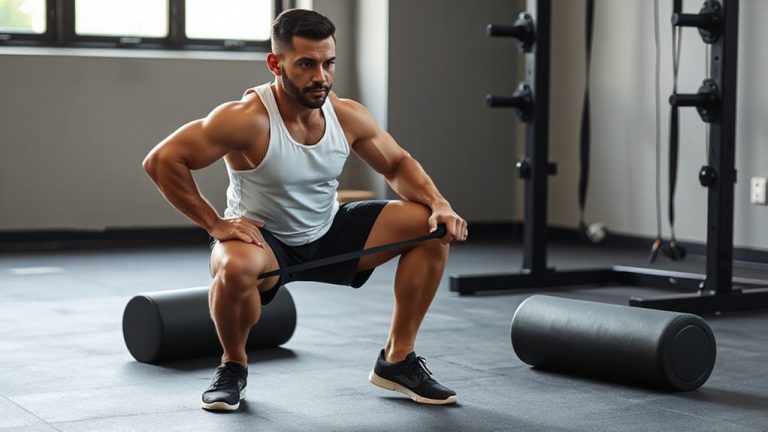
You’ll find eccentric overhead barbell slides build essential shoulder control by boosting time under tension and reinforcing proper scapular mechanics. This movement targets eccentric strength, helping volleyball players manage powerful overhead motions with less injury risk. Paired with recovery tools like foam rollers and resistance bands, it integrates well into training cycles. The drill’s simplicity and minimal equipment needs make it a practical, effective addition to any strength program focused on performance and longevity.