The Science Behind Percussion Therapy: Boosting Muscles’ Healing Process
You’re using rapid, targeted pulses to boost muscle recovery by increasing blood flow and breaking up tight fascia. These mechanical vibrations stimulate tissue repair, reduce soreness, and help clear lactic acid. Percussion therapy also eases pain by distracting nerve signals and triggering endorphins. It won’t replace rest, but when used right, it enhances healing and performance-especially with consistent, proper technique across training phases. There’s more to optimizing your recovery with the right tools and timing.
Notable Insights
- Percussion therapy delivers rapid pulses to stimulate deep muscle tissue, enhancing neuromuscular activation and releasing trigger points.
- It increases microcirculation, boosting oxygen and nutrient delivery while accelerating lactic acid removal for faster tissue repair.
- The therapy modulates inflammation by promoting efficient immune response and reducing swelling without suppressing natural healing.
- Rhythmic stimulation triggers sensory distraction and endorphin release, reducing pain perception and improving recovery comfort.
- Regular use improves muscle elasticity, range of motion, and recovery time, supporting rehabilitation and performance resilience.
What Is Percussion Therapy and How Does It Aid Recovery?
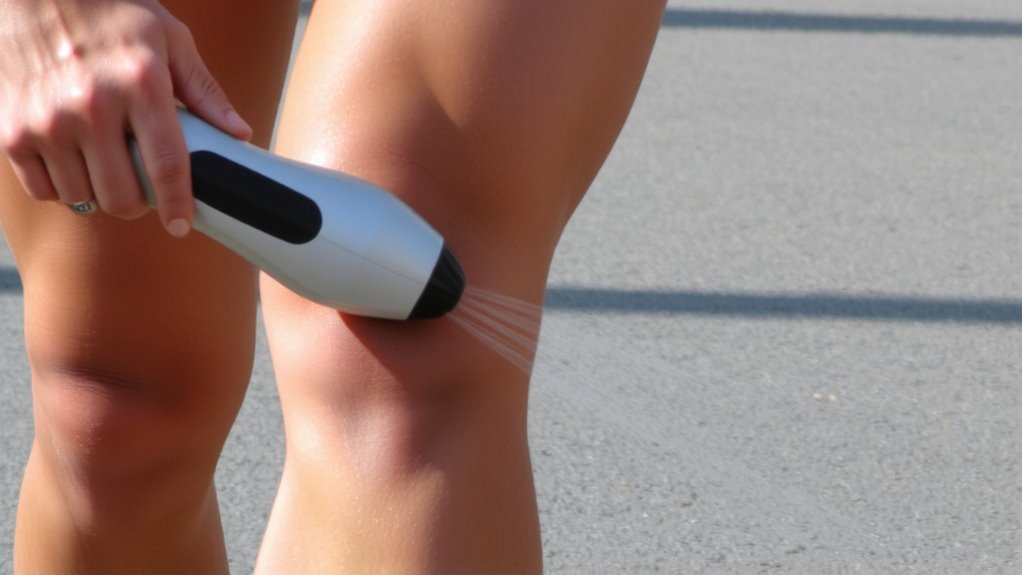
Percussion therapy uses rapid, targeted pulses to penetrate muscle tissue, helping to relieve tightness, increase blood flow, and speed up recovery after intense workouts. You’ll notice improved muscle activation right after a session, as the quick impulses stimulate neuromuscular response, priming muscles for movement or easing them into relaxation. It’s especially effective for fascial release, breaking up adhesions in the connective tissue that restrict motion and contribute to soreness. Devices designed for this therapy typically offer adjustable speeds and attachments, letting you tailor depth and intensity. When used consistently, they support long-term mobility and reduce stiffness. While not a replacement for stretching or proper warm-up, it’s a valuable addition to recovery routines. Fitness enthusiasts report less downtime and smoother shifts between training phases, making percussion tools practical, if not essential, in modern recovery gear. Top-rated models like the Theragun PRO deliver clinical-level percussive force for professional-grade recovery.
How Increased Blood Flow Speeds Muscle Healing
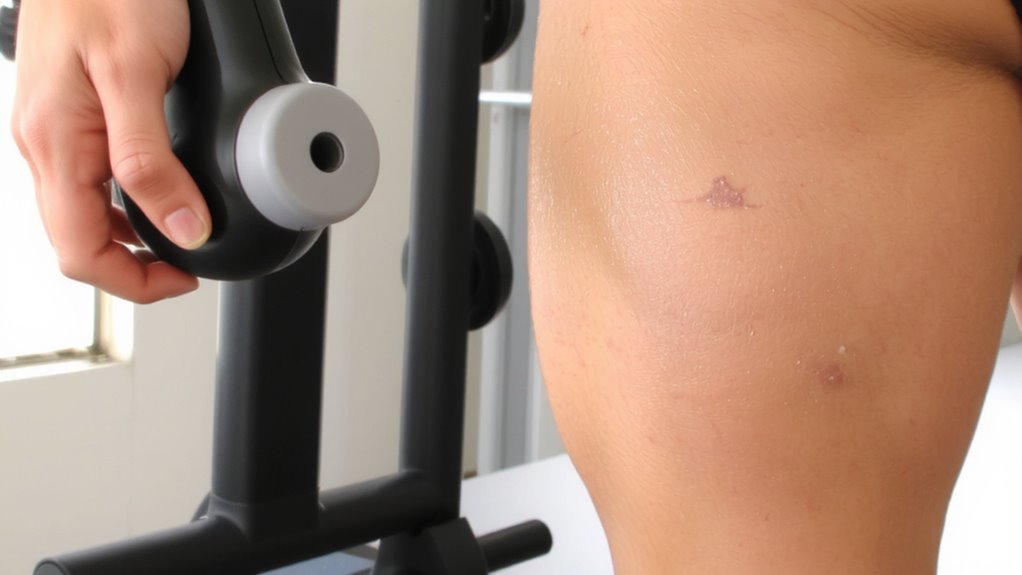
You’re already feeling the release as tight muscles loosen under rapid pulses, but the real healing begins beneath the surface where blood flow surges in response to the stimulation. This boost isn’t just noticeable-it’s measurable. Percussion therapy drives microcirculation improvement, expanding capillaries and allowing more nutrient-rich blood to reach damaged tissues. With better flow comes oxygenation enhancement, critical for cellular repair and energy production in strained muscles. You’re not just soothing soreness; you’re accelerating recovery at a physiological level. Devices delivering consistent, targeted pulses perform best, making quality gear essential. Studies show improved circulation correlates with faster regeneration, reducing downtime between workouts. While not a cure-all, the therapy’s ability to enhance blood dynamics makes it a smart addition to recovery routines. When recovery’s your goal, prioritizing blood flow isn’t optional-it’s foundational. Top models offer adjustable percussion depth settings to match user-specific needs and optimize therapeutic outcomes.
Why Percussion Therapy Reduces Soreness and Tension
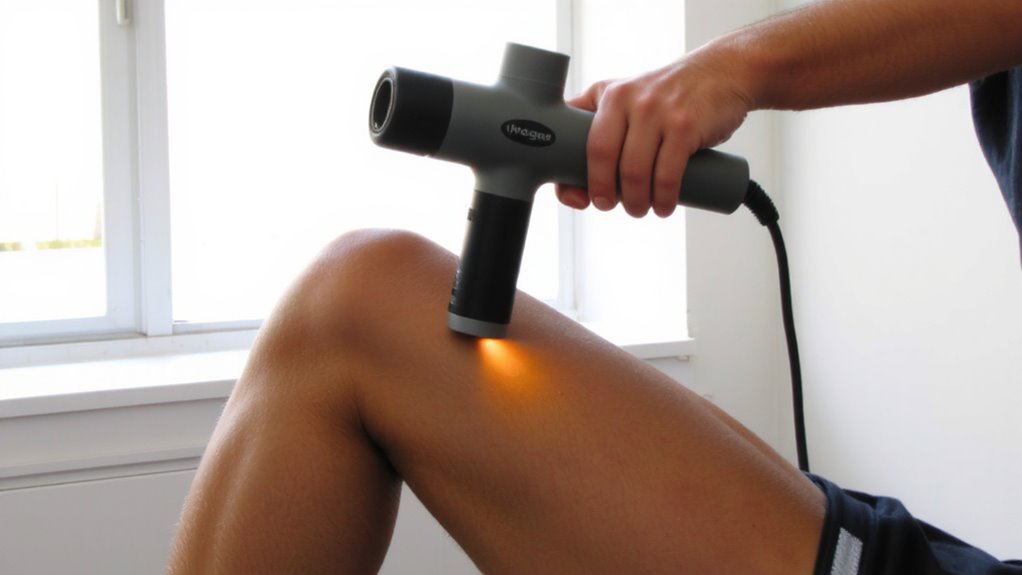
If you’ve ever rolled out a knot or pressed into a tight spot post-workout, you’ll recognize the sweet relief that targeted pressure brings-and percussion therapy delivers that relief with precision and power. The rapid pulses penetrate deep into muscle tissue, promoting muscle relaxation by interrupting pain signals and calming overactive nerve endings. You’ll notice how the rhythmic tapping eases stiffness, especially when it zeroes in on stubborn trigger points-those hyperirritable spots within tight muscle bands. By applying focused pressure, percussion therapy aids trigger point release, helping dissolve tension and restore normal muscle function. Unlike static pressure, the device’s dynamic action reaches deeper layers without excessive effort on your part. It’s efficient, consistent, and adjustable, letting you tailor intensity to your recovery needs. Used regularly, it supports faster recovery and improved mobility. While not a cure-all, it’s a practical, evidence-backed tool that enhances your recovery toolkit. Choosing the right device, such as one of the best massage guns for every need, can significantly improve treatment effectiveness.
Can Percussion Therapy Reduce Inflammation?
How does a device delivering rapid, concentrated pulses affect the body’s inflammatory response? Research suggests percussion therapy may modulate inflammation by stimulating circulation and tissue mobility, promoting a balanced immune response. While it doesn’t eliminate inflammation-your body’s natural defense-it can help shift acute inflammation into the healing phase more efficiently. This shift supports faster cellular repair and reduces prolonged swelling. Devices with adjustable frequencies allow targeted treatment, making them valuable in fitness recovery.
| Before Therapy | During Therapy | After Therapy |
|---|---|---|
| Swollen muscles | Increased blood flow | Reduced swelling |
| Stiff movement | Enhanced oxygen delivery | Improved mobility |
| Lingering soreness | Activated immune response | Accelerated recovery |
| Fatigue | Reduced metabolic waste | Renewed energy |
| Delayed repair | Stimulated cellular repair | Faster healing |
Why Percussion Therapy Feels So Good (And Relieves Pain)
Why does that rapid thumping sensation from a percussion device somehow melt away aches and leave muscles feeling looser? You’re not just imagining it-there’s real science behind why it feels so good. The rhythmic pulses trigger an endorphin release, your body’s natural painkillers, which help elevate mood and reduce discomfort. At the same time, the intense but controlled stimulation creates sensory distraction, overwhelming your nervous system with non-pain signals and effectively “drowning out” pain messages. This dual action relaxes tight tissues while giving immediate relief, making it a favorite among athletes and fitness enthusiasts. Percussion therapy devices apply this principle efficiently, combining ergonomic design with adjustable intensity to match your recovery needs. Though not a cure-all, their ability to blend comfort and biomechanical function sets them apart in the growing market of recovery tools.
Best Practices for Using Percussion Therapy Devices
While percussion therapy can deliver impressive results, you’ll get the most out of your device by following a few key guidelines that balance effectiveness with safety. Proper device selection matters-choose a model with adjustable speed settings and interchangeable heads to match your needs, whether it’s deep-tissue work or gentle recovery. Start on a low setting and gradually increase intensity to avoid overstimulating muscles. Keep session duration short: 15 to 20 seconds per muscle group, no more than two minutes per area, to prevent tissue fatigue. Avoid bones, joints, and injured areas. Use your device pre-workout to activate muscles or post-workout to support recovery. Consistency yields better outcomes than prolonged, infrequent sessions. Regular cleaning and proper storage extend your device’s lifespan and performance.
Who Benefits Most From Percussion Therapy?
Though percussion therapy isn’t a one-size-fits-all solution, you’ll likely see the most benefit if you’re an athlete, fitness enthusiast, or someone managing chronic muscle tightness. For you, consistent use can enhance athlete recovery and reduce soreness after intense training. If you deal with chronic pain, especially from tight fascia or overused muscles, this therapy may offer meaningful relief by boosting blood flow and loosening stiff tissue. Even desk workers or those with low mobility can gain improved flexibility and reduced discomfort.
| User Type | Main Benefit | Common Use Case |
|---|---|---|
| Athletes | Faster recovery | Post-workout soreness |
| Fitness Enthusiasts | Reduced muscle fatigue | Daily training maintenance |
| Chronic Pain Sufferers | Pain relief | Neck, back, or shoulder tension |
| Office Workers | Decreased stiffness | Lower back and hip tightness |
| Rehab Patients | Improved circulation | Post-injury mobility support |
On a final note
You’re likely to see real benefits from percussion therapy if you’re active or often sore. It boosts blood flow, eases muscle tension, and may lower inflammation-key for recovery. Devices work well when used correctly: aim for 15–30 seconds per muscle group, avoid bones or joints, and don’t overuse. While not a cure-all, it’s a solid tool alongside stretching and rest. For fitness recovery, it’s practical, science-backed, and fits easily into your routine.