The Role of Glucosamine Supplementation in Facilitating Joint Recovery After Intense Workouts
You push your joints hard during intense workouts, and that repeated stress can wear down cartilage over time. Glucosamine helps by supporting your body’s natural repair of joint tissue, maintaining lubrication, and reducing post-exercise stiffness. While results aren’t immediate, consistent use-especially with chondroitin and omega-3s-can improve joint resilience. Research shows it’s most effective as long-term support, particularly under heavy training loads, setting the stage for deeper insights into optimizing recovery.
Notable Insights
- Glucosamine supports cartilage repair by fueling the production of glycosaminoglycans and proteoglycans after intense joint stress.
- It helps reduce post-exercise joint stiffness and discomfort by promoting natural anti-inflammatory processes within joint tissues.
- Consistent glucosamine use enhances joint resilience, particularly in weight-bearing knees and hips during high-impact training.
- Taking 1,500 mg of glucosamine sulfate daily with meals improves absorption and supports long-term joint integrity.
- Combining glucosamine with chondroitin, collagen, and omega-3s amplifies its effectiveness for joint recovery and protection.
Why Do Intense Workouts Damage Your Joints?
Why do your joints take such a beating when you push hard in the gym or on the trail? Because every sprint, lift, or downhill step increases joint compression, forcing bones closer and stressing the protective tissues between them. Over time, this repetitive pressure contributes to cartilage wear, especially in weight-bearing joints like knees and hips. Unlike muscles, cartilage doesn’t regenerate quickly, making it vulnerable to long-term damage. High-impact workouts amplify this effect, particularly without proper form or footwear to absorb shock. While fitness gear like cushioned shoes or knee sleeves can help reduce strain, they don’t eliminate the underlying mechanical stress. Ignoring these forces may compromise joint integrity, leading to discomfort or reduced mobility. So, even though intense training builds strength and endurance, it also accelerates degeneration if recovery and joint health aren’t prioritized. The body adapts-but only if given the right support and time.
What Is Glucosamine and How Does It Help Joints Recover?
A key player in joint recovery that’s gained attention among athletes and fitness enthusiasts is glucosamine-a naturally occurring compound found in healthy cartilage. You rely on it to support joint lubrication and encourage cartilage regeneration, both critical after intense training. When your joints undergo stress, glucosamine helps maintain structural integrity by fueling the production of glycosaminoglycans and proteoglycans-key components of cartilage. It doesn’t work overnight, but consistent use shows measurable benefits in joint comfort and mobility.
| Benefit | Role in Recovery | Practical Use Case |
|---|---|---|
| Joint lubrication | Reduces friction | Eases movement post-workout |
| Cartilage regeneration | Supports tissue repair | Helps long-term joint health |
| Natural support | Mimics body’s compounds | Ideal for daily supplementation |
| Low risk | Few side effects | Safe for most active individuals |
Can Glucosamine Speed Up Recovery After Exercise?
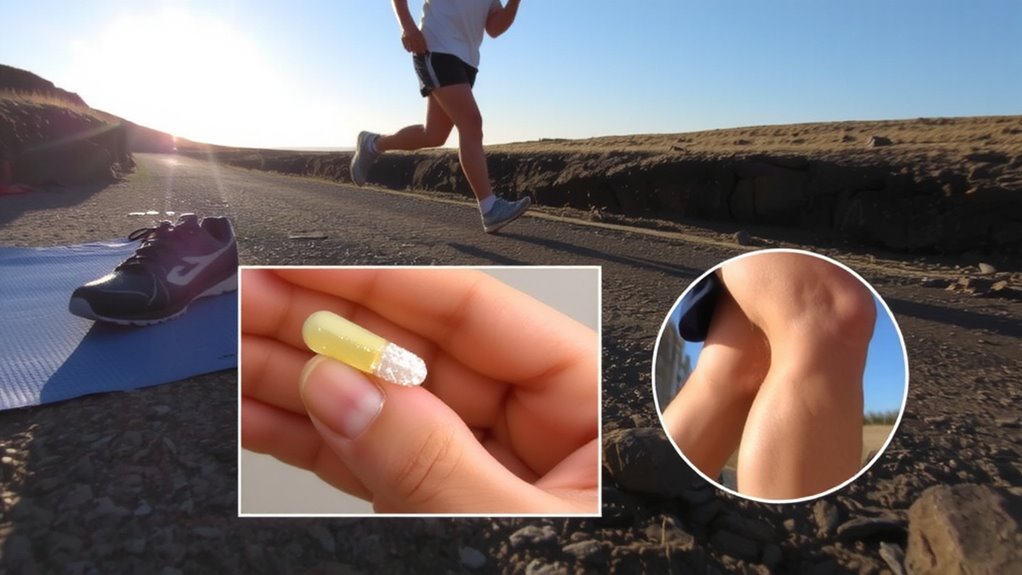
How quickly does your body bounce back after a tough workout? If you’re dealing with joint inflammation or early signs of cartilage wear, recovery might feel slower than you’d like. Glucosamine may help speed things up by supporting your joints’ natural repair processes. It’s believed to reduce joint inflammation, easing stiffness and discomfort after intense activity. Over time, consistent use could help protect against further cartilage wear, especially in weight-bearing joints like knees and hips. While it’s not a quick fix, taking glucosamine regularly may improve joint resilience, letting you recover more efficiently between sessions. Think of it like maintaining high-performance fitness gear-preventative care keeps everything running smoothly. For active individuals, this supplement might just give your joints the edge they need to keep up with your routine.
What Does the Science Say About Glucosamine for Athletes?
Could the supplement you’re taking actually make a difference in how your joints respond to training stress? Research on glucosamine for athletes shows mixed but generally supportive results. While it’s not a direct performance enhancement tool, studies suggest it may help maintain joint integrity during repeated high-impact activity. Some athletes report reduced joint discomfort after weeks of consistent use, particularly in knees and hips under load. However, benefits appear more pronounced in those with existing joint wear or intense training regimens. You shouldn’t expect immediate changes-effects often build over months. Importantly, clinical trials confirm its long term safety, with minimal side effects reported even after years of use. Though not a magic pill, it may complement recovery protocols when combined with proper nutrition, rest, and smart training. For endurance or strength athletes, this low-risk support could mean fewer joint-related setbacks over time.
Who Should Take Glucosamine for Joint Recovery?
You’re likely wondering whether glucosamine fits into your recovery routine-and the answer depends on your training load, joint history, and long-term goals. If you regularly engage in high-impact or repetitive workouts-like running, CrossFit, or powerlifting-supporting joint health should be a priority. Glucosamine may help maintain cartilage integrity over time, especially if you’re over 30 or have prior joint discomfort. It’s not a quick fix, but as part of a broader injury prevention strategy, it can contribute to smoother recovery and improved resilience. Athletes with a history of joint strain or those increasing training volume may benefit most. While not essential for everyone, consistent use could enhance long-term joint health, particularly when combined with smart recovery practices. Think of it as low-risk support for your body’s wear and tear-not a miracle, but a practical tool in your recovery toolkit.
What’s the Best Form, Dose, and Timing for Glucosamine?
Glucosamine isn’t a one-size-fits-all supplement, and getting the most out of it means paying attention to form, dose, and when you take it. You’ll find glucosamine in sulfate, hydrochloride, and shellfish-derived forms-sulfate has the strongest research backing, especially for joint stability and cartilage regeneration. Most studies use 1,500 mg daily, typically split into one or two doses. Taking it with meals improves absorption and reduces stomach upset. While results aren’t immediate, consistent use over 8–12 weeks shows measurable improvements in joint comfort and function. For athletes, timing it post-workout may support recovery, though daily consistency matters more than exact timing. Keep in mind, effectiveness varies-some notice sharper joint support, while others see subtle changes. Still, if you’re aiming for long-term joint health, the combination of proper form and steady dosing makes a meaningful difference.
Which Supplements Work Best With Glucosamine for Joints?
Why stop at glucosamine alone when joint support often requires a team effort? You’ll get better results by pairing it with synergistic supplements. Chondroitin sulfate, commonly combined with glucosamine, helps retain cartilage moisture and may slow degeneration-studies suggest the duo supports joint comfort better than either alone. Adding collagen peptides boosts your connective tissue repair, providing the building blocks tendons and ligaments need after intense training. You’ll likely notice improved resilience and faster recovery, especially under heavy loads. Omega-3s and MSM also complement this stack, reducing inflammation and oxidative stress. But among all options, chondroitin sulfate and collagen peptides stand out for targeted joint support. When choosing products, look for hydrolyzed collagen peptides (around 10–15g daily) and pharmaceutical-grade chondroitin sulfate (800mg/day) for reliable absorption and performance. Consistency matters most-pair these with smart recovery habits and quality fitness gear to protect joints long-term.
On a final note
You’re likely pushing your joints hard with intense training, and while glucosamine won’t work miracles, it may support cartilage repair and reduce soreness over time. Research shows mixed results, but consistent use-especially with chondroitin and MSM-can improve joint comfort for some athletes. It’s not a quick fix, but paired with proper recovery gear like compression sleeves and foam rollers, glucosamine fits into a smart, long-term strategy for joint health and mobility.