TENS Therapy Demystified: Transcutaneous Electrical Nerve Stimulation for Pain Management Post-workout
TENS therapy can help ease post-workout soreness by blocking pain signals and boosting endorphins, giving you quicker relief than rest or ice alone. It won’t speed muscle repair, but it reduces discomfort so you move better during recovery. Use it within an hour after exercise, on clean skin near (not on) sore areas, with frequencies between 80–120 Hz. While results vary, pairing it with smart recovery habits increases its value-there’s more to discover about optimizing your routine.
Notable Insights
- TENS therapy uses low-voltage electrical currents to block pain signals and reduce post-workout soreness perception.
- It does not accelerate muscle healing but provides temporary relief by stimulating endorphin release.
- For best results, use TENS within 30 to 60 minutes after exercise during peak recovery.
- Place electrodes around, not directly on, sore muscles, avoiding sensitive areas like the neck or chest.
- TENS offers faster, targeted pain relief compared to ice or rest, but works best alongside proper recovery practices.
Does TENS Actually Reduce Post-Workout Soreness?
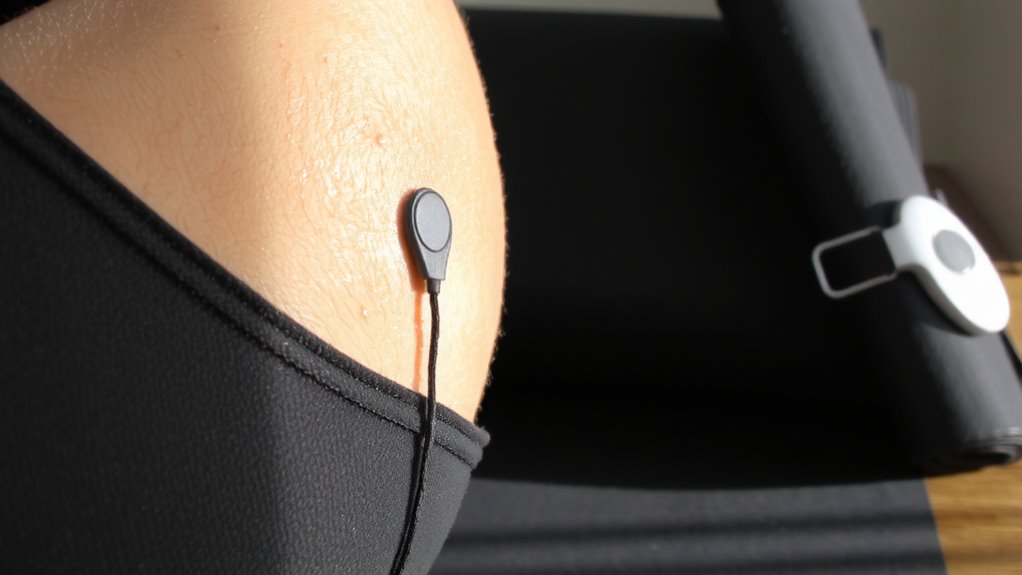
Could the device you’re holding truly ease that deep muscle ache after leg day? Research suggests TENS may help, but results aren’t universal. Some users report noticeable relief, while others detect little change-raising questions about the placebo effect. If you believe the device works, your brain might dampen pain signals temporarily, creating real but psychological relief. Beyond that, nerve adaptation plays a role: repeated TENS use can alter how nerves transmit pain, possibly reducing sensitivity over time. Still, effects vary by individual, intensity setting, and electrode placement. Studies show mixed outcomes for delayed onset muscle soreness (DOMS), with modest benefits at best. While TENS isn’t a magic fix, it’s a low-risk tool worth trying. You’ll need consistency and realistic expectations. For some, especially those sensitive to electrical stimulation, it may offer a non-drug option in recovery gear-practical, portable, but not always powerful. Top-performing devices often feature adjustable frequency and waveform settings, making best muscle stimulators a key consideration for optimizing recovery.
How Does TENS Help Sore Muscles Recover?
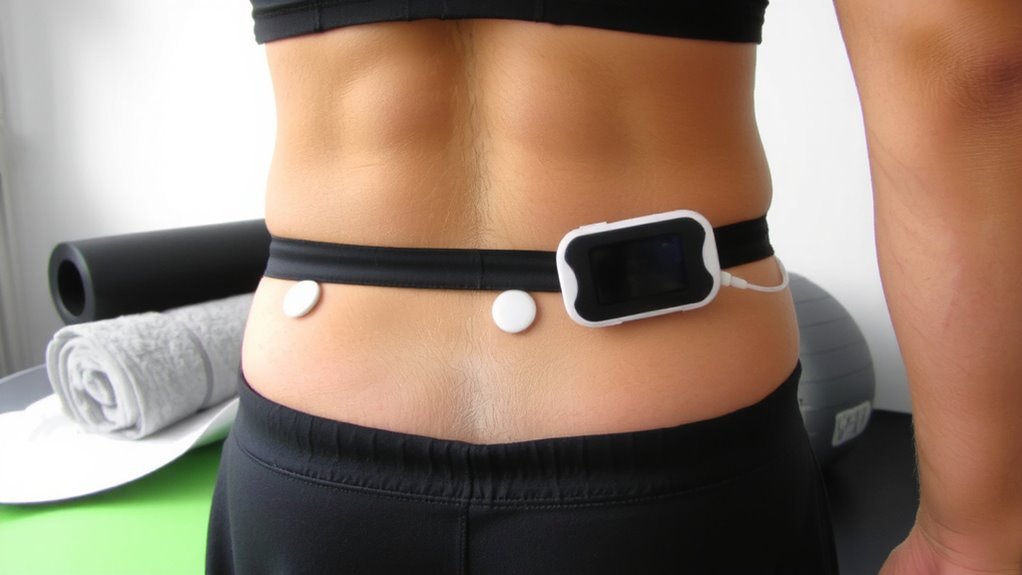
While TENS won’t speed up actual muscle repair, it can make recovery feel more manageable by altering your perception of soreness. You’re not accelerating muscle regeneration, but the electrical stimulation blocks pain signals and prompts your body to release endorphins, acting as natural painkillers. This temporary relief allows you to move more freely, which can support circulation and indirectly aid recovery. The pads deliver low-voltage currents that target nerve pathways, not the muscle tissue itself, so while your soreness feels reduced, the underlying healing process continues at its normal pace. TENS units are portable and easy to use, making them practical post-workout gear. They don’t heal, but their strategic use during recovery may improve comfort and mobility. For best results, pair TENS with proven recovery methods like stretching and proper nutrition.
When Should You Use TENS After a Workout?
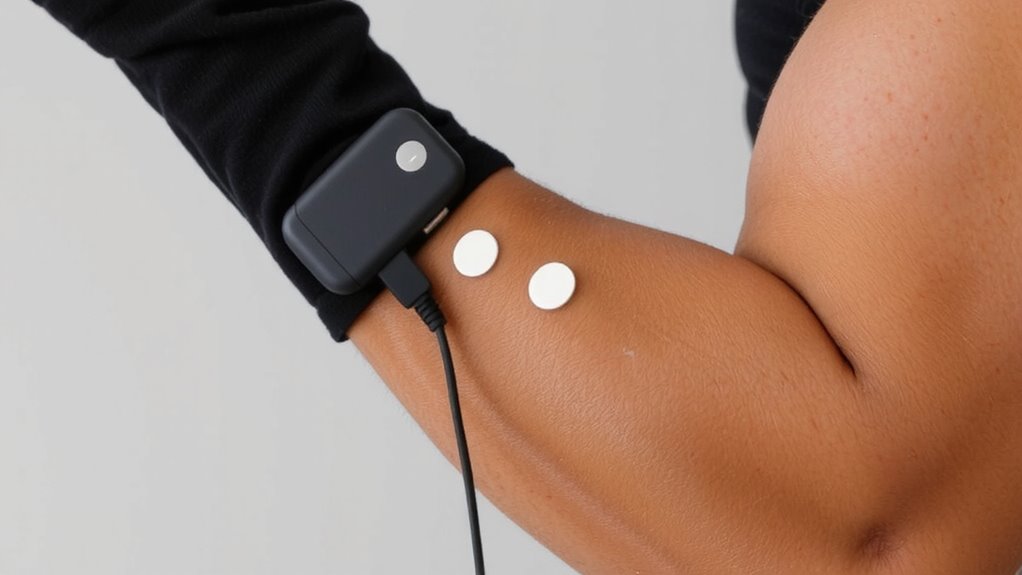
When should you reach for that TENS unit after pounding the pavement or lifting heavy? Ideally, use it during the early recovery window-within 30 to 60 minutes post-exercise-when muscles are most receptive to intervention. This timing aligns well with your hydration timing and protein intake, both critical for recovery. While TENS doesn’t directly repair tissue, it may reduce perceived soreness, allowing you to move more comfortably while nutrients are delivered. Don’t rely on TENS alone; it’s most effective when paired with proper recovery habits. Consider it a complementary tool, not a substitute for fueling or fluid replenishment. Using TENS too late may still offer relief, but syncing it with metabolic recovery peaks boosts practical benefit. Think of it as part of a coordinated strategy, enhancing comfort while your body rebuilds. TENS works best when integrated, not isolated.
How to Use TENS Safely After Exercise
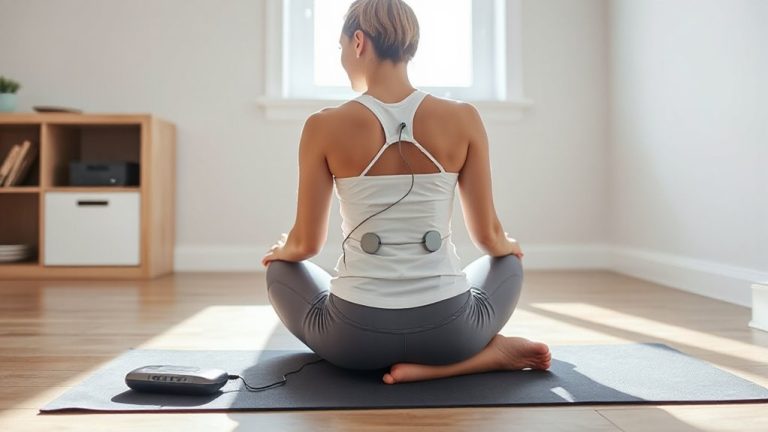
You’ve just finished a tough session, and now it’s time to recover-using a TENS unit can help, but only if applied correctly and safely. Start with clean, dry skin to guarantee proper electrode adhesion and avoid irritation. Electrode placement is critical: position the pads around, not directly on, the sore area, typically in pairs flanking the pain site. Avoid placing them near the neck, chest, or broken skin. Set the pulse frequency between 80–120 Hz for acute post-workout discomfort, as higher settings more effectively block pain signals. Begin at a low intensity and gradually increase until you feel a strong but comfortable tingling. Never use TENS while sleeping or driving. Replace electrodes every 10–15 uses to maintain conductivity. With consistent placement and appropriate pulse frequency, the device becomes a reliable part of your recovery toolkit-when used wisely. For those interested in muscle stimulation beyond pain relief, consider exploring best EMS machines for enhancing recovery and strength training at home.
Is TENS Better Than Ice, Massage, or Rest?
How do your recovery choices stack up when it comes to easing post-workout soreness? When you’re weighing TENS against ice, massage, or rest, each method has pros. But TENS offers targeted nerve stimulation that may relieve pain faster than passive options. Consider this ice comparison and massage effectiveness across key recovery factors:
| Method | Pain Relief Speed | Muscle Function Recovery |
|---|---|---|
| TENS | Fast | Moderate to High |
| Ice | Slow | Low |
| Massage | Moderate | High |
| Rest | Slow | Moderate |
TENS provides immediate signal-based relief, outpacing ice in onset time. While massage effectiveness shines for circulation and flexibility, it requires time and skill. Ice reduces inflammation, but delays healing if overused. Rest is essential, but passive. For active recovery with measurable impact, TENS stands out-especially when recovery time is limited and performance matters.
On a final note
You’re likely wondering if TENS is worth adding to your recovery routine. Evidence shows it can reduce post-workout soreness by interfering with pain signals and easing muscle tension. While not a replacement for rest or proper nutrition, it complements strategies like massage or icing. Used correctly, with clean pads and proper placement, TENS offers a drug-free option that’s portable and adjustable. It won’t speed healing, but for immediate, temporary relief, it’s a solid tool.