Optimizing Delayed Onset Muscle Soreness Symptoms: The Role of Massage Therapy Techniques
You feel sore after intense workouts because DOMS results from muscle microtears that trigger inflammation and repair. Massage helps by boosting blood flow, reducing inflammation, and speeding up recovery. Techniques like Swedish massage soothe acute soreness, while deep tissue works better later to break adhesions. Timing matters-wait 24–72 hours post-exercise for best results. Pairing massage with hydration and mobility work enhances outcomes. The right approach can turn discomfort into stronger, more resilient muscles.
Notable Insights
- Massage therapy enhances blood flow to deliver nutrients and accelerate muscle repair after intense exercise.
- Timing massage between 24 to 72 hours post-exercise optimizes recovery during peak DOMS sensitivity.
- Swedish massage is preferred for acute soreness, using gentle strokes to reduce inflammation without overstimulation.
- Deep tissue massage helps resolve chronic tightness and adhesions during later stages of muscle recovery.
- Combining massage with hydration, sleep, and mobility work maximizes soreness reduction and functional restoration.
What Causes DOMS After Exercise?
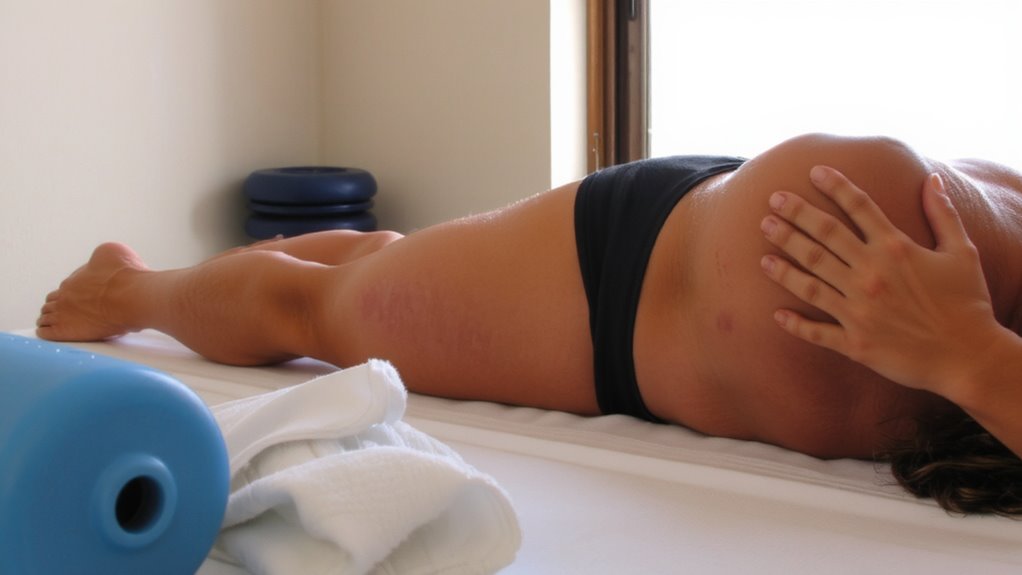
Delayed onset muscle soreness, or DOMS, isn’t just a byproduct of pushing yourself too hard-it’s actually a sign your muscles are adapting to new levels of stress. When you perform intense or unfamiliar exercise, you create muscle microtears-tiny disruptions in the fibers-that trigger an inflammation response. That’s not a bad thing; in fact, it jumpstarts repair and growth. Your body sends fluids and nutrients to the area, causing temporary soreness and stiffness usually peaking 24 to 72 hours post-workout. This process is essential for building strength, but unmanaged DOMS can hinder performance and consistency. While fitness gear like compression wear may help circulation, it only supports recovery-they don’t prevent microtears. The inflammation response is natural, even necessary, but optimizing it through smart training, hydration, and recovery practices makes a real difference in how quickly you bounce back and improve. Using a massage gun can help alleviate DOMS symptoms by increasing blood flow and reducing muscle tension.
Does Massage Actually Help DOMS?
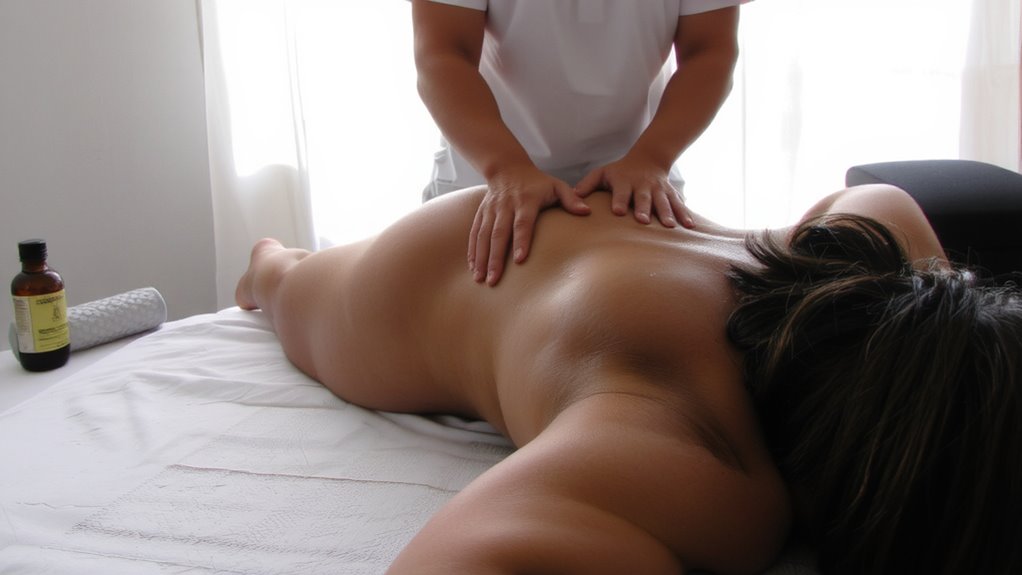
You’ve felt the stiffness set in after a tough session-DOMS creeping up hours after your last rep, making stairs a challenge and even light movement uncomfortable. Research shows massage can help ease these symptoms, though it won’t fully prevent them. By boosting blood flow, massage delivers oxygen and nutrients that support muscle repair while flushing out metabolic waste. You’ll likely notice reduced soreness and improved range of motion, especially when treatment occurs within hours post-exercise. While massage doesn’t speed structural recovery, it modulates pain signals and decreases inflammation markers, offering meaningful relief. It’s not a magic fix, but as part of a recovery routine-alongside proper hydration, sleep, and mobility work-it adds real value. Practical gear like foam rollers or percussive devices can mimic some benefits, but hands-on therapy often provides more targeted results. Using a high-quality percussion massager can enhance post-workout recovery by delivering deep, targeted pulses that penetrate muscle tissue efficiently.
Best Massage Techniques for DOMS Relief
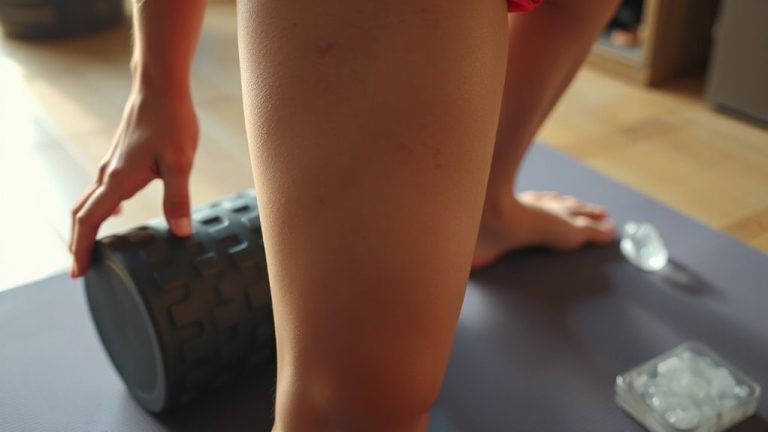
When it comes to easing DOMS, not all massage techniques deliver the same results-some excel in promoting circulation, while others focus on releasing deep tension. You’ll find foam rolling especially effective for self-myofascial release, helping break up tightness and increase blood flow to overworked muscles. Used regularly, it complements your stretching routines by improving tissue elasticity and reducing stiffness. Pairing foam rolling with dynamic and static stretches post-exercise can accelerate recovery and minimize soreness onset. Massage techniques like trigger point therapy and effleurage also stand out for targeting specific sore areas and enhancing lymphatic drainage. While tools vary in design and firmness, those with textured surfaces offer deeper penetration without excessive discomfort. Consistency matters most-integrating these techniques into your recovery regimen guarantees better long-term outcomes. You don’t need professional gear to start, but durability and ergonomics improve effectiveness over time. For optimal results, consider using a high-density foam roller designed to withstand repeated use while maintaining structural integrity.
Deep Tissue vs Swedish: Which Helps Sore Muscles More?
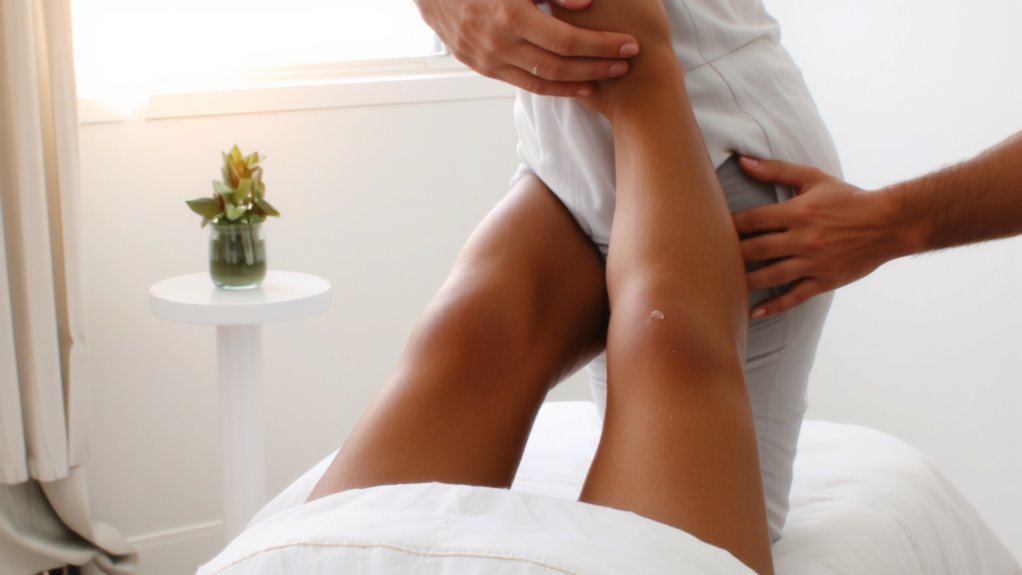
Pressing beyond basic massage tools and techniques, you’ll find that hands-on therapies like deep tissue and Swedish massage offer distinct advantages for muscle recovery, each suited to different phases of soreness and training intensity. If you’re dealing with lingering muscle adhesions or tightness after intense workouts, deep tissue massage applies firm pressure to break down restrictions and promote fascial release, helping restore mobility and reduce stiffness. It’s especially effective when soreness stems from overused or chronically tense areas. On the other hand, Swedish massage uses gentler, rhythmic strokes to increase blood flow and encourage relaxation, making it ideal for acute DOMS when muscles are still highly sensitive. While Swedish won’t target adhesions as directly, its circulatory benefits support early-stage recovery. You’ll likely benefit more from deep tissue in prolonged soreness with restricted movement, whereas Swedish suits immediate post-workout tenderness.
Best Time to Massage DOMS After a Workout
How soon should you schedule a massage after a tough workout? The ideal post workout timing falls between 24 to 72 hours, aligning with your body’s muscle recovery windows. Right after exercise, inflammation is still peaking, so immediate massage might interfere with natural adaptation. Waiting a day allows soreness to surface without disrupting early recovery. Research shows massaging during peak DOMS-usually 48 hours post-exercise-reduces discomfort and enhances circulation, speeding up repair. While earlier sessions (under 24 hours) aren’t harmful, they’re often less effective. Delaying beyond 72 hours may miss the best window for intervention. You’ll benefit most when the massage targets the period when muscles are actively repairing but not fully healed. This balance makes 48 hours a smart benchmark, supporting recovery without compromising gains.
Best Self-Massage Tools for DOMS Relief
Hitting the 48-hour mark after an intense workout means you’re likely feeling the full effect of DOMS, and now’s the time to actively support your recovery. Foam rolling is a go-to for many-affordable, accessible, and effective at loosening tight fascia. High-density rollers offer deeper pressure, ideal for larger muscle groups like quads and hamstrings. For targeted relief, percussion therapy devices deliver rapid pulses that penetrate muscle tissue, reducing stiffness and improving blood flow. Models with adjustable speeds and multiple attachments let you tailor intensity to soreness levels. While foam rollers require more effort and precision, percussion guns provide consistent force with less physical strain. Both tools, when used correctly, reduce DOMS discomfort noticeably within minutes. Your choice depends on preference: foam rolling for broad surface work, percussion therapy for deep, focused recovery.
Pair Massage With These Recovery Habits for Faster Results
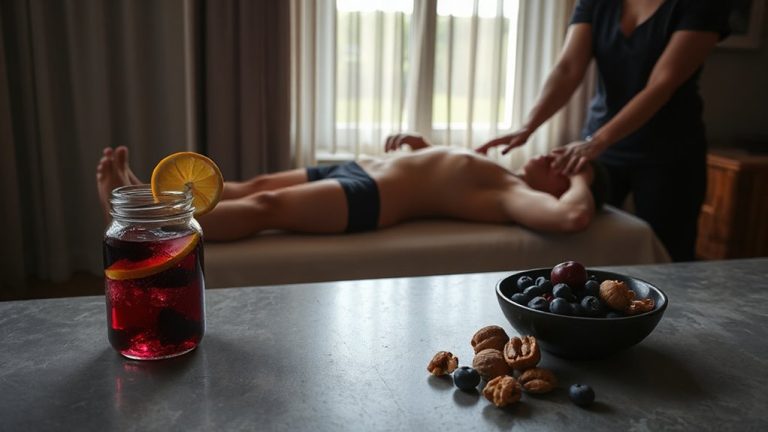
While massage therapy can greatly ease DOMS, you’ll get the fastest results when combining it with other recovery-focused habits that support circulation, muscle repair, and tissue mobility. Incorporating foam rolling before or after your massage enhances tissue pliability and helps release deeper tension, improving overall range of motion. Think of it as prepping the muscles for better response to manual work. Pair this with smart hydration strategies-electrolyte balance and consistent fluid intake-since well-hydrated muscles recover faster and are less prone to cramping. Massage loosens tight fibers, but without proper hydration and myofascial maintenance, benefits diminish quickly. Foam rolling tools vary in density and texture, so choose based on sensitivity and target muscle group. Used together, these methods create a synergistic recovery effect. You’re not just soothing symptoms-you’re actively supporting long-term muscle resilience with practices backed by both athletes and therapists.
On a final note
You’ll find massage therapy can markedly reduce DOMS when timed right-ideally 24 to 72 hours post-workout. Techniques like deep tissue and Swedish each offer benefits, though deep tissue often works better for persistent soreness. Foam rollers and percussion guns boost recovery, especially when combined with hydration, sleep, and light mobility work. While tools vary in precision and pressure control, consistency and pairing modalities deliver the most reliable relief from muscle fatigue and tenderness.