Utilizing Graston Technique to Promote Effective Tissue Remodeling and Muscle Growth
You’re not just recovering with Graston-you’re rebuilding. By breaking down restrictive scar tissue and stimulating collagen realignment, it promotes stronger, more flexible muscle fibers. It boosts blood flow, accelerates healing, and enhances tissue quality far beyond what foam rollers or massage guns achieve alone. Ideal for overuse injuries or stalled recovery, it bridges rehab and performance. You’ll feel the difference in mobility and resilience-see how integrating it can transform your recovery strategy.
Notable Insights
- Graston Technique promotes tissue remodeling by breaking down scar tissue and adhesions that restrict muscle function and movement.
- It stimulates fibroblast activity and collagen production, enhancing the repair of damaged soft tissues.
- Controlled microtrauma from instrument-assisted scraping triggers a healing response for stronger, more flexible muscle fibers.
- Increased blood flow improves delivery of oxygen and nutrients critical for muscle recovery and growth.
- When combined with strength training, Graston accelerates return to activity and reduces chronic muscle tightness.
What Conditions Does Graston Treat?
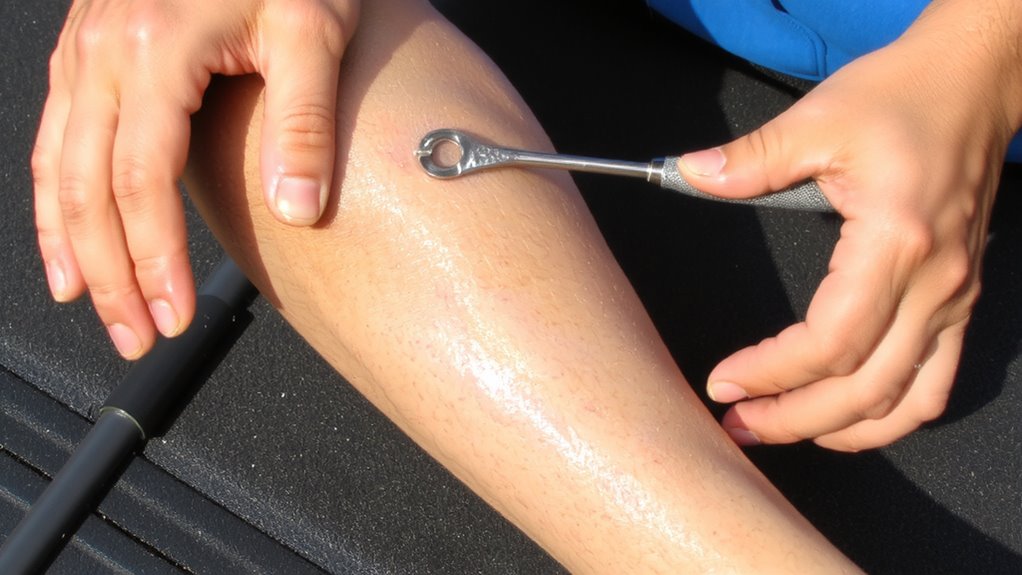
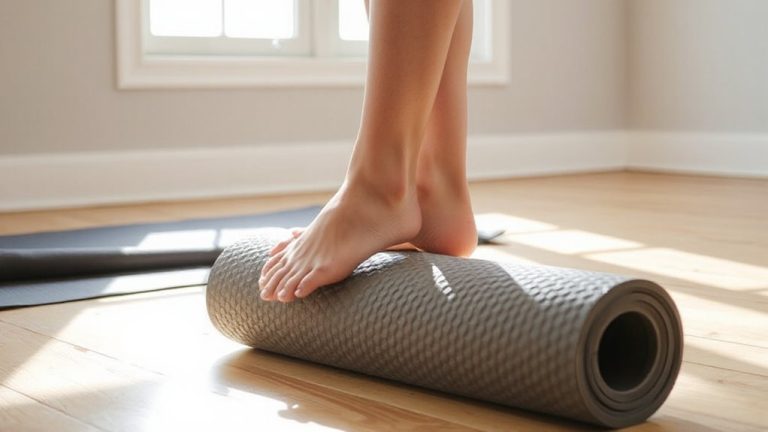
Graston Technique is commonly used to treat a range of soft tissue conditions, especially those involving scar tissue formation, chronic inflammation, or muscle tightness. You’re likely dealing with issues like plantar fasciitis or tennis elbow if you’ve tried rest, stretching, or basic gear like foam rollers without real progress. These overuse injuries respond well because the technique breaks down restrictive tissue, helping restore normal movement. With plantar fasciitis, you’ll notice reduced heel pain after just a few sessions as the thickened fascia begins to remodel. For tennis elbow, the method targets the forearm’s extensor tendons, easing the grip-related discomfort that limits daily use. Fitness recovery tools often focus on surface relief, but Graston works deeper, offering more lasting results when properly applied. It’s not a quick fix, but combined with strength work and proper recovery practices, it’s proven effective across clinical settings. Top options include sleeves designed specifically for targeted compression sleeves for tennis elbow support.
How Graston Speeds Up Healing
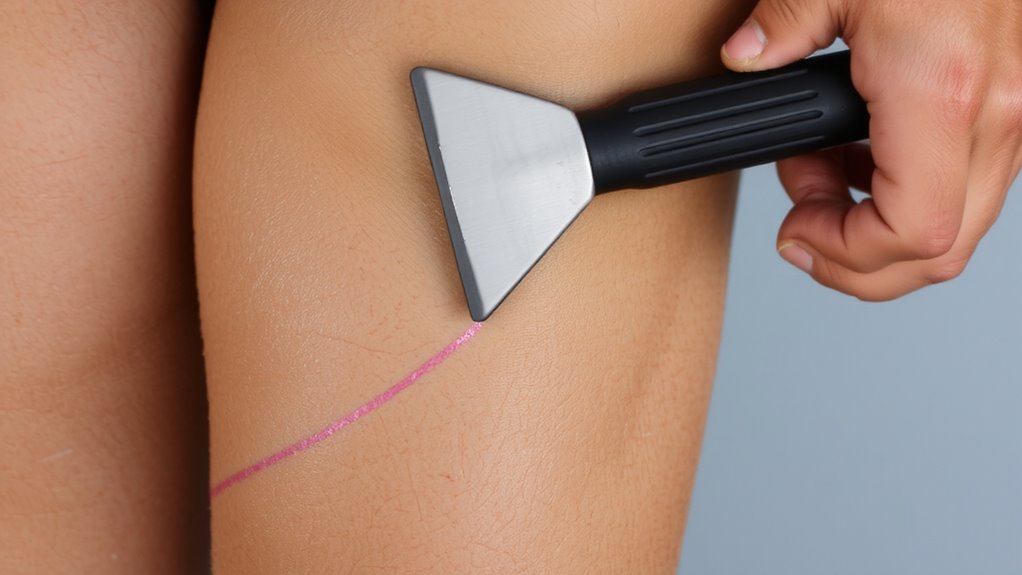
While your body’s natural healing process can take weeks or even months to resolve chronic soft tissue issues, the Graston Technique accelerates recovery by stimulating a controlled inflammatory response that activates fibroblasts-key cells involved in tissue repair. This method promotes cellular regeneration and supports inflammation reduction, enhancing your rehab timeline. Small, strategic disruptions in the tissue trigger a refreshed healing cascade, making recovery more efficient than passive rest.
| Phase | Biological Effect | Clinical Benefit |
|---|---|---|
| 1 | Microtrauma induction | Jumpstarts repair mechanisms |
| 2 | Fibroblast activation | Boosts collagen production |
| 3 | Increased blood flow | Enhances nutrient delivery |
| 4 | Inflammation reduction | Minimizes swelling and pain |
| 5 | Cellular regeneration | Restores functional tissue |
You’re not just waiting for healing-you’re actively reshaping it with precision.
Break Down Scar Tissue With Graston
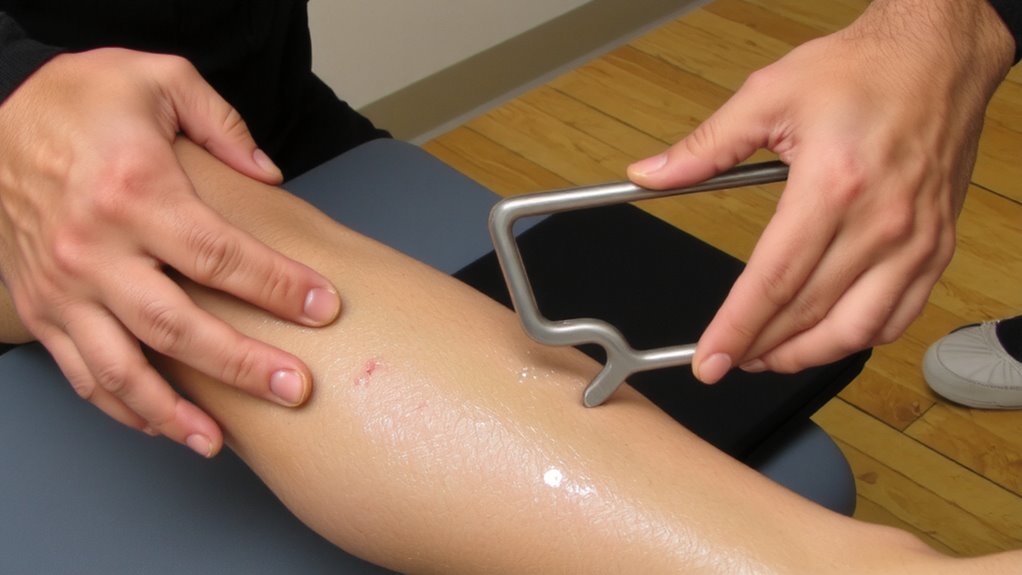
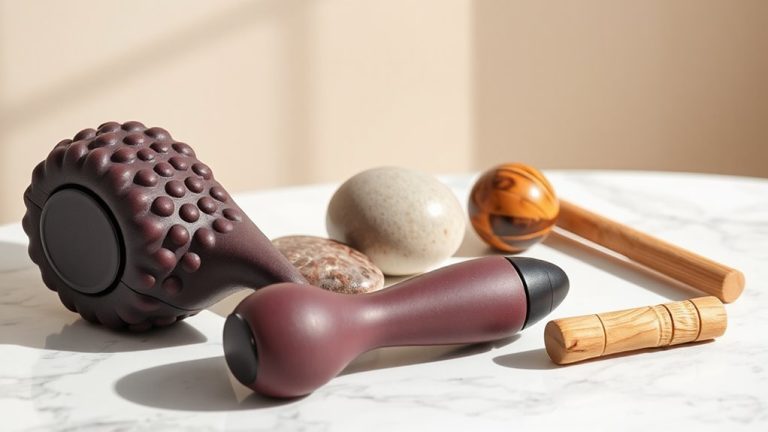
When scar tissue builds up from injury or repetitive strain, it can restrict movement and lead to chronic discomfort, but the Graston Technique offers a targeted way to break down those dense, fibrous adhesions. Using specially designed stainless steel instruments, practitioners detect and disrupt fascial adhesions that limit mobility and impair function. You’ll likely feel a minor discomfort during treatment, but that’s normal as the tools separate bound tissues. This mechanical stimulation triggers your body’s natural connective repair processes, replacing stiff scar tissue with healthier, more flexible fibers. Unlike general massage, the Graston Technique delivers precise, consistent pressure, making it especially effective for chronic or deep-layer adhesions. Clinical feedback shows improved range of motion and reduced pain after just a few sessions. When integrated into a recovery routine, it enhances long-term tissue quality, supporting both rehab and performance. Equipment is durable and easy to sanitize, fitting seamlessly into professional fitness recovery protocols.
Boost Blood Flow for Faster Recovery
Since recovery depends heavily on how well nutrients and oxygen reach damaged tissues, the Graston Technique acts as a catalyst by stimulating localized blood flow. You trigger a vasodilation response in targeted areas, which widens blood vessels and enhances circulation precisely where it’s needed most. This boosted flow isn’t just about warmth or temporary relief-it directly improves nutrient delivery to overstressed muscles and connective tissues. Think of it as turning on a high-pressure delivery line for amino acids, oxygen, and essential recovery compounds. With consistent application, this physiological shift supports faster cellular repair and reduces downtime after intense training. Unlike passive recovery tools, the Graston Technique actively manipulates soft tissue to create lasting circulatory benefits. It’s not merely reactive; it’s a strategic advantage. When recovery efficiency is key, promoting robust blood flow via controlled instrument-assisted therapy offers measurable value. You’re not just treating symptoms-you’re optimizing the environment for tissue regeneration. Devices like the best massage guns can complement this process by further increasing circulation and reducing muscle tension, making best massage guns a valuable addition to a comprehensive recovery protocol.
Use Graston in Training and Rehab
How do you bridge the gap between injury rehabilitation and peak athletic performance? You integrate Graston into both recovery and training phases. Instrument application breaks down restrictive scar tissue, boosting tissue mobility and preparing muscles for load. When you combine this with consistent technique integration, you’re not just treating symptoms-you’re reshaping how tissues respond to stress. Athletes report quicker return-to-play times and reduced chronic soreness when Graston is applied regularly alongside strength work. The tools’ contoured edges allow precise targeting of adhesions in tendons, fascia, and muscles, making sessions efficient. Used correctly, the technique supports long-term adaptation, not just short-term relief. It’s not a standalone fix but a functional part of a broader recovery system. With proper training and tool maintenance, Graston enhances both rehab outcomes and performance readiness, proving its role in modern fitness recovery protocols.
On a final note
You’re using the Graston Technique to actively remodel tissue and support muscle growth, not just manage symptoms. By breaking down restrictive scar tissue and boosting localized blood flow, it accelerates healing and improves mobility. When integrated into training or rehab, it enhances recovery efficiency. Though results depend on proper application, consistent use shows measurable improvements in tissue quality and function, making it a valuable, evidence-backed tool in modern recovery protocols.