A 15-Minute Morning Mobility Sequence to Reduce Stiffness and Improve Posture
You’ll start with ankle circles and wrist rotations to lubricate stiff joints, then flow into pelvic tilts and cat-cow stretches that reset spinal alignment. Glute bridges activate your posterior chain, while band-resisted shoulder rotations protect your rotator cuffs. A 36-inch high-density foam roller helps release hip and fascial tension efficiently. This sequence reduces morning stiffness, boosts neuromuscular readiness, and supports lasting posture-especially if done consistently. Next steps reveal how to integrate movement into daily life seamlessly.
Notable Insights
- Perform ankle circles and wrist rotations to lubricate joints and reduce morning stiffness.
- Activate glutes and rotator cuffs with bridges and band-resisted shoulder rotations for neurological readiness.
- Warm up the spine using slow roll-ups, pelvic tilts, and cat-cow stretches to restore natural curvature.
- Release hip flexors and shoulder capsules to correct alignment and counteract sitting-related tightness.
- Flow through dynamic movements like spinal waves and lunges with arm sweeps for full-body mobility.
Do This First: A 15-Minute Morning Mobility Routine
While your body’s still waking up, slipping into a structured 15-minute mobility routine can make a noticeable difference in joint function and muscular readiness throughout the day. You’ll start with joint isolation moves-like ankle circles and wrist rotations-that lubricate synovial fluid and reduce morning stiffness. These precise motions prime connective tissues without strain. Then, shift to controlled muscle activation patterns: glute bridges fire up posterior chains, while band-resisted shoulder external rotations wake up rotator cuffs. A foam roller helps, especially textured models that target fascial adhesions, though overuse can irritate cold tissues. You’re not just moving-you’re signaling neurological pathways to engage. Quality matters: a 36-inch high-density roller lasts longer and supports full-body use better than cheaper foam. This blend of joint isolation and muscle activation boosts circulation, enhances proprioception, and sets a functional tone for movement-no expensive gear needed, just disciplined minutes. For those looking to maximize recovery, choosing the right tool is key-best foam rollers offer density and texture calibrated for effective myofascial release.
Loosen Up: 3 Gentle Spine Warm-Ups to Start
Start with three deliberate spine warm-ups to gently restore mobility and alert your central nervous system after hours of inactivity. These movements prime your posture and reduce morning stiffness. First, perform spinal articulation by slowly rolling up from a standing forward bend, vertebra by vertebra-this reestablishes natural curvature and enhances intervertebral control. Next, practice pelvic tilting in a supine position: flatten your lower back into the floor by tilting the pelvis posteriorly, then release to a neutral position. This motion improves neuromuscular awareness and loosens tight segments. Finally, add cat-cow stretches on all fours, syncing breath with motion for rhythmic spinal articulation. These warm-ups take just 3–4 minutes but deliver disproportionate benefits. They’re non-negotiable for anyone serious about maintaining spinal health, especially when paired with consistent recovery practices and supportive fitness gear that doesn’t restrict motion. Incorporating tools like a back stretching device can enhance these benefits by promoting deeper muscle release and improved spinal alignment.
Fix Tight Hips and Shoulders in 5 Minutes
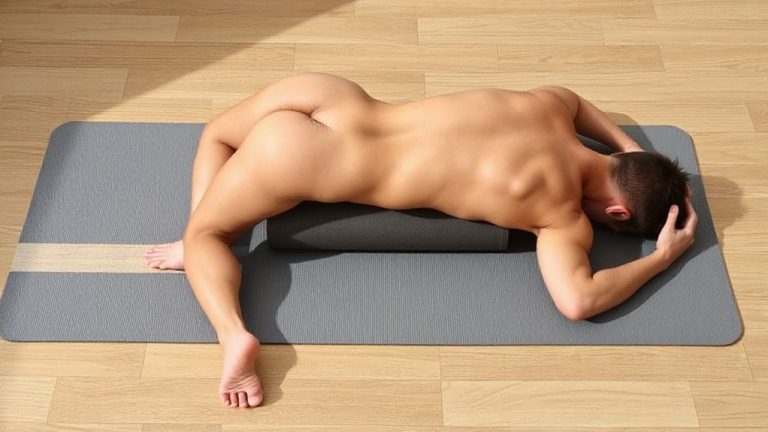
Tight hips and stiff shoulders don’t just limit your range of motion-they compromise your form, recovery, and long-term joint health. You likely sit more than you realize, and that daily compression feeds tight hip flexors and restricted shoulder movement. Address this fast with targeted work: the hip flexor release opens the front of the hips, reducing lower back strain and improving pelvic alignment. Follow it with shoulder capsule mobilization-gentle oscillations in a lune position-to restore rotator cuff freedom and combat slouched posture. These aren’t just feel-good moves; they’re biomechanical resets. In just five minutes, you’re priming joints for safer, more efficient movement. Consistent use enhances recovery by promoting circulation and reducing compensatory patterns. Quality foam rollers or mobility straps can deepen these efforts, but bodyweight alone delivers results. This isn’t optional maintenance-it’s essential preparation. Incorporating a vibrating foam roller can further enhance tissue release and accelerate recovery.
Flow Through a Full-Body Mobility Sequence
You’ve already loosened up two major trouble spots-tight hips and stiff shoulders-but true mobility goes beyond isolated fixes. Now, flow through a connected sequence that integrates joint rotation and muscle activation across your entire body. Begin with gentle spinal waves to wake up your spine, then link movement: reach overhead with one arm while stepping opposite leg back, engaging core and improving coordination. Include dynamic lunges with arm sweeps to combine hip, thoracic, and shoulder mobility. Each motion should shift seamlessly, promoting blood flow and neuromuscular readiness. Joint rotation routines-like ankle circles, wrist openings, and neck glides-prepare smaller articulations often overlooked. Pair these with muscle activation drills such as glute bridges and scapular push-ups to guarantee stability follows mobility. This full-body flow doesn’t just reduce stiffness-it primes your system for better posture and movement efficiency throughout the day.
How to Make Morning Mobility a Habit
It’s easy to overlook morning mobility when your schedule feels tight or your energy’s low, but consistency matters more than duration or intensity. Starting with just five minutes can kickstart consistency building, especially when paired with habit tracking. Place your mat in sight the night before-visual cues reduce friction in beginning. Link the practice to an existing habit, like brushing your teeth, to anchor it naturally. Track each session in a journal or app; this simple act increases accountability and reveals progress over time. While high-end fitness gear like foam rollers or resistance bands can support recovery, they’re optional-your body is the primary tool. Over weeks, you’ll notice reduced stiffness and sharper focus, reinforcing the routine. The real benefit isn’t in perfect form every day, but in showing up. Consistency builds resilience, and resilience shapes lasting change.
On a final note
You’ve now got a proven, time-efficient routine to combat morning stiffness and support long-term posture. Consistent mobility work enhances joint range and movement quality, especially when paired with durable, functional fitness gear like supportive mats and well-designed resistance bands. These tools don’t just last longer-they make routines safer and more effective. Over time, this blend of smart movement and reliable equipment improves recovery, reduces injury risk, and keeps your body resilient through daily demands.