Water-Row Simulation Drills Using Elastic Bands for Dryland Shoulder Care
You can simulate on-water rowing while protecting your shoulders by anchoring a resistance band at knee height and performing full stroke motions. This setup mimics the consistent drag of water, engaging your rotator cuff and scapular stabilizers through controlled, low-impact movement. Focus on a slow eccentric phase to build joint resilience and neuromuscular control, using durable braided bands with secure clips to maintain tension safely. These drills reinforce proper mechanics and shoulder integrity-especially during recovery, where many injuries occur. A well-structured band routine enhances performance while reducing injury risk over time. There’s more to optimizing this training for long-term shoulder health and rowing efficiency.
Notable Insights
- Anchor resistance bands at knee height to simulate the fixed foot stretcher and mimic on-water rowing resistance.
- Perform full rowing strokes seated on the floor, maintaining controlled movement from catch to finish position.
- Focus on engaging lats and scapular stabilizers while keeping elbows close to the body during the drive phase.
- Use slow eccentric loading (3–4 seconds) on recovery to enhance shoulder joint resilience and neuromuscular control.
- Train 2–3 times weekly with moderate band tension to build rotator cuff strength without joint strain.
Why Bands Help Rowers Avoid Shoulder Injury
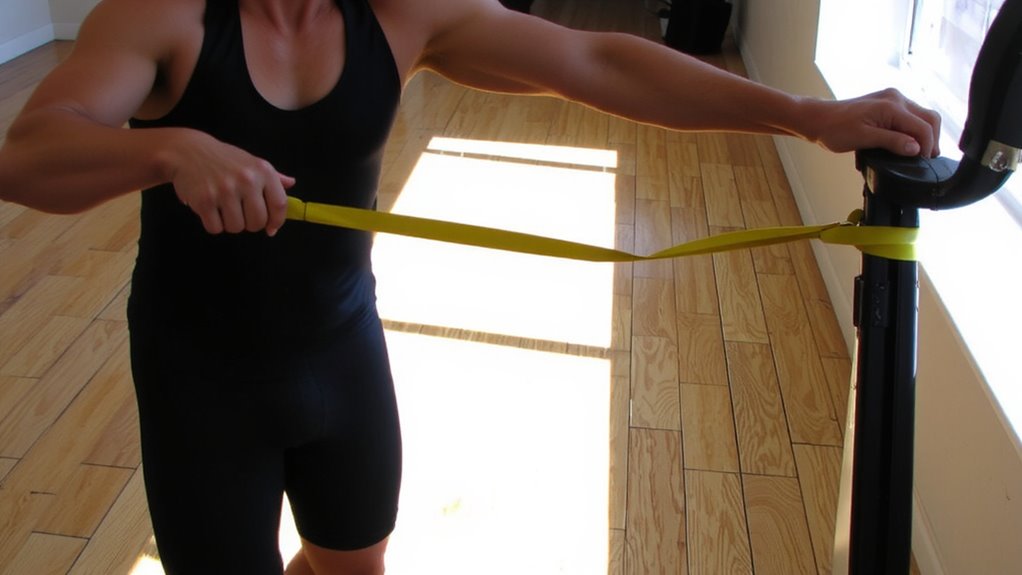
While traditional rowing strokes place repetitive strain on the shoulder joint, resistance band training offers a controlled way to simulate those movements with reduced risk. You get consistent muscle activation across the rotator cuff and scapular stabilizers without overloading the joint. Unlike free weights, bands provide variable resistance that mimics the water’s drag, promoting smoother, more functional movement patterns. This enhances joint stability by strengthening supporting musculature in a coordinated, low-impact manner. Because bands eliminate abrupt force peaks, they’re ideal for both performance training and injury prevention. You’ll notice less wear and tear over time, especially during high-volume training blocks. Top-tier bands made from durable latex or fabric hold tension well and resist fraying, ensuring reliable performance. Their lightweight design allows easy integration into warm-ups or recovery sessions, making them practical for daily use. When used correctly, they balance strength and mobility-key for long-term shoulder health.
Set Up Your Resistance Band Like a Rower
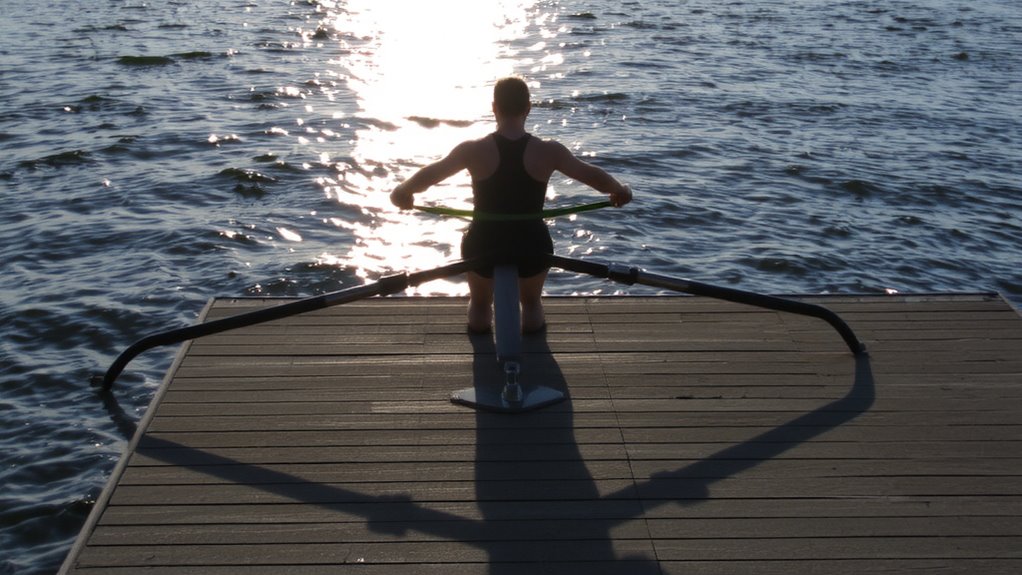
How do you anchor your band to truly mimic the rowing motion? Secure your resistance band at knee height to a sturdy anchor point-like a pole, door frame, or squat rack. This simulates the boat’s fixed foot stretcher, letting you replicate the row’s resistance path. Position yourself sitting on the floor with legs extended, heels on the ground, and the band running from the anchor to your hands. Proper band tension is essential: too loose, and you lose stroke feel; too tight, and you strain your shoulders. Test the tension by pulling gently-you should feel consistent resistance from the start. Choose durable, braided bands with secure clips to prevent slippage, as integrity during use guarantees both safety and effective training. A reliable setup means better neuromuscular feedback and shoulder joint protection over time.
Row Through the Full Stroke: Catch to Finish

Start your stroke with a solid catch position: lean forward from the hips, arms extended, and core braced as you grip the band palms down. Begin the full stroke by engaging your lats and driving your elbows back, close to your body, until they pass your torso. This phase maximizes muscle activation across the back, shoulders, and biceps while mimicking the resistance of water. Keep the movement smooth-no jerking-so tension stays consistent. As your hands approach your lower ribs, squeeze your scapulae to complete the finish. The elastic band’s tension should feel challenging but controlled, replicating the load of a real rowing stroke. Proper execution guarantees targeted strengthening without joint strain, making it ideal for dryland shoulder care. Consistent use improves neuromuscular coordination, supporting recovery and injury prevention. This drill’s effectiveness hinges on form precision and band tension selection.
Stay Controlled on the Recovery Phase
Because the recovery phase is just as critical as the drive, treating it as a passive return undermines both performance and injury prevention-especially when using elastic bands that maintain constant tension. You need a controlled recovery to preserve shoulder stability and maximize muscle engagement throughout the full range of motion. Unlike free weights, elastic bands don’t release tension at the end of the stroke, so letting your arms and torso bounce back invites strain. Instead, actively guide the band forward, keeping your scapulae stable and elbows soft. This controlled recovery reinforces proper neuromuscular patterns, supports joint integrity, and mimics the deceleration phase of actual rowing. Over time, consistent focus on stability during return motions builds resilient shoulders better equipped for repetitive drills. It’s not just about strength-precision matters. Treat each recovery as purposeful, not passive, and you’ll get more from your dryland training.
Slow the Eccentric for Shoulder Endurance
When you’re aiming to build durable shoulder strength with elastic bands, slowing down the eccentric phase of the water-row simulation makes a meaningful difference in muscular endurance and joint resilience. By emphasizing eccentric loading-lengthening the muscle under tension-you increase time under tension, which is critical for strengthening rotator cuff musculature without excessive joint strain. Control matters: a 3–4 second return to start position boosts neuromuscular engagement and promotes tendon adaptation. You’ll notice greater muscular fatigue compared to faster repetitions, which signals effective stimulus without needing heavier resistance. This technique also highlights weaknesses or imbalances early, allowing for corrective action before injury risk rises. High-quality bands maintain consistent tension, making them reliable for this drill. Over time, slow eccentrics improve shoulder stability and endurance, especially during repetitive overhead motions. It’s not just about strength-it’s about resilient movement patterns.
Add These Band Rows to Your Weekly Routine
You’ve already seen how slowing the eccentric phase builds shoulder endurance and joint resilience-now it’s time to put that control into practice with specific band row variations that belong in your weekly routine. Use looped or tube-style band types anchored securely at chest height, ensuring stable anchor points like a squat rack or door anchor. Start with bent-over single-arm rows to target scapular retraction, then progress to standing resisted rows with a slight forward lean. The bands’ tension should challenge you through the full range, but not compromise form. Heavier band types build strength, while lighter ones enhance endurance and recovery. Perform 2–3 sets weekly, focusing on tempo and shoulder stability. Consistent use improves movement efficiency and joint support. Proper care-checking for wear, storing away from sunlight-keeps bands reliable. These drills aren’t just prep; they’re essential maintenance for durable shoulders.
On a final note
You’ll keep your shoulders resilient by integrating band rows into your weekly routine. The controlled tension builds endurance without stressing joints. When you slow the eccentric phase, you strengthen the rear delts and rotコミュニケ cuff effectively. Proper setup guarantees functional movement mimicking actual rowing mechanics. These drills complement recovery, especially when joint-friendly resistance replaces heavy loads. Consistent use improves scapular stability and reduces injury risk-making elastic bands a practical, durable tool for long-term shoulder health.