Integrating Pallof Press Variations Into Strength Programs for Rotational Athletes
You’re not just building core strength-you’re training your body to resist rotation under load, which is critical for athletes in baseball, golf, or tennis. The standard Pallof hold works initially, but you’ll outgrow its static demand. Switch to half-kneeling rotations, split-stance chops, or band-resisted turns to increase time-under-tension and neuromuscular coordination. These variations match sport-specific movement patterns, boost eccentric control, and maintain stiffness where it matters. Avoid common errors like flared ribs or forward shoulders by focusing on bracing and scapular control. When programmed correctly across off-season, pre-competition, and in-season phases, Pallof presses evolve from passive holds to dynamic stability drills that prepare your core for explosive, rotational power. There’s a smarter way to balance resistance and movement-and it starts with how you press.
Notable Insights
- Use Pallof press variations with rotational return to enhance dynamic core control and neuromuscular coordination for rotational athletes.
- Replace static holds with moving variations like half-kneeling or split-stance chops to increase time-under-tension and sport-specific demand.
- Align exercise angles and stances with sport mechanics-e.g., high-to-low presses for golfers or band-resisted rotation for baseball players.
- Correct common errors like rib flaring and scapular drift to ensure proper anti-rotation engagement and spinal alignment.
- Phase Pallof exercises appropriately: overload in off-season, emphasize explosive control pre-competition, and maintain in-season with minimal volume.
5 Best Pallof Press Variations for Rotational Power
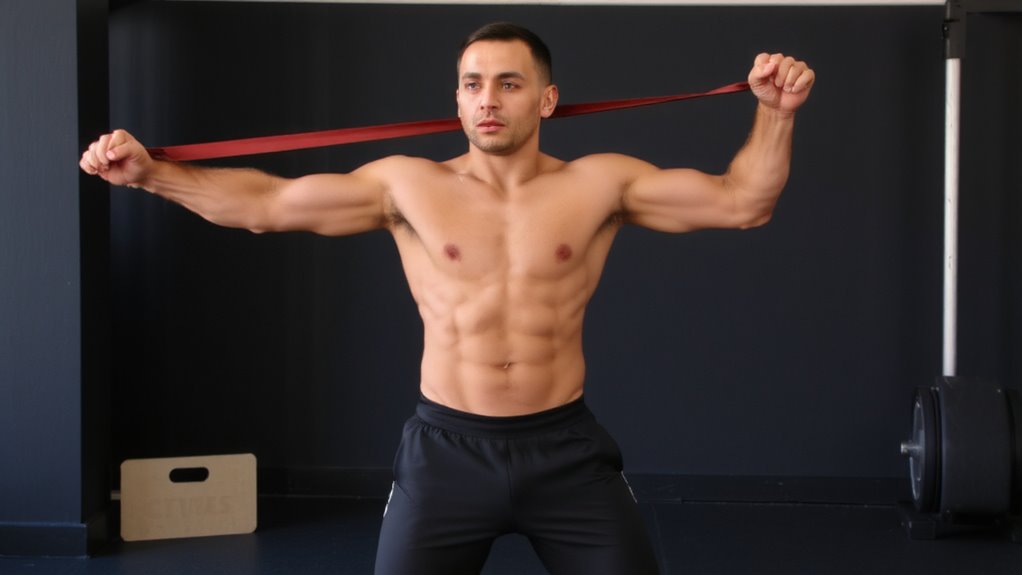
While most people think of the Pallof press as a core stability exercise, when modified correctly, it can become a powerful tool for building rotational strength, especially for athletes who rely on explosive torso rotation. You engage anti rotation dynamics by resisting force from a cable or band, training your core to stabilize under load while allowing controlled movement. Try the Pallof press with rotation return-press out, then rotate slightly away, and return slowly. This variation emphasizes resisted rotation sequencing, improving neuromuscular coordination. The half-kneeling, rotational chop, and split-stance variations increase demand on obliques and glutes, enhancing transfer to sports like baseball or golf. Using quality fitness gear, such as a durable anchor system and adjustable resistance bands, guarantees consistent tension. These variations don’t just build stability-they condition your body to generate and control power efficiently, making them essential in your strength programming.
Why Rotational Athletes Outgrow the Standard Hold
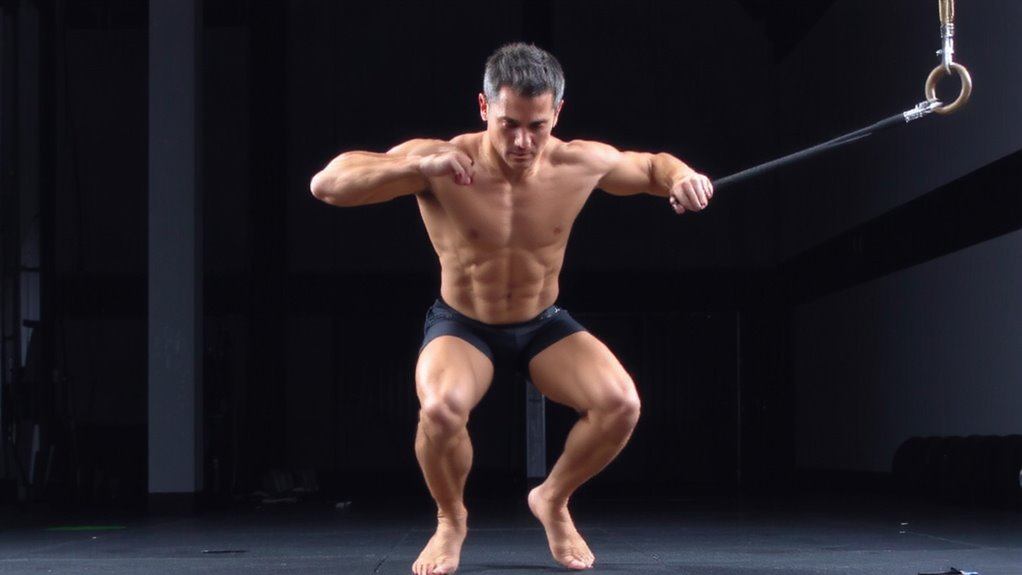
Why do so many rotational athletes plateau despite nailing the standard Pallof press hold? Because the static hold stops challenging your core fatigue response once you adapt. You’ve built initial anti-rotational strength, but staying here too long limits movement efficiency in dynamic sports. The standard variation lacks the time-under-tension and neuromuscular demand needed for advanced athletes. Your body learns to brace early and coast, reducing training specificity. As rotational power increases, so should exercise complexity. Without progression, you’re reinforcing stiffness instead of dynamic stability. That’s why you outgrow the standard hold-your nervous system needs greater load fluctuations and instability to keep adapting. You’re not just resisting rotation; you’re preparing for explosive, coordinated actions. Sticking with basics means missing chances to boost control under fatigue. It’s not about abandoning the foundation-it’s about building beyond it.
Match Variations to Baseball, Golf, and Tennis Demands
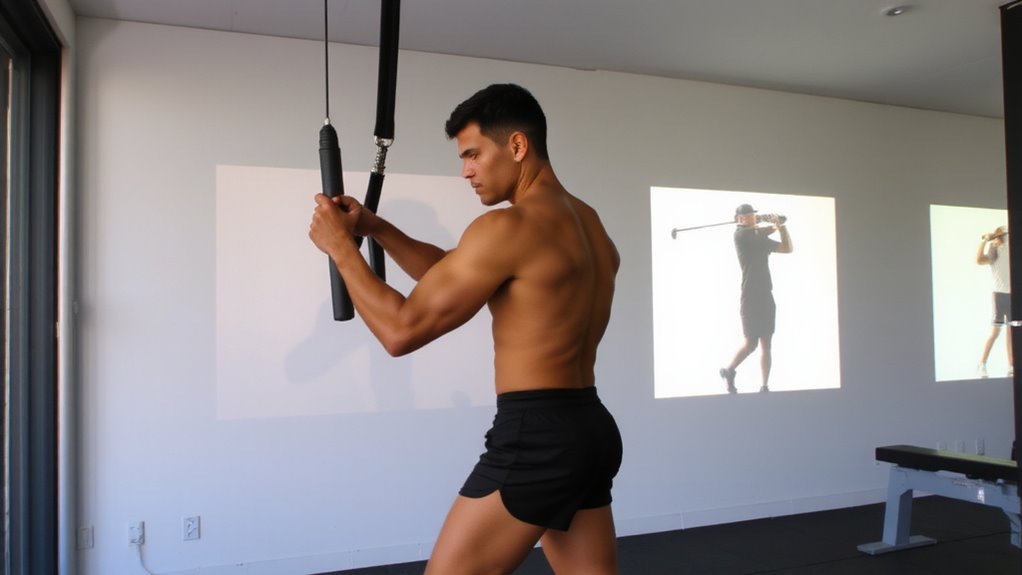
How do you guarantee your Pallof press variations truly translate to sharper swings, throws, or serves? You match them to sport-specific demands. For baseball, emphasize baseball anti rotation variations-press from a staggered stance with band height at chest level to mimic pitching or hitting resistance. This trains your core to stabilize under high-velocity rotation, reducing energy leaks. Golfers benefit most from golf resisted rotation drills, using a high-to-low pressing angle that mirrors the downswing’s diagonal torque. Perform slowly, focusing on eccentric control to build timing and stiffness. Tennis players should press from split stances while rotating slightly toward the working side, simulating open-stance forehands. These variations aren’t just stronger-they’re smarter, bridging gym work to field performance. The right setup guarantees your Pallof press doesn’t just build endurance; it sharpens rotational precision exactly where your sport demands it.
Avoid These 5 Pallof Press Form Errors
A well-executed Pallof press builds serious rotational stability, but even slight form breakdowns can turn it into a wasted rep-or worse, a risk. Maintaining proper spinal alignment and a solid breathing technique is essential. Avoid these common errors:
| Error | Fix |
|---|---|
| Flaring ribs and arching back | Engage core, keep ribs down to preserve spinal alignment |
| Holding breath during press | Use steady breathing technique to stabilize under load |
| Letting shoulders drift forward | Pack scapula and press straight out, resisting rotation |
Letting form slip compromises effectiveness and can lead to strain. You’re not just pressing against resistance-you’re training anti-rotation control under tension. Bracing correctly guarantees you’re loading the right musculature. Every rep should reinforce posture, not erode it. Stay strict, stay stable.
Program Pallof Presses by Training Phase
Now that you’ve cleaned up your technique and learned to maintain tension without compromising form, it’s time to think about when and how often you should be doing Pallof presses throughout your training cycle. During off-season phases, prioritize progressive overload by gradually increasing band tension or load to build core stiffness. As you shift into pre-competition, reduce volume but maintain resistance timing with shorter, more explosive presses to mimic athletic demands. In-season, scale back to maintenance-1–2 sets weekly with moderate resistance-to avoid fatigue without losing adaptation. Proper resistance timing means syncing the press duration with movement goals: longer holds for stability, quicker pulses for dynamic readiness. Treat Pallof presses like any strength movement-programmed, not random. This phased approach guarantees your anti-rotational strength aligns with sport-specific demands, supporting power transfer while protecting the spine under load.
From Static Holds to Dynamic Core Challenges
Why settle for static holds when your core thrives on movement that mimics real athletic demands? You need dynamic core challenges that go beyond isometric contractions to develop real-world strength. Introducing dynamic resistance through moving Pallof variations forces your torso to resist rotation during motion, not just at standstill. These drills enhance coordination and control while exposing imbalances static presses might miss. Emphasizing eccentric loading - like slowly returning to the start position under tension - boosts muscle resilience and time-under-tension, essential for injury prevention. The controlled deceleration trains your core to handle forces similar to those in sports like baseball or golf. Equipment must allow smooth movement and consistent tension; adjustable cable machines work best. These progressions aren’t just harder - they’re smarter, bridging the gap between stabilization and functional performance without sacrificing control.
How the Pallof Press Builds Sport-Specific Stability
You’ve already seen how dynamic variations of the Pallof press challenge your core beyond static holds, but what really sets it apart is how closely it mirrors the rotational demands of sports like tennis, baseball, and golf. By resisting rotation under load, you’re training your body to maintain trunk stability exactly when and where it’s needed most. This builds essential isometric strength, teaching your obliques, transverse abdominis, and deep stabilizers to fire efficiently without giving in to twisting forces. Over time, this translates into better control during powerful rotational motions, reducing injury risk and improving performance. The consistent tension from the band or cable also enhances core endurance, allowing your muscles to stay engaged through repeated movements. Whether you’re swinging a bat or serving a tennis ball, that sustained stability is vital. Practical, measurable, and sport-specific, the Pallof press earns its place in any serious rotational athlete’s routine.
On a final note
You’ve seen how Pallof press variations build rotational stability more effectively than static holds alone. For athletes in baseball, golf, or tennis, these drills bridge the gap between core strength and dynamic control. When programmed correctly across training phases, they enhance anti-rotational power with minimal equipment. Just make certain form stays tight-no flaring ribs or leaning. Used wisely, Pallof presses become a reliable tool, not just filler.