Progressive Eccentric Chin-Ups to Strengthen Elbow Flexors Without Aggravation
You’re building stronger elbow flexors safely by focusing on controlled 3–5 second eccentric chin-ups, which boost tendon collagen without aggravating inflammation. Use a box to jump up, then lower with strict form-no swinging. Keep your core tight, avoid locking out elbows, and stop before pain starts. Pair with push-ups or pike presses to balance joint forces. Progress slowly, every 48–72 hours, and you’ll see resilience build where it matters. There’s a smarter way to train through nagging discomfort-optimal recovery is part of the plan.
Notable Insights
- Perform controlled 3–5 second eccentric descents to stimulate tendon adaptation without excessive strain.
- Use a box to jump up and lower with perfect form, avoiding momentum or joint locking.
- Limit range of motion to prevent hyperextension and reduce stress on elbow tendons.
- Train every 48–72 hours to allow tendons adequate recovery and progressive remodeling.
- Pair with push-ups or pike push-ups to balance musculature and reduce overuse injury risk.
Why Elbow Pain Happens During Chin-Ups and How Eccentrics Fix It

While you’re probably familiar with the satisfying burn of a well-earned chin-up, you might also know the nagging elbow pain that sometimes follows-often stemming from repetitive strain, poor scapular control, or weak tendons unprepared for the load. What’s happening lies deep in elbow biomechanics: during aggressive pulling, excessive shear and compressive forces stress tendons poorly equipped to handle sudden load increases. Without progressive stimulation, tendon adaptation lags, increasing injury risk. Eccentrics change that, allowing controlled, prolonged tension that promotes structural remodeling. Instead of flaring pain, you get productive stress-cueing collagen realignment and increased tensile strength. This isn’t just recovery; it’s active fortification. Unlike passive rest or supportive braces, which merely manage symptoms, eccentric loading targets root causes. You’re not just healing-you’re upgrading tendon resilience. Over time, this method fosters durable adaptations, letting you train harder without recurring flare-ups. It’s fitness recovery that prioritizes long-term function over shortcuts. For additional support during recovery, consider using the best elbow sleeves for tendonitis to help stabilize the joint and reduce strain.
Perform Eccentric Chin-Ups With Perfect Form
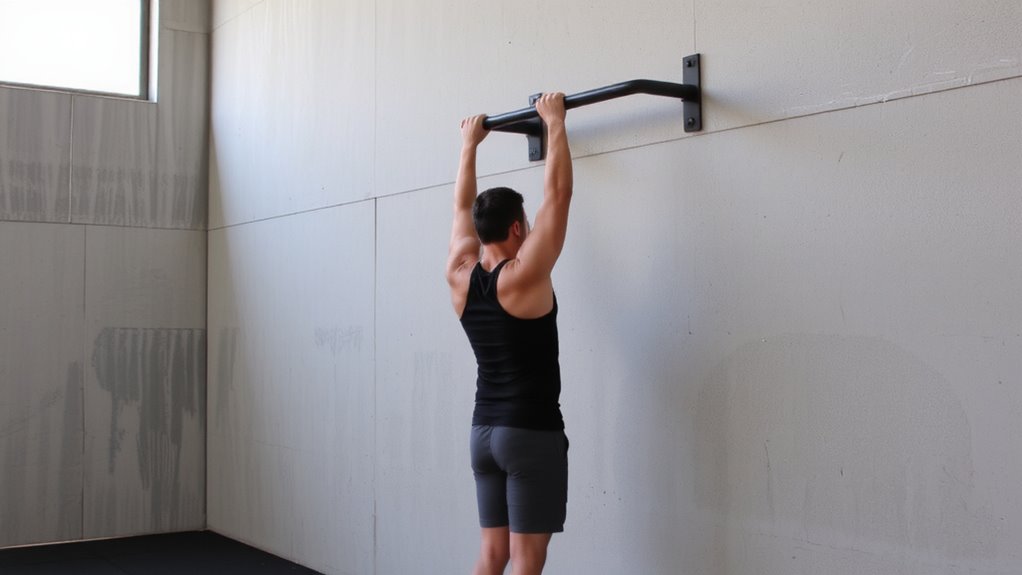
You’ve already seen how eccentric chin-ups tackle elbow pain by strengthening tendons through controlled resistance, turning a common recovery setback into an opportunity for long-term gain. Now, nailing perfect form is essential. Start with a proper grip-thumbs wrapped, hands slightly wider than shoulders-to stabilize your joints. Use a box to jump up to the top position, then begin your descent. Aim for full extension at the bottom without locking out, keeping tension in your brachialis and brachioradialis. Keep your core tight and avoid swinging.
| What You Feel | What It Means |
|---|---|
| Sharp elbow pain | Stop-form is off |
| Burning biceps | Muscles are working |
| Steady control | Progress is happening |
| Shoulder discomfort | Grip may be too wide |
| Full extension ease | Tendons are adapting |
Control Tempo to Build Stronger Tendons
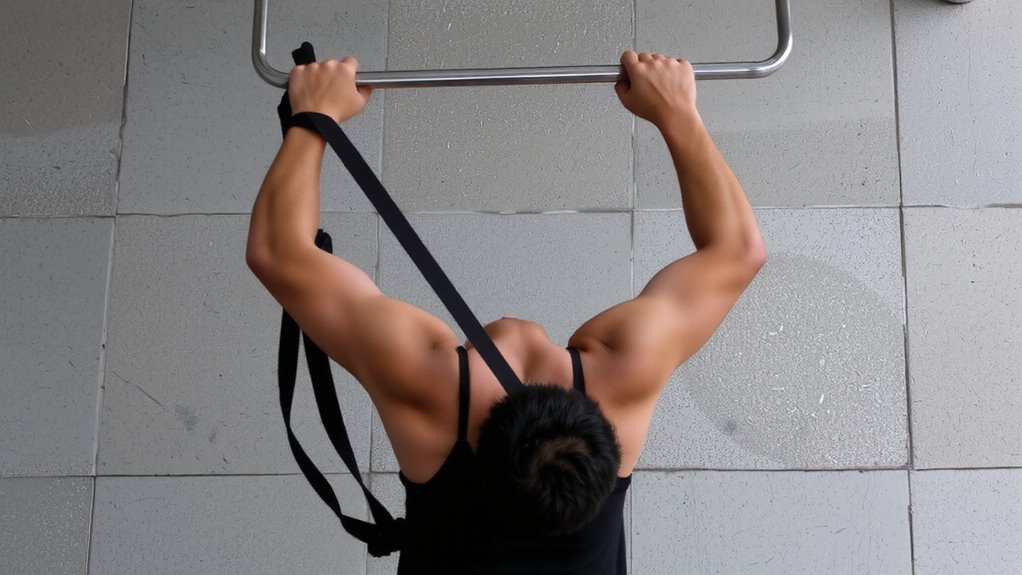
You’re not just lowering yourself during the eccentric phase-you’re building tendon resilience with every controlled inch. By slowing your descent, you increase time under tension, which stimulates collagen synthesis in tendons, making them denser and more resistant to strain. A 3–5 second negative forces muscle synchronization, enhancing neuromuscular coordination so your biceps, brachialis, and forearm flexors work together efficiently. This precision reduces energy leaks and minimizes excessive joint stress. Unlike explosive movements, controlled tempo trains connective tissues without overshooting their adaptive capacity. Use a metronome app or count steadily to maintain consistency. Over weeks, this builds a tendon foundation that handles higher loads with less risk. The right tempo turns each rep into a recovery-enhancing, strength-building opportunity-no special gear needed, just disciplined pacing. It’s not about how fast you can go, but how well you can control the fall.
Progress Eccentric Chin-Ups Without Flaring Pain
How do you keep progressing with eccentric chin-ups when your shoulders or elbows start to ache? You adjust-without backing down. Your elbow anatomy, especially tendons like the biceps brachii and brachialis, tolerates progressive overload best when pain triggers are managed. Avoid flaring by reducing range of motion-don’t lock out at the bottom. That hyperextension stresses joint capsules and strains medial structures. Use a controlled 3–5 second descent, but stop just before discomfort begins. Modify grip width: too wide increases shear forces, too narrow concentrates pressure on lateral tendons. Train every 48–72 hours to allow tendon recovery. Monitor swelling or tenderness post-workout-early signs your volume or tempo exceeded tolerance. Listen to your body’s feedback as precisely as you track reps. Progress isn’t just load or speed-it’s consistency without aggravation. Smart progression respects structure.
Pair With Push Exercises to Prevent Overuse
While strengthening the upper body through eccentric chin-ups, neglecting opposing muscle groups can tilt the musculoskeletal balance and elevate injury risk-so pairing with purposeful push exercises isn’t just complementary, it’s essential. Maintaining push pull balance reduces asymmetric tension and mitigates excessive joint compression, especially in the shoulder and elbow. You’re not just building strength-you’re fostering joint resilience. Here’s how to pair movements effectively:
| Pull Exercise | Push Exercise | Purpose |
|---|---|---|
| Eccentric chin-up | Push-up | Balance horizontal forces |
| Slow negative pull | Dumbbell press | Counteract joint compression |
| Assisted chin-up | Pike push-up | Enhance scapular stability |
| Dead hang pull | Floor shoulder tap | Promote core integration |
| Controlled descent | Band-resisted punch | Support push pull balance |
This structured pairing optimizes recovery, improves postural alignment, and guarantees sustainable progression without overuse.
On a final note
You’ll build tendon resilience and elbow strength with progressive eccentric chin-ups, especially when you control tempo and avoid flare-ups. These movements repair tissue tolerance without overloading inflamed areas. Pairing with push exercises balances joint stress. Unlike bulky gear that limits motion, smart progressions enhance recovery. You’re not just rehabbing-you’re upgrading movement quality. It’s efficient, evidence-backed, and sustainable for long-term performance.