Split Squat Descents With Slow Eccentrics to Rebuild Quad Strength Safely
You’re using split squat descents with slow eccentrics to rebuild quad strength safely, and that’s smart-this method reduces knee shear while boosting time under tension. By controlling the 3–4 second descent, you enhance neuromuscular coordination and prioritize joint alignment over load. It’s ideal for rehab because it limits systemic fatigue and supports connective tissue health. Proper form guarantees real quad activation, not compensation. There’s more to optimizing this movement effectively.
Notable Insights
- Slow eccentric split squats minimize knee shear forces, making them safer for quad strength rebuilding.
- A 3–4 second descent increases time under tension, enhancing quad hypertrophy and neuromuscular control.
- The split stance improves joint stability and promotes proper knee and pelvic alignment during rehab.
- Unilateral training corrects muscle imbalances and ensures even quad development without compensation.
- Start with bodyweight or light loads, focusing on form and tempo before progressing intensity gradually.
Why Split Squat Descents Rebuild Quad Strength Safely
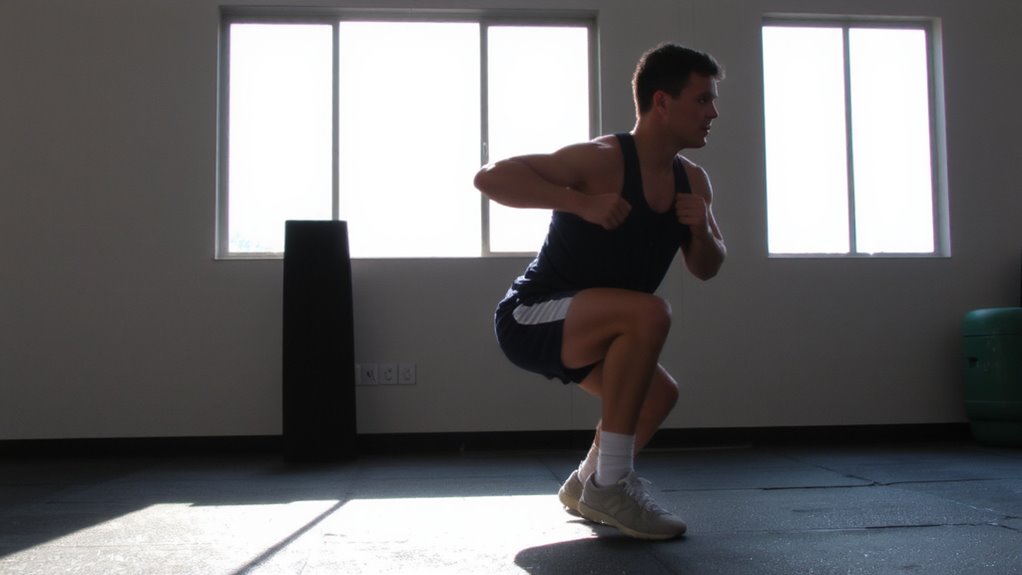
While traditional squats place substantial stress on the lower back and knees, split squat descents offer a safer, more controlled way to rebuild quad strength, especially during recovery. You minimize shear forces on the knees while still overloading the quadriceps effectively. The split stance enhances joint stability by promoting proper pelvic alignment and reducing compensatory movement. Because each leg works independently, you also develop muscle symmetry, correcting imbalances that often go unnoticed with bilateral lifts. This unilateral focus challenges core engagement subtly, reinforcing posture without requiring heavy loads. Recovery becomes more efficient since the exercise is less systemically taxing than barbell squats. You can maintain training volume without exceeding joint tolerance-ideal when rehabbing or managing fatigue. With consistent use, split squat descents support durable strength gains while preserving connective tissue health. Proper footwear and a non-slip surface further enhance safety and performance during execution.
How to Perform Slow Eccentric Split Squats (With Perfect Form)
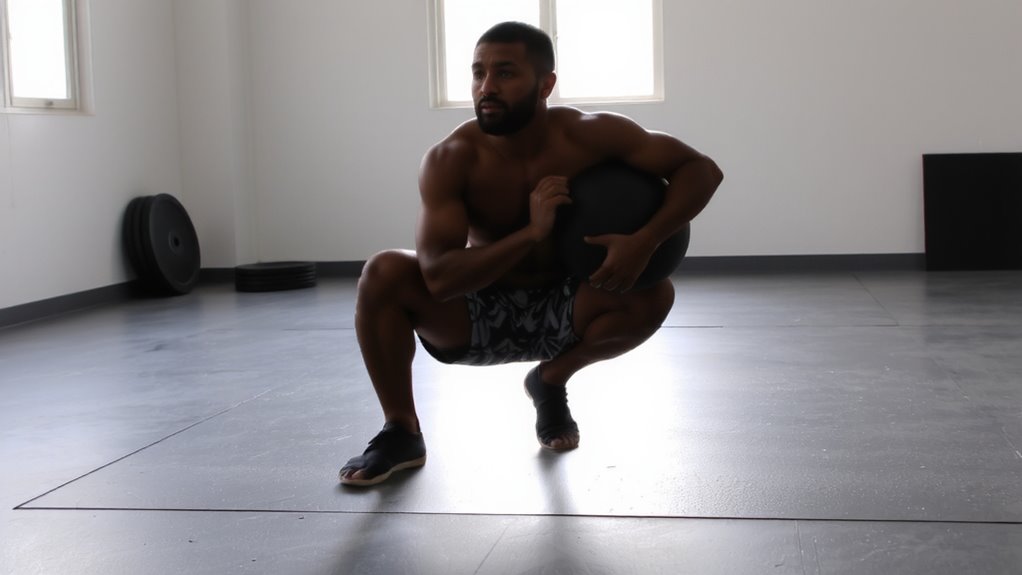
You’ll want to nail the setup first, since proper form turns this move into a quad-building powerhouse without compromising your joints. Start with one foot forward, lunge position, back knee hovering just above the floor. Keep your torso upright-this helps maintain hip alignment and reduces shear forces on the spine. As you lower, focus on knee tracking: your front knee should stay in line with your toes, not caving inward. That guarantees even load distribution and protects ligaments. Your back knee points down, not forward, so you’re engaging quads, not straining joints. Keep your core tight throughout to support pelvic stability. Foot placement matters-too far forward stresses the knee; too far back shifts work off the quads. A controlled start position sets the foundation for effective, joint-safe hypertrophy. Proper execution here means better muscle recruitment and long-term joint health, especially during recovery phases.
Control Your Descent for Better Quad Engagement
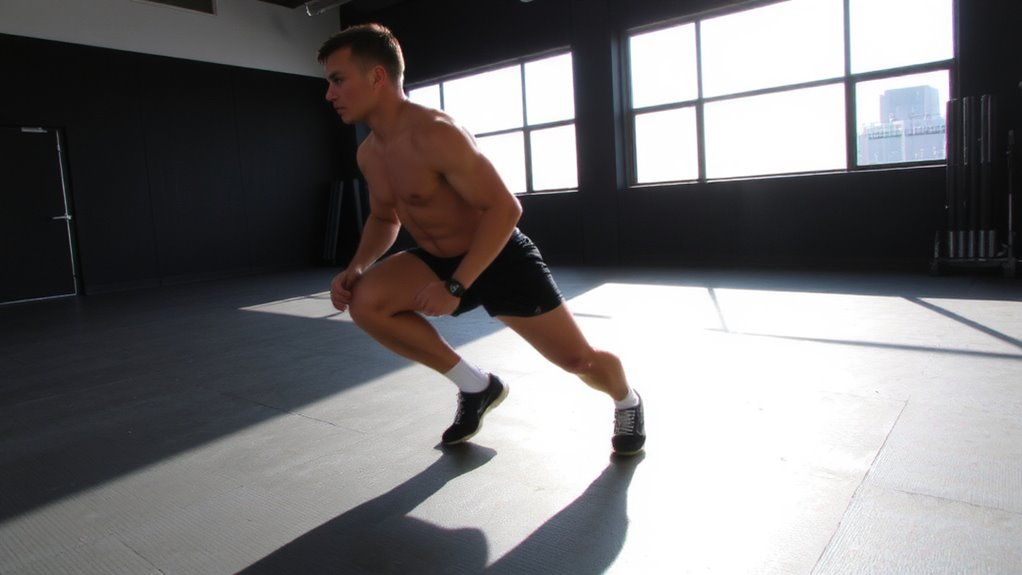
Because muscle growth hinges on time under tension, slowing your descent in the split squat forces your quads to work harder through a full range of motion, making each rep more effective for hypertrophy. You’ll maximize muscle tension by taking 3–4 seconds to lower yourself, which amplifies strain on the quadriceps without compromising joint alignment. Staying in control guarantees your knee tracks over your toes properly, reducing shear forces and protecting connective tissue. This deliberate tempo isn’t just about strength-it teaches neuromuscular coordination, improving movement efficiency over time. Unlike heavier, ballistic variations, slow eccentrics minimize joint stress while still overloading the muscle, making them ideal when recovery matters. Quality footwear with a stable sole and minimal heel lift helps maintain precise joint alignment, letting you focus on form instead of balance. When executed with intent, controlled descents turn a basic exercise into a potent tool for rebuilding quad strength with precision and safety.
How to Program Eccentric Split Squats for Rehab and Strength
How do you balance the demands of rehab with the drive to rebuild strength? Eccentric split squats let you do both-but only if programmed wisely. Exercise selection matters: this movement targets quads safely while minimizing compressive knee stress, making it ideal early in rehab. Start with bodyweight or light loads, emphasizing a 3–5 second descent to increase time under tension without heavy loading. For recovery timing, stick to 2–3 sets, 2–3 times weekly, allowing 48 hours between sessions to avoid overreaching. Pair it with low-impact accessories to maintain quad stimulus while managing fatigue. Over time, progress load gradually, but keep eccentric control central. Unlike aggressive lifts, this tempo-focused work supports tissue resilience and neuromuscular re-education. It’s not flashy, but with consistent effort and smart recovery timing, you’ll rebuild strength without backtracking.
Form and Tempo Errors That Undermine Quad Activation
Eccentric split squats offer a smart path to rebuilding strength with controlled loading, but even the best programming can’t compensate for poor execution. If you’re rushing the descent or leaning too far forward, you’re undermining quad activation and shifting stress to the hip flex arm or lower back. Maintaining proper knee alignment is critical-your front knee should track over your toes without caving inward, as valgus collapse promotes muscle imbalances and increases joint strain. A tempo that’s too fast defeats the purpose of slow eccentrics, robbing you of time under tension where quads thrive. You also risk compensating with the posterior chain if depth is achieved through poor mechanics instead of controlled hip and knee flexion. Stay upright, drive through the front heel, and monitor alignment closely. These adjustments guarantee the quads remain the prime mover, reducing asymmetries and supporting balanced, resilient strength recovery.
Progressing From Slow Eccentrics to Full Strength
What happens when slow eccentrics have done their job-when your quads feel more engaged, joint stability has improved, and movement patterns are cleaner? You’re ready to progress. Now it’s time to apply progressive overload safely, gradually increasing load or volume while preserving control. The goal is to maintain movement symmetry-guaranteeing both legs perform equally through full range of motion-so imbalances don’t creep back in. You’ll start incorporating full concentric contractions, building strength through the entire split squat. Monitor form closely; even small deviations can skew loading. Use a consistent tempo at first, then adjust to challenge power and coordination. Durable, low-profile footwear helps maintain ground feedback, and a firm surface assures accurate force transfer. Don’t rush-strength built with precision lasts longer and protects joints better. This phase bridges rehab and performance, letting you regain power without sacrificing control.
Best Companion Exercises for Quad Rehab
You’ve built control and stability through slow eccentrics and are now adding full concentric strength with split squats-so it’s time to round out your quad rehab with exercises that support balanced development without overloading irritated tissues. Incorporate step-ups using a 6- to 12-inch platform; they build unilateral strength while promoting muscle symmetry. Seated leg extensions are effective for quad isolation, letting you precisely control load and range, especially useful early in rehab. Add glute bridges to counterbalance hip extensor involvement and reduce anterior knee strain. Nordic curl negatives, when progressed carefully, enhance eccentric quad strength and coordination. These movements, combined with split squats, create a synergistic rehab protocol that targets full function. Use proper footwear with stable heel support to maintain alignment. Consistency and gradual load increases guarantee durable recovery.
On a final note
You’re rebuilding quad strength with control and intent, not sheer load, which makes slow eccentric split squats ideal for safe recovery. This method boosts muscle engagement while reducing joint stress, letting you progress without risking setbacks. Paired with proper rehab programming and complementary exercises, you’ll regain stability and power efficiently. The focus on tempo strengthens neural drive and muscle coordination-critical for long-term resilience. It’s not just rehab; it’s smart, sustainable strength building.