Weight-Shifting Exercises on Foam Pads for Foot Ankle Sensorimotor Retraining
You’ll get the best results using a medium to high-density foam pad with a slightly textured surface-it offers enough instability to challenge balance while supporting proper form. Start with double-leg weight shifts to activate ankle proprioception, then progress to single-leg stance for greater demand. Add dynamic reaches in all directions to improve neuromuscular control. Consistent training 3–4 times weekly builds long-term joint stability. The right pad makes progression safe and effective-there’s more to optimizing your routine.
Notable Insights
- Use medium to high-density foam pads with a textured surface to optimize stability and reduce slip during weight-shifting exercises.
- Perform slow, controlled double-leg weight shifts forward, backward, and side to side to enhance ankle proprioception and joint control.
- Engage the core throughout the exercise to minimize torso movement and maintain proper postural alignment.
- Progress to single-leg weight shifts once balance improves to increase neuromuscular demand and ankle stability.
- Train 3–4 times weekly on foam pads to build sensorimotor control and maintain long-term functional gains.
Choose the Right Foam Pad
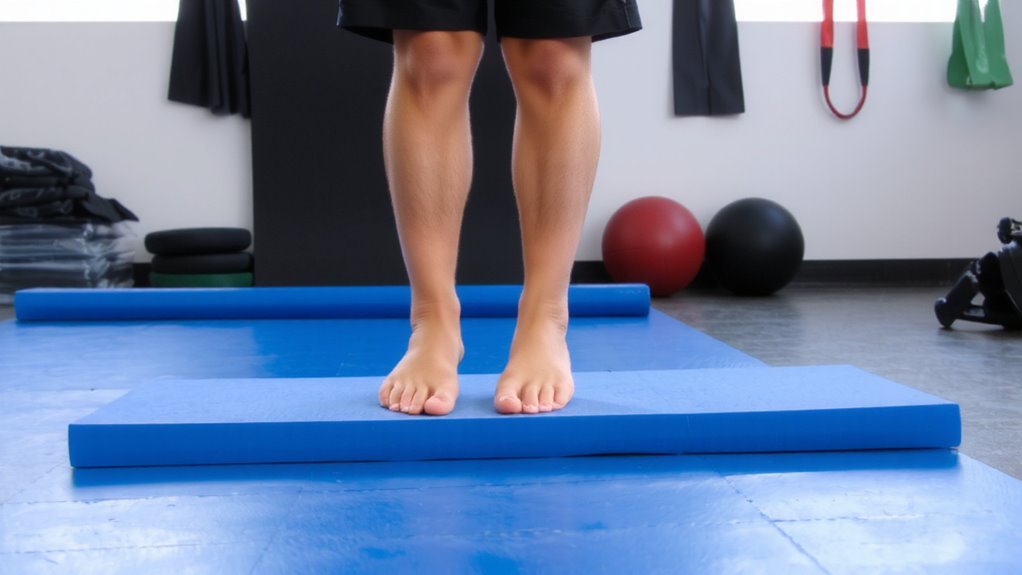
A well-chosen foam pad can make or break your balance training, and getting the right one starts with understanding density, thickness, and surface texture. Foam density determines stability-high-density pads resist compression, offering less give and better support for early-stage retraining, while low-density versions increase challenge by amplifying instability. For foot and ankle sensorimotor work, medium to high density often strikes the right balance between safety and effectiveness. Surface texture matters too: a slightly textured top layer improves grip, reducing slip risk without irritating bare skin. Smooth surfaces may shift underfoot, undermining control. Thickness also plays a role-1 to 2 inches typically suffice, offering enough instability without sacrificing manageability. Choose a pad with closed-cell foam; it resists moisture and holds up longer under regular use. Pick durability and function over aesthetics-your recovery depends on performance, not color.
Start With Double-Leg Weight Shifts
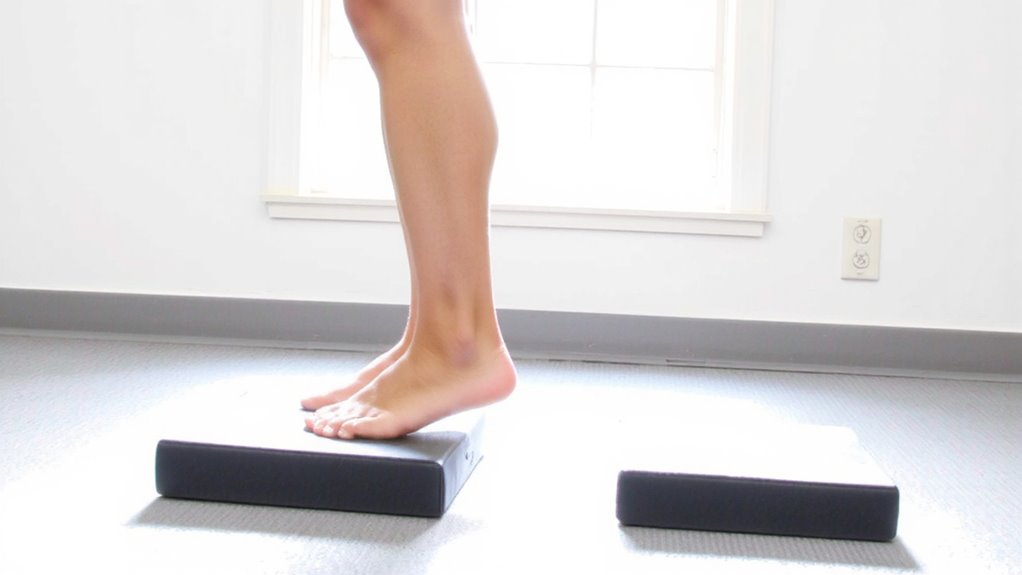
Now that you’ve picked a foam pad with the right density, thickness, and surface grip, it’s time to put it to use with foundational balance work. Start with double-leg weight shifts to safely build ankle mobility and stability. Stand with feet hip-width apart on the pad, then slowly shift your weight forward, back, and side to side. The unstable surface challenges your proprioception, forcing subtle joint adjustments that enhance foot and ankle control. Don’t forget core engagement-tighten your abs slightly to prevent excessive torso movement and maintain upright posture. This coordination strengthens key stabilizing muscles while improving neuromuscular timing. These shifts are low-risk yet highly effective for sensorimotor retraining, especially in early rehab or maintenance phases. Over time, consistent practice boosts dynamic balance and prepares you for more complex drills. The foam pad’s compressibility adds just enough instability to demand focus without overwhelming beginners.
Progress to Single-Leg Balance on Foam
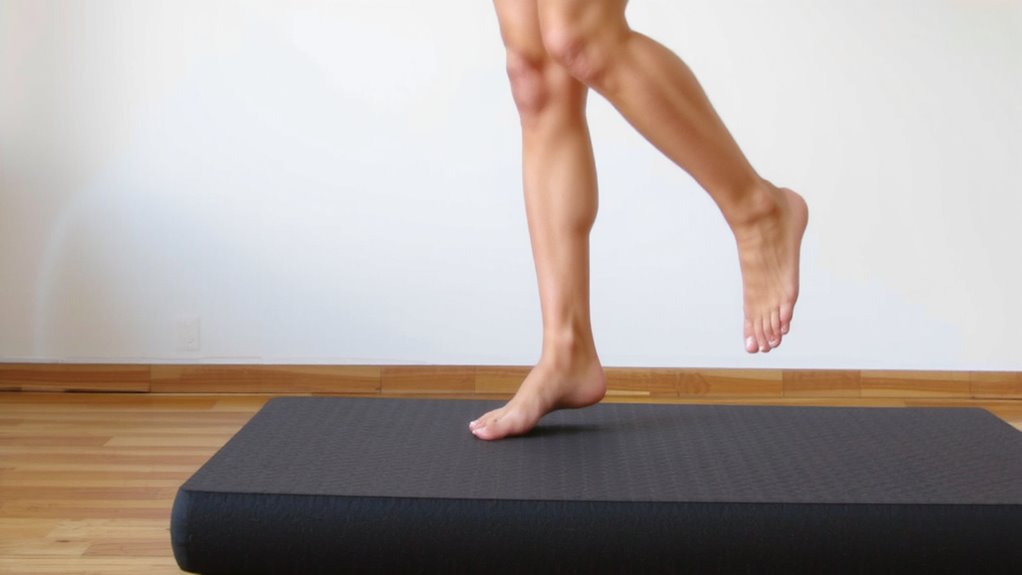
One effective way to advance your balance training is shifting from double-leg weight shifts to single-leg stance exercises on a foam pad. This progression increases demand on your proprioceptive system, challenging your ability to maintain stability on an unstable surface. You’ll likely notice more ankle wobble at first, especially if your sensorimotor control is still recovering. That’s normal-consistent practice helps reduce excessive joint drift over time. Foam pads with varying densities allow you to scale difficulty effectively, making them practical tools for home and clinical rehab. Focus on keeping your standing hip level and your knee aligned over your toes to avoid compensatory patterns. Single-leg balance on foam doesn’t just test stability-it trains your neuromuscular system to respond faster, improving ankle control. It’s a proven step toward functional recovery, especially when guided by mindful repetition and proper form. For optimal results, consider using a high-density foam roller that provides consistent support and durability during repetitive training sessions.
Add Movement With Reach Drills
How do you push beyond basic balance and start training movement control in a way that mirrors real-world demands? You add dynamic reaching to your foam pad routines. Once you’ve mastered single-leg balance, it’s time to challenge your system with purposeful, multiplanar movements. Reach forward, laterally, or diagonally while balancing-these dynamic reaching drills enhance proprioception and neuromuscular coordination. The unstable foam surface amplifies sensory feedback, forcing your ankle stabilizers to adapt quickly. Multiplanar movements replicate everyday actions like bending, twisting, or grabbing something off a shelf. Integrated into your sensorimotor retraining, these drills bridge rehab and function. They’re not just about stability-they demand control during motion, building confidence in unpredictable environments. Use low-cost, firm foam pads that compress slightly but rebound consistently. Done regularly, this progression sharpens motor responses and builds resilience, making your recovery not only effective but practical.
Retrain Your Balance After Injury
Why do so many people struggle to regain steady footing after an ankle sprain or knee injury, even when strength seems restored? Because stability isn’t just about muscle-it’s about communication. You’ve lost essential proprioception enhancement during the injury, dulling your body’s awareness of joint position. Standard rehab often skips neuromuscular activation drills that retrain fast-twitch responses. Foam pads introduce controlled instability, forcing micro-corrections that rebuild neural pathways. When you shift weight on an uneven surface, you’re not just balancing-you’re reprogramming reflexive muscle firing patterns. These exercises mimic real-world demands, making adaptation functional, not just mechanical. Unlike rigid platforms, foam pads challenge your system dynamically, promoting faster, more accurate feedback loops. For true recovery, gear must do more than support-it should provoke adaptation. That’s why integrating foam-based training isn’t optional; it’s essential for durable balance. You’ll move with more confidence, because your nervous system remembers how to respond-quickly, accurately, automatically.
Adjust Grind and Agitation Smartly
You’ve rebuilt foundational stability by retraining balance on foam pads, but now it’s time to fine-tune the intensity. Adjusting surface texture and agitation level helps refine pressure distribution during weight shifts. Too much instability too soon can hinder control, while too little won’t challenge sensorimotor adaptation. Smart progression means matching the grind to your current capacity.
| Surface Texture | Agitation Level | Best For |
|---|---|---|
| Smooth foam | Low | Early reweighting |
| Nubby surface | Moderate | Sensory feedback |
| Textured gel | High | Advanced proprioception |
| Dual-density | Variable | Dynamic pressure distribution |
Choose surfaces that challenge without overwhelming. A pad’s texture directly influences foot feedback, enhancing neuromuscular precision. Variable agitation-created through shifting stance or adding motion-amplifies demand on ankle stabilizers, making training more functional.
Train Consistently for Lasting Stability
Regularly engaging in weight-shifting drills on foam pads isn’t just helpful-it’s essential for building lasting neuromuscular endurance and joint stability. You’ll notice real improvements in foot strength and joint mobility when you commit to consistent training. These exercises challenge your proprioception, forcing your stabilizing muscles to adapt and grow more resilient. Without regular practice, gains fade quickly, so aim for at least three to four sessions weekly. Foam pads provide the right compromise between instability and support, making them ideal for progressive sensorimotor retraining. Over time, consistent use enhances balance, reduces injury risk, and supports functional movement patterns. You’ll find that joint mobility increases alongside foot strength, leading to smoother, more controlled motions. Unlike passive recovery tools, foam-based training actively rebuilds performance capacity. For long-term stability, consistency isn’t optional-it’s the foundation. Stick with it, and you’ll feel stronger, more agile, and better equipped for daily demands.
On a final note
You’ll find foam pad weight-shifting exercises highly effective for foot and ankle sensorimotor retraining. These drills sharpen proprioception, especially post-injury, when paired with consistent practice. Quality foam pads offer ideal instability-firm enough to support, soft enough to challenge. Progressing from double-leg to single-leg and reach drills builds functional balance. For lasting stability, smart progression and proper gear matter. Foam pads are affordable, durable tools worth including in recovery and fitness routines.